
28-03-2026 07:55
 Marc Detollenaere
Hello everybody,Yesterday I found a number of whit
26-03-2026 15:31
 Åke Widgren
Hello,I found this one in October last year, on r
27-03-2026 15:23
Gernot FriebesHi,this Trichopezizella deviates from typical T. b
25-03-2026 10:35
Hulda Caroline HolteHello,I collected this species growing on a dead b
27-03-2026 15:08
Gernot FriebesHi,I'm looking for help with this coelomycete on C
27-03-2026 10:47
Åge OterhalsI have tentatively identified this Stictis to S. f
24-03-2026 21:37
Elisabeth StöckliBonsoir,Sur bois (tronc) très pourri de conifère


25-03-2026 22:23
Marc Detollenaere
Dear Forum,On a debarked stem of Tilia, we found s
Dung fungi?
Malcolm Greaves,
08-09-2017 14:06
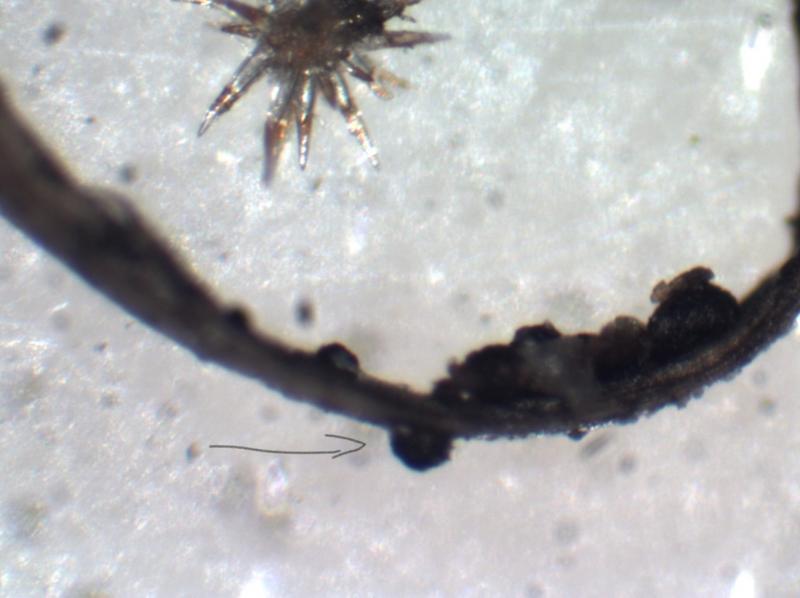
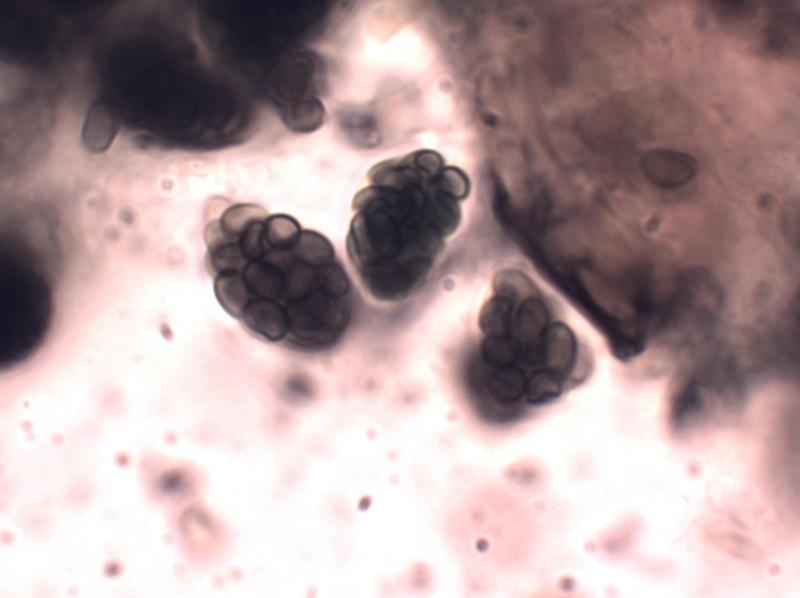
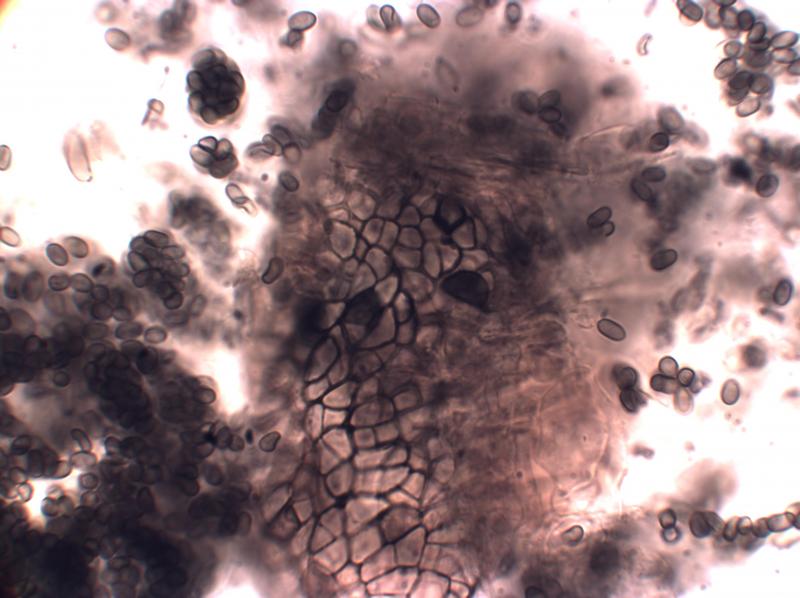
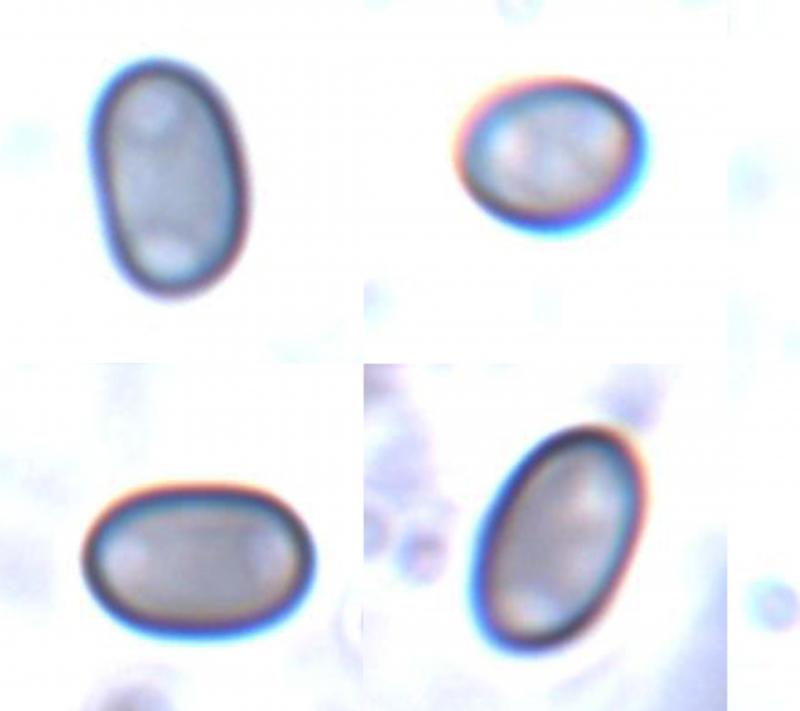
 A small Cleistothecia? 0.13 mm across x .08mm high was found growing on unknown dung (probably bird as it was on the top of a Leylandii hedge) along with many Podospora conica. It looks to have multispored asci (probably 16) with cylindrical spores 4.5-5.4 x 2.2-2.6.
Can anyone help
Thanks
Mal
Norbert Heine,
08-09-2017 16:07

Re : Dung fungi?
Hallo Mal,
you should compare with Westerdykella nigra (=Preussia nigra).
At first with 8 spores, immediately separating and soon with 32 ascospore segments.
4-5,2 x 2,4-3 µm.
Regards, Norbert
you should compare with Westerdykella nigra (=Preussia nigra).
At first with 8 spores, immediately separating and soon with 32 ascospore segments.
4-5,2 x 2,4-3 µm.
Regards, Norbert
Malcolm Greaves,
08-09-2017 21:08
Re : Dung fungi?
Hello Norbert
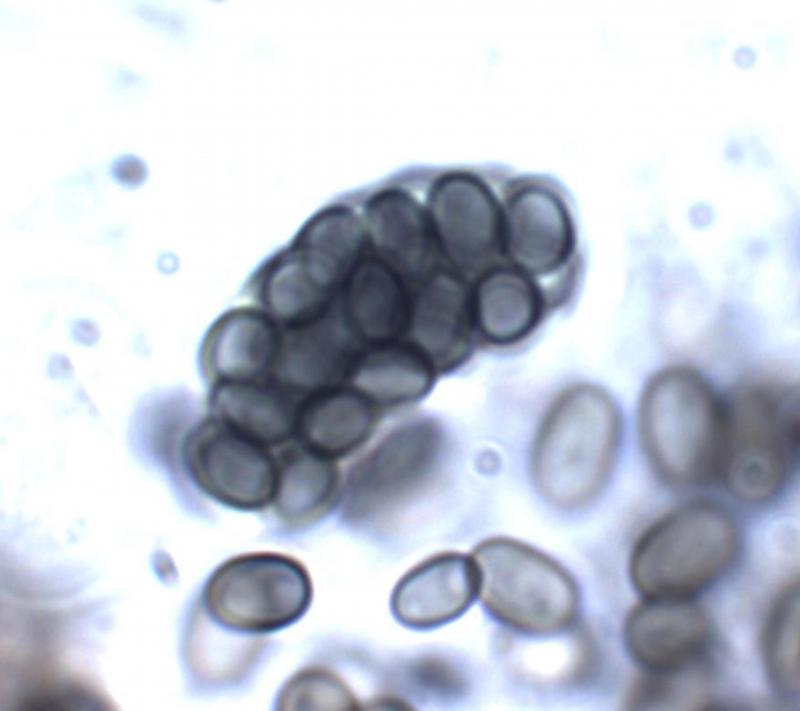
I don't have any detailed description of Westerdykella nigra but from what I can gather it is a close relative of Sporormiella. These also split into segments and have a spore septa. Looking more closely at my find the spores do not look to be grouped in the asci and I see no sign of the septa in fact I think I can see droplets at each end of the spores. I don't know if this would rule out the Westerdykella (Preussia) group.
Mal
I don't have any detailed description of Westerdykella nigra but from what I can gather it is a close relative of Sporormiella. These also split into segments and have a spore septa. Looking more closely at my find the spores do not look to be grouped in the asci and I see no sign of the septa in fact I think I can see droplets at each end of the spores. I don't know if this would rule out the Westerdykella (Preussia) group.
Mal
Norbert Heine,
09-09-2017 00:18
Re : Dung fungi?
Hello Mal,
yes, the genus Westerdykella seems to be near to Sporormiella, Preussia.
Another option for the species you found could be W. cylindrica (Asci 17-25 x 9-10).
The asci of W. nigra should be larger (30-40 x 9-11).
We spoke about Westerdykella nigra / cylindrica / multispora in the german Pilzforum.eu some years ago.
At answer #6 you can find two pdf.
In the Doveri article there's a description of W. cylindrica (p. 209-212) and in the article by Ebead et al you can find a key (p. 197-198).
The discussion you will find here (sorry, in german):
https://www.pilzforum.eu/board/thema-westerdykella-cylindrica
Maybe this will help you a little bit more.
Norbert
yes, the genus Westerdykella seems to be near to Sporormiella, Preussia.
Another option for the species you found could be W. cylindrica (Asci 17-25 x 9-10).
The asci of W. nigra should be larger (30-40 x 9-11).
We spoke about Westerdykella nigra / cylindrica / multispora in the german Pilzforum.eu some years ago.
At answer #6 you can find two pdf.
In the Doveri article there's a description of W. cylindrica (p. 209-212) and in the article by Ebead et al you can find a key (p. 197-198).
The discussion you will find here (sorry, in german):
https://www.pilzforum.eu/board/thema-westerdykella-cylindrica
Maybe this will help you a little bit more.
Norbert
Malcolm Greaves,
09-09-2017 01:34
Re : Dung fungi?
Norbert
Reading through those articles W cylindrica looks a perfect match.
Thanks for that.
Mal
Reading through those articles W cylindrica looks a perfect match.
Thanks for that.
Mal