
23-05-2026 11:44
 Charles Grapinet
Hello, I am having trouble identifying this copro
25-05-2026 16:44
François BartholomeeusenHi forum members,During an excursion organised by
26-05-2026 21:25
Dirk GerstnerHello everyone, I'm completely stumped by this li
26-05-2026 22:44
Ethan CrensonHi all, I think I have Incrucipulum capitatum her
22-05-2026 14:44
 Lothar Krieglsteiner
in unripe condition citrine yellow, then soon fadi
25-05-2026 16:35
 Bernard CLESSE
Bonjour à toutes et tous,J'ai trouvé récemment,
22-05-2026 13:29
Gernot FriebesHi,I am curious to hear your opinion on this mater
23-05-2026 18:57
Sylvie Le GoffBonjour à tousRécolté sur une branchette de Sal
22-05-2026 21:35
Steve ClementsBonjour, I expected this find on old wood on our
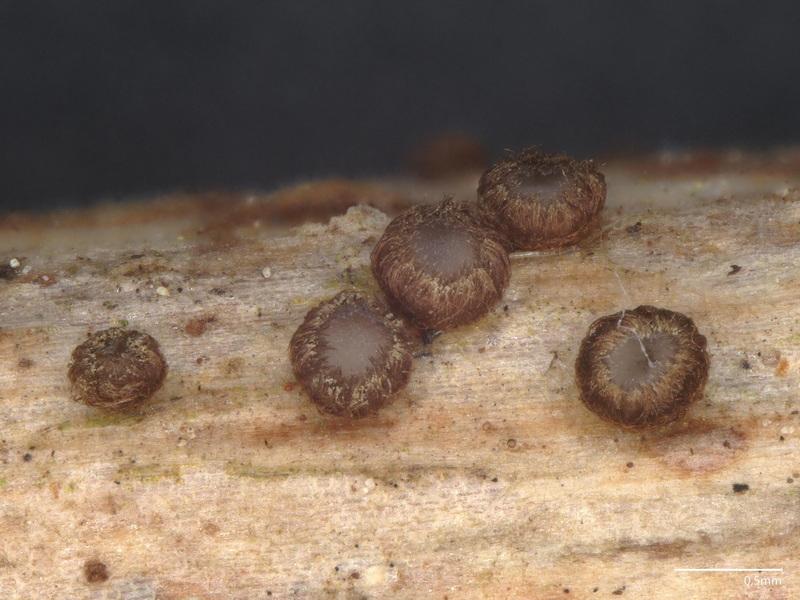
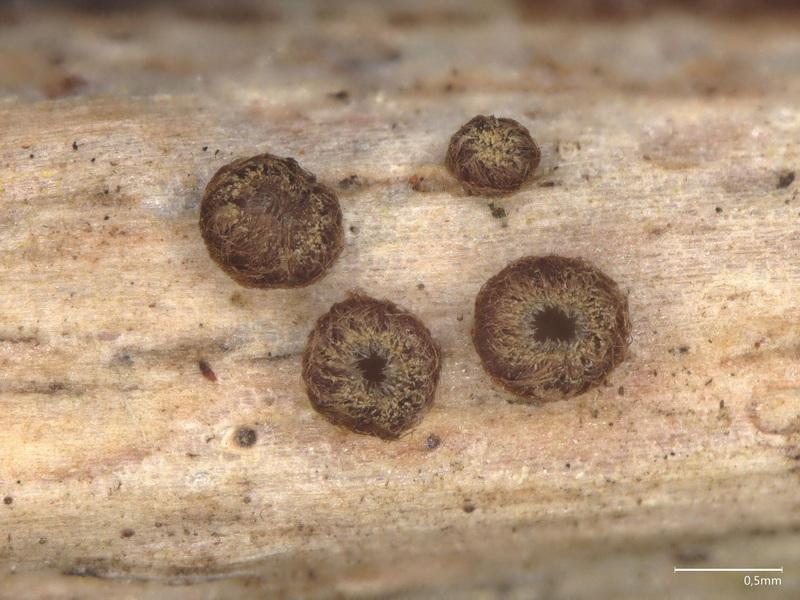
Trichopezizella barbata?
Gernot Friebes,
27-03-2026 15:23
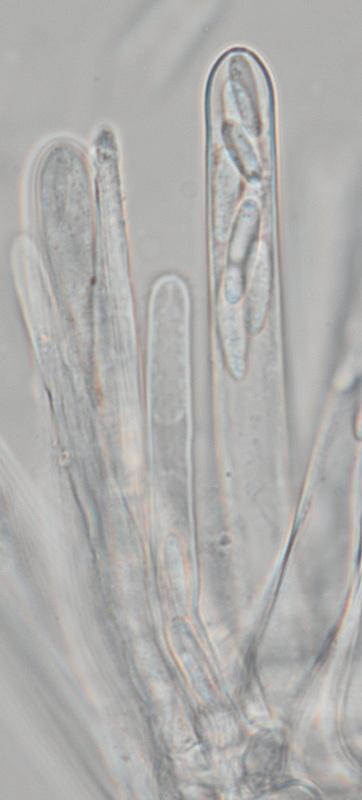
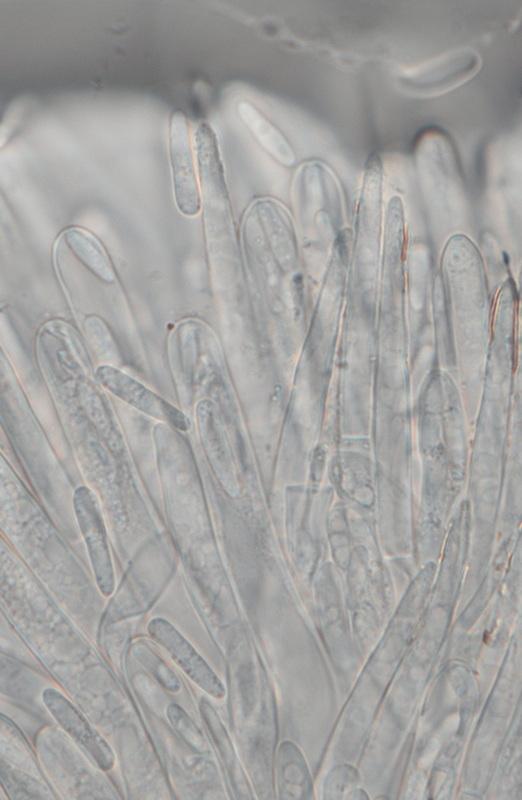
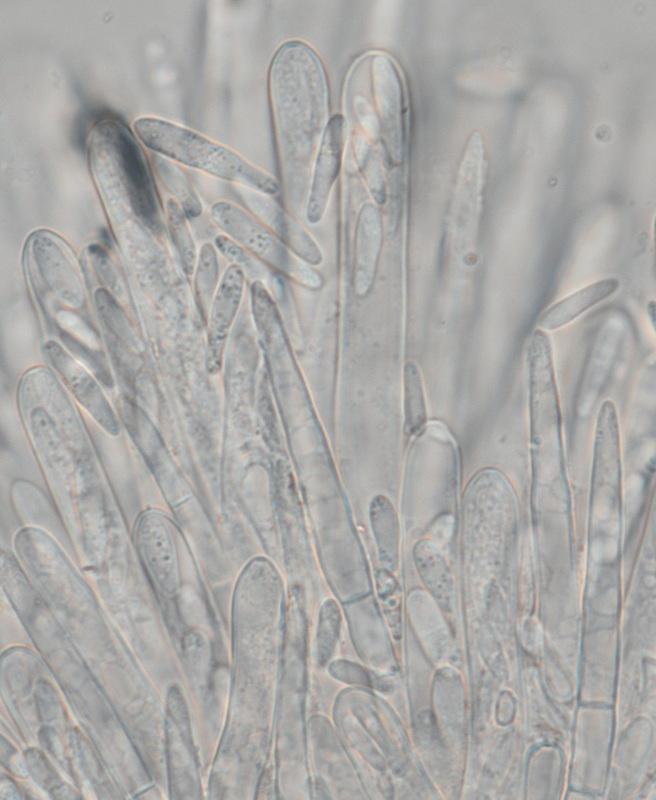
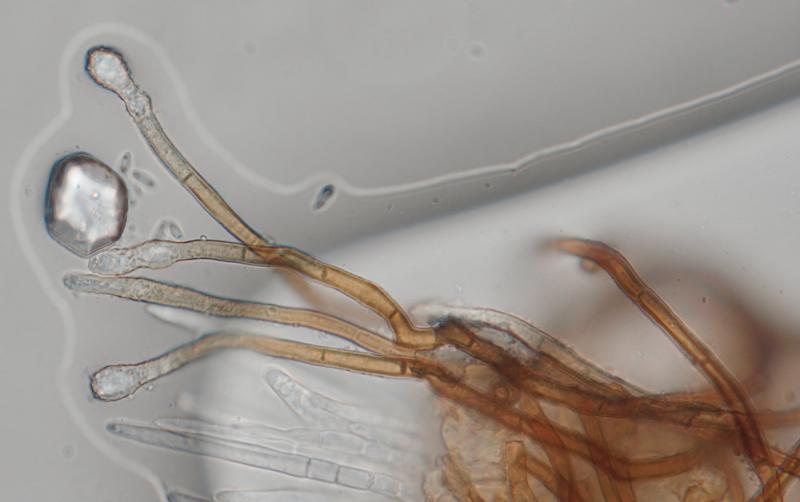
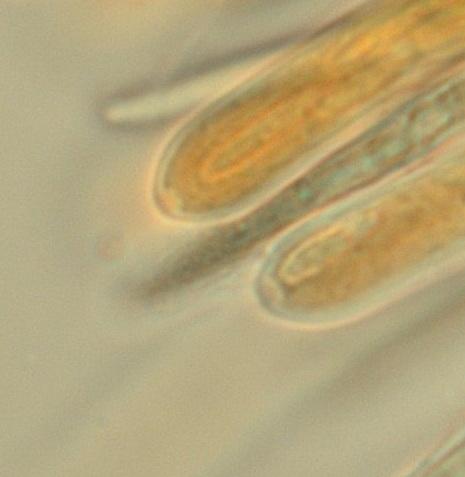
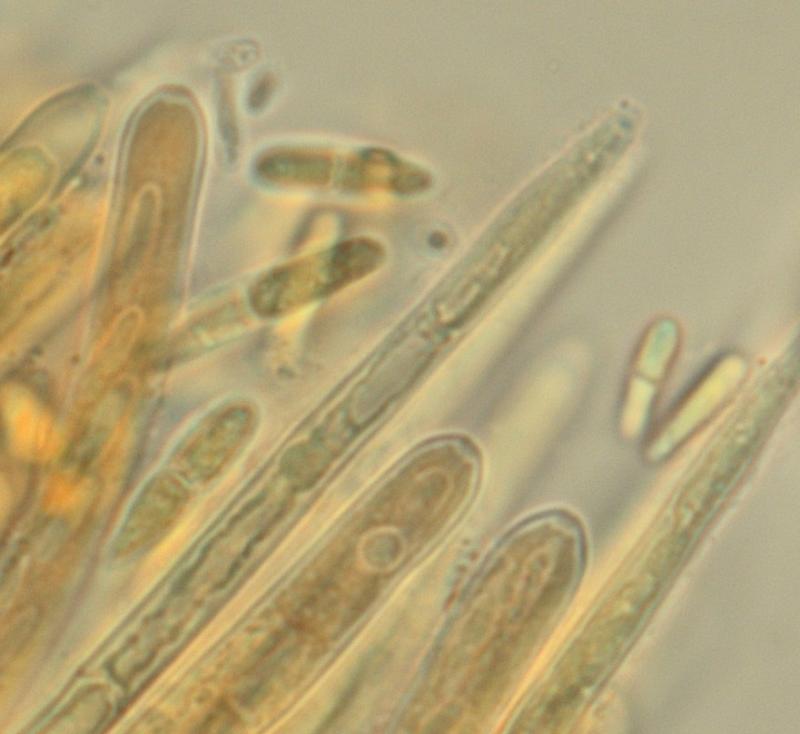
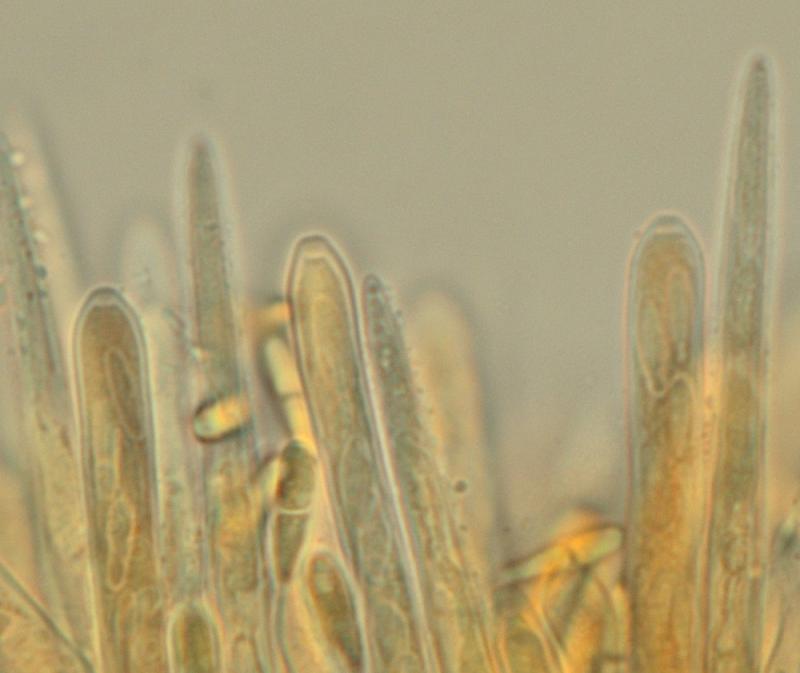
this Trichopezizella deviates from typical T. barbata by asci that are IKI- or react only very weakly. Do you think it is still T. barbata?
Found on still attached Lonicera twigs.
Ascospores: 12.6-18.7 x 2.7-3.9 µm.
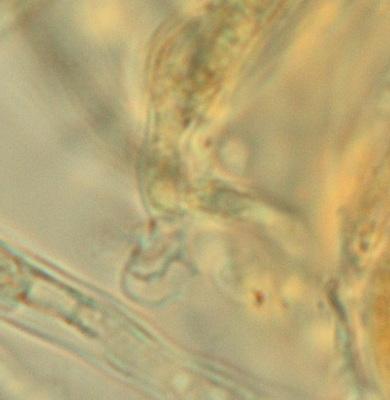
Asci: croziers +.
Paraphyses: sometimes apically warted.
Hairs: Apically inflated.
Best wishes,
Gernot
Hans-Otto Baral,
27-03-2026 17:43

Re : Trichopezizella barbata?
Hi Gernot,
I had a discussion with Bernd Fellmann recently, he sent me this and another species, both on Lonicera and sometimes in association. This one has often inflated hair apices and clavate spores, the other never inflated hairs and fusoid spores. Also the apo colour is different.
I had both species in my folders but in disorder, now they are sorted. It seemed that the one with clavate spores is typical T. barbata.
Your pale reaction is strange. Is it actually Lugol? To me it looks a bit like MLZ.
Can you tell me more collectiom data? I would like to compile descriptions of the two species.
Zotto