
28-03-2026 07:55
 Marc Detollenaere
Hello everybody,Yesterday I found a number of whit
26-03-2026 15:31
 Åke Widgren
Hello,I found this one in October last year, on r
27-03-2026 15:23
Gernot FriebesHi,this Trichopezizella deviates from typical T. b
25-03-2026 10:35
Hulda Caroline HolteHello,I collected this species growing on a dead b
27-03-2026 15:08
Gernot FriebesHi,I'm looking for help with this coelomycete on C
27-03-2026 10:47
Åge OterhalsI have tentatively identified this Stictis to S. f
24-03-2026 21:37
Elisabeth StöckliBonsoir,Sur bois (tronc) très pourri de conifère


25-03-2026 22:23
Marc Detollenaere
Dear Forum,On a debarked stem of Tilia, we found s

Dear Forummembers
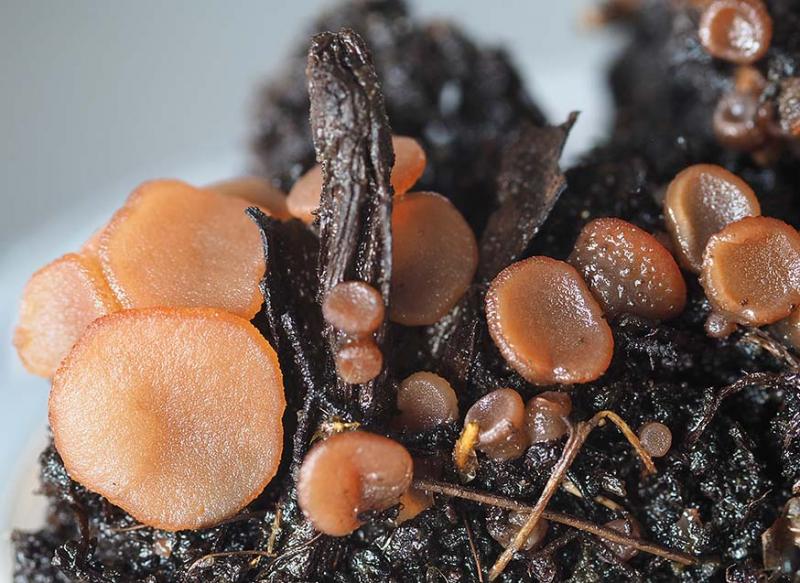
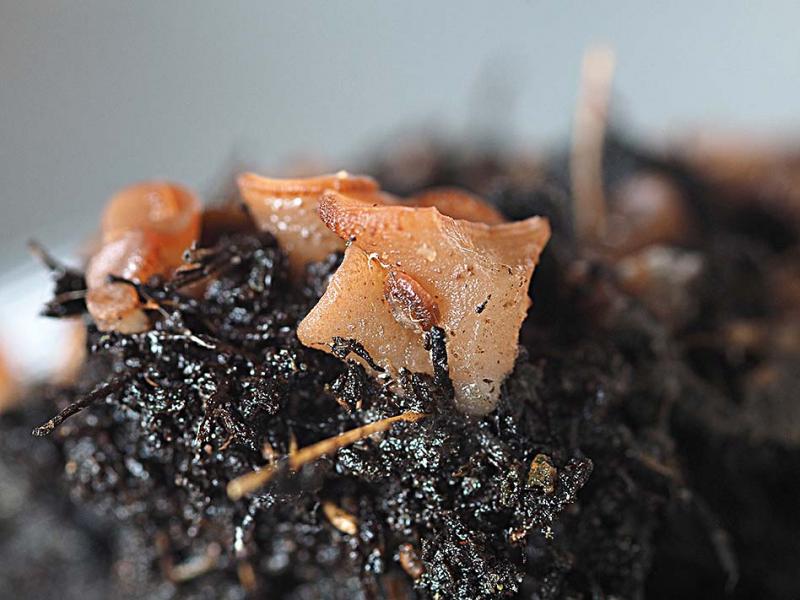
I've a problem with an asco on riched soil (flowerpot), sclerotia not observed.
Apothecium: 2- 8 mm diam.; 1- 6 mm high, first turbinate then turbinate to discoid narrowed into a tapering stipe.; disc with a depression; pink brown; margin even and a little outwards reflexed; outside flocculose, dark pink brown.
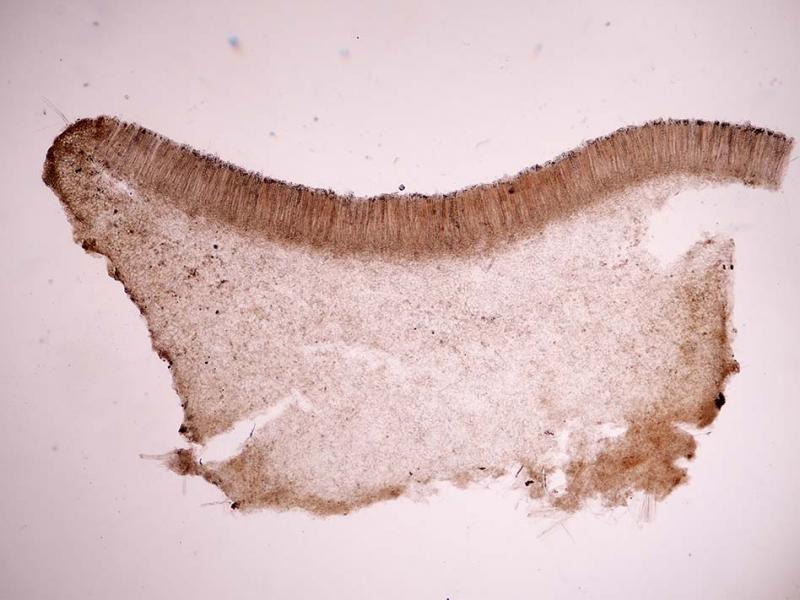
Section:
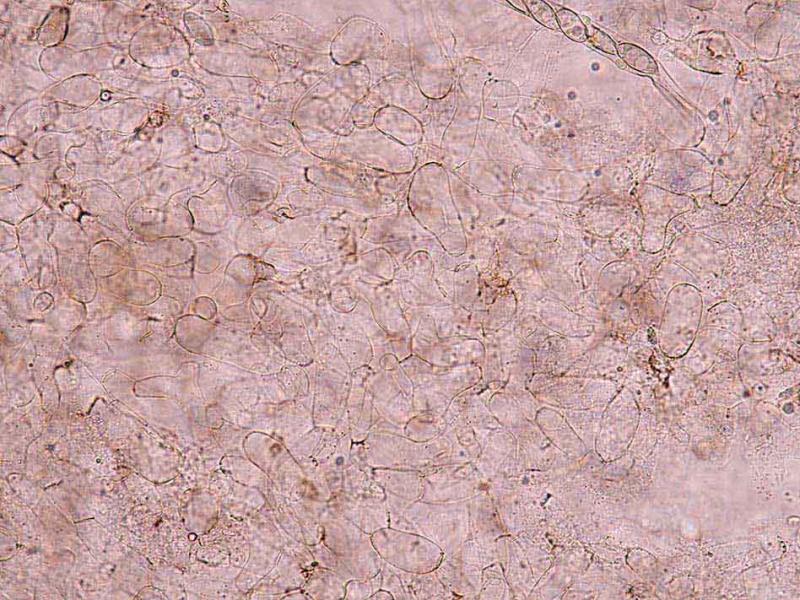
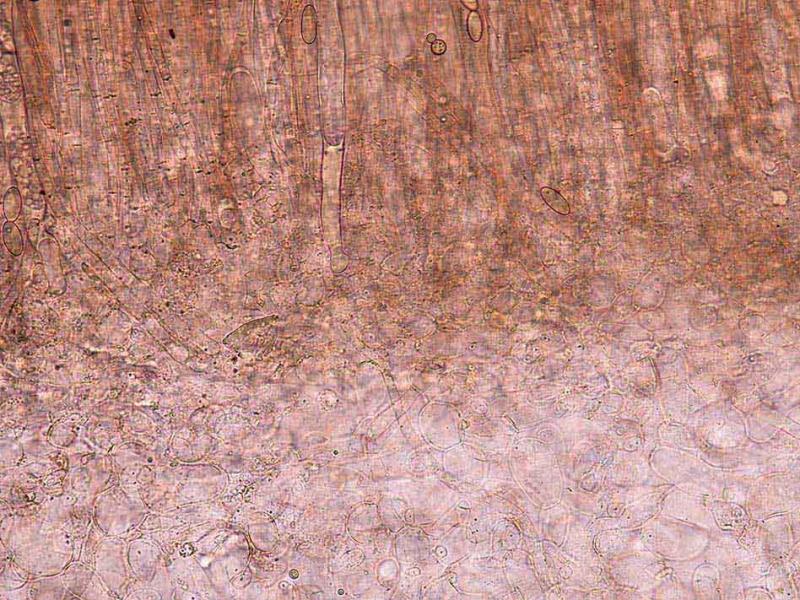
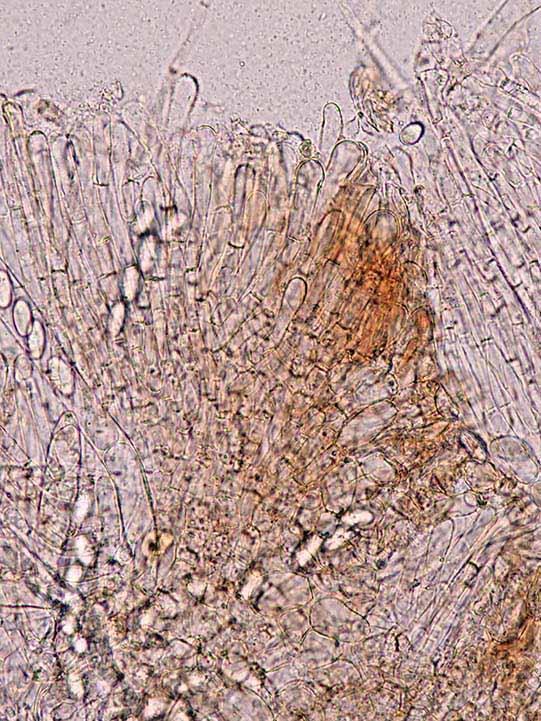
-medular excipulum: elongated cells, tended to textura epidermoidea
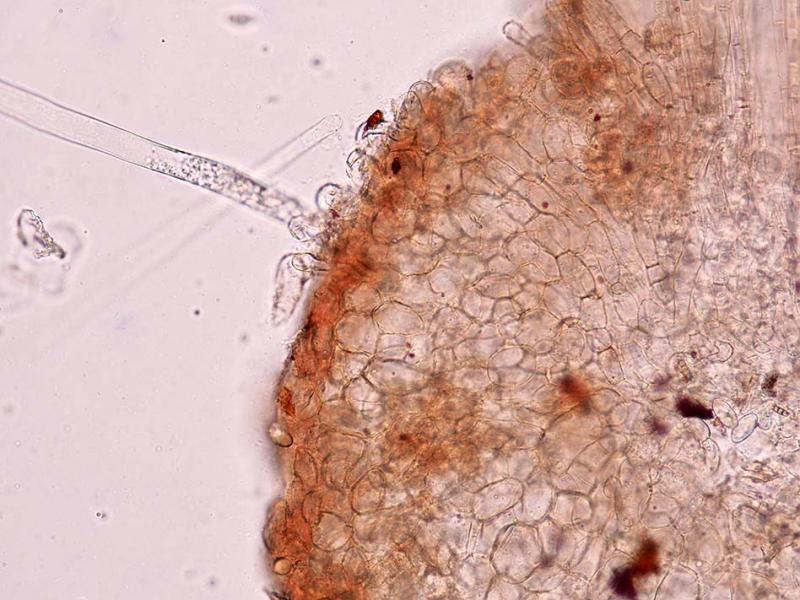
-ectal excipulum: textura subglobosa to textura angularis : outside with yellowbrown elongated excipulumcells; broadened at the top
Margin: transition between paraphyses and elongated excipulumcells:-7 septate ; cilindric, subclavate, subcapitate; yellowbrown
Spores in water : 16-20(22)x(9)9.5 10 µm : smooth (also in cottonblue); eggutulate but small polair zone with diffuse droplets
Asci: 250-300x14-16 µm operculate; ascuswall amyloid in Melzers reagens;(ascustop didn't shows the typical Peziza darkblue top).
Paraphyses: agglutinated,cilindric; 6µm ; top broadened to-8 µm; light brown vacuolair pigment; -5 septate
Discussion:
Peziza fimeti: typical dark blue ascustop is missing , also without oildrops but different in medular excipulum? Does there exist a Peziza fimeti complex as a friend of my give me that suggestion?
Pseudombrophila-like but this genus is without amyloid ascuswall and asci < 200 µm
Pachyella: different hair outgrowths, spores with two oildrops
Thanks for any reaction.
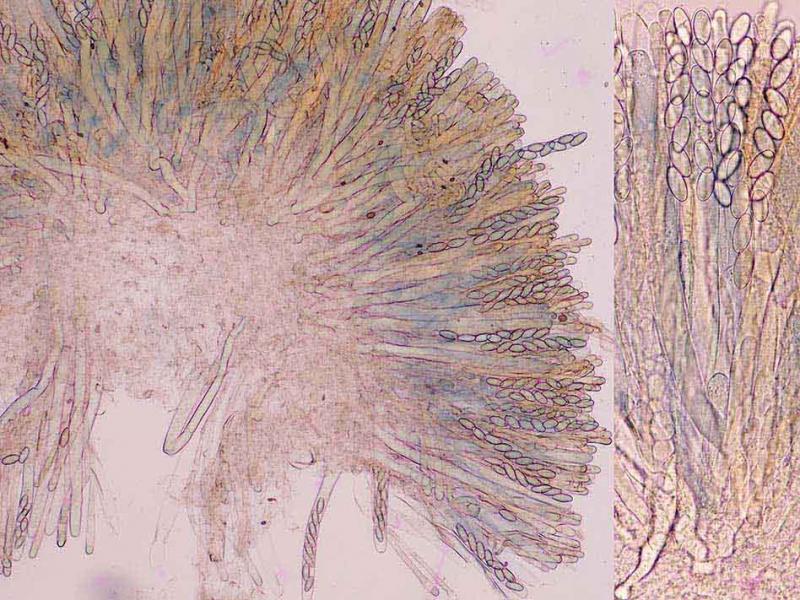
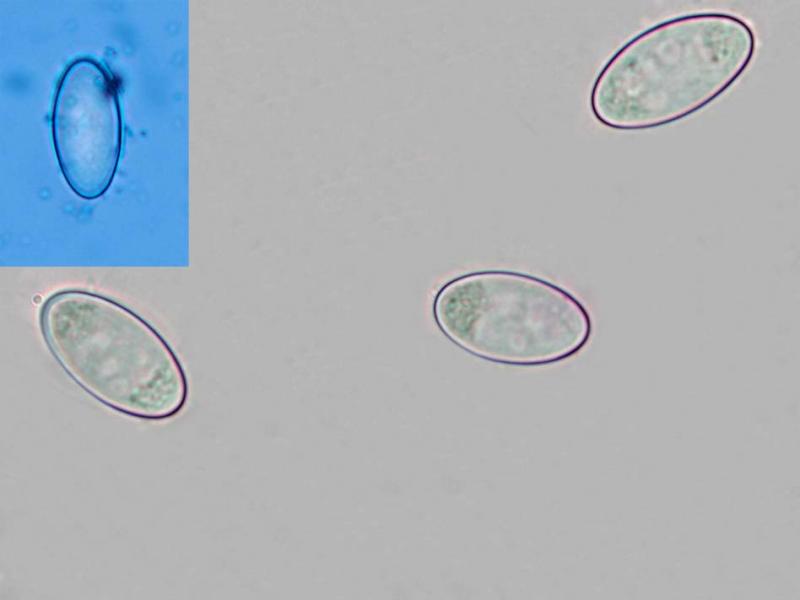
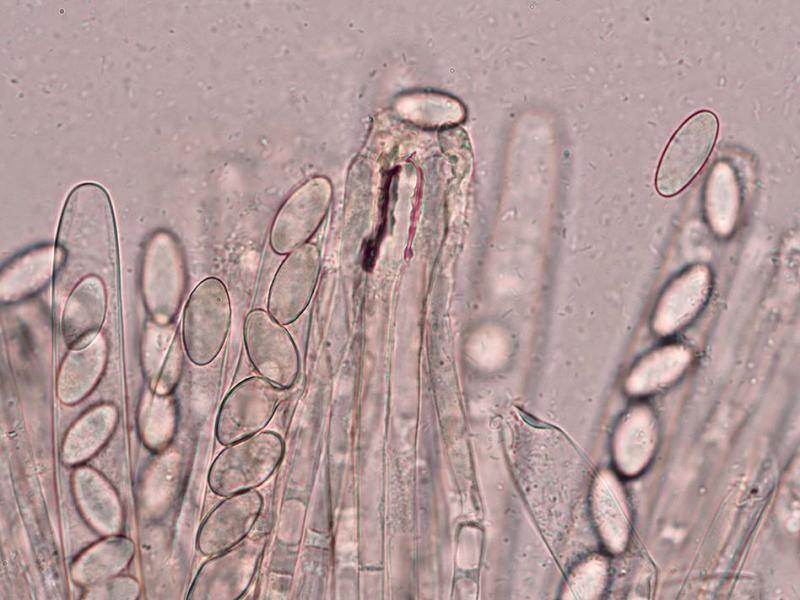
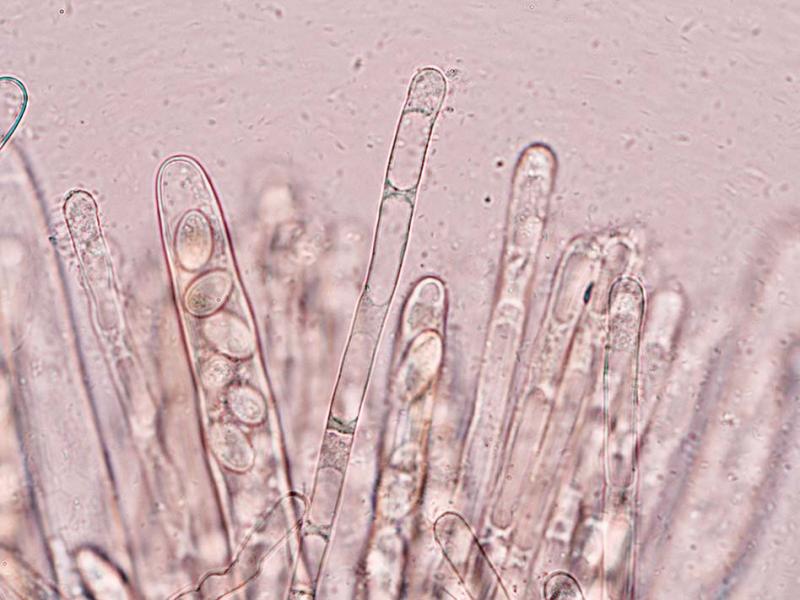

I am surprised about the obviously multinucleate spores containing at least 4 nuclei. I remember this as a rare feature in Pezizales, occurring in Sarcoscyphinae and perhaps a few other groups. In Syllabus I wrote for both Ascobolaceae and Pezizaceae the the spores were uninucleate.
Maybe there occur exceptions....
Zotto

- color of apothecia;
- size of ascospores;
- pattern of amyloid reaction;
- asci with croziers.
No idea of what it can be, maybe an exotic species...
Thanks for your interesting addtions and info.
Lieve