
27-03-2026 10:47
Åge OterhalsI have tentatively identified this Stictis to S. f
26-03-2026 15:31
 Åke Widgren
Hello,I found this one in October last year, on r
25-03-2026 10:35
Hulda Caroline HolteHello,I collected this species growing on a dead b
24-03-2026 21:37
Elisabeth StöckliBonsoir,Sur bois (tronc) très pourri de conifère


25-03-2026 22:23
 Marc Detollenaere
Dear Forum,On a debarked stem of Tilia, we found s
24-03-2026 15:44
Åge OterhalsI hope someone can confirm the name of this collec
25-03-2026 20:53
François BartholomeeusenDear forum members,On 23 March 2026, I found sever
23-03-2026 20:16
 Miguel Ángel Ribes
Good eveningI'm unable to identify this Coprotus o
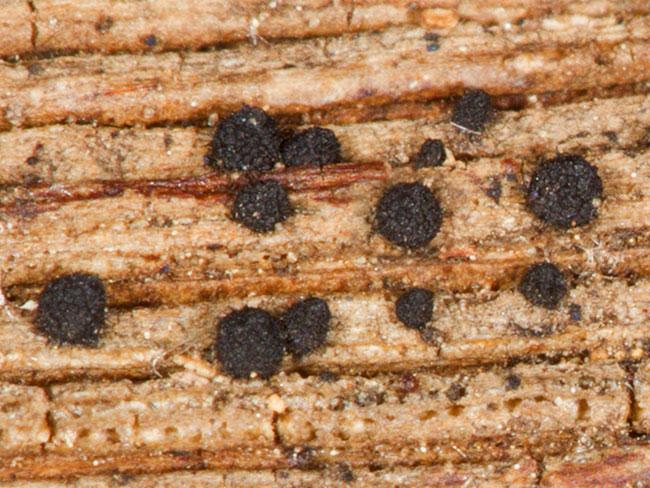
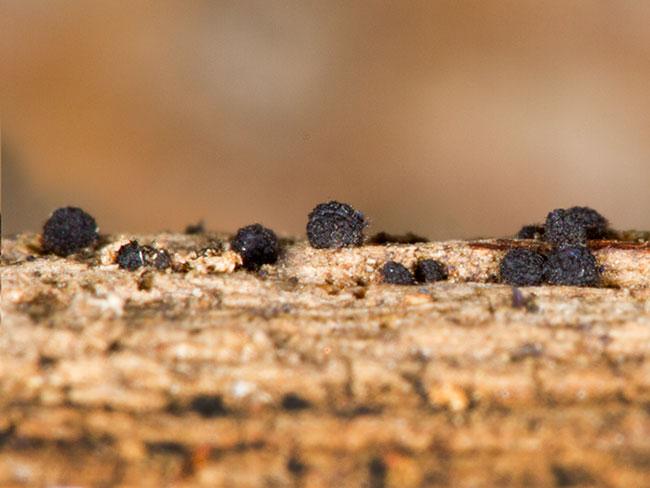
I would say that this is (in accordance with Reblova 1999) Helminthosphaeria carpathica.
The spores are little less and the host is not wood. I found them on the rotten liana of Vitis silvestris. Eccentric septa is very typical.
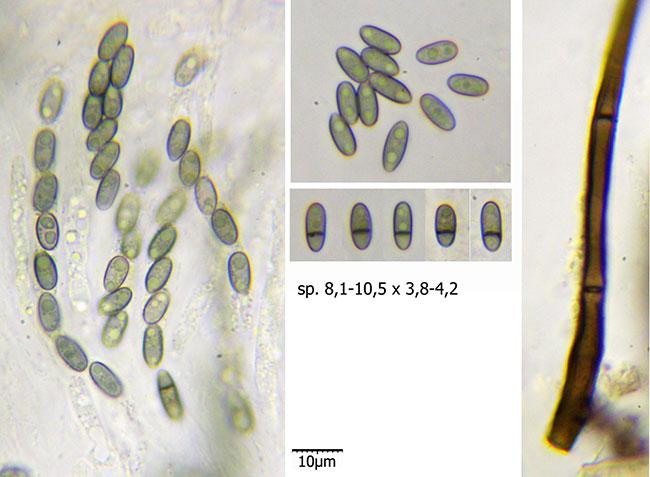

ascospores of your fungus develop an eccentric septum tardily, unlike those of H. carpathica which are already septate in the ascus; they are likewise significantly smaller, thus it might be a different taxon.
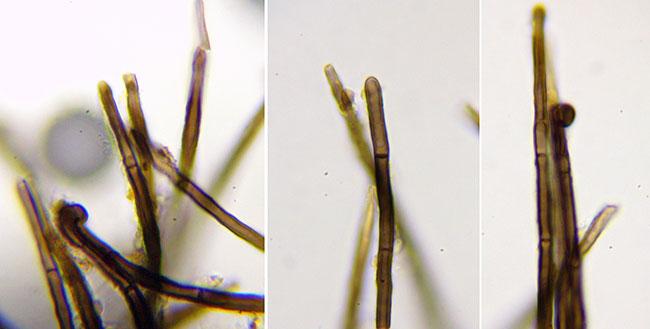
Does your last photo show a basal, subicular hypha or a hair originating from the wall?
The setae of H. carpathica are fairly distinctive and might give a good indication.
Good luck!
Jacques

Hi friends,
I know very well this fungus (Jacques, AG10056), probably the same I've found several times on Pinus sylvestris. I remember having sent material to Andy. Perhaps has he got results ?
Dragisa, I can send my complete description to you in order to compare, if you want.
Alain
Hi Alain, great, send me a description to compare.
the ascospores are also rather reminiscent of H. odontiae, aren't they? Helminthosphaeria is certainly not an easy genus sometimes...
Best wishes,
Gernot
Hi Gernot,
Those of odontiae are more ellipsoid apparently. But the concept of H. odontiae s.l. is probably not sufficient and would merit molecular studies. Probably more than one species in this complex, and you're right, this genus is not easy !
Alain

Yes, I remember these specimens. Unfortunately, the first one (AG 10056) had too few ascomata to sequence (only 8-10 ascomata), and the second recollection (same number), I sequenced a Hyphodontia (corticioid) - probably the basidiomycete that it is growing on. I am happy to try a third time if you would like to collect again and send me more material. These things are difficult to identify and to sequence!!! ;o)
Happy NEw Year,
Andy
Hi Andy,
Thank you for the reply.
You said me these results, I remember now. I wil try to send you fresh material, with a sufficient number of ascomata. Difficult to sequence, but not impossible for you, I think and I hope.
Best wishes, and happy new year.
Alain
I have about 20 ascomata, if you want I can send you, or to try to do here sequencing (Serbia).
Andy
Thanks,
Andy
Dr. Andrew Miller
University of Illinois
Illinois Natural History Survey
1816 South Oak Street
Champaign, IL 61820-6970 USA
phone: 001 (217) 244-0439
Andy
Andy