
23-05-2026 18:57
Sylvie Le GoffBonjour à tousRécolté sur une branchette de Sal
23-05-2026 11:44
 Charles Grapinet
Hello, I am having trouble identifying this copro
22-05-2026 21:35
Steve ClementsBonjour, I expected this find on old wood on our
22-05-2026 18:12
 Lothar Krieglsteiner
... in moist chamber from Portugal.As the fungus s
22-05-2026 20:08
Ethan CrensonHello all, Yesterday in NYC I was visiting an e
11-01-2022 16:36
 Jason Karakehian
Hi does anyone have a digital copy of Raitviir A (
20-05-2026 17:47
Margot en Geert VullingsWe found this Mollisia on dead Juncus stems mown l
22-05-2026 14:47
Gernot FriebesHi,superficial ascomata collected on bark of a liv
22-05-2026 14:44
Lothar Krieglsteiner
in unripe condition citrine yellow, then soon fadi
22-05-2026 13:29
Gernot FriebesHi,I am curious to hear your opinion on this mater
 Good evening
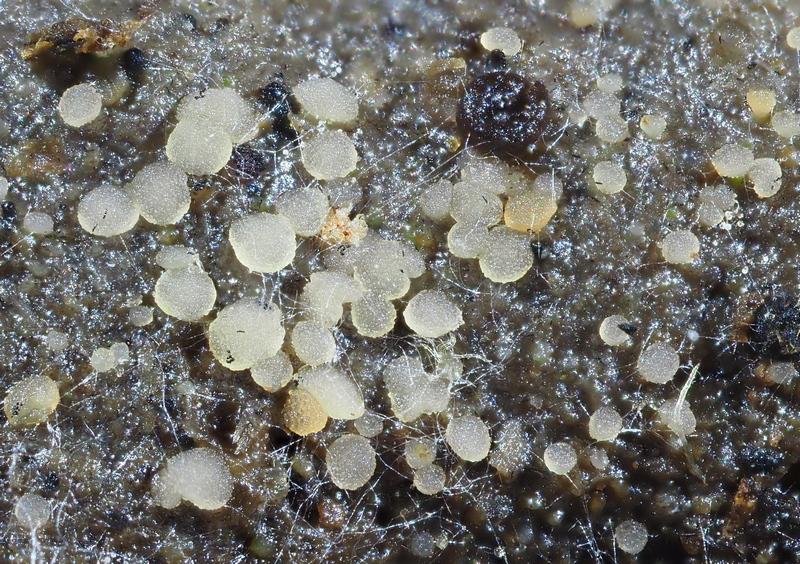
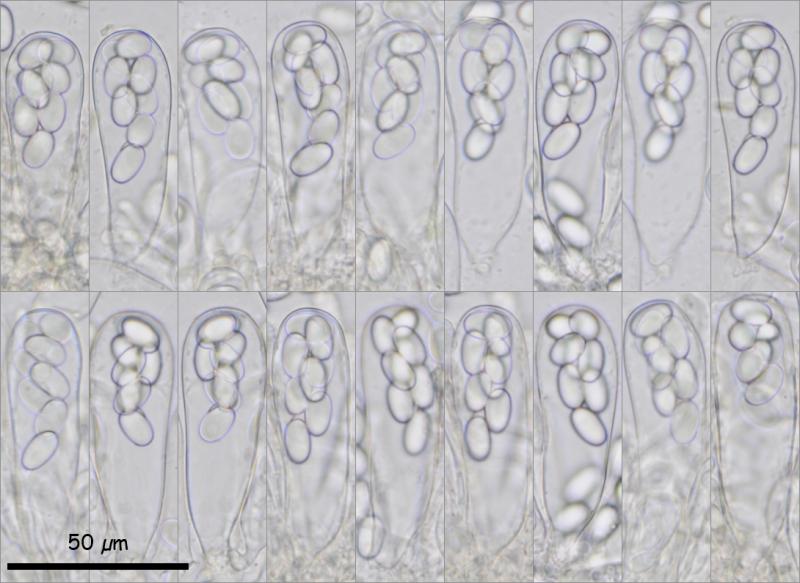
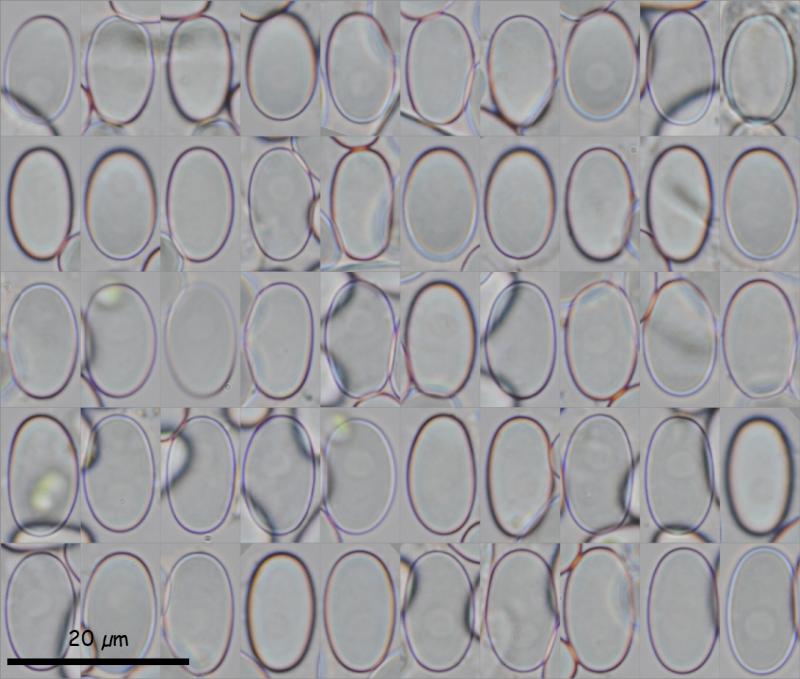
I'm unable to identify this Coprotus on cow dung, which was found next to C. leucopocillum. It have very similar characteristics to this species, but is much paler in color and has considerably smaller asci and spores. Matocec's keys lead me to C. disculus or C. dextrinoideus, but it doesn't fit either description.
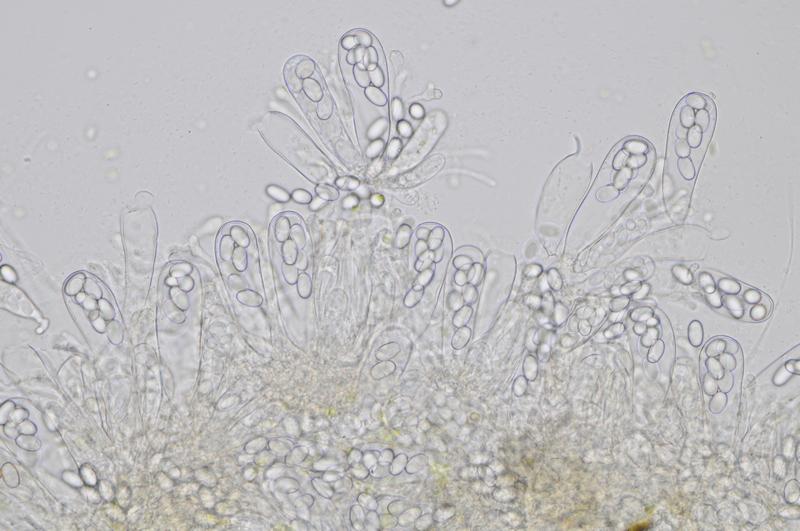
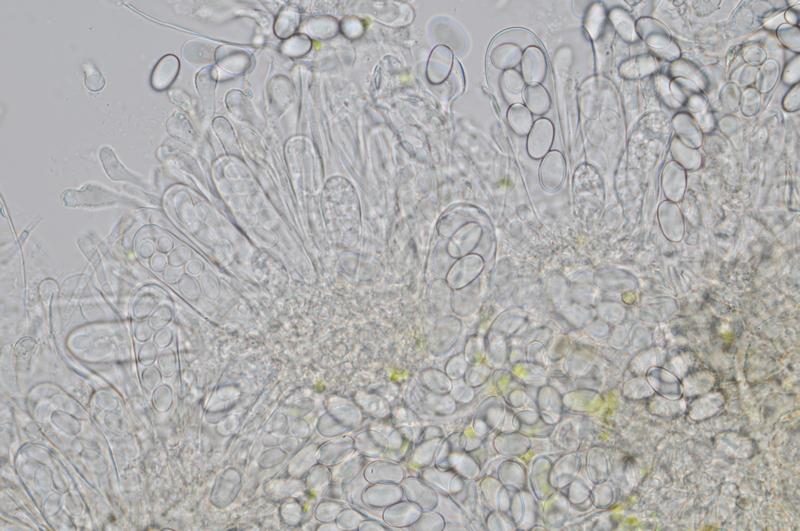
Asci short clavate, biseriate, (63,3) 67 - 76,8 (79,6) × (18,6) 20,4 - 23,4 (23,5) µm; Q = (2,9) 3 - 3,7 (3,8) ; N = 24; Me = 71,4 × 21,8 µm ; Qe = 3,3
Spores ellipsoid, (11,1) 11,9 - 13,2 (14,4) × (6,9) 7,1 - 7,8 (8,2) µm; Q = (1,4) 1,6 - 1,8 (1,9) ; N = 96; Me = 12,6 × 7,5 µm ; Qe = 1,7
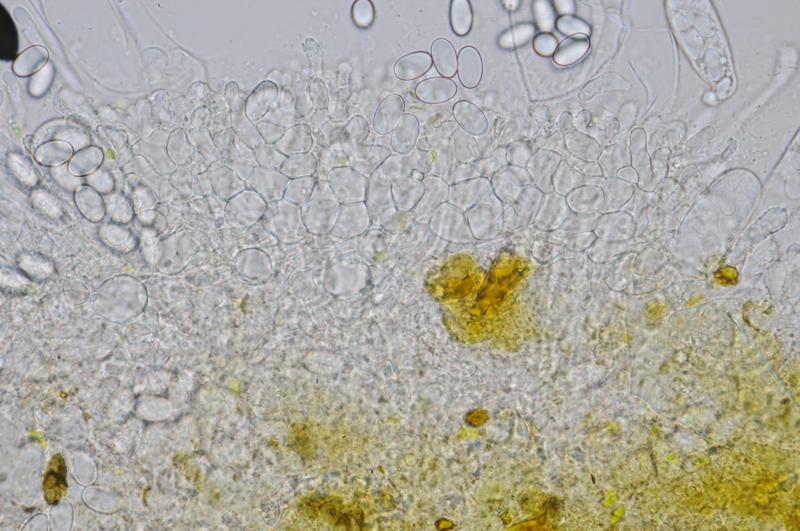
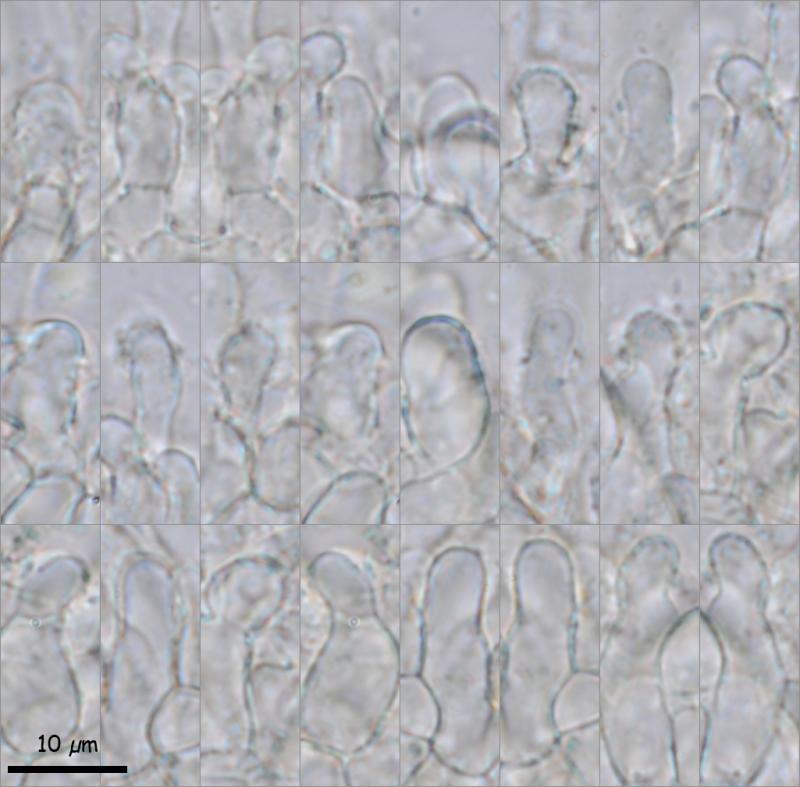
Marginal cells elongated, (9,4) 10,1 - 19,2 (21,4) × (3,4) 3,7 - 7,3 (7,8) µm; Q = (1,7) 1,9 - 4,2 (5,7) ; N = 24; Me = 14 × 5 µm ; Qe = 2,9
Paraphysis inflated at apex up to (4,8) 5,4 - 7,2 (7,5) µm; N = 23; Me = 6,4 µm
Thank you in advance.
Miguel Á. Ribes

Muchas gracias.
Reviewing the asci and spore measurements of all the species in Kusan and Matocec's key, I arrived at these three species based on spore size, but none of them quite fit:
* C. granuliformis, because its asci are much more clavate and smaller, measuring 38-60 x 14-30.
* C. disculus, because its asci are much more cylindrical.
* C. dextrinoideus, because its asci are much larger, measuring 80-125.
The only thing I can think of is that it might be something similar to C. leucopocillum, which was right next to these apothecia, but with an abnormal development.
Any suggestion?
Thank you in advance.
Miguel Á. Ribes