
27-04-2026 20:52
 Lothar Krieglsteiner
Found on hanging tiwg of Olea europaea in dried-ou
27-04-2026 18:48
Tony MoverleyCollected 23rd April 2026, Norfolk, EnglandSwarms
27-04-2026 17:41
Lothar Krieglsteiner
.. Algarve, same leaf than the last post. The con
27-04-2026 18:05
Lothar Krieglsteiner
... still attached at standing tree. The green con
27-04-2026 17:16
Lothar Krieglsteiner
.. Algarve, moist lying.The conidiomata look like
27-04-2026 12:54
Steve ClementsBonjour. Ce petit champignon blanc résupiné et
27-04-2026 09:59
Pauline. PennaBonjour Can anyone advise me on these pycnidia fo

22-04-2026 20:54
 Enrique Rubio
Hi to everybody.This Pyrenopeziza grew in moist le
Bonjour à tous
Quelques petites apothécies blanchâtres avec poils marginaux bruns de 2 à 4 mm de diamètre.
En macroscopie j'ai songé au genre Trichophaea ou Paratrichophaea; mais la microscopie me fait plutôt penser au genre Cheylimenia. D'autre part peut-il exister des Scutellinia de forme "albinos" ??
Mon manque d'expérience en la matière me porte à faire appel à vous. Merci de me mettre sur la bonne voie.
Alain
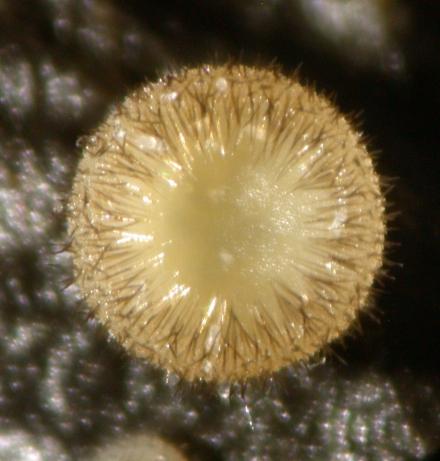
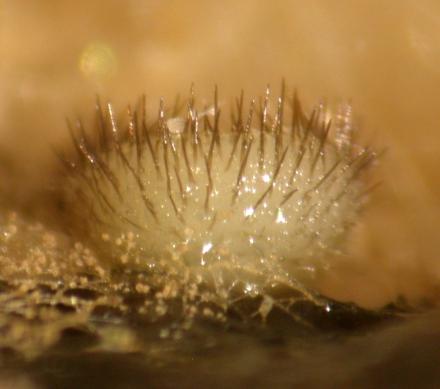
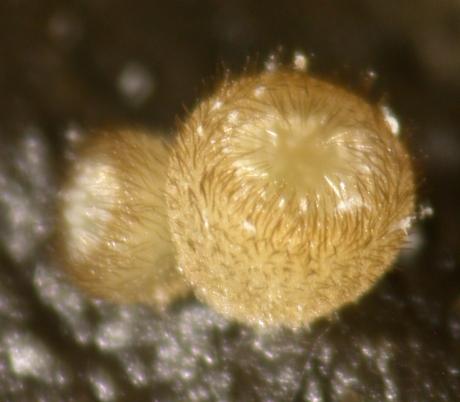
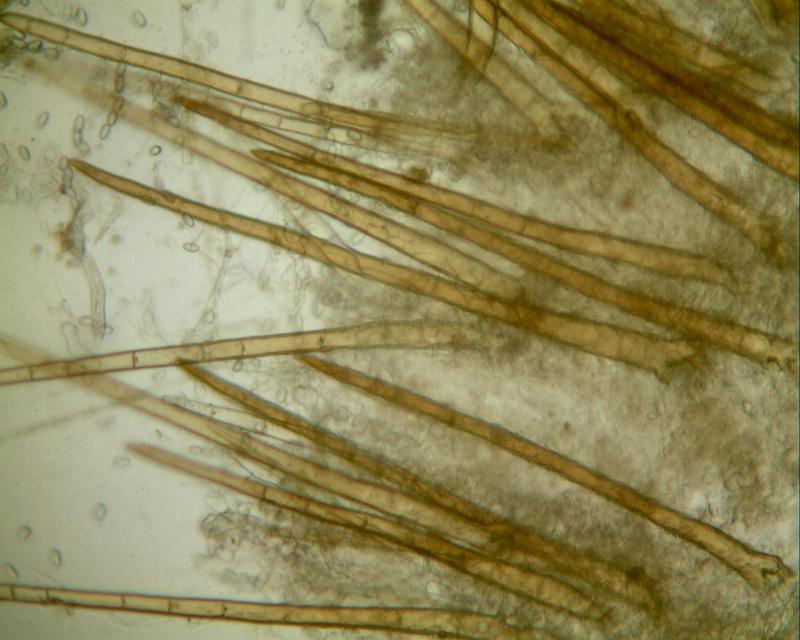
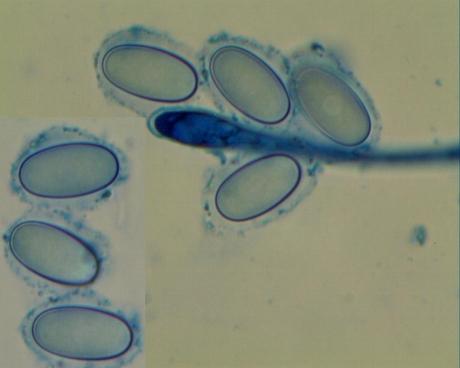
These probably are immature apothecia of Paratrichophaea boudieri.
Can you provide us with some microscopical data?
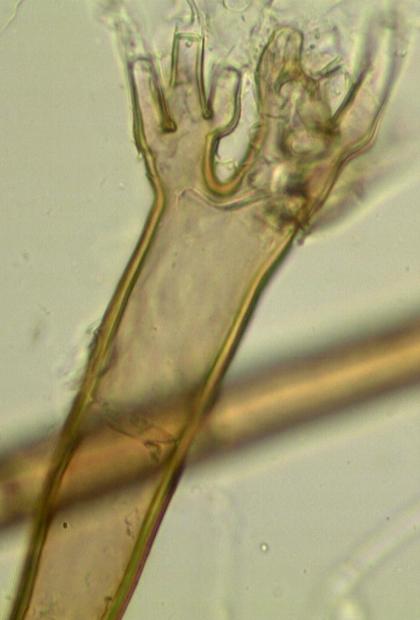
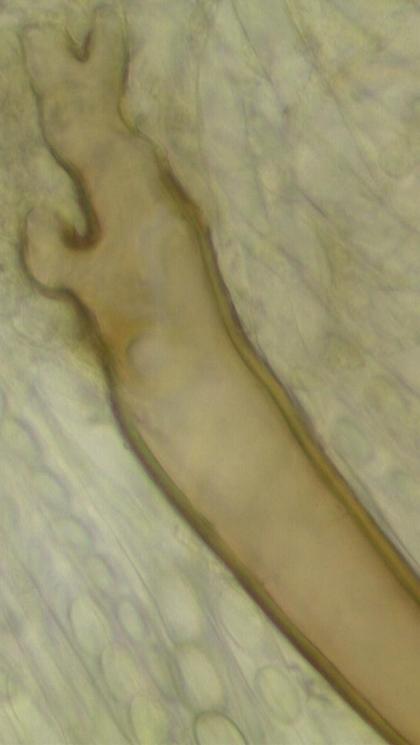
P. boudieri has hairs with different kind of bases.
You should also see hairs with a truncate, tapered or bulbous base.
Kind regards,
Ron
Hi Ron
Thank you very much for your answer.This rare species is first for me.
Best regards
Hi Ron & hi to all
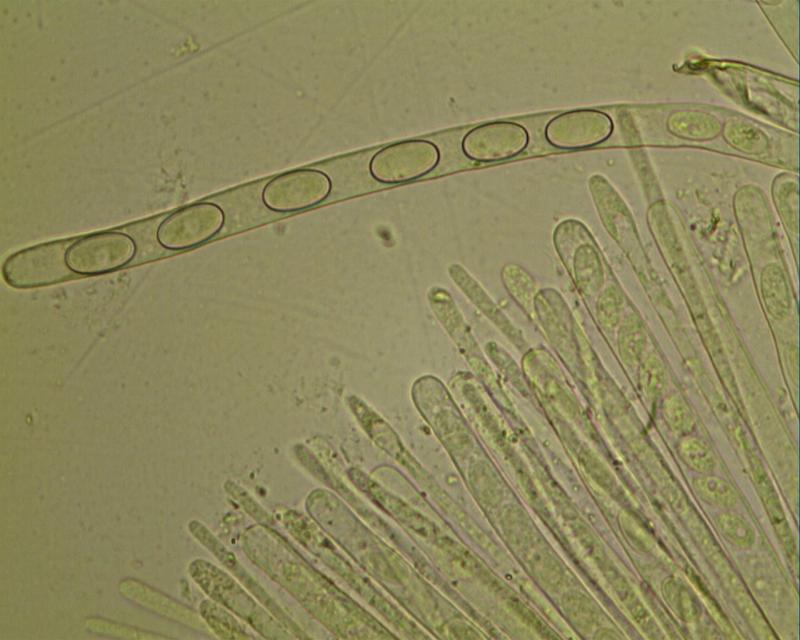
Other images and microscopical data.
Is the new images convincing ?? Is this pseudohairs a good feature for Paratrichophaea boudieri ??
But I have not examine under a microscope the hair withe buble base.
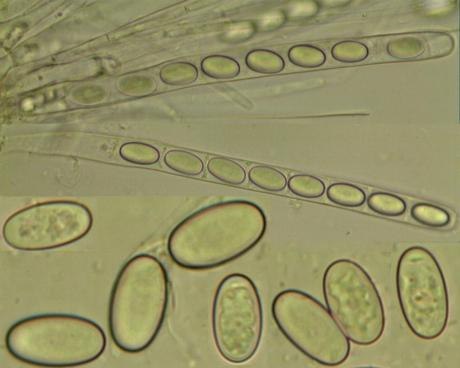
asque ; 220-230 x 12-14 µm
spore; 15-18 x 9-10 µm
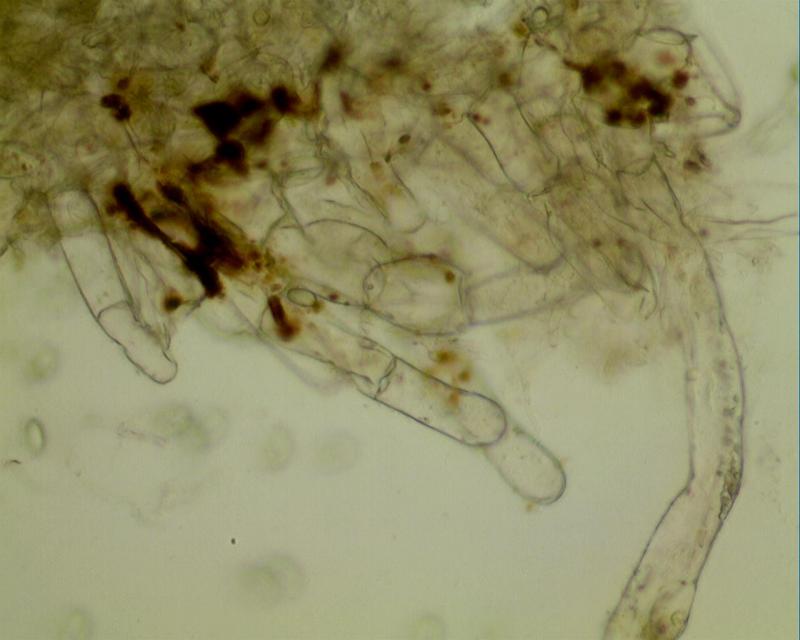
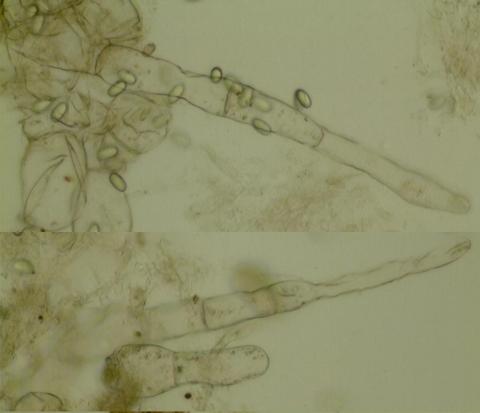
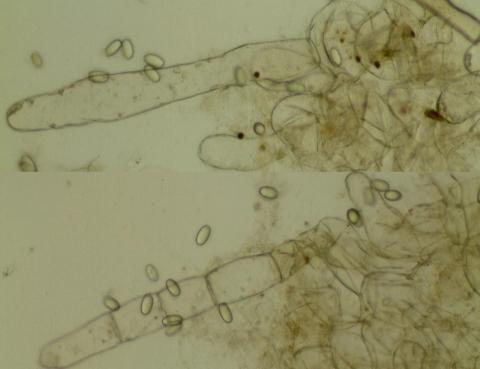
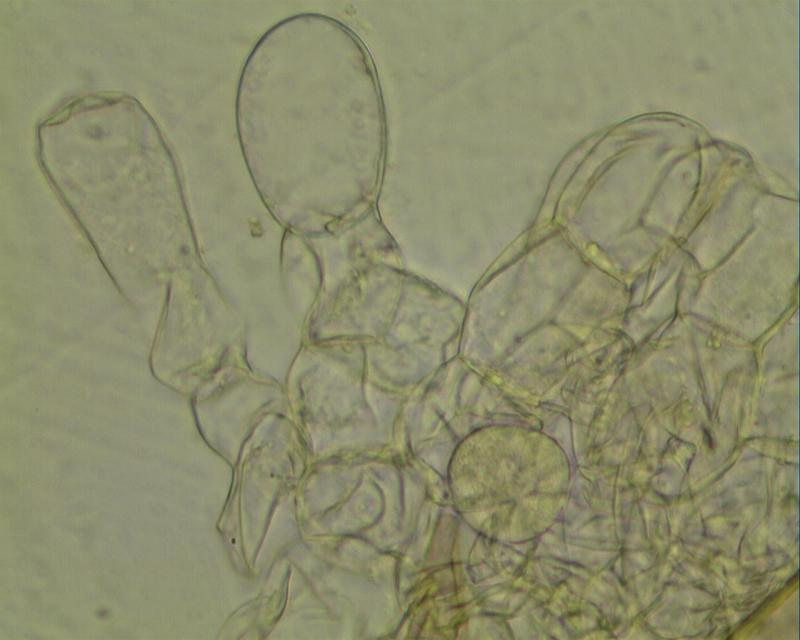
The pseudohairs are indeed typical for P. boudieri.
Sporesize is rather small, perhaps due to immaturity.
The shorter hairs towards the apothecial base are often (not always) with a bulbous base.
You should examine fully mature specimens if possible.
All the best!
Ron
Hello Ron
You're a great help. Thank you very much again
Kindest regards