15-05-2026 13:33
Sylvie Le GoffBonjour à tousJe serais très reconnaissante enve
16-03-2011 14:31
roman vargas albertoHi. I would like some opinion about this Peziza
14-05-2026 05:36
Ethan CrensonHi all, I haven't paid much attention to Lachnu
10-05-2026 23:17
 Andreas Gminder
Hello,today we found in a moist steep decidous for
11-05-2026 12:32
 Bernard CLESSE
Pourriez-vous m'aider à identifier cette héloti
13-05-2026 15:26
 François Freléchoux
Bonjour,Voici une récolte faite il y a quelques j
12-05-2026 15:41
 Nicolas VAN VOOREN
Dear Ascolovers, especially interested in Pezizale
13-05-2026 12:05
 Thierry Blondelle
Bonjour à tous,J'aimerais avoir confirmation de c
28-04-2026 20:07
 Lothar Krieglsteiner
... on twig in the air at standing Ceratonia siliq
27-04-2026 20:52
Lothar Krieglsteiner
Found on hanging tiwg of Olea europaea in dried-ou
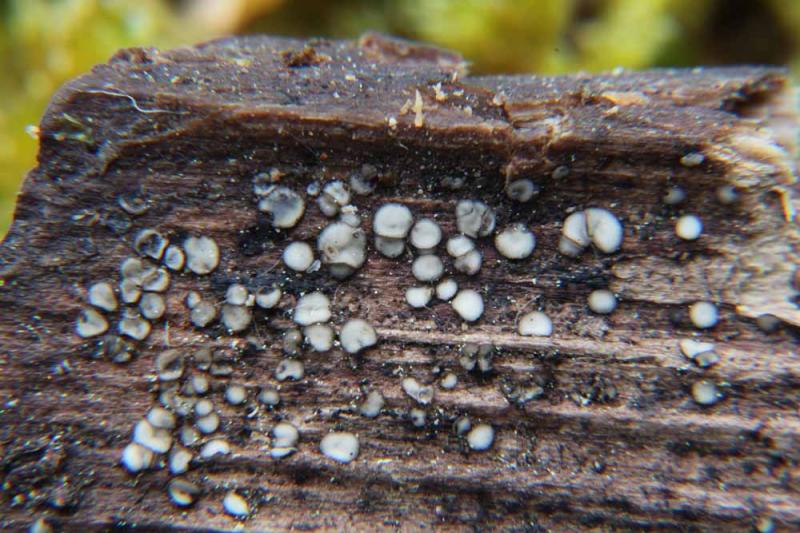
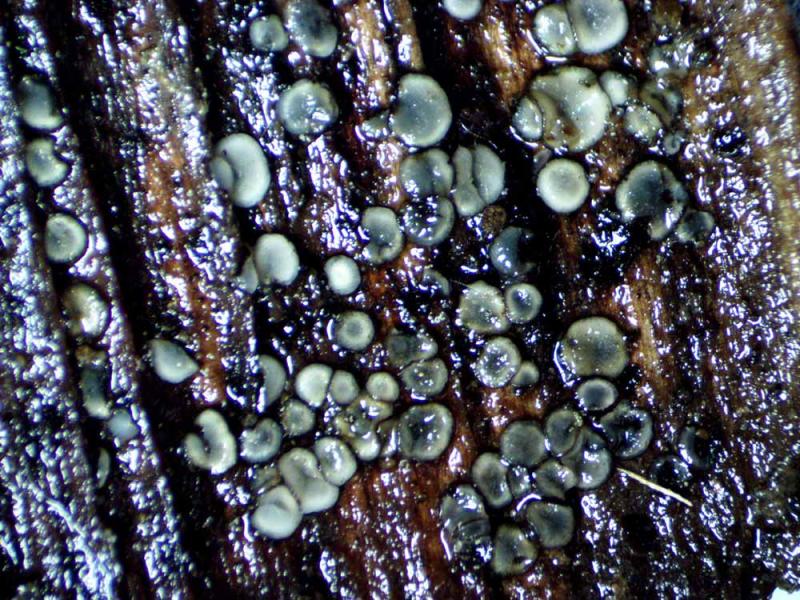
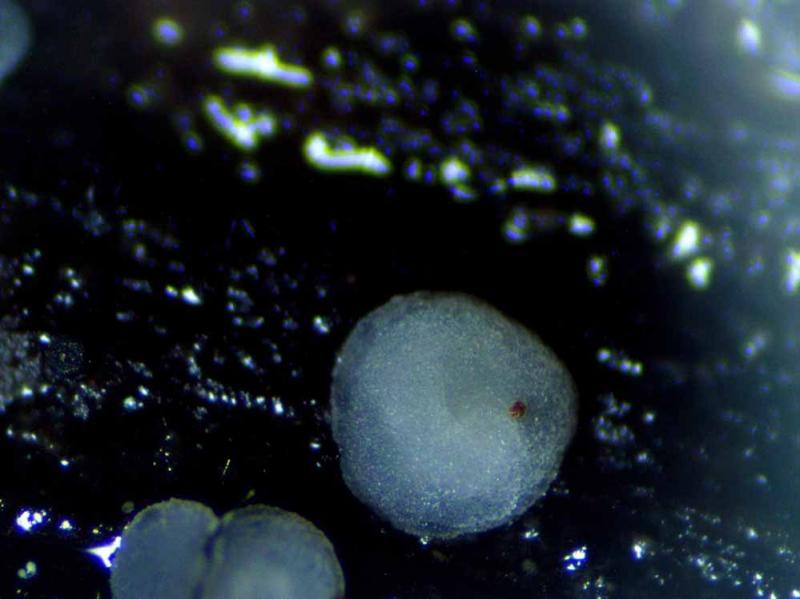
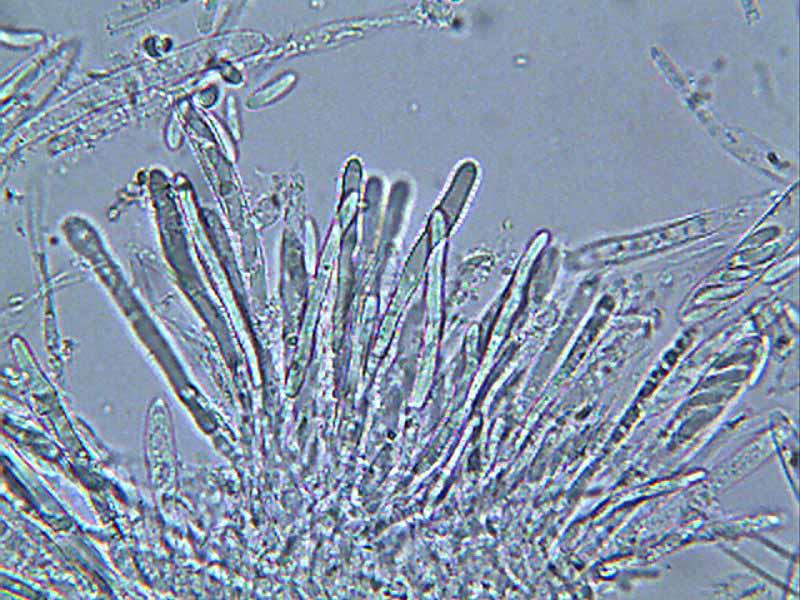
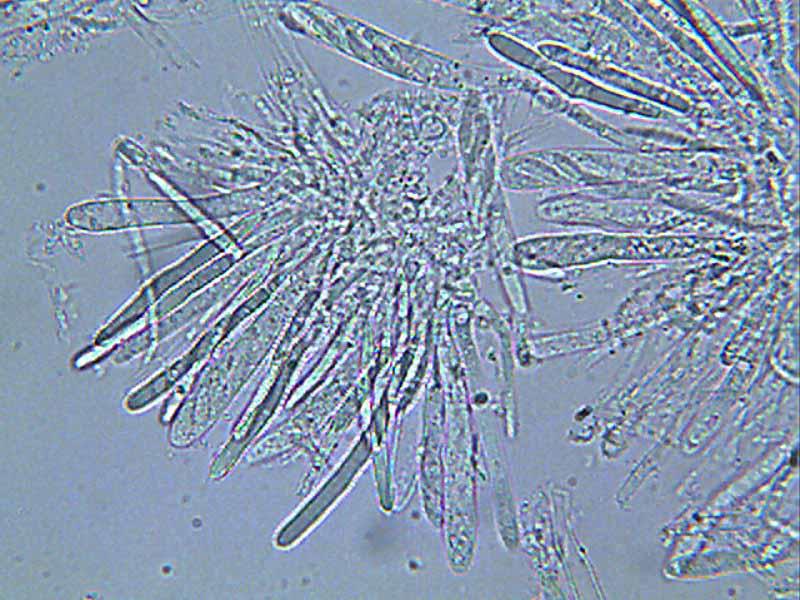
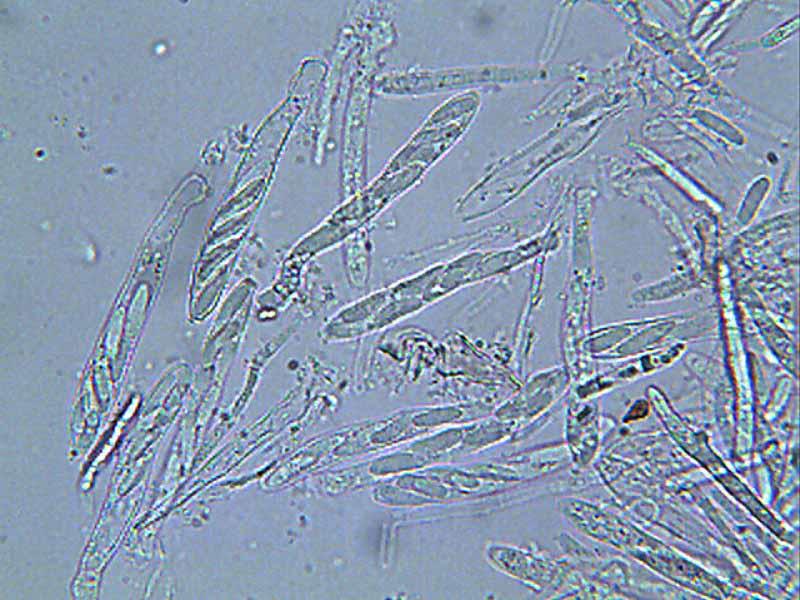
 Hola tengo esta Mollisia que en principio pensaba que seria M. cinerea, pero al KOH es negativo, puede ser M.hydrophyla ?????.
Recogida en pino a unos 1600m.
0,80--0,93 diametro.
KOH negativo
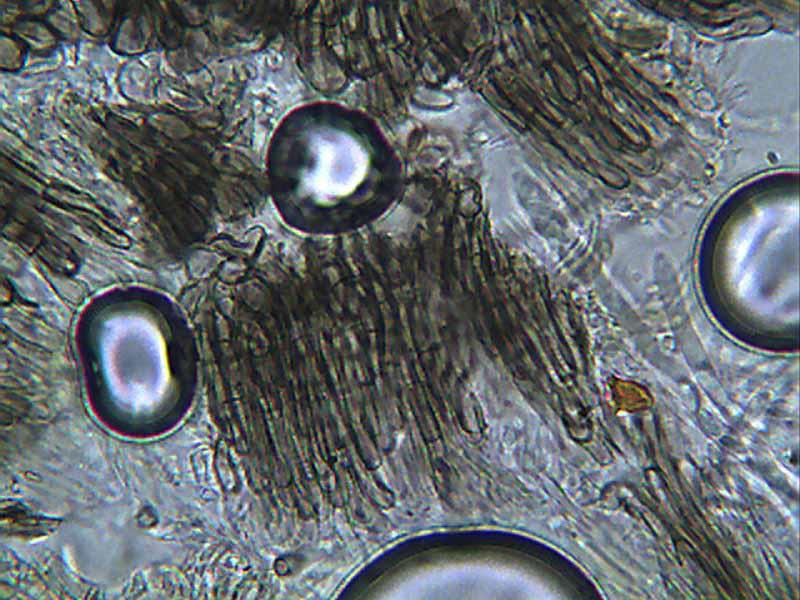
IKI +, no maranja el asca
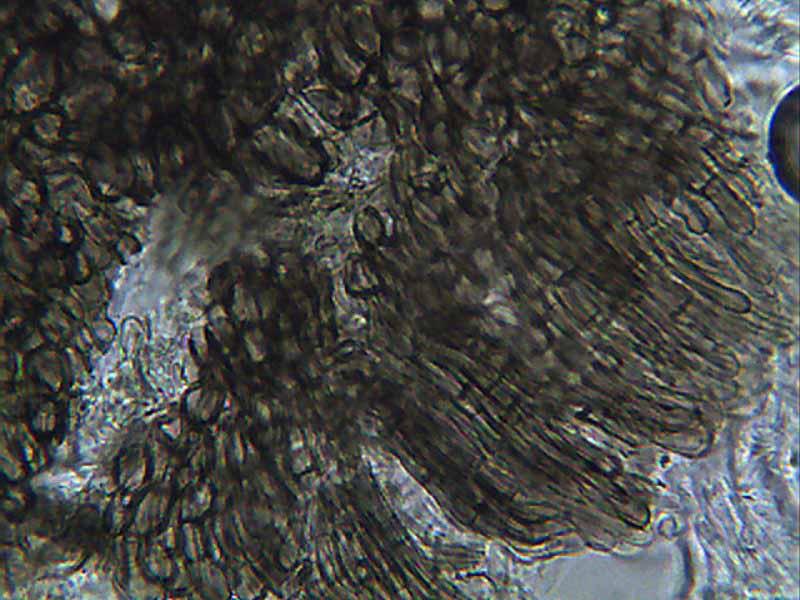
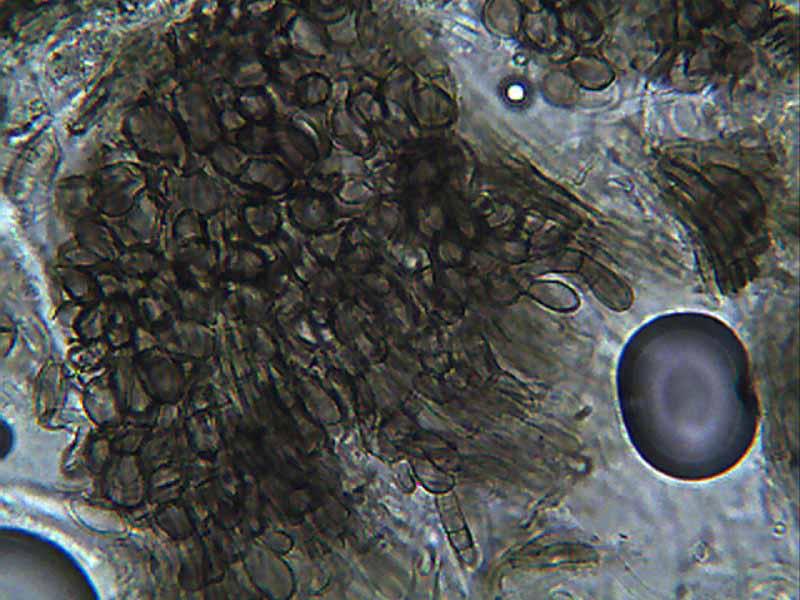
Parafisis x3--x4 (X6) apice redondeado
ascas de 50 x 6---50 x 7---52 x 6,5---53 x 6,4---58 x 7---60 x 7.
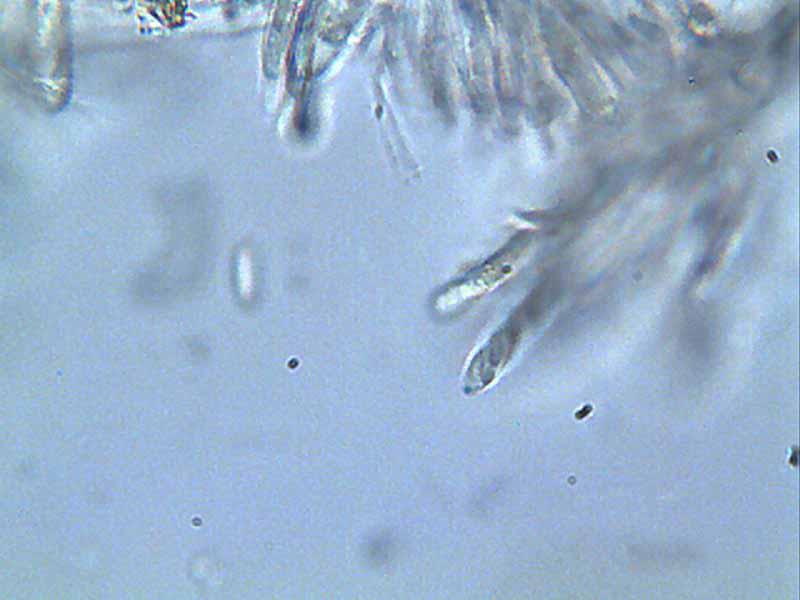
esporas de 8 x 2,6---8 x 2,8---9 x 2,5---9 x 3---10 x 2,7---10 x 3---11 x 2,9 (15x3).
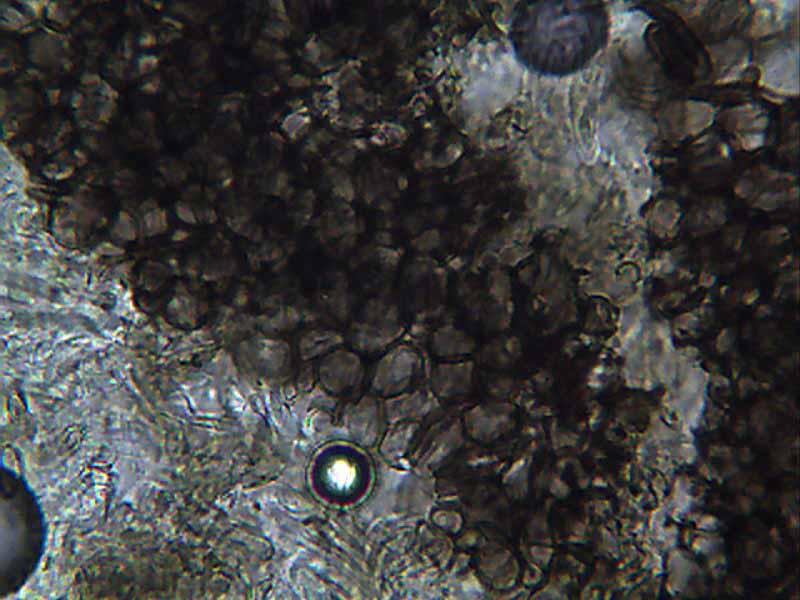
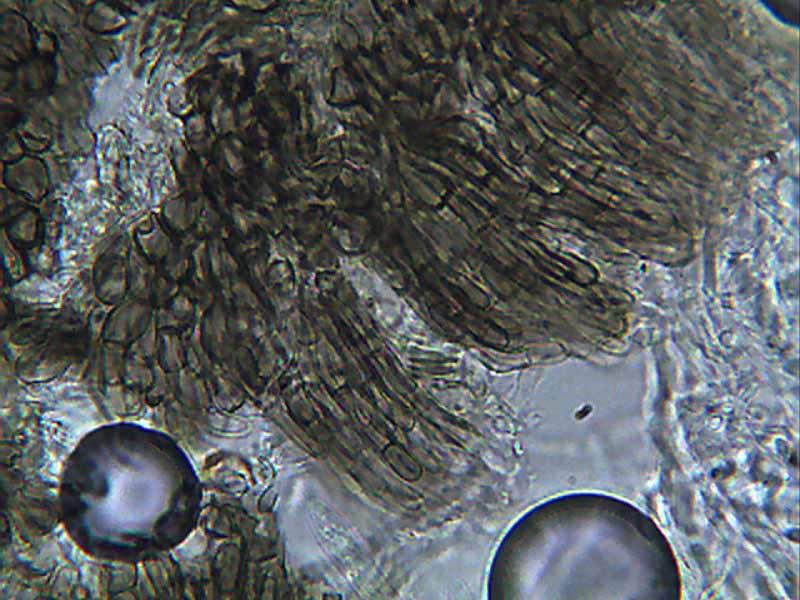
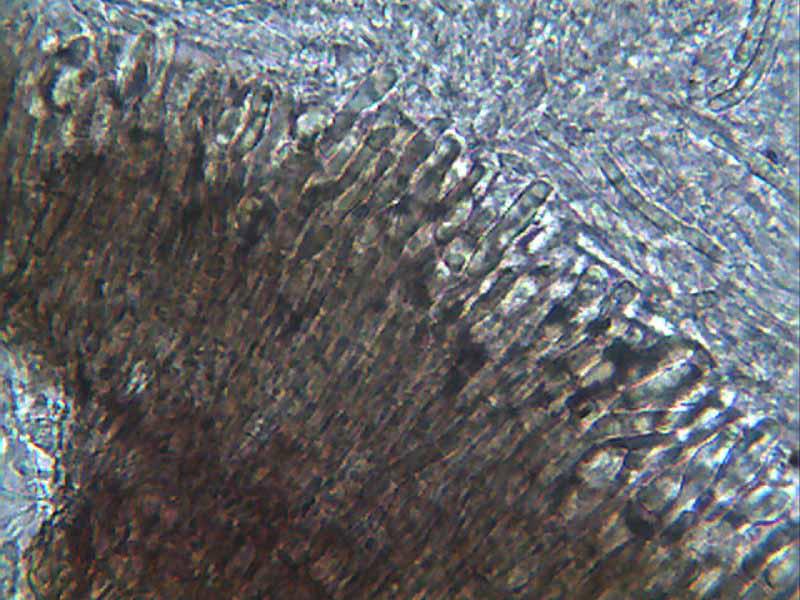
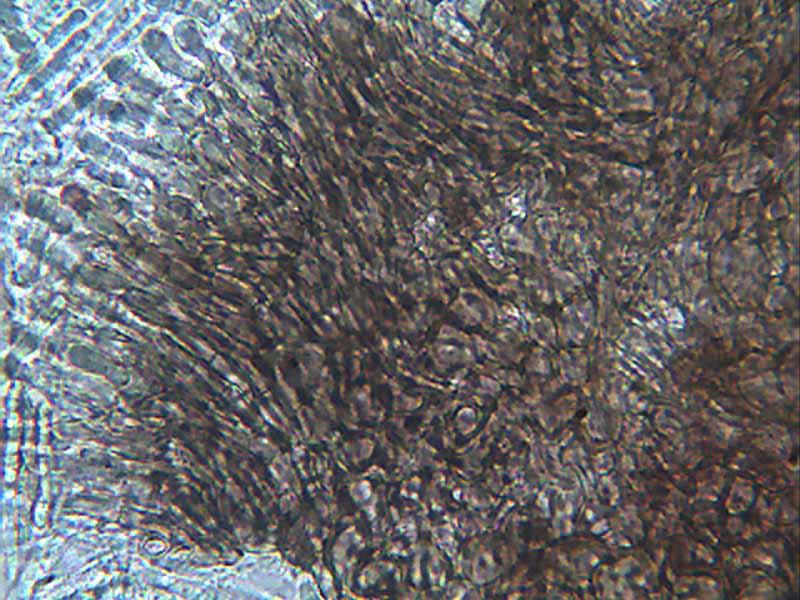
Textura globosa, celulas del margen un poco piriformes miden 20--28 x 4--6
Un saludo
Rafael
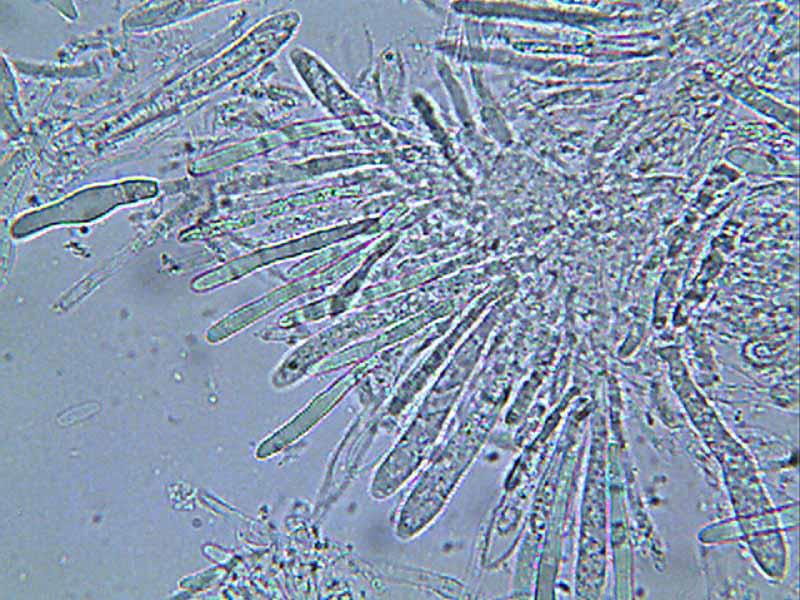
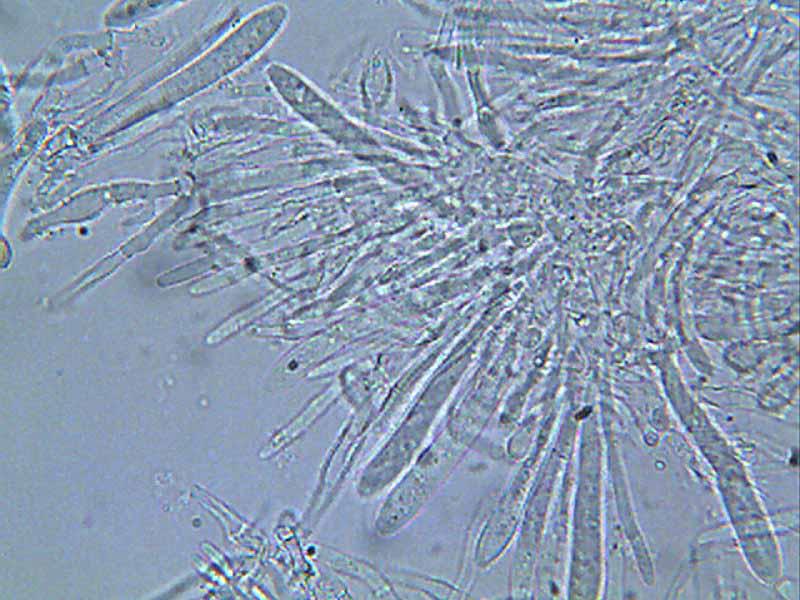
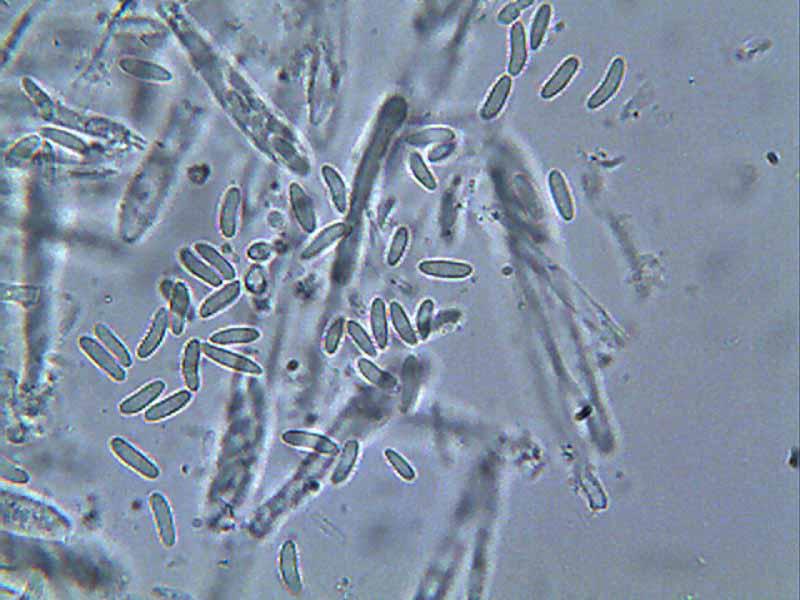
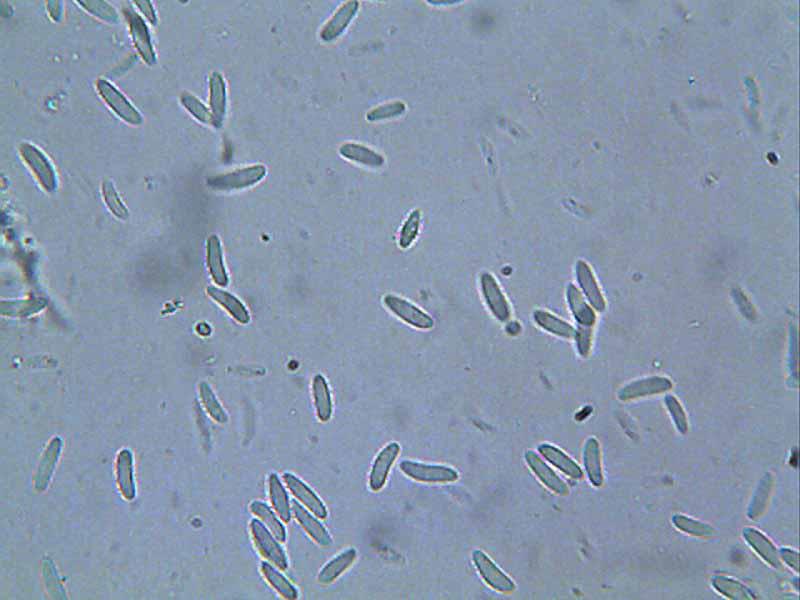
RAFAEL
Hello Rafael,
it is surely not M. hydrophila, which is confined to Phragmites (rarely other grasses may be), has more oil in the spores, a yellow KOH reaction (not always constantly) and masses of cristals in the medulla.
What you have there I can't say. Probably it is what I tend to call M. olivaceocinerea, the most common species of the cinerea-complex. Then you should see a little bit of oil droplets in the spores. If they are really completely empty, then I don't know. I don't think it is M. cinerea ss. str., which has smaller spores (6-9 µm, max. 10 µm long) and a bit different macroscopic appearance.
best regards,
Andreas
la camara del micro no permite captar muchos detalles, pero en los dos polos de las esporas se ven unos gotoitas muy pequeñas
Un saludo
Rfaeal
Hola Rafael,
in Mollisia olivaceocinerea the excipulum often becomes olivaceous-greenish with KOH and not grey as in the other Mollisia species. This is not a constant character, but when it is to see, it is a good hint for this species.
Also the hymenium becomes a bit cream coloured when slowly (!) drying. You can see that in the field in older apothecia.
best regards,
Andreas