
01-05-2026 22:45
 Thierry Blondelle
Bonjour à tous, Une récolte sur bouse séchée d
28-04-2026 20:07
 Lothar Krieglsteiner
... on twig in the air at standing Ceratonia siliq
14-04-2026 05:32
Ethan CrensonHi all, A few weeks back a friend pointed out som
28-04-2026 20:33
Vitus SchäfftleinHello, I found Trochila ilicina on Ilex aquifoliu

30-04-2026 10:28
Rot BojanHello, by appearance I would say that I am dealing
27-04-2026 18:48
Tony MoverleyCollected 23rd April 2026, Norfolk, EnglandSwarms
27-04-2026 20:52
Lothar Krieglsteiner
Found on hanging tiwg of Olea europaea in dried-ou
28-04-2026 22:51
 Bernard CLESSE
Bonsoir à toutes et tous,Pourriez-vous m'aider à
29-04-2026 08:01
Lothar Krieglsteiner
... on twig attached to small tree of Citrus auran
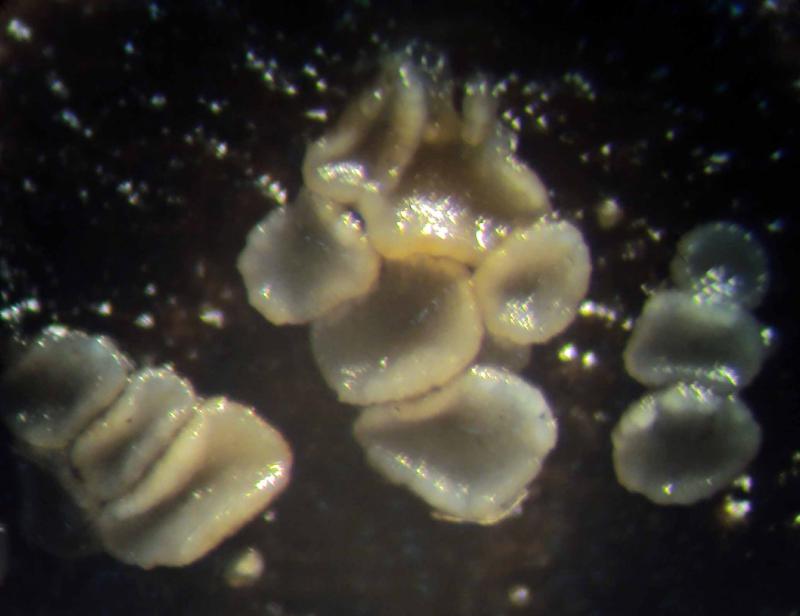
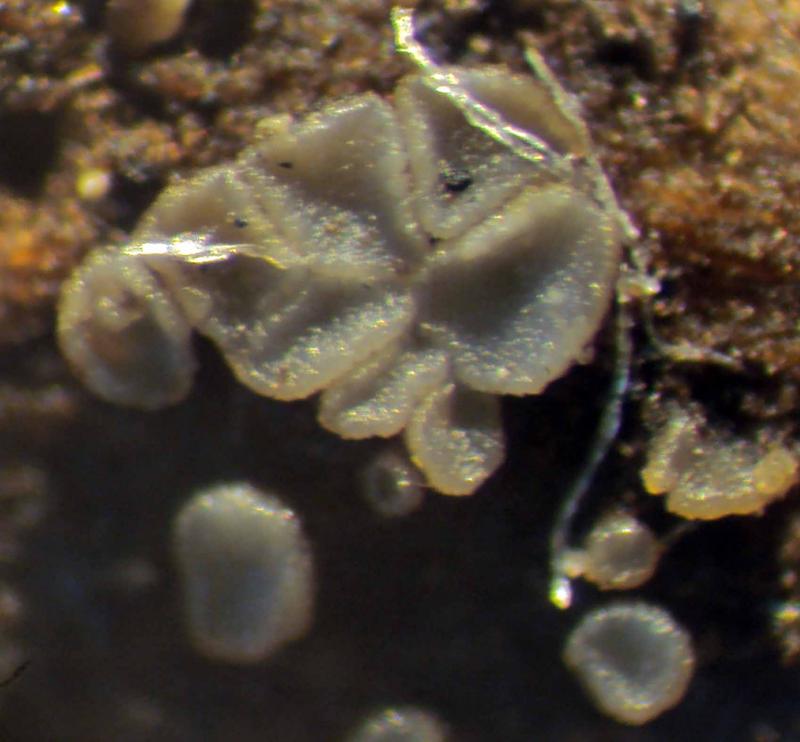
 Hello dear colleagues and friends!
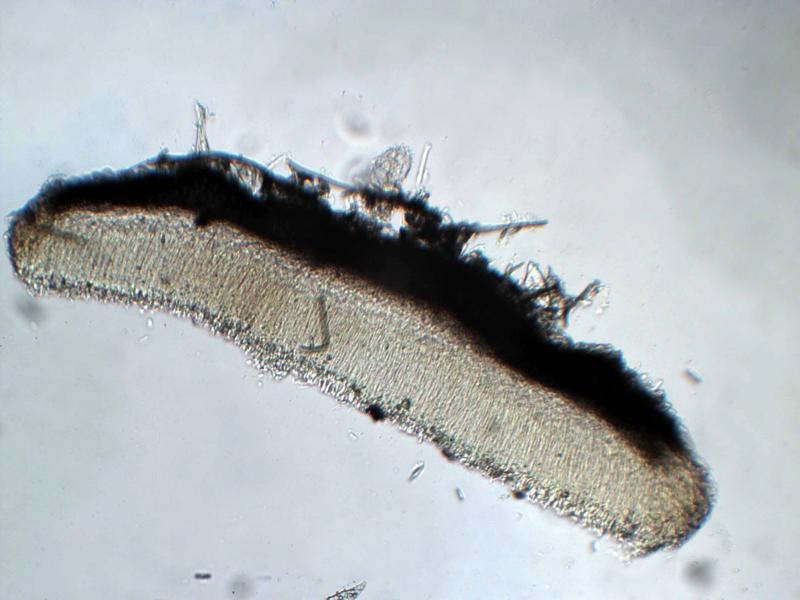
Here is an interesting Mollisia/Pyrenopeziza from Ukraine. The specimen is dried, I hope for Mollisias it is not so critical as for other groups. With a Gminder's key I had a M. perparvula, but nevertheless Mollisias are difficult group and I cannot be sure.
The substrate is a twig of deciduos tree, ca 1 sm in diam.
Fruitbodies are light grey. KOH reaction is bright yellow, quickly disappearing in a mount.
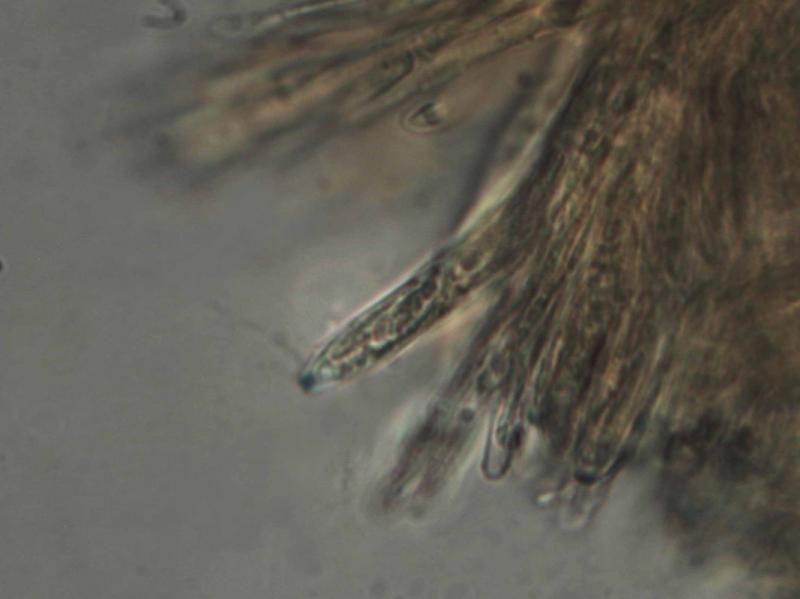
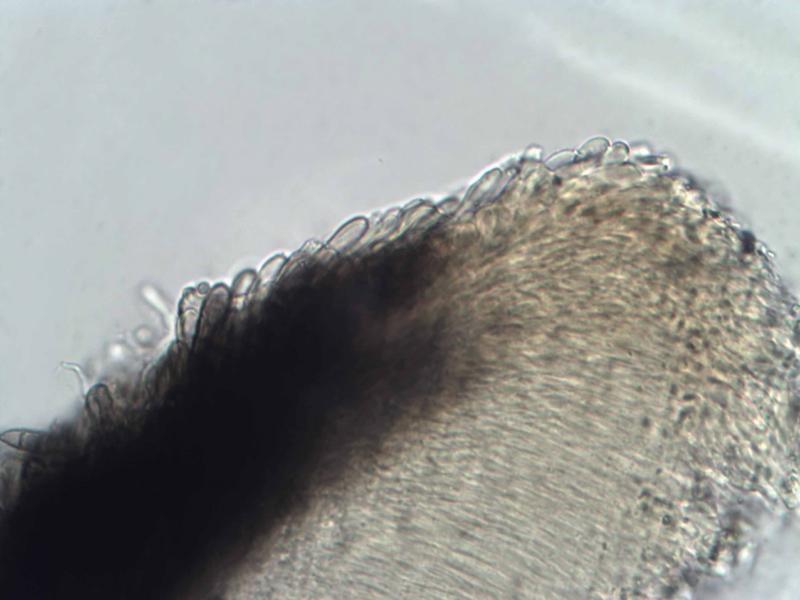
Subhymenium hyaline, marginal cells are short, 2-3-celled
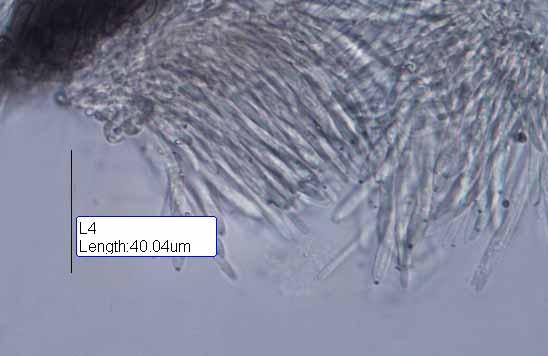
Asci with croziers, IKI bb (2 or 3), 49-63*4.7-5.4 um. Paraphyses filiform.
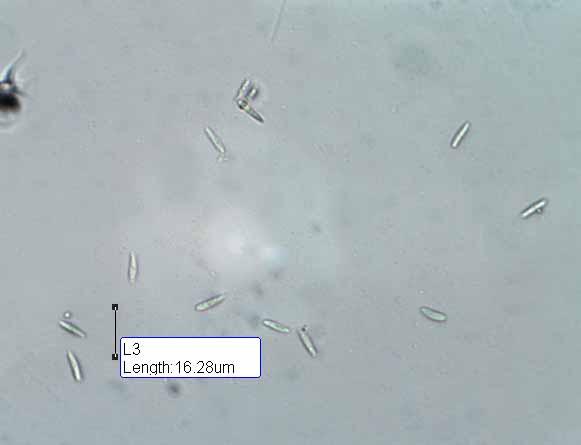
Spores 8.3-10.7*1.8-2.45(3) um, with scattered oil droplets or not.
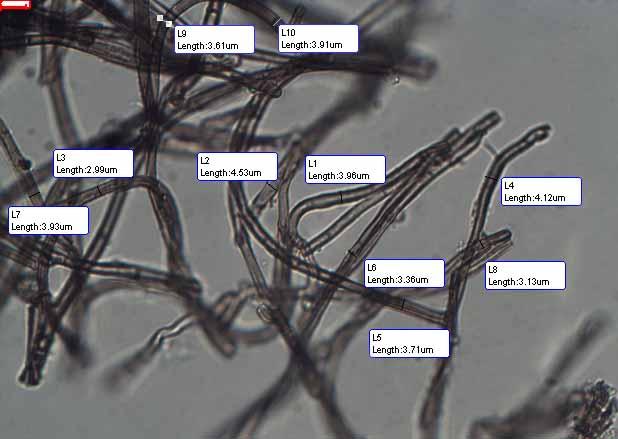
Subiculum abundant, ca 3-4 um wide.
See photos attached. What do you think?
With best wishes,
Irina Morozova
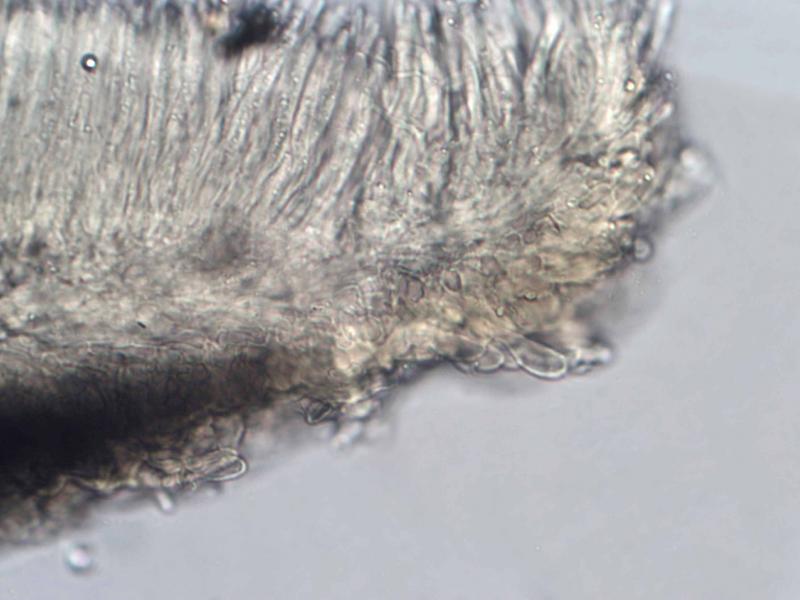

with a yellow reaction it cannot be a Pyrenopeziza. And likewise with such subiculum. But more I cannot say.
Zotto
Differences between Mollisia/Pyrenopeziza/Tapesia are still not very clear for me.
Irina
Pyrenopeziza never contains refractive vacuoles (which are responsible for the yellow KOH-reaction), and these you would much better see with fresh apothecia.
Zotto