12-06-2026 14:50
 François Freléchoux
Bonjour, Voici la brève description d'une Mollis
10-06-2026 21:16
François Freléchoux
Bonsoir,Le dernier du jour, en attendant votre avi
11-06-2026 19:01
 William Slosse
Hello all,In an attempt to make a culture of a sus
11-06-2026 19:03
 Nicolas VAN VOOREN
Chers membres d'Ascofrance,Le site sera placé en

09-06-2026 18:32
Camille MertensSur morceau de roseau immergé 0,5 - 0,7 mm de dia
10-06-2026 12:54
Steve ClementsBonjour encore, Pouvez-vous m'aider, s'il vous pl
10-06-2026 21:07
François Freléchoux
Toutes les tiges de gentianes jaunes de l'an passÃ
10-06-2026 13:41
François Freléchoux
Bonjour à nouveau, Voici une trouvaille d'hier.
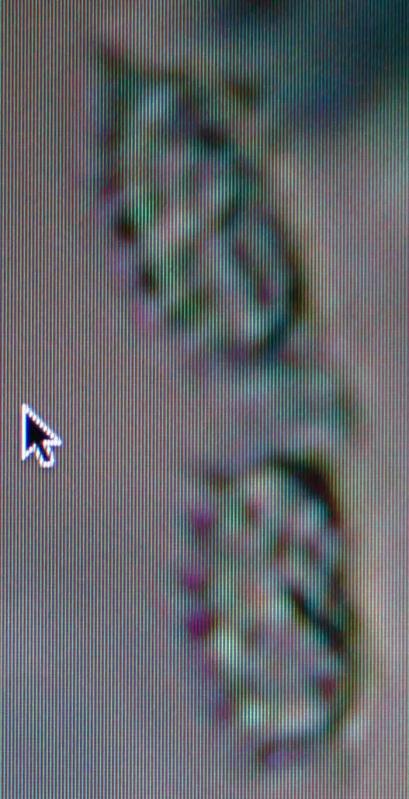
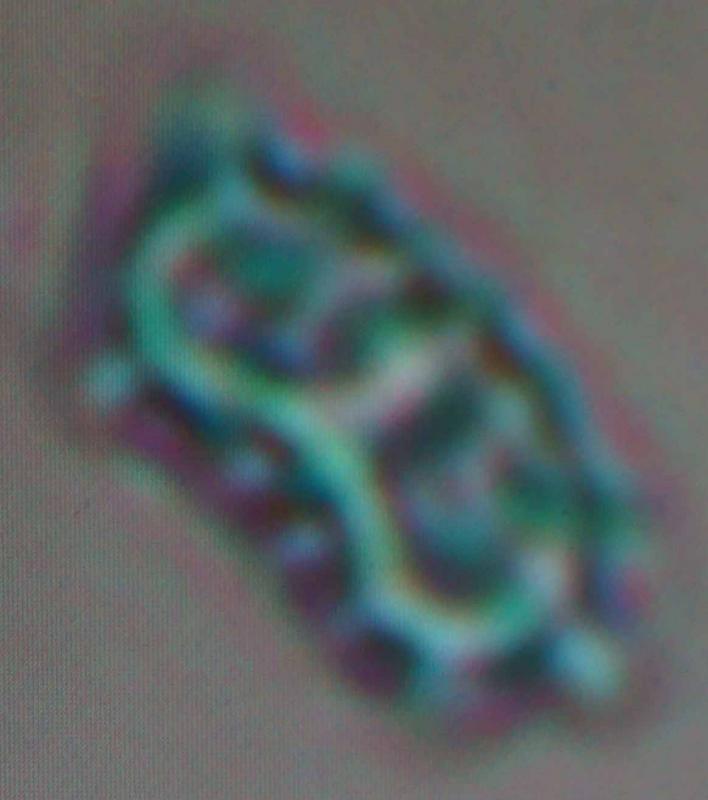
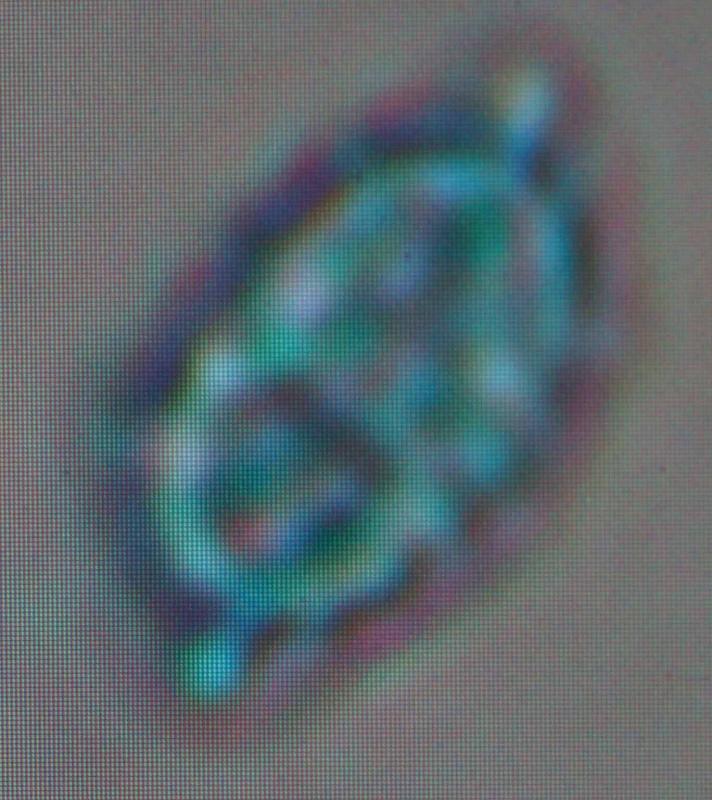
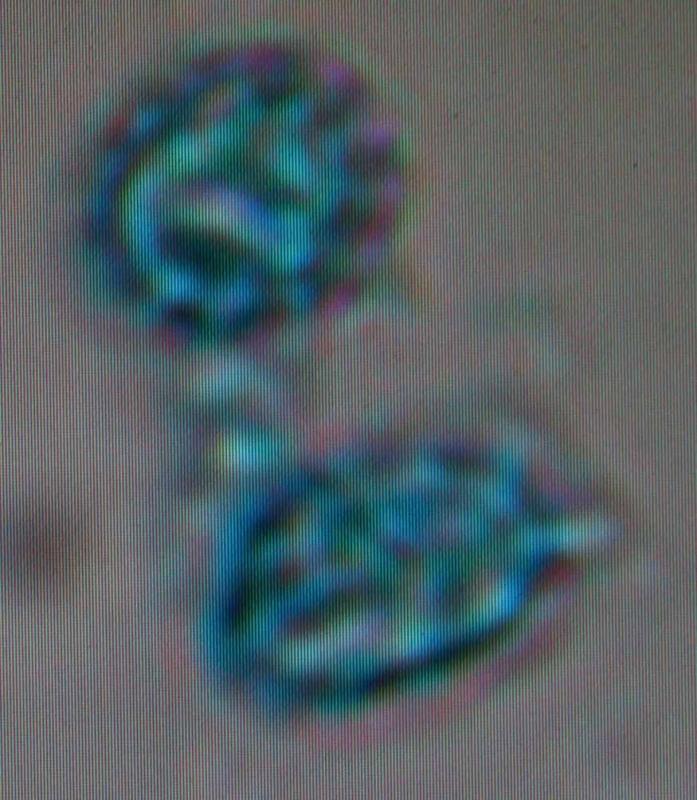
 Found growing in Pennsylvana, United States. Growing on the soil in a mulched path with soil and wood chips under conifers but on the soil. At first I was thinking it resemble Aleuria aurantia but when when i find that species it grows on clay in disturbed areas and it is much larger. A friend put it under her microscope and measured the spores at 10 X 8 and very warted. J- and they did not react with melzer's reagent. There we only had Nordic Macromycetes and using the key it keyed out to Octospora sp. but there was no moss.
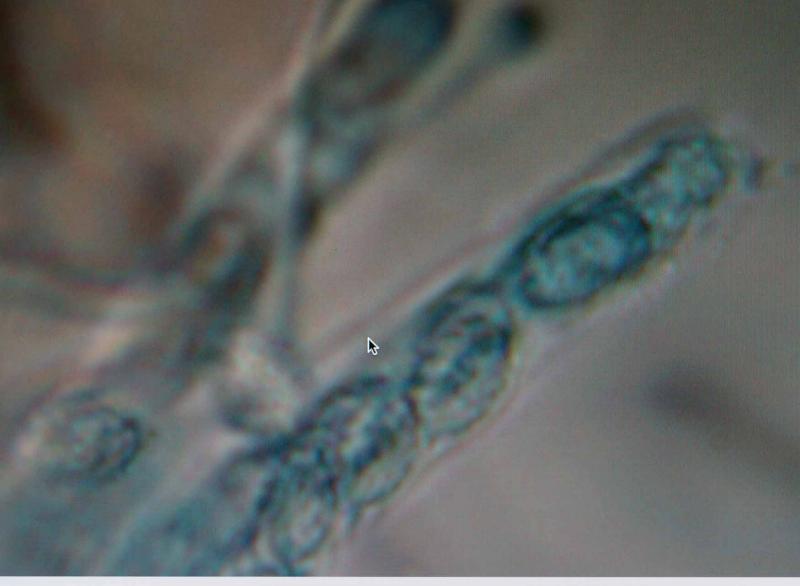
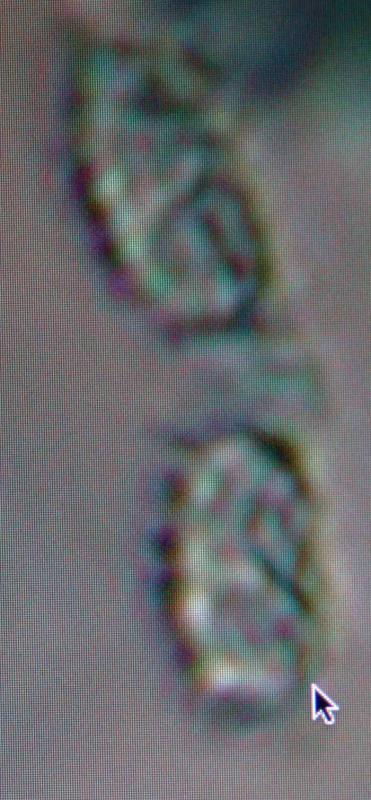
 So looking at it with another friend under a different microscope we tried additional stains. I measured the spores at 13.5 X 9. looking at several of them it appeared that they had spines on the spores that went into a slime layer that surrounded the spore. It also appeared that inside some of the spores there was a figure 8 or prehaps 2 oil drops or septa. Not certain. We also observed that some of the spores had protrusions on each end. There the book he had was the Fungi of Switzerland and there was a Aleuria that had similar looking spores but it looked different and also differed by having a stalk. Could not come up with any better ideas.
I will post spore photos shortly.
John
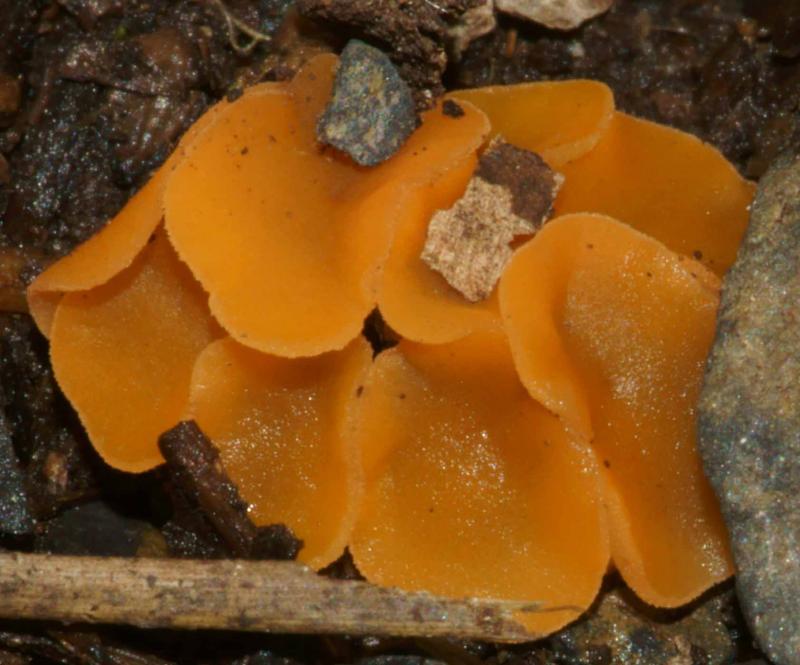
I think it's Aleuria aurantia
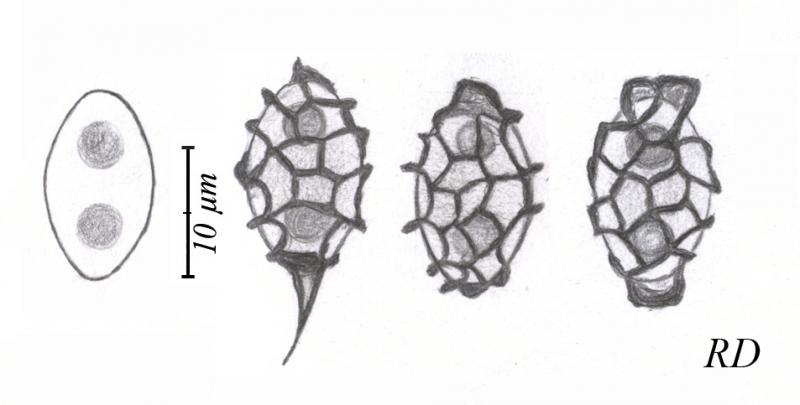
Il est difficile, à partir de vos photos, de pouvoir apprécier correctement l'ornementation sporale. Si l'ornementation est comme vous l'indiquez, formée d'épines, il ne s'agit alors pas de Aleuria aurantia.
Les Aleuria, contrairement aux Octospora, possèdent des poils hyphoïdes, inférieurs à 200 µm de long, sur l'excipulum. Les apothécies de A. aurantia peuvent être inférieures à 10 mm de diamètre.
La planche 99 de B&K illustre Sowerbyella reynana (Bull. :Fr.) J. Moravec, non une espèce du genre Aleuria.
En annexe une planche montrant les ascospores de A. aurantia.
Amicalement
René