
08-05-2026 11:55
Gernot FriebesHi,found on a decorticated Picea abies branch stil
11-05-2016 20:37
 Zuzana Sochorová (Egertová)
Hi,this very little ascomycete grew on soil in a m
09-05-2026 07:37
Zuzana Sochorová (Egertová)
Hello,please, could anyone share this paper?Ferná

05-05-2026 22:40
Gernot FriebesHi,I believe this is a Plagiostoma growing on a Sa
06-05-2026 11:25
 Castillo Joseba
Me mandan el material seco de Galicia (España) re
06-05-2026 17:23
Thomas Læssøehttps://svampe.databasen.org/observations/10594257
28-04-2026 20:07
 Lothar Krieglsteiner
... on twig in the air at standing Ceratonia siliq
04-05-2026 18:13
 Stephen Martin Mifsud
ID request for what seems to be a true aquatic fun
04-05-2026 16:39
Stephen Martin Mifsud
ID request: This specimen was collected in Malta o
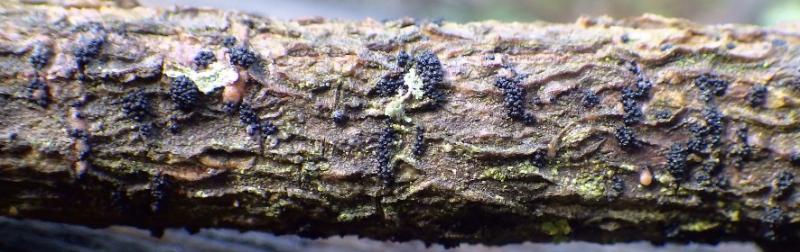
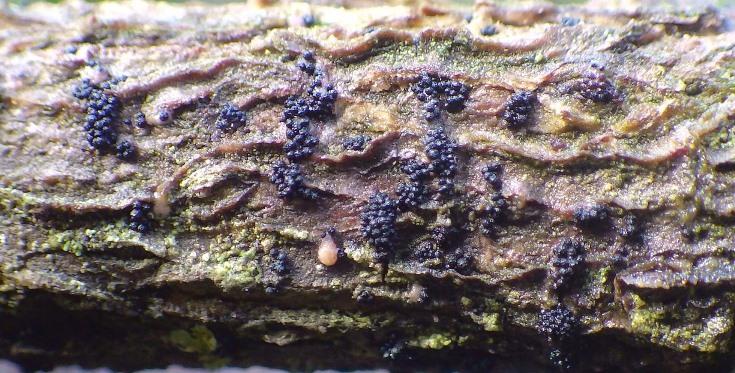
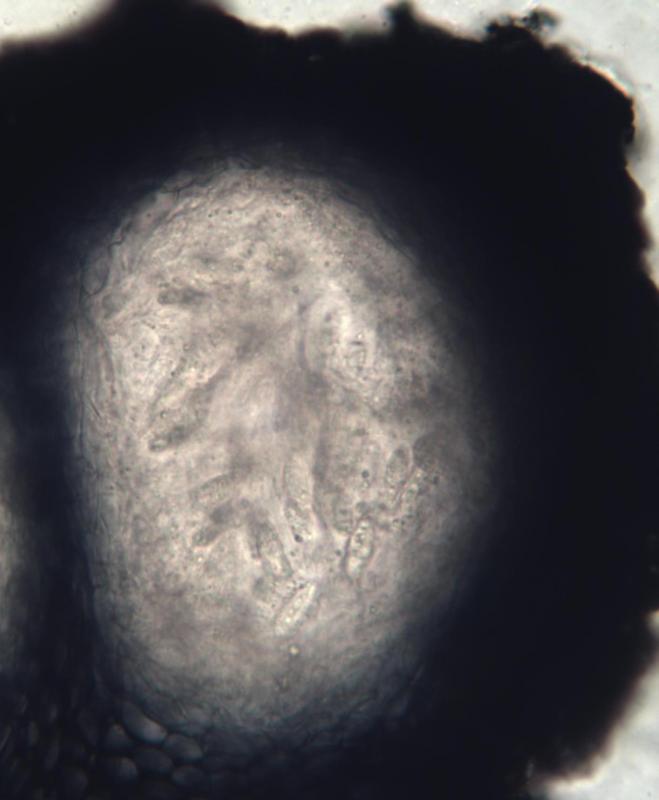
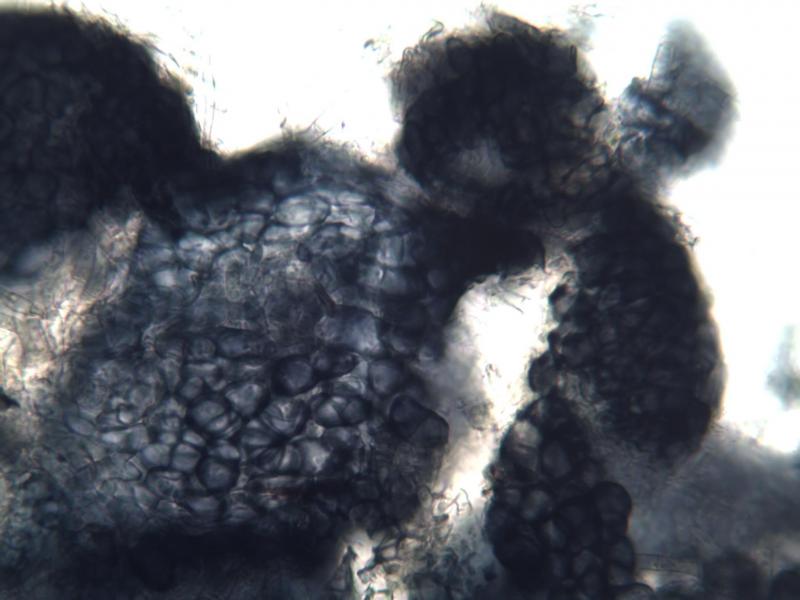
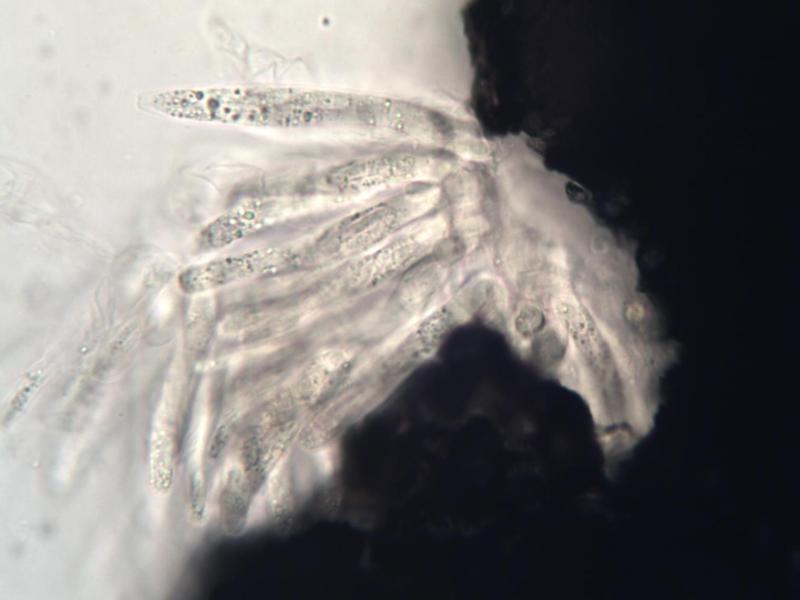
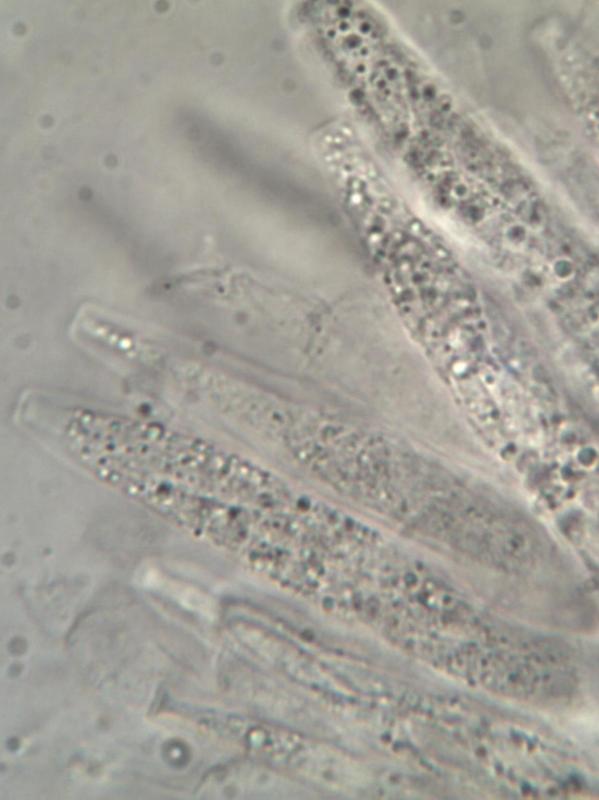
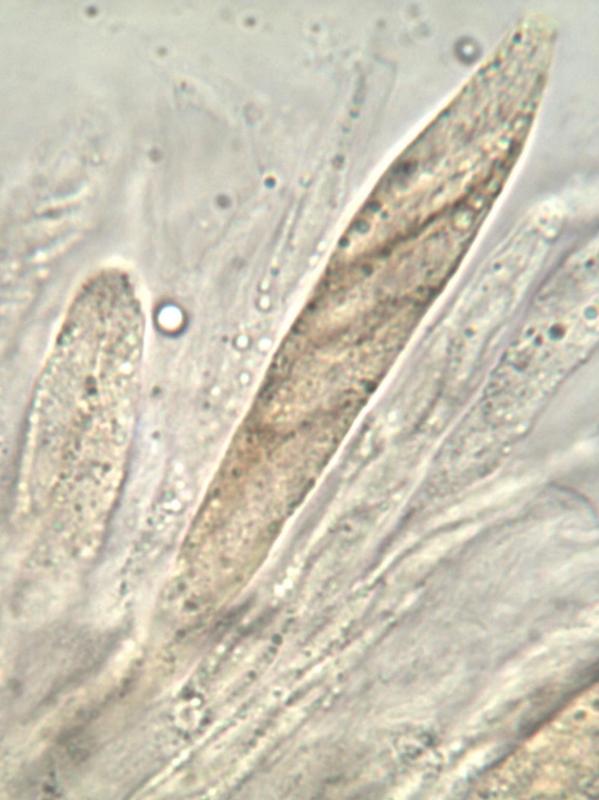
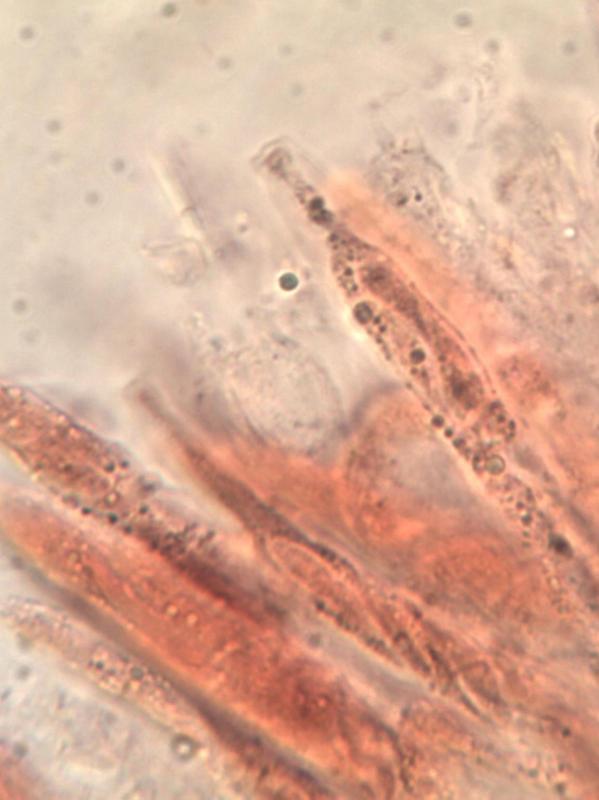
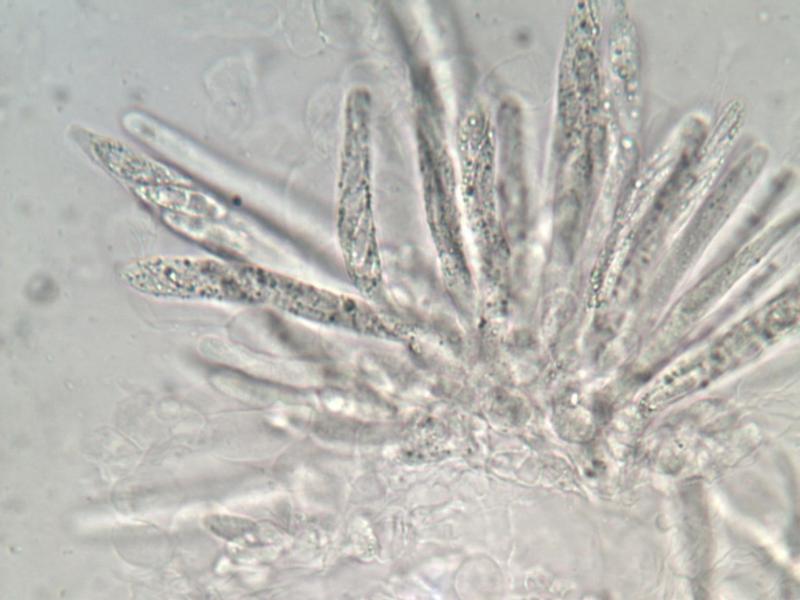
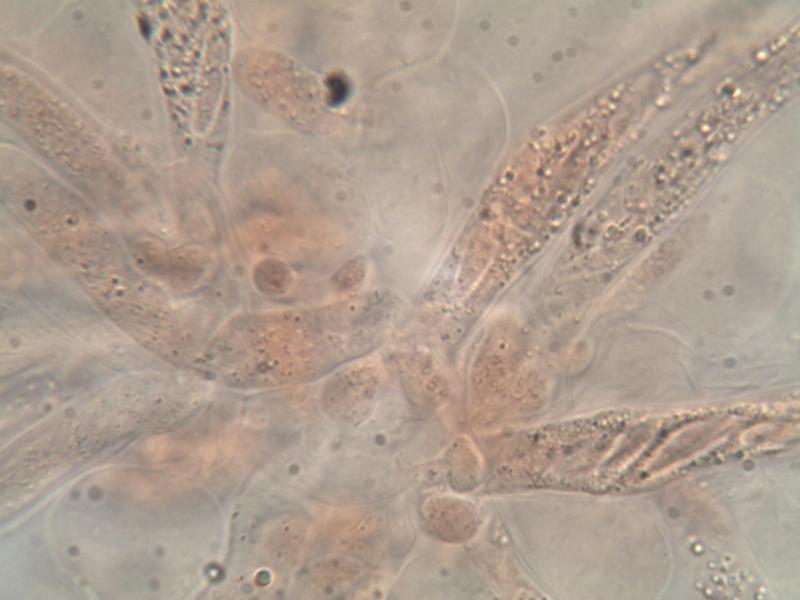
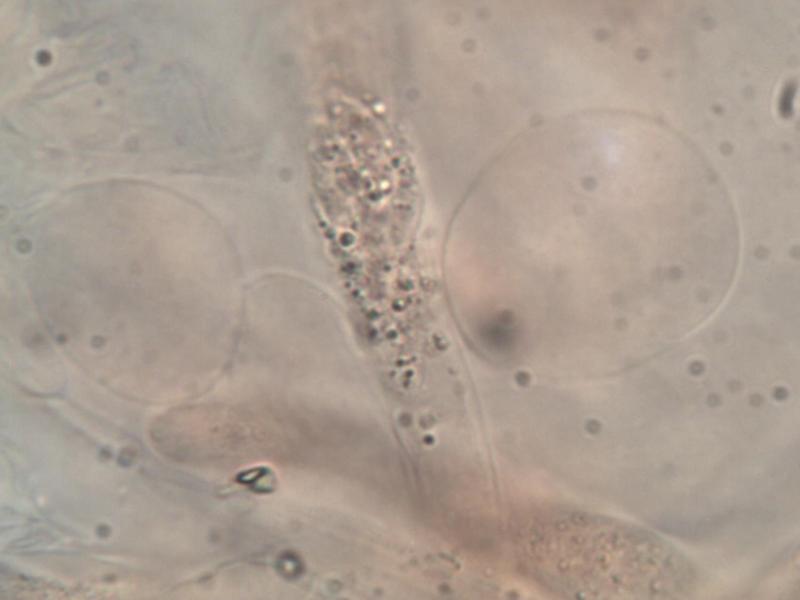
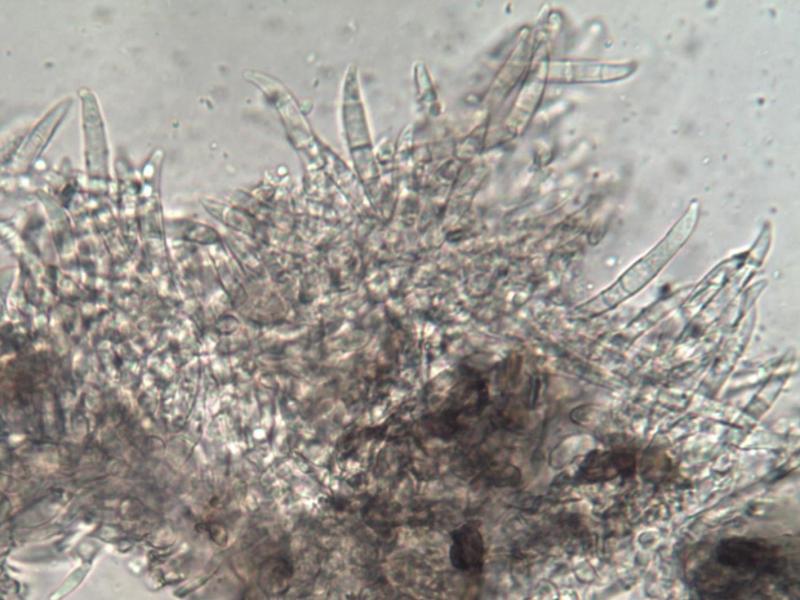
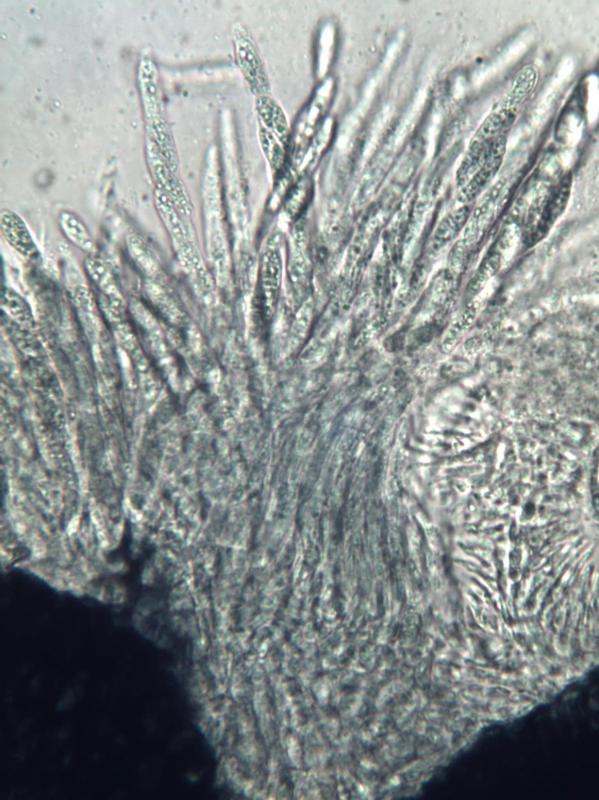
At first I had no idea about its classification, but it has very distinguish features, namely:
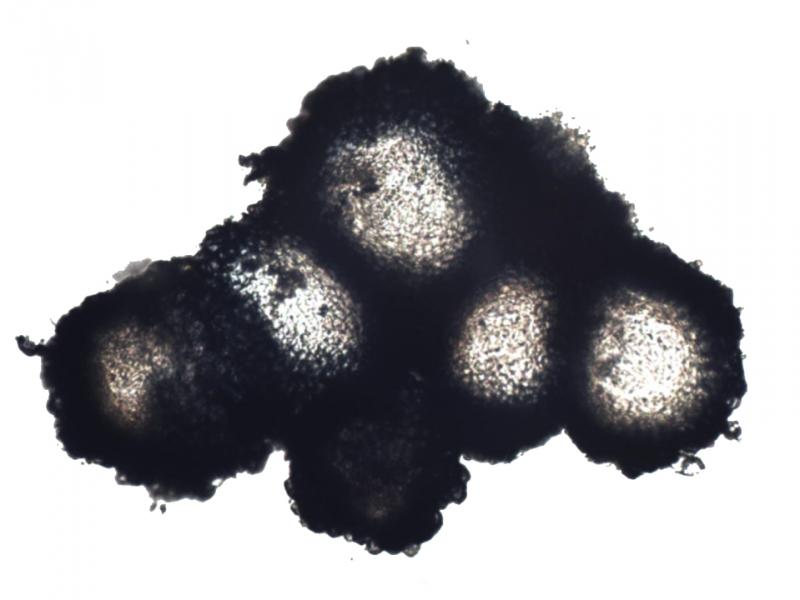
- A blue pigment on all the tissues of the perithecia,
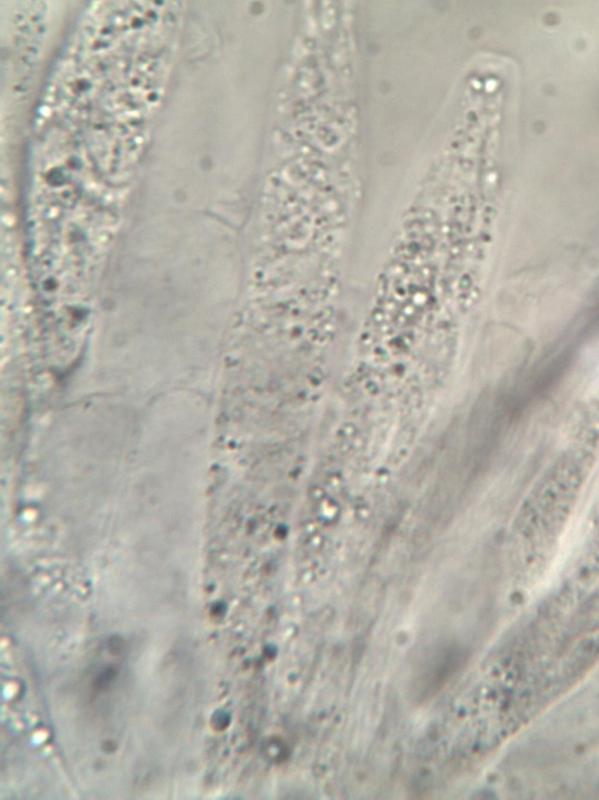
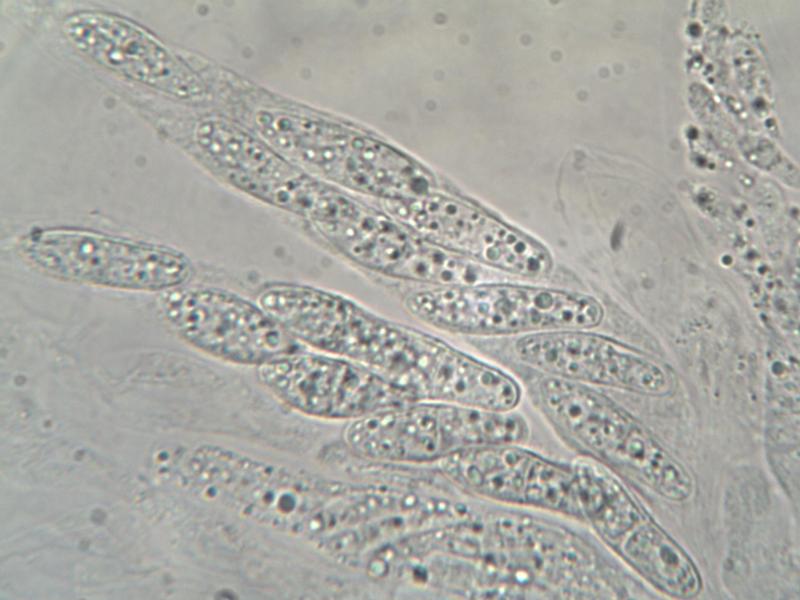
- some big (sub-)globose cells at the bases of the asci (up to 30 um).
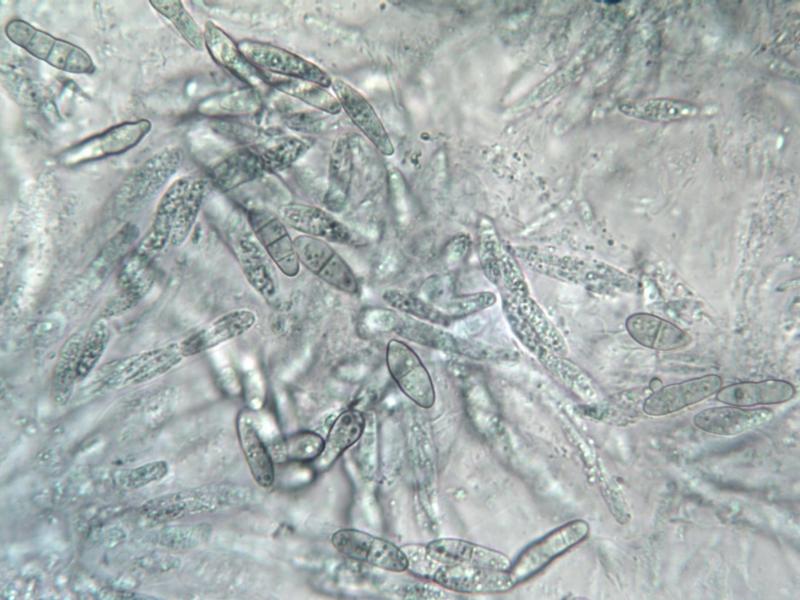
- some big conidia, comma shaped, septate, some seeming to have some internal oil drops.
Searching the forum for "bleu pyréno" I found the topic by Luc Bailly "Pyréno bleu foncé sur Arnica montana" (#17317), where some connection was made to the genus Gibberella. I got the "Gibberella" key by Samuels et al., where the identification of species rely on the anamorph, a Fusarium sp..
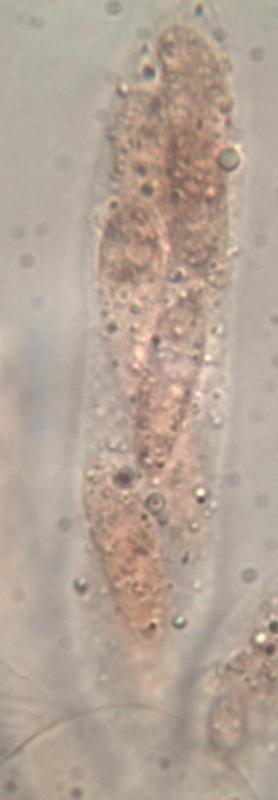
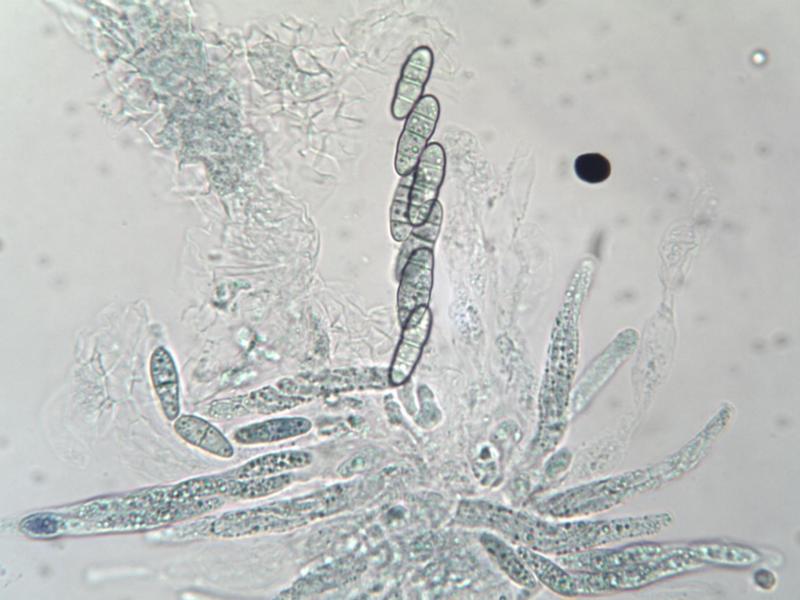
The question is that such key only contains species with septate ascospores (one or more septa) and I was not able to see any septation on the spores, though the photos are not clear do to hyalinity and the existence of many drops inside the asci and arround the spores, which perturb their observation. Thus, I only give their approximate dimensions: 12 - 17.5 x 3.3 - 5.6 um.
Can anyone help?
I will upload some photos in different messages to this topic, starting for those of the specimens.
Thanks in advance,
zaca
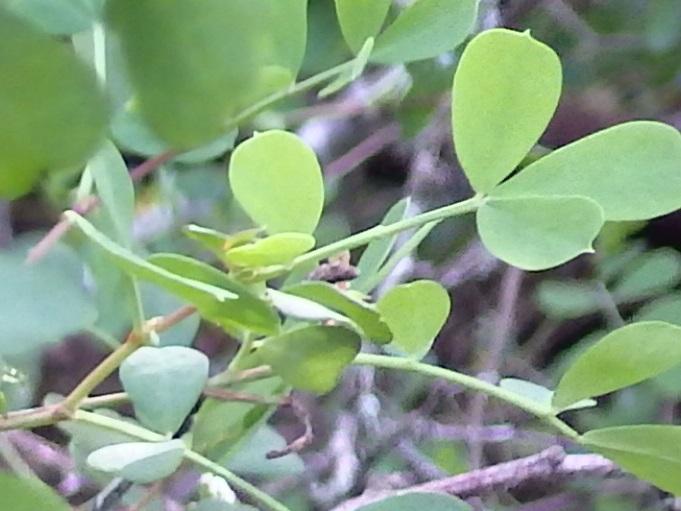
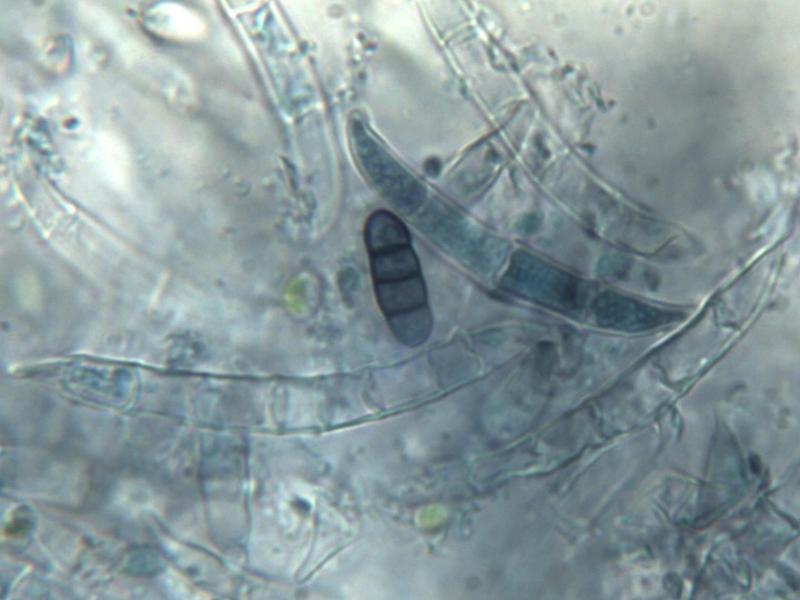
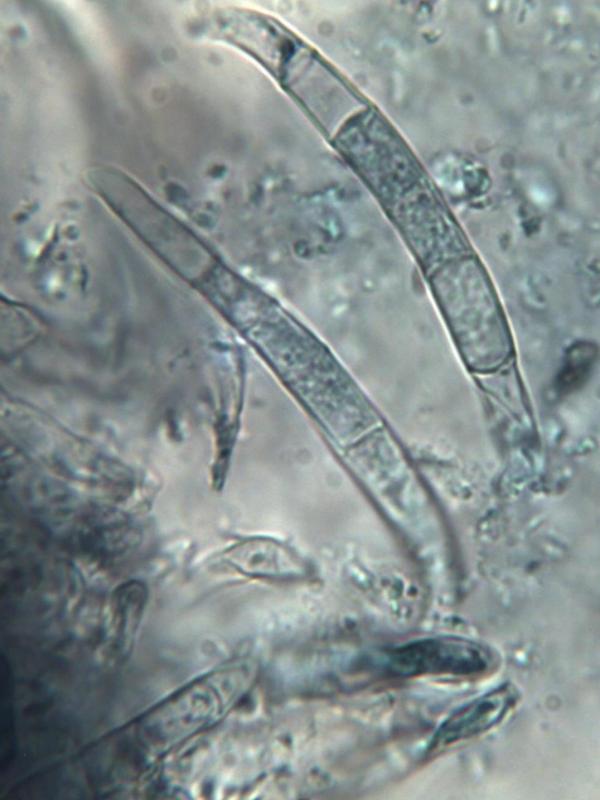

http://www.floravascular.com/index.php?spp=Coronilla%20minima
regards
Martin
It seem very likely. So, maybe next month I can see the flower.
Regards,
zaca
But spores should be 3-septate indeed. Unmature?
Regards
Martin
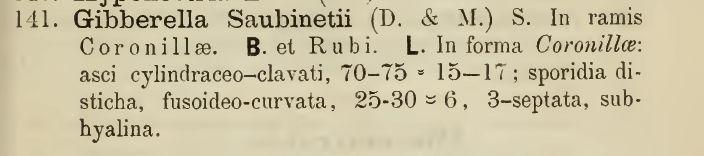
I'm new to these genera. I have to look again for the spores and conidia. Any suggetsion for the stain, in order to better see the possible septation?
Regards,
zaca
Martin
Thanks, Martin!
Regards,
zaca
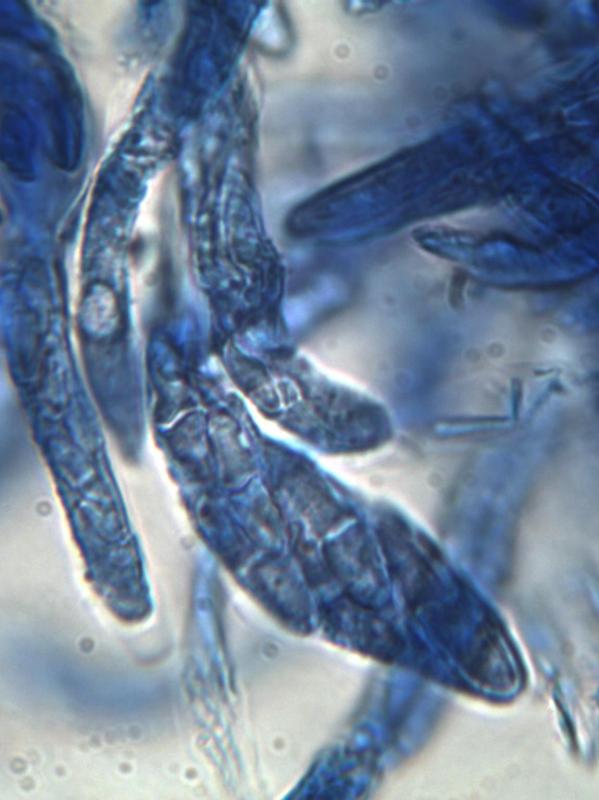
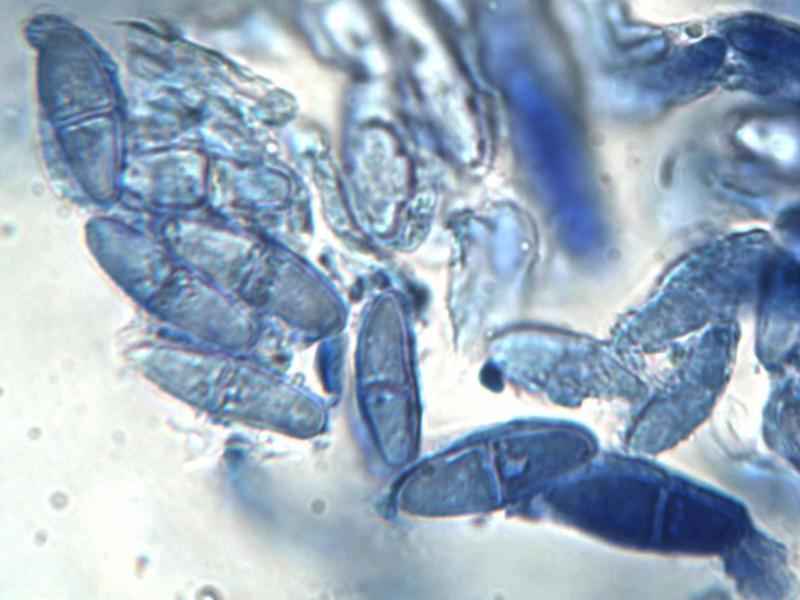
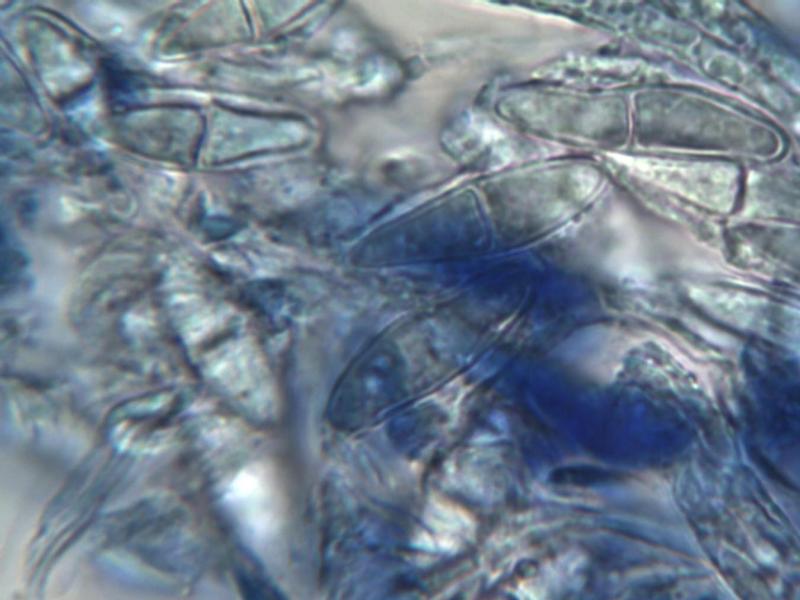
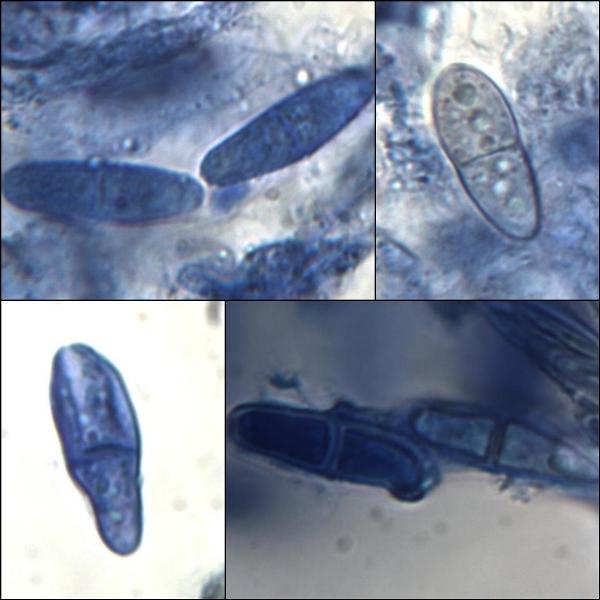
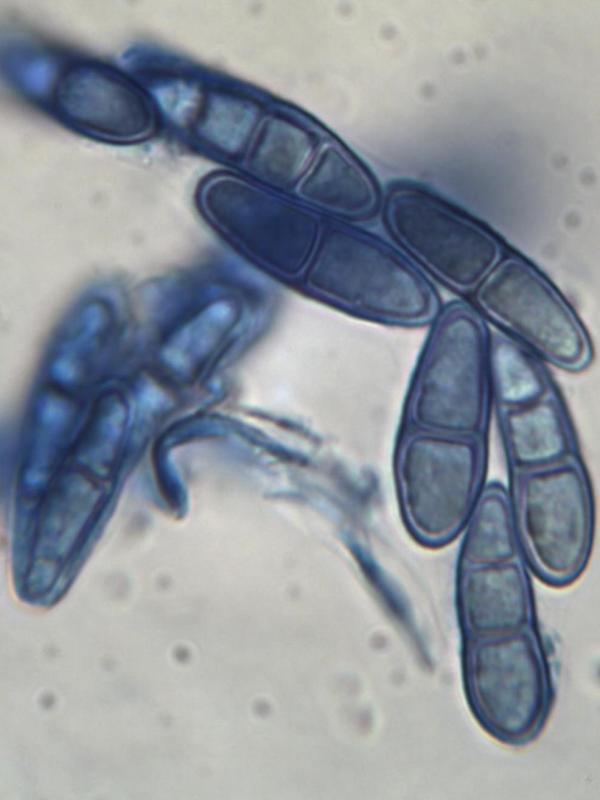
congrats for the septa! I would file this now at least as Giberella zeae cf. since you found only few with 3 septa, but variation is known:
https://www.jstor.org/stable/3807718?seq=1#page_scan_tab_contents
regards
Martin
You seem to have an inexhaustible source of material related with Fusarium/Giberella. I could not read the whole paper at the link you provided (no access), but the abstract is clear about the variation of the septation of the ascospores in G. zeae. However, I have the reverse of the situation therein, a big amount of one-celled, a part with 2-cells and a very small part with 3 and 4 cells (these occuring in only one ascus). On the other hand, as far as I understand, the conidia seem to fit the anamorph Fusarium species with telemorph G. zeae, Fusarium graminearum (compare with the paper by DlMlTR ATANASOFF in Journal of Agricultural Research Vol. 20 (no. 1), 1920). Thus, as you proposed, by now I will leave it as G. cf. zeae.
Best regards,
zaca
Just to update the data from microscopy, since this time and after several failed attempts I succeeded to observe many 3-septate spores, one more point in favour of Gibberella zeae. My acknowledgements to Martim Bemmann, who knew from the beginning that sooner or later I will arrive to this point.
Best regards,
zaca
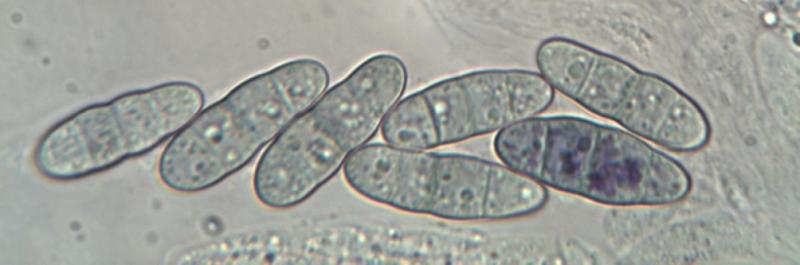
I did know nothing. I just followed a narrow path starting by identifying the host and then using my digital library. I am far off to be an expert on Giberella....
I just had fun to solve this riddle, as you had ? Thank you for sharing this!
Best regards
Martin