
02-05-2026 12:42
Alain BRISSARDBonjour à tousJeuidi 30 avril dernier on m'a remi
02-05-2026 13:06
Pauline. PennaBonjour Please can someone help me with this id
01-05-2026 22:45
 Thierry Blondelle
Bonjour à tous, Une récolte sur bouse séchée d
28-04-2026 20:07
 Lothar Krieglsteiner
... on twig in the air at standing Ceratonia siliq
14-04-2026 05:32
Ethan CrensonHi all, A few weeks back a friend pointed out som
28-04-2026 20:33
Vitus SchäfftleinHello, I found Trochila ilicina on Ilex aquifoliu

30-04-2026 10:28
Rot BojanHello, by appearance I would say that I am dealing
27-04-2026 18:48
Tony MoverleyCollected 23rd April 2026, Norfolk, EnglandSwarms
27-04-2026 20:52
Lothar Krieglsteiner
Found on hanging tiwg of Olea europaea in dried-ou
¿Hymenoscyphus?
Salvador Tello,
17-01-2013 16:56
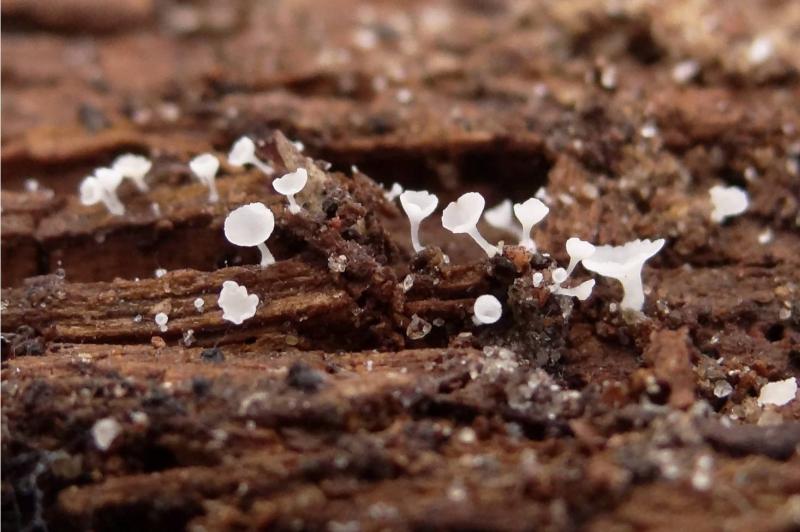
Este pequeño ascomiceto estaba sobre madera de Pinus pinea.
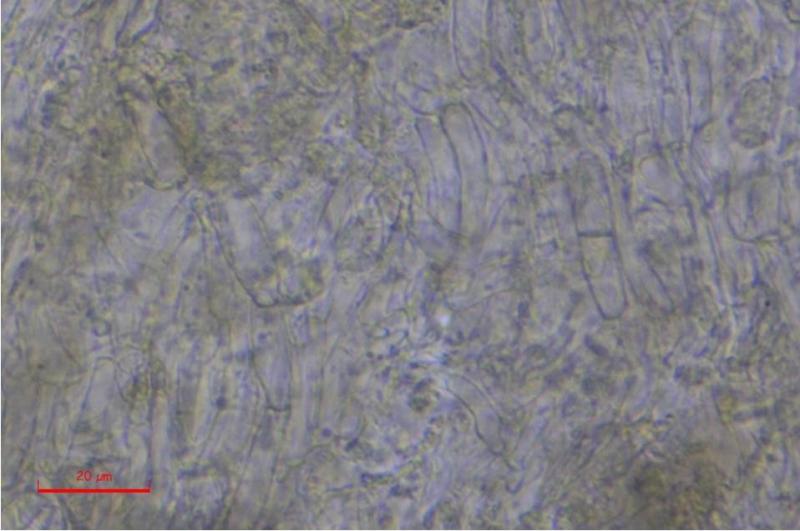
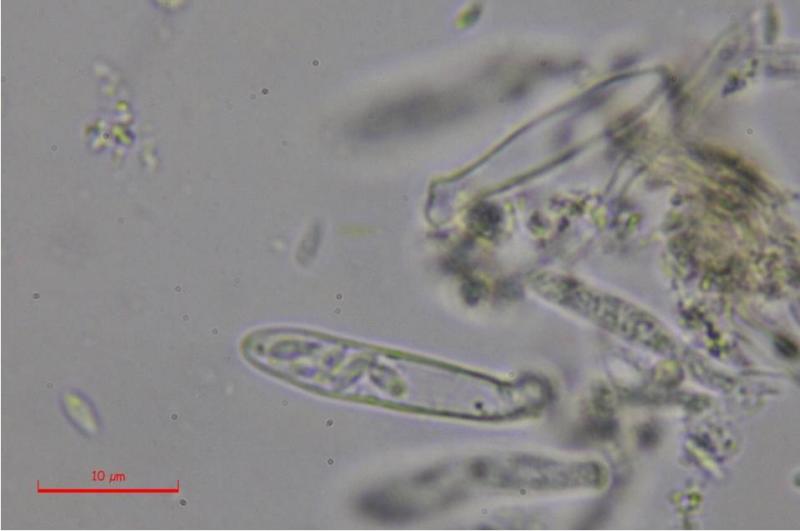
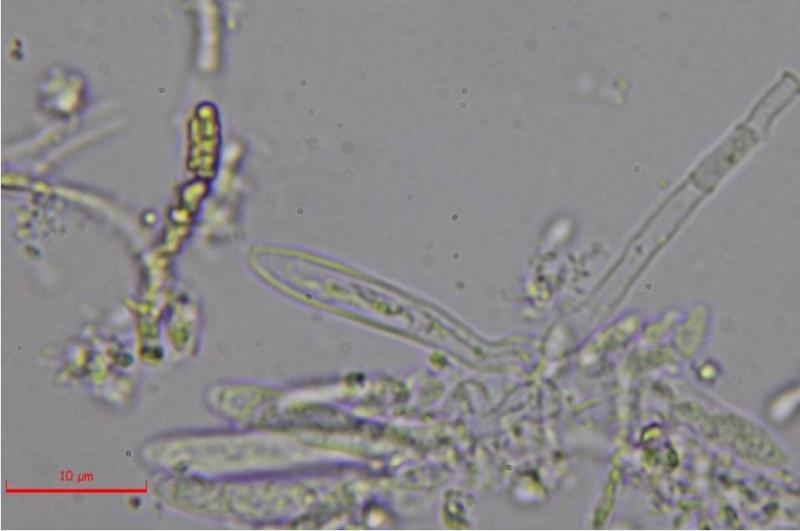
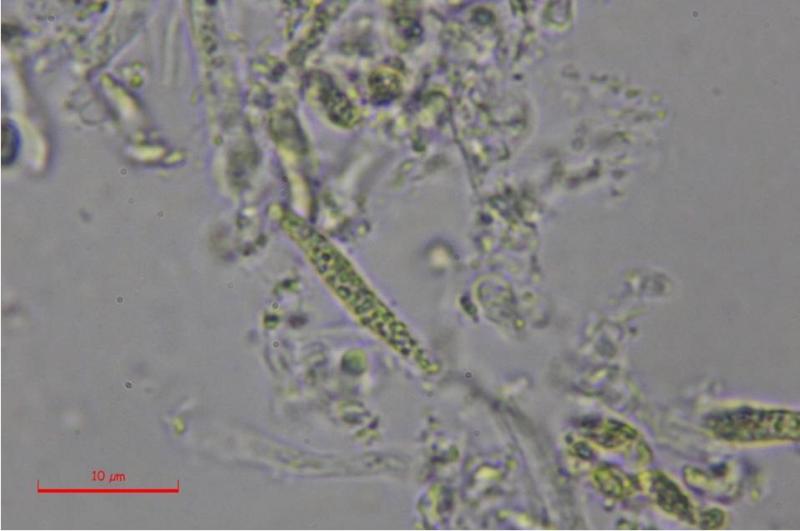
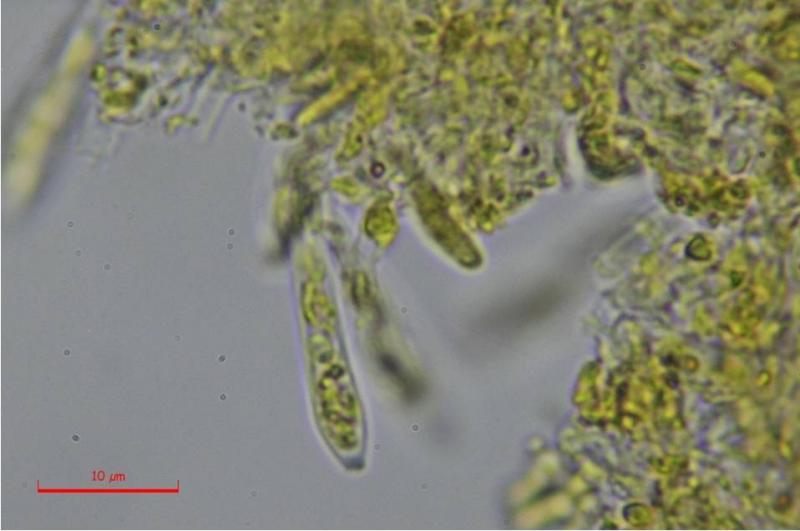
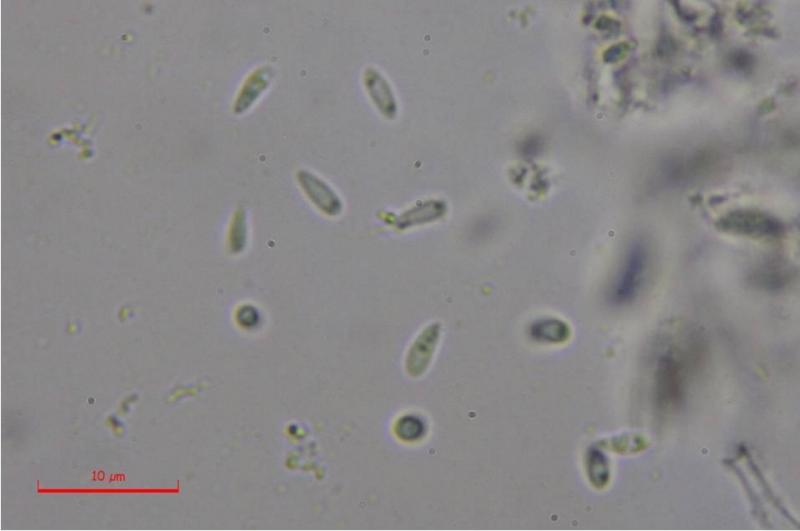
Apotecios de entre 0,5 y 1,5 mm, tiene ascas de ápice amiloide de Me = 21,2 x 3,8 µm ; Qe = 5,6. Esporas de Me = 4,2 x 1,7 µm ; Qe = 2,6 y con lo pequeño que es, es difícil la observarlo bien y no estoy seguro de si he visto las paráfisis, pongo unas fotos.
Agradezco cualquier ayuda.
Gracias.
Saludos.
Salvador.
Hans-Otto Baral,
17-01-2013 17:22

Re : ¿Hymenoscyphus?
Reminds me of Hymenoscyphus myrtilli, though this has spores 7-8 x 2-2.5 µm and grows on rootlets of Vaccinium though I have one collection which seemd to be rootlets o Picea.
The paraphyses contain very prominent and abundant droplets (VBs) when alive. It is certainly not a Hymenoscpyhus, but what else?
Do you still have the fungus fresh? perhaps you could carefully mount in water and preserve the living state of the paraphyses?
Zotto
The paraphyses contain very prominent and abundant droplets (VBs) when alive. It is certainly not a Hymenoscpyhus, but what else?
Do you still have the fungus fresh? perhaps you could carefully mount in water and preserve the living state of the paraphyses?
Zotto
Salvador Tello,
17-01-2013 19:24
Re : ¿Hymenoscyphus?
Hola Zotto.
Todavía tengo material fresco. Todas las fotos de micro que he puesto son con agua a excepción de la 7 que es con IKI.
Voy a probar otra vez para ver si esta vez lo veo mejor.
Gracias.
Salvador.
Todavía tengo material fresco. Todas las fotos de micro que he puesto son con agua a excepción de la 7 que es con IKI.
Voy a probar otra vez para ver si esta vez lo veo mejor.
Gracias.
Salvador.
Hans-Otto Baral,
17-01-2013 20:24
Re : ¿Hymenoscyphus?
If you put a part of the cupula or a hymenial fragment in a large drop of water and avoid any pressure on the coverslip, the drops in the excipular cortex and in the paraphyses should not get destroyed.
Salvador Tello,
17-01-2013 22:26
Re : ¿Hymenoscyphus?
He vuelto a mirar otro apotecio con unos resultados mejores que en la vez anterior.
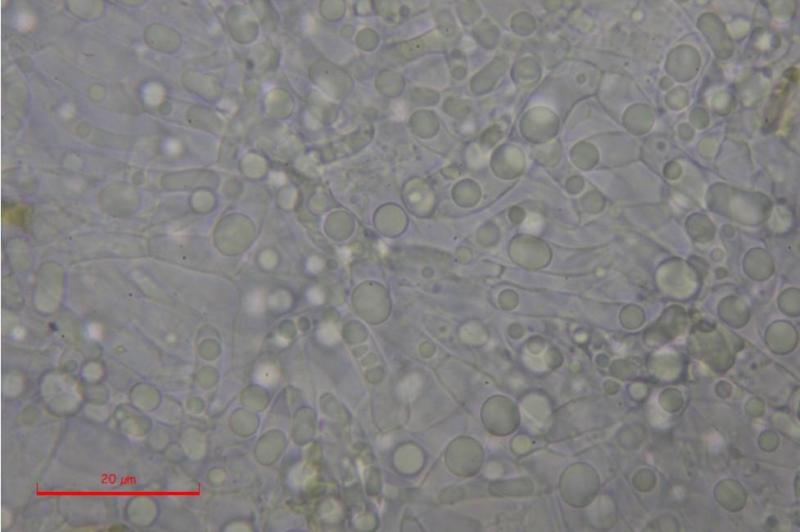
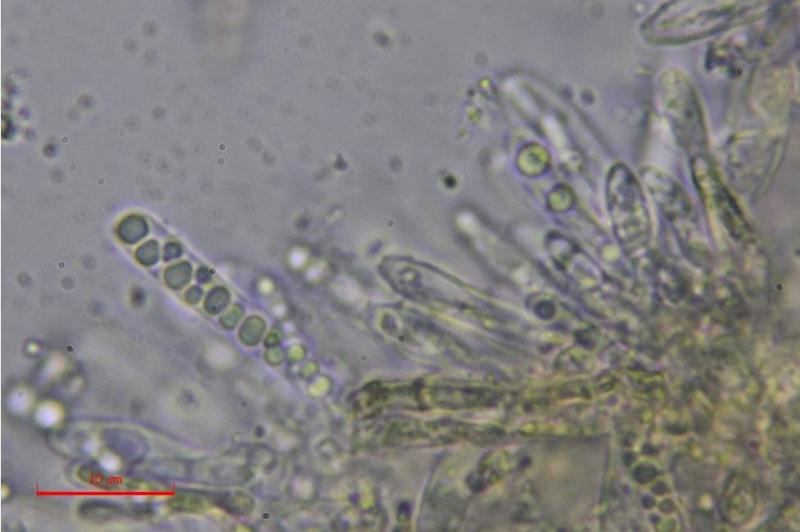
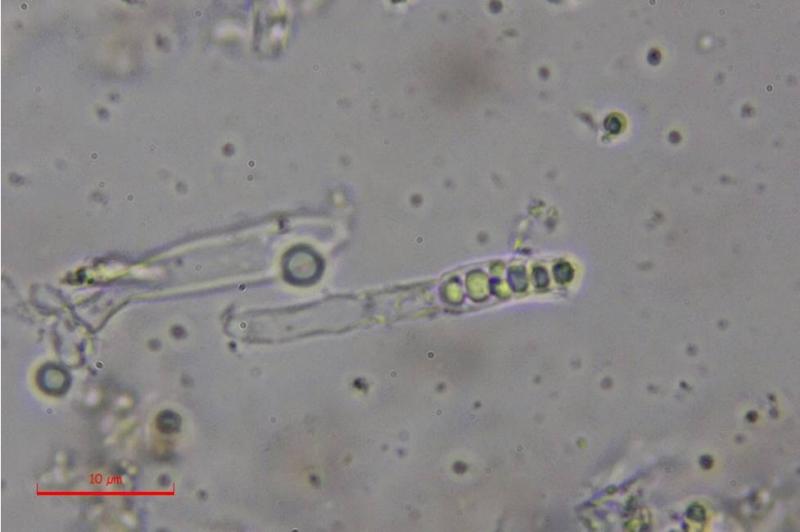
En esta ocasión las células del excípulo ectal aparecen llenas de gotas de aceite, al igual que las paráfisis. Las ascas y las esporas son de las mismas medidas que en la muestra anterior.
Dejo las fotos para ver que te parece ahora.
Gracias.
Saludos.
Salvador.
En esta ocasión las células del excípulo ectal aparecen llenas de gotas de aceite, al igual que las paráfisis. Las ascas y las esporas son de las mismas medidas que en la muestra anterior.
Dejo las fotos para ver que te parece ahora.
Gracias.
Saludos.
Salvador.
Hans-Otto Baral,
17-01-2013 22:41
Re : ¿Hymenoscyphus?
Great! This helps a lot. From your scale I evaluate the spores as 4-4.3 x 1.4-1.5 µm?, so this is much too small for H. myrtilli.
I have presently no idea, I am sorry. The apical ring is too small to see details that might help.
I have presently no idea, I am sorry. The apical ring is too small to see details that might help.
Salvador Tello,
17-01-2013 23:31
Re : ¿Hymenoscyphus?
Muchas gracias zotto.
Estas son las medidas que me dan las esporas.
3,3 [4,1 ; 4,4] 5,1 x 1,2 [1,6 ; 1,7] 2,1 µm
Q = 1,7 [2,4 ; 2,8] 3,5 ; N = 31 ; C = 95%
Me = 4,2 x 1,7 µm ; Qe = 2,6
¿El género si es Hymenoscyphus?
Saludos.
Salvador.
Estas son las medidas que me dan las esporas.
3,3 [4,1 ; 4,4] 5,1 x 1,2 [1,6 ; 1,7] 2,1 µm
Q = 1,7 [2,4 ; 2,8] 3,5 ; N = 31 ; C = 95%
Me = 4,2 x 1,7 µm ; Qe = 2,6
¿El género si es Hymenoscyphus?
Saludos.
Salvador.
Hans-Otto Baral,
18-01-2013 09:34
Re : ¿Hymenoscyphus?
2 µm spore width is ruther much, you don't have it on your photos. would mean ovoid rather than clavate.
I am sure it is not a Hymenoscyphus. Possibly the apical ring is of the Calycina type? This is not clearly seen.
Zotto
I am sure it is not a Hymenoscyphus. Possibly the apical ring is of the Calycina type? This is not clearly seen.
Zotto
Salvador Tello,
18-01-2013 10:44
Re : ¿Hymenoscyphus?
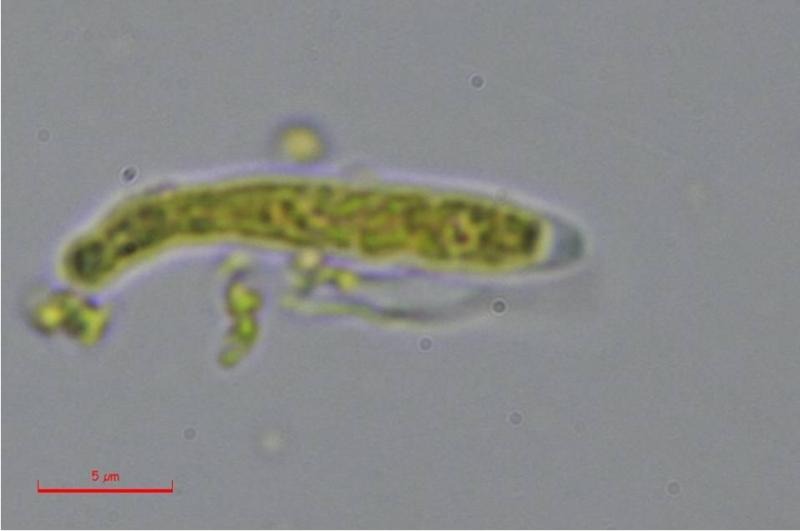
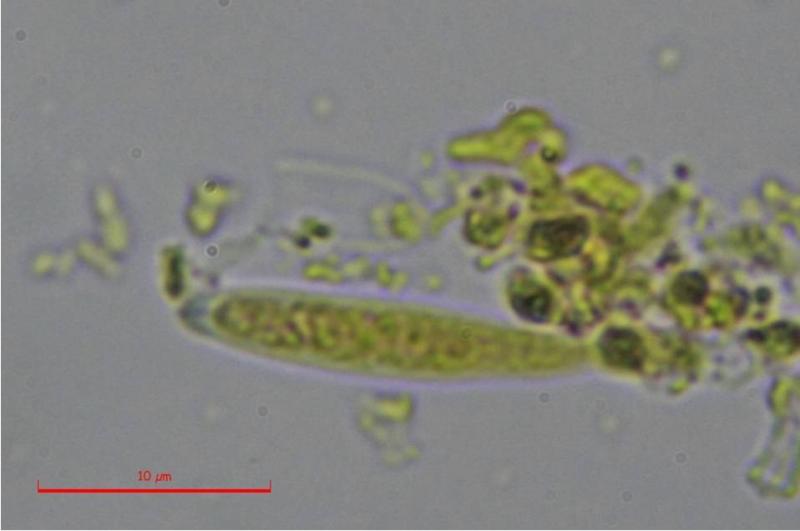
Es muy pequeño y no se ve bien.
Pongo otras fotos.
Gracias.
Saludos.
Salvador.
Pongo otras fotos.
Gracias.
Saludos.
Salvador.
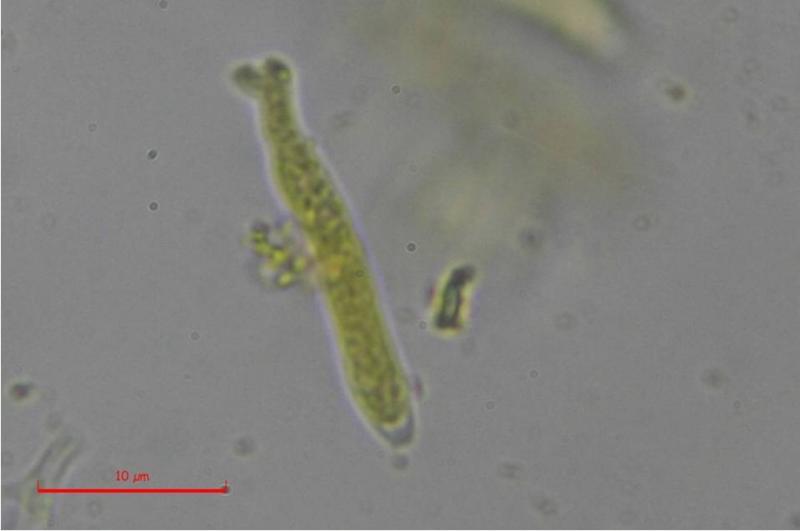
Hans-Otto Baral,
18-01-2013 10:56
Re : ¿Hymenoscyphus?
Good! It looks more like Calycina type. And we can be sure that the fungus has croziers.
So I hope I will get an idea in the future.
So I hope I will get an idea in the future.
Raúl Tena Lahoz,
25-04-2014 01:50

Re : ¿Hymenoscyphus?
Hi Salvador & Zotto
I think this one maybe can fit in Antinoa buissonii. We also find this one at Valencia.
Cheers,
Raúl
I think this one maybe can fit in Antinoa buissonii. We also find this one at Valencia.
Cheers,
Raúl
Hans-Otto Baral,
25-04-2014 09:31
Re : ¿Hymenoscyphus?
Hi Raul
this is actually a very good idea. And yes, this species has just these VBs in the paraphyses. Usually it has a convex disc but not when still rather young. In order to ascertain, the total ascus wall should react blue when KOH-pretreated, at least this was the case in the type specimen.
Zotto
this is actually a very good idea. And yes, this species has just these VBs in the paraphyses. Usually it has a convex disc but not when still rather young. In order to ascertain, the total ascus wall should react blue when KOH-pretreated, at least this was the case in the type specimen.
Zotto
Raúl Tena Lahoz,
25-04-2014 10:43
Re : ¿Hymenoscyphus?
I will check mine some day... (I don´t know when!)
Strange reaction! Any reaction only in IKI? Then, you can talk here about an hemiamyloid reaction or not?
Raúl
Strange reaction! Any reaction only in IKI? Then, you can talk here about an hemiamyloid reaction or not?
Raúl
Hans-Otto Baral,
25-04-2014 10:45
Re : ¿Hymenoscyphus?
I suppose hemiamyloid. In such old material as the holotype the red reaction might be less distinct than in new ones. I am sure that also Melzer will give the blue when KOH-pretreated - as usual.
Raúl Tena Lahoz,
25-04-2014 10:48
Re : ¿Hymenoscyphus?
Ok, thanks for the explanation Zotto
Raúl
Raúl
Salvador Tello,
25-04-2014 23:59
Re : ¿Hymenoscyphus?
Gracias Raúl.
Es un género del que no tengo ninguna bibliografía. ¿Tienes alguna descripción de Antinoa buissonii?
Saludos.
Salvador.
Es un género del que no tengo ninguna bibliografía. ¿Tienes alguna descripción de Antinoa buissonii?
Saludos.
Salvador.
Hans-Otto Baral,
26-04-2014 07:50
Re : ¿Hymenoscyphus?
The combination does not exist. It is this:
Cudoniella buissonii Grélet, Revue Mycol., Paris 12(1): 31 (1947)
Cudoniella buissonii Grélet, Revue Mycol., Paris 12(1): 31 (1947)
Synonymy:
Hymenoscyphus buissonii (Grélet) Matheis, Mitt. thürgau. naturf. Ges. 46: 72 (1985)
Did you look in Cubby under Calycina / Antinoa-like?
Salvador Tello,
27-04-2014 00:20
Re : ¿Hymenoscyphus?
Gracias Zotto, ya he mirado en cuby. Yo no había probado con KOH + IKI, cuando pueda lo haré.
Saludos.
Salvador.
Saludos.
Salvador.