
12-11-2019 10:32
 Miguel Ángel Ribes
Hi againExactly at the same place than my previous
25-12-2019 17:54
Valencia Lopez Francisco JavierHola a todos/asEstas supuestas pezizas estaban en
28-07-2011 18:31
 Alex Akulov
Dear FriendsToday I made the pdf file of Velenovsk
12-07-2015 00:05
 Nedim Jukic
This one from the same locality as the previous on


30-05-2026 21:12
Philippe PELLICIERSur branche de mélèze (Larix) près de la neige,
31-05-2026 10:35
Hulda Caroline HolteHello,I collected this species growing on a rather
25-05-2026 16:35
 Bernard CLESSE
Bonjour à toutes et tous,J'ai trouvé récemment,
29-05-2026 15:35
daniel FERREBonjour à tous,Je voudrais votre aide pour cette
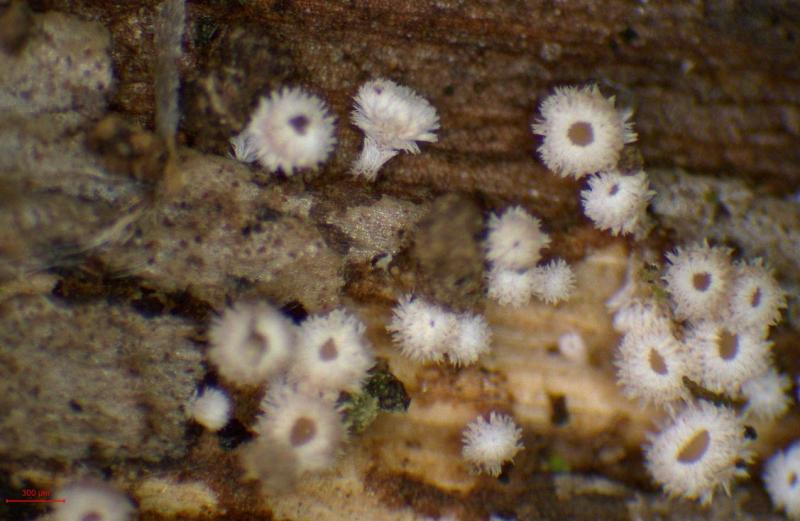
Fruitbody:
Very hairy white outside, with a white-cream hymenium, with hairy stipe.
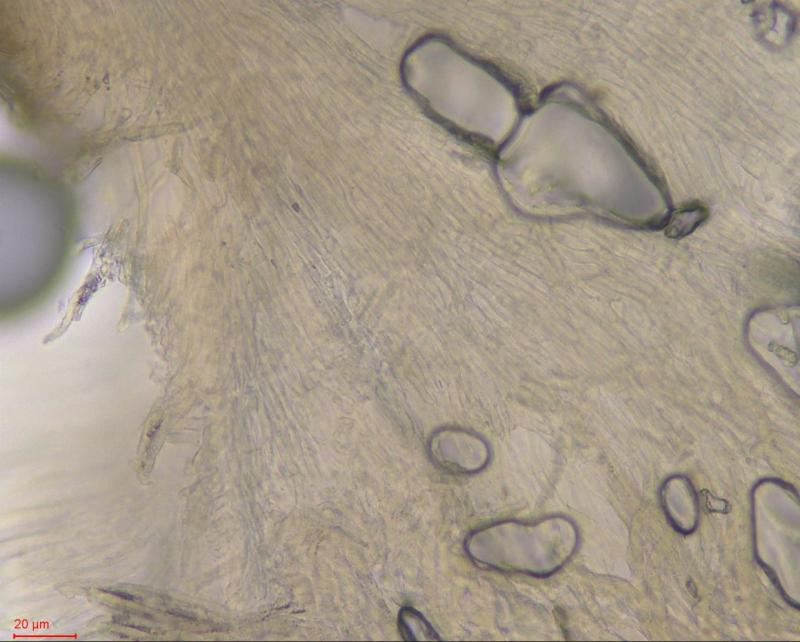
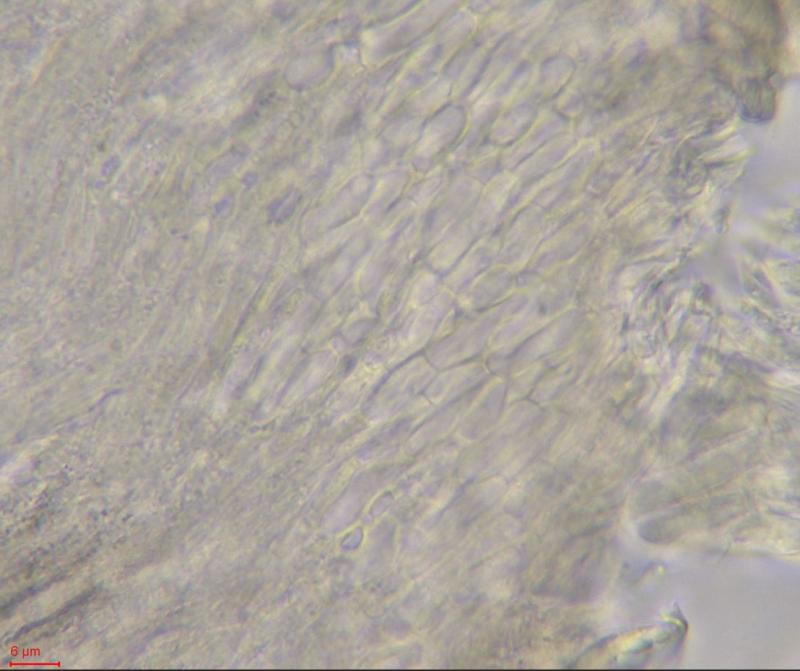
Structure:
Only textura prismatica observed, difficult due to the many long hairs.
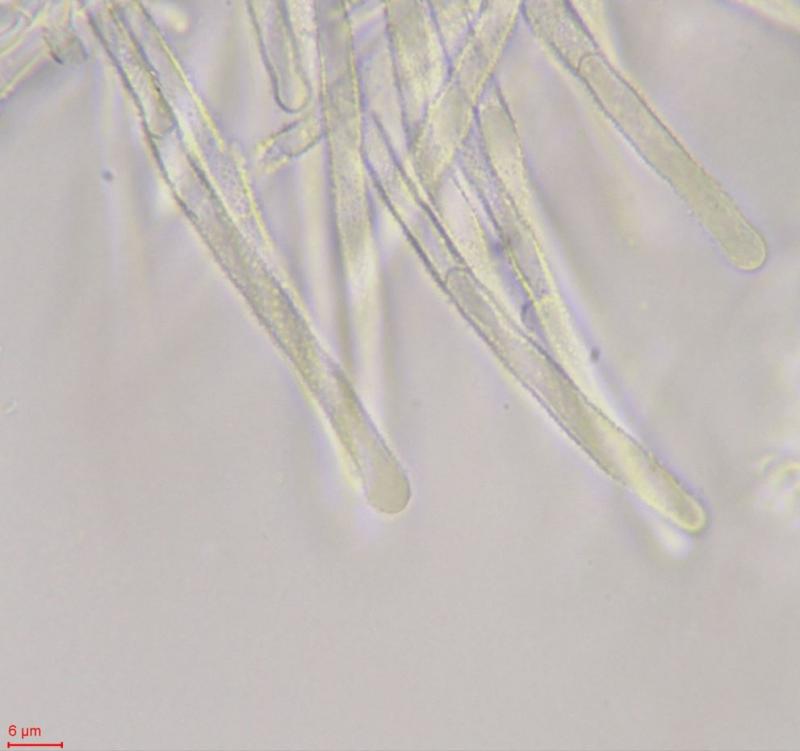
Hairs:
Incrusted to the apex, therefore Lachnum.
Cylindrical, no/hardly thickened apex, no crystals.
Flank of hairs measured in water: Me = 148.2 µm
Edge of hairs measured in water: (119.7) 119.71 - 119.8 µm
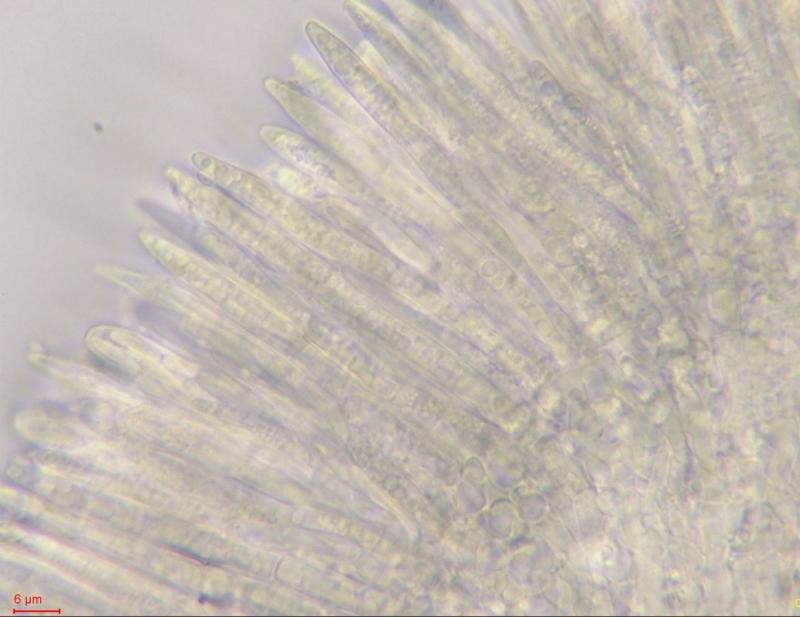
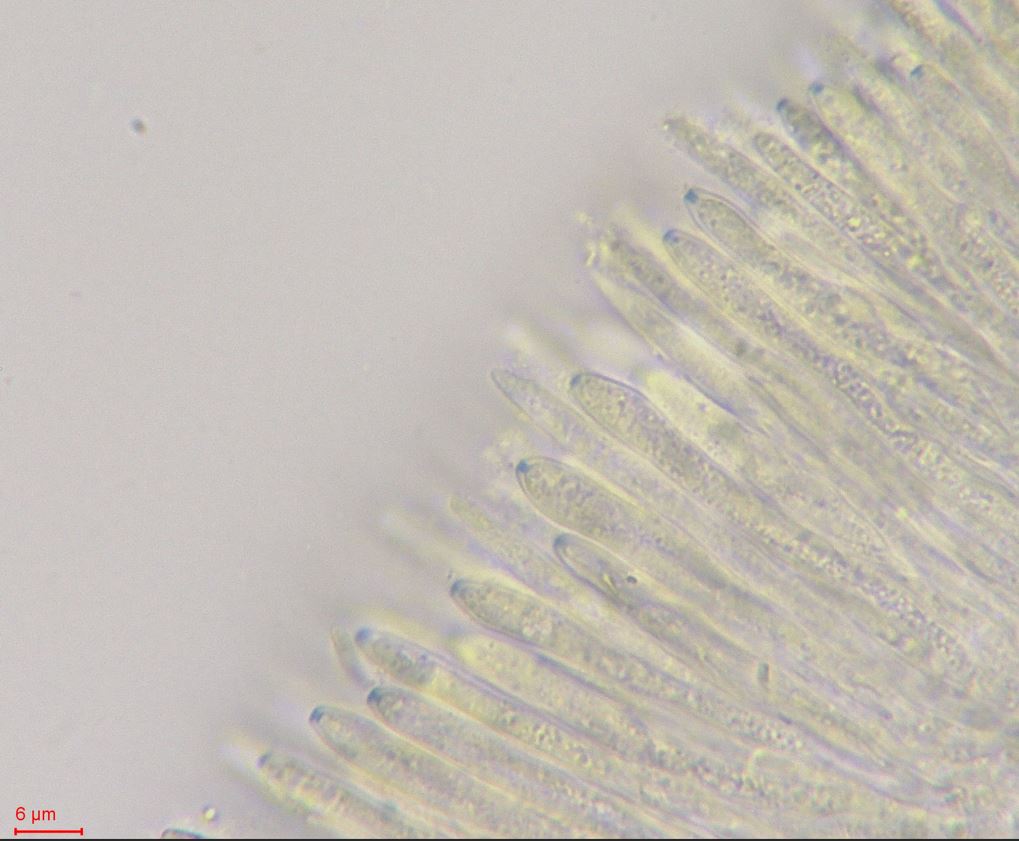
Asci:
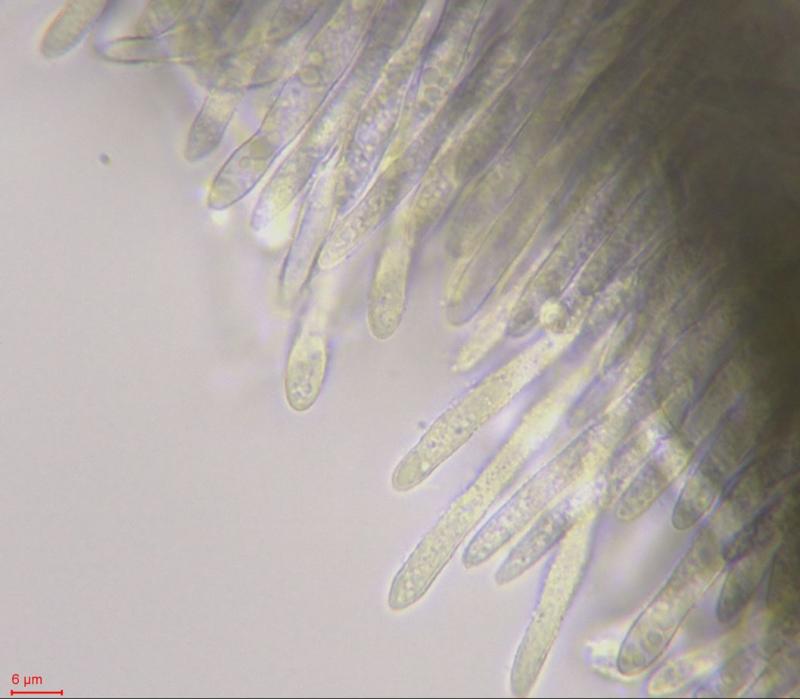
Measured in water: 41.6 - 47.9 × 5 - 5.09 (5.1) µm
Croziers + and IKI +
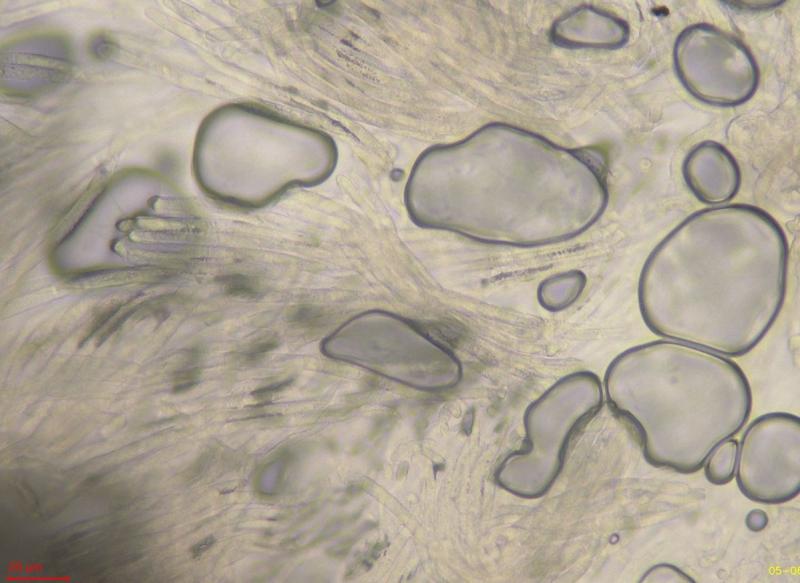
Paraphyses:
Lanceolate, full of guttules.
Width measured in water: (4.5) 4.6 - 4.7 (4.8) µm
Protruding above asci measured in water: (5.5) 5.52 - 9.17 (9.2) µm
Spores:
Cylindrical, sometimes narrower at one end.
Measured in water: (7) 7.4 - 9.5 (10) × (1.6) 1.7 - 2.1 (2.2) µm, Qe = 4.3
Using Baral's Lachnum key, we arrive at - - +, no crystals, no strong/medium refractive VBs, croziers +.
Subkey 5 -> Lachnum virgineum.
The only thing that doesn't quite fit is that the paraphyses should protrude 15-30 µm, we measure a max. 9 µm, and the width of the paraphyses should be 5-7 µm, we measure a max. 4.8.
Is it a different species after all?
Kind regards, Geert&Margot Vullings
 10-Knipsel-05-026-0001.JPG
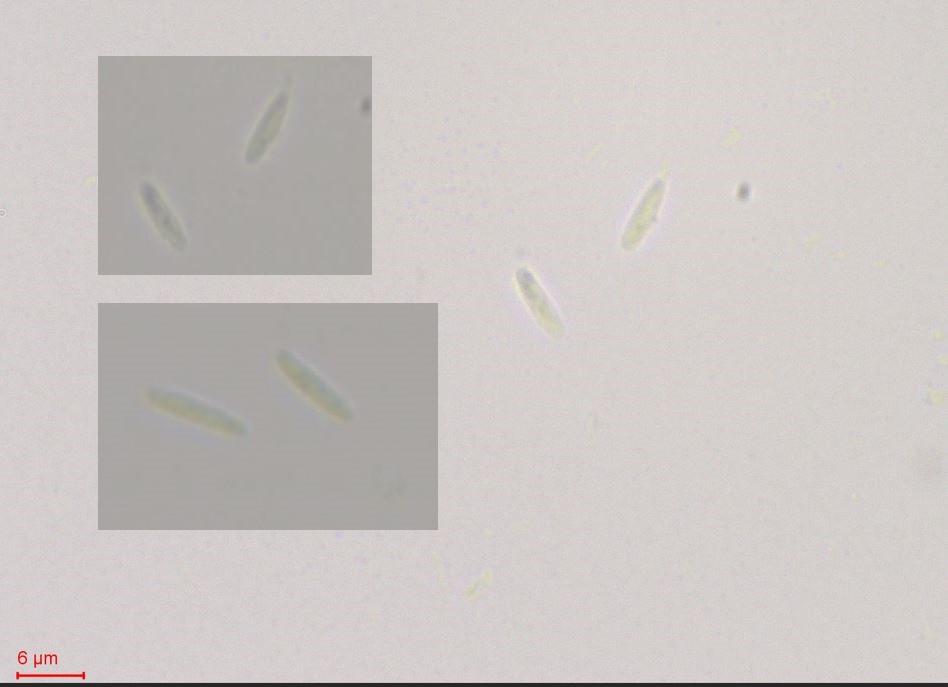 11-Knipsel-06-007-0001.JPG
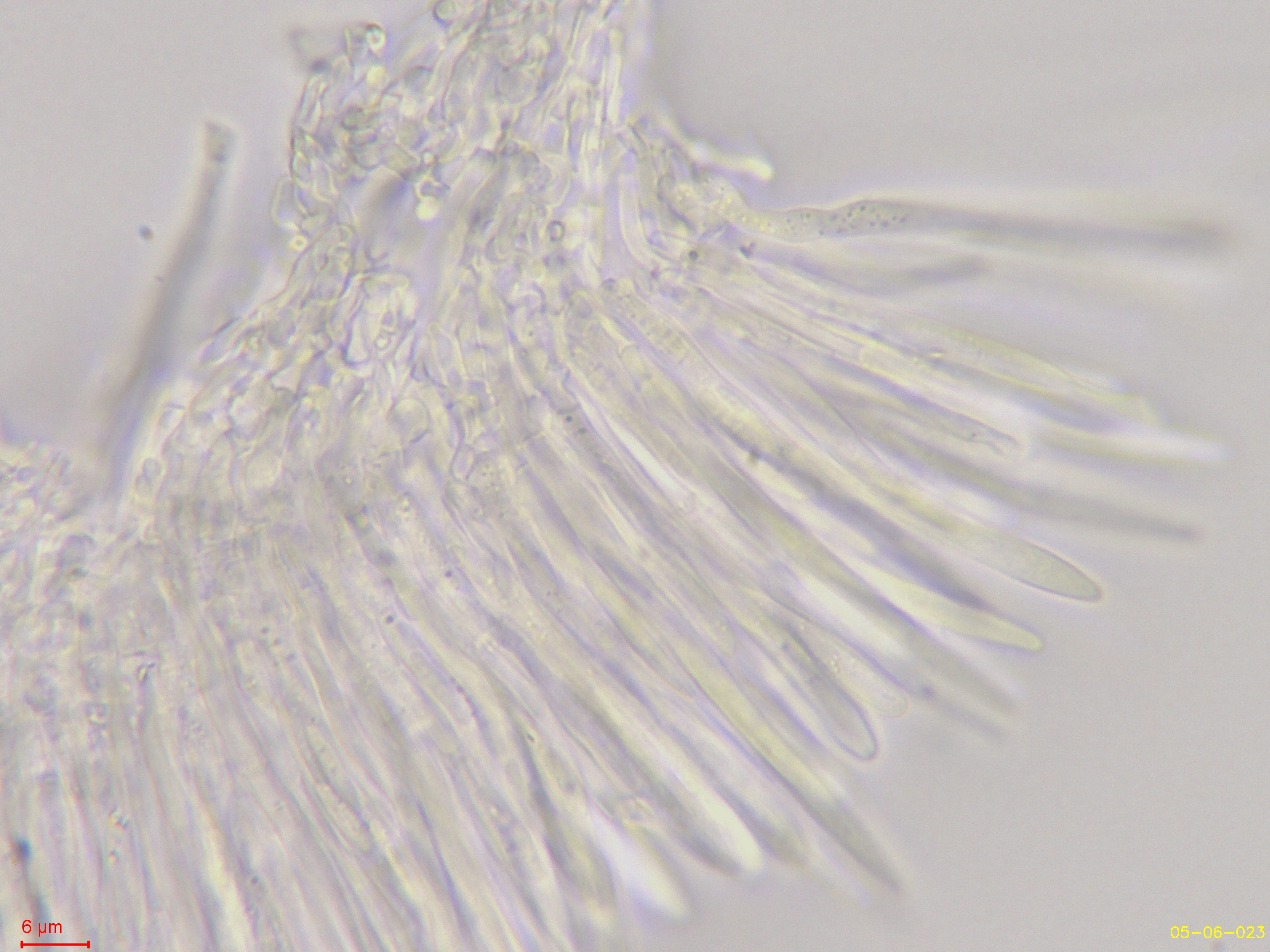 12-Mic2026-05-06-023-0001.jpg
The measurements come from Piximètre, hence down to 0.01 µm.
As you say, if we choose for VB's to be present, we do not arrive at a type that fits, therefore the choice of not strongly/medium refractive.
We keep this one on L. virgineum.