Accès membres

Mot de passe perdu? S'inscrire

08-04-2026 20:33

Vasileios Kaounas Vasileios Kaounas

Found 07-04-26, in Abies cephalonica. Diameter 1,

08-04-2026 10:39

FRANCIS FOUCHIER

Bonjour , je recherche en pdf cet article: KORF R

06-04-2026 15:04

David Chapados David Chapados

Hi! Could someone help me identifying this specim

29-06-2016 15:18

Per Vetlesen

HiIt was found on the bark of a dead branch of Jun

07-01-2018 22:47

Per Vetlesen

Grown in moist chamber on bark/resin of fallen Pin

06-04-2026 21:36

Viktorie Halasu Viktorie Halasu

Hello, could anyone please send me the article wi

06-04-2026 19:40

David Gibbs David Gibbs

Help with this one much appreciated, on rotting Fa

06-04-2026 11:07

Louis DENY

Bonjour forum, Trouvé sur bois de feuillu très d

06-04-2026 16:24

Juuso Äikäs

Last Tuesday I found some tiny white Helotiales gr

05-04-2026 13:33

Sylvie Le Goff

Bonjour à tousPuis avoir votre avis sur ce champi

« < 1 2 3 4 5 > »
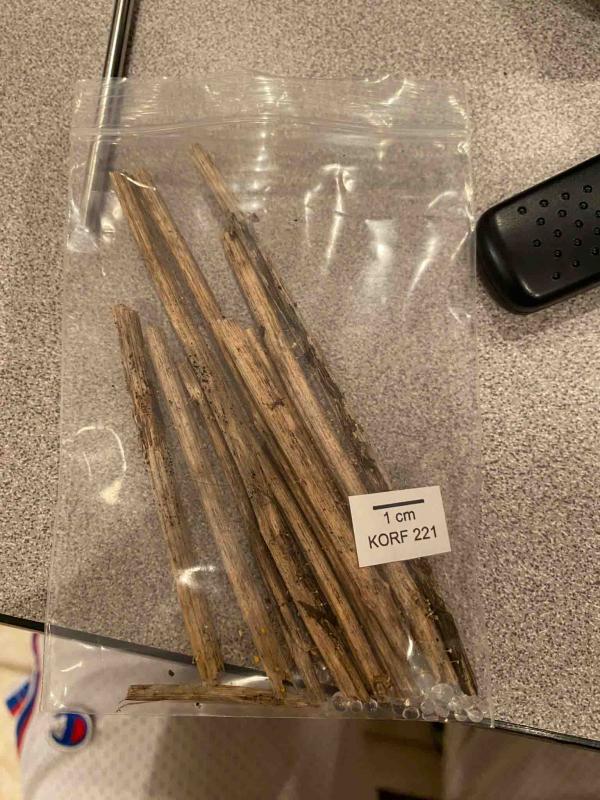
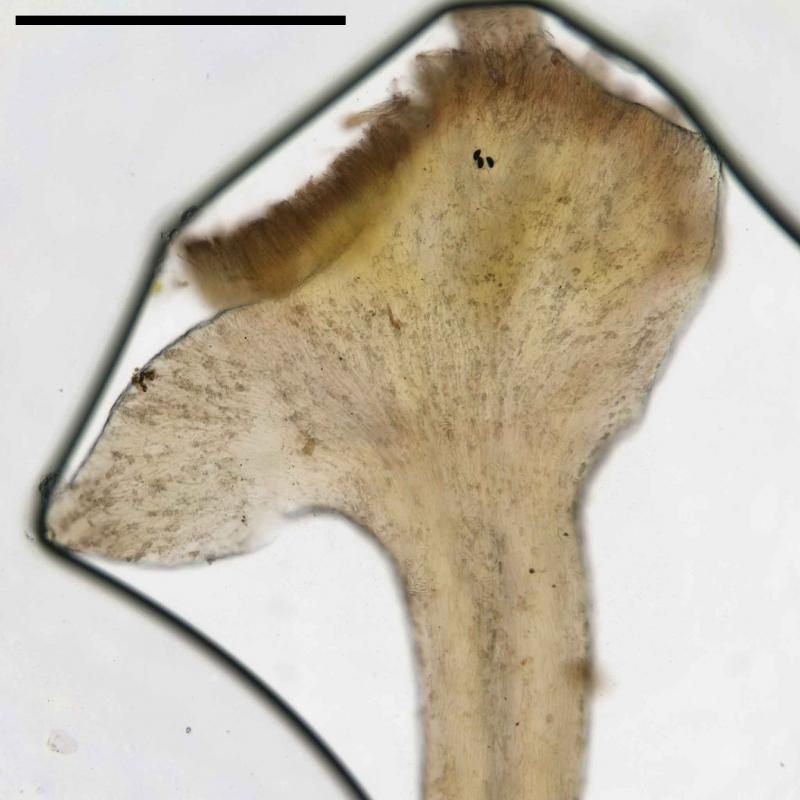
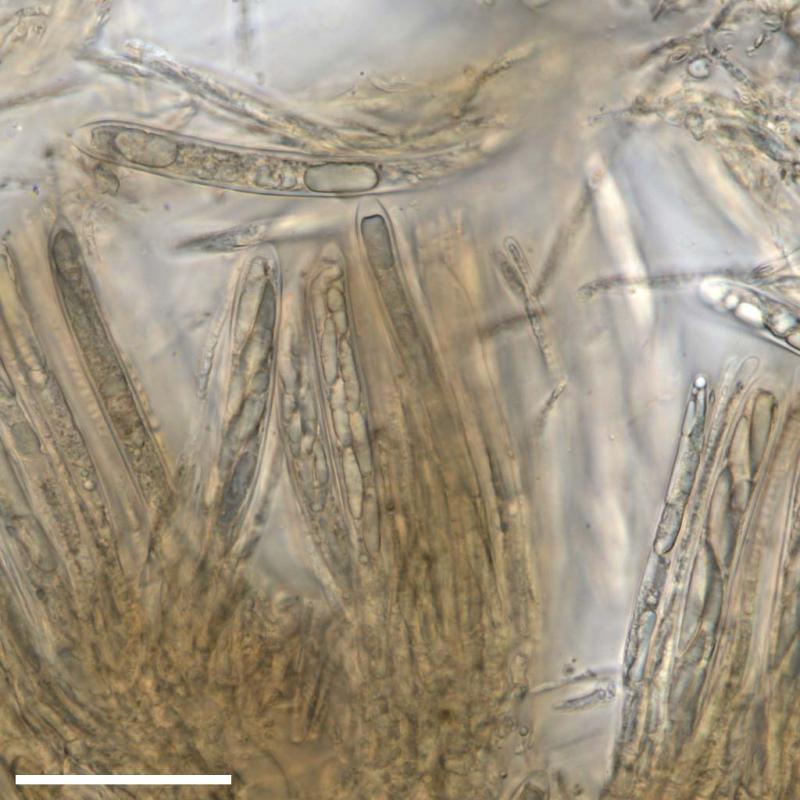
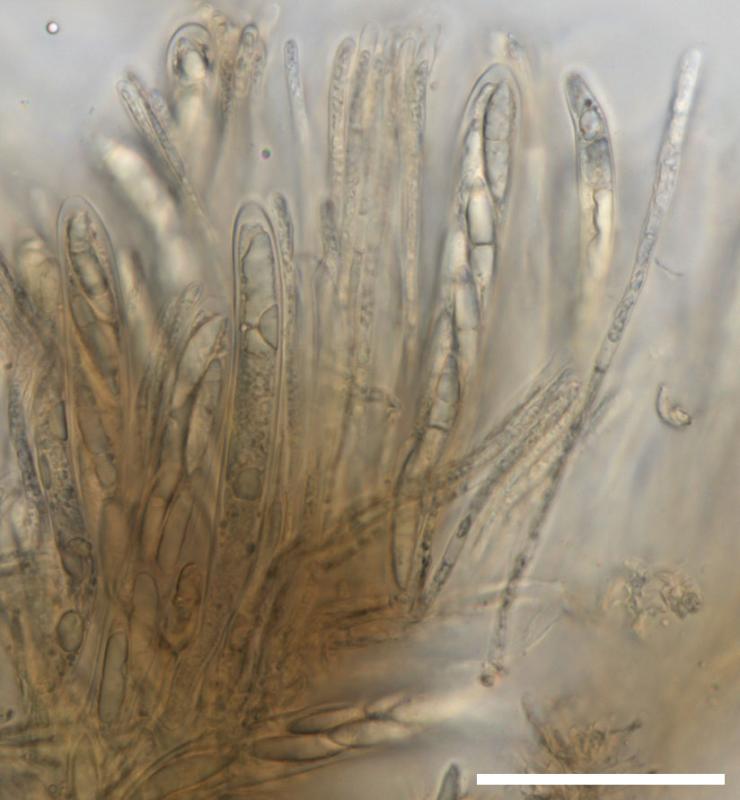
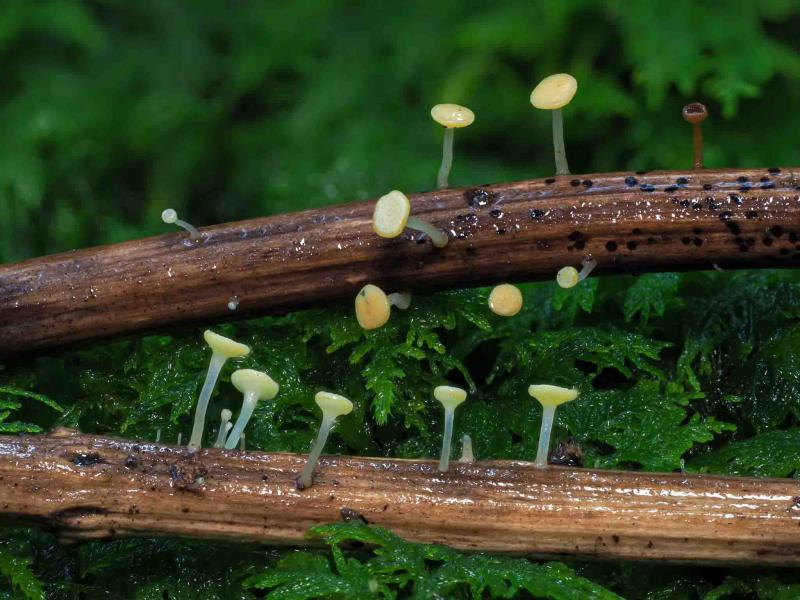
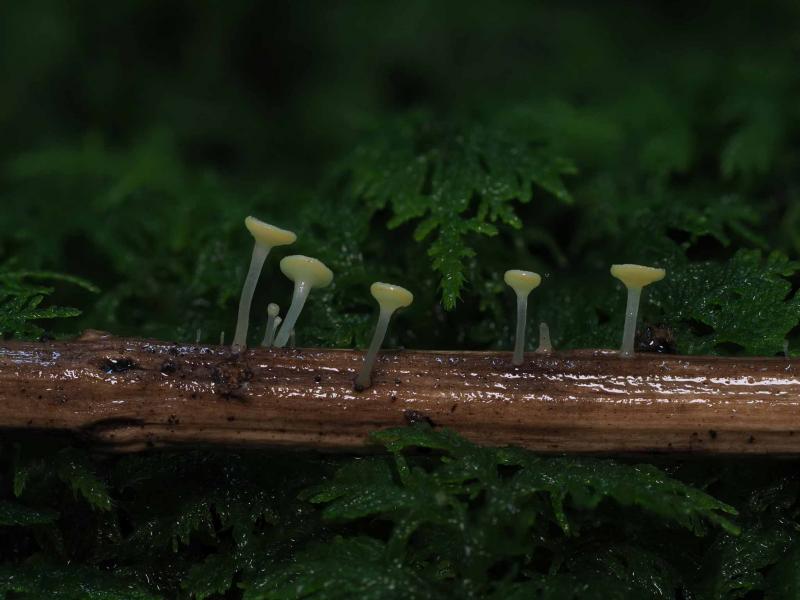
Cyathicula coronata on Urtica dioica - 303628165
Danny Newman, 12-01-2026 05:24
Danny NewmanCyathicula coronata on Urtica dioica
Cataloochee Divide Trail, Great Smoky Mountains National Park, Haywood County, North Carolina, USA
https://www.inaturalist.org/observations/303628165

photo credits: Connor Dooley & Fenner Martin Morse
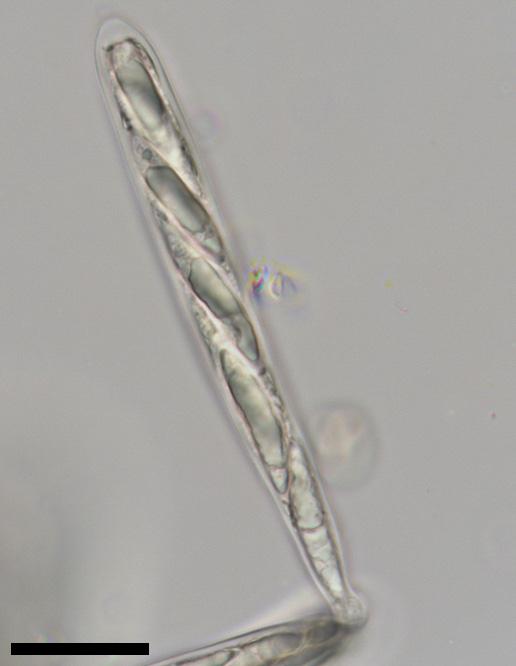
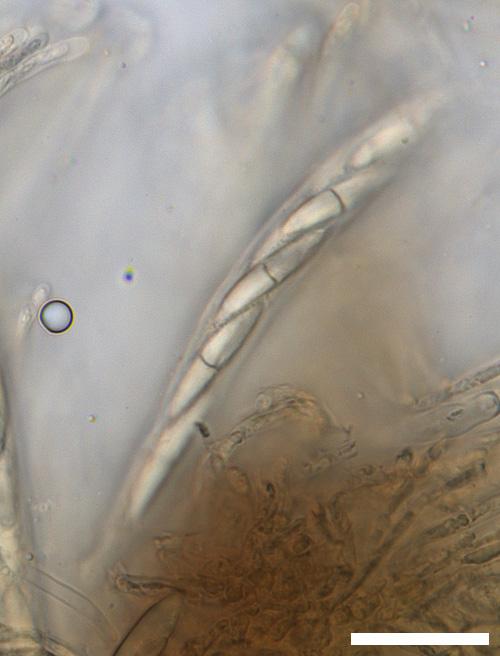
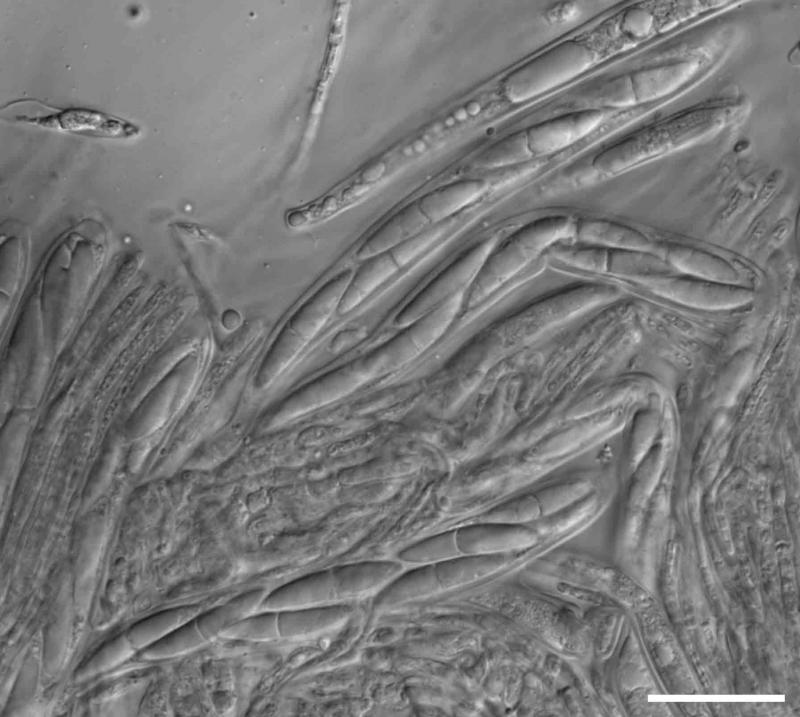
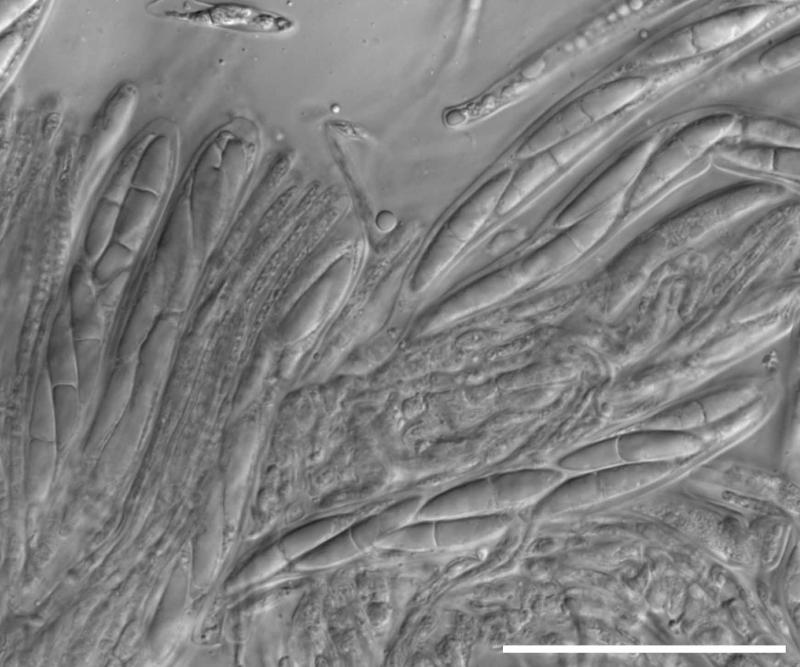
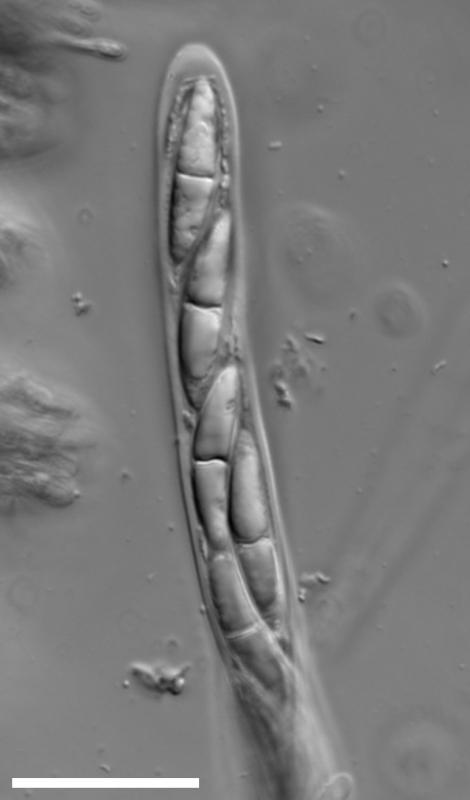
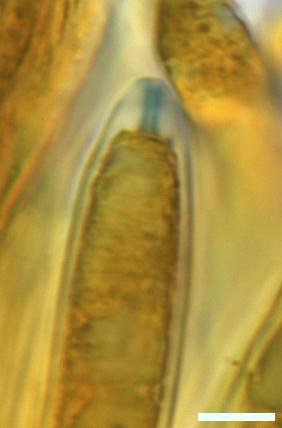
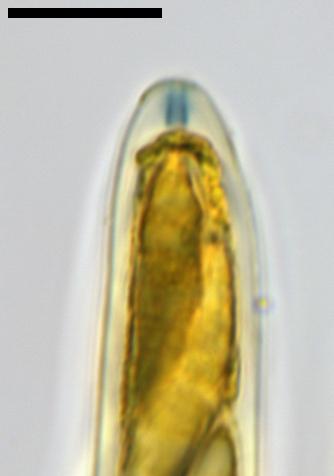
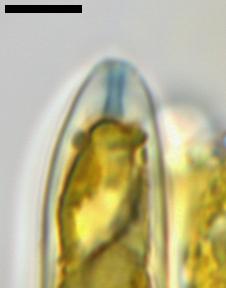
micrographs: Patrick Verdier


sequence available at iNaturalist link


Spores:


(19.8) 20.3 - 22.2 (22.5) × (3.5) 3.8 - 4.9 (5) µm
Q = (4) 4.4 - 5.7 (6) ; N = 20
Me = 21.3 × 4.2 µm ; Qe = 5.1


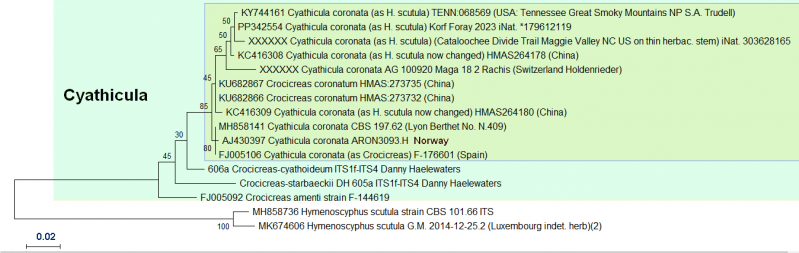
Zotto has remarked on iNaturalist that this taxon has been repeatedly misidentified as Hymenoscyphys scutula in GenBank, if not other genetic databases.
  • message #84301
  • message #84301
  • message #84301
  • message #84301
  • message #84301
  • message #84301
  • message #84301
  • message #84301
  • message #84301
  • message #84301
  • message #84301
  • message #84301
  • message #84301
  • message #84301
Hans-Otto Baral, 12-01-2026 08:35
Hans-Otto Baral
Re : Cyathicula coronata on Urtica dioica - 303628165
I add my ITS-analysis showing the problem. The lack of marginal teeth is remarkable and could point to a different species, but the available sequences, which are predominantly from outside Europe, all appear to lack morphological data. Possibly behind these deviations exist several species.

I forgot that I have a folder "coronata aff. no teeth", with 5 European collections without teeth, but with the microscopy (mostly in living state) very similar to collections with prominent teeth.
  • message #84303