18-05-2026 12:43
Sylvie Le GoffBonjour à tousPuis je avoir votre aide sur ce que
19-05-2026 10:27
Patrice TANCHAUDBonjour, récolte récente sur terre retournée i

18-05-2026 10:13
 Lieve Deceuninck
Dear forum members,I identified this as the teleom

17-05-2026 19:05
Thomas FlammerI have found this tiny 200 ym cup shaped apothecia
17-05-2026 16:41
Margot en Geert VullingsWe found this Lachnum on an old Rubus stem.Fruitbo
05-04-2026 22:46
 Lothar Krieglsteiner
on wood of Ceratonia, Algarve, 3.4.2026.The color
15-05-2026 13:33
Sylvie Le GoffBonjour à tousJe serais très reconnaissante enve
16-03-2011 14:31
roman vargas albertoHi. I would like some opinion about this Peziza
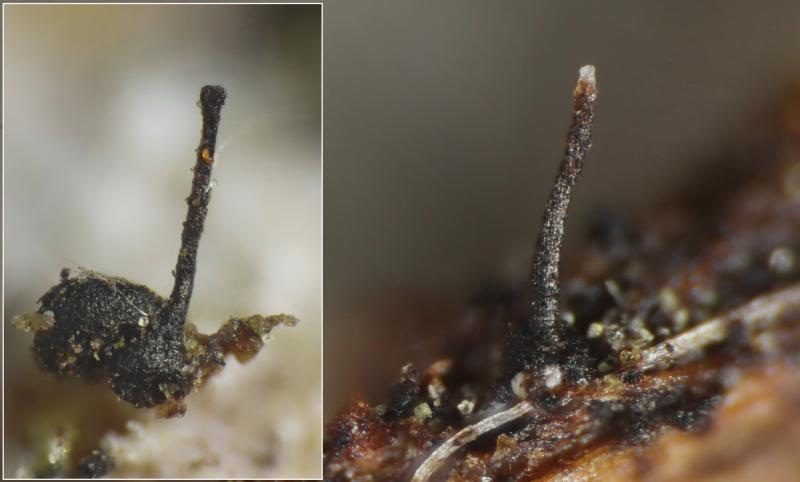
It was found on the bark of a dead branch of Juniperus communis in Rotlia Naturreservat, Norway, in October last year, and I had no idea of what it was until I saw this tread: http://ascofrance.com/search_forum/43458
I think it must be a Scopinella, I have looked at the keys and read the info about it on the forum. I understand that it is only one species that has 4-spored asci(?), S. gallicola, but it is supposed to grow on Endocronartium harknessii. I did not observe it being fungicola, but it could grow on fungus under the bark or in the wood?
Peritecium: globose, 180µm
Neck: 570µm long
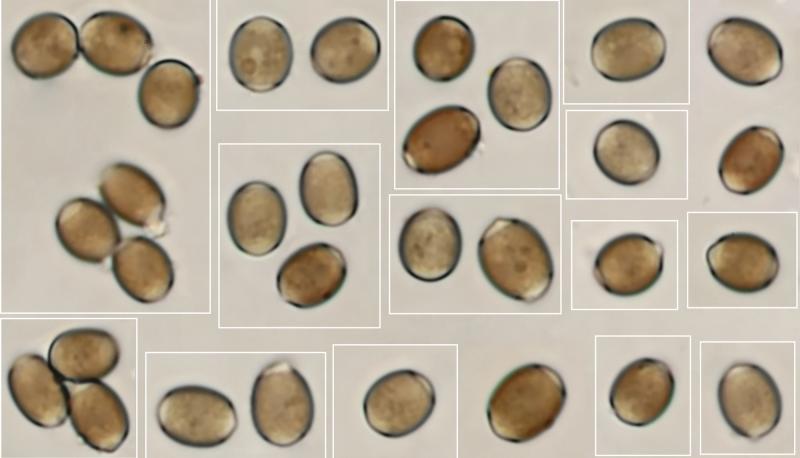
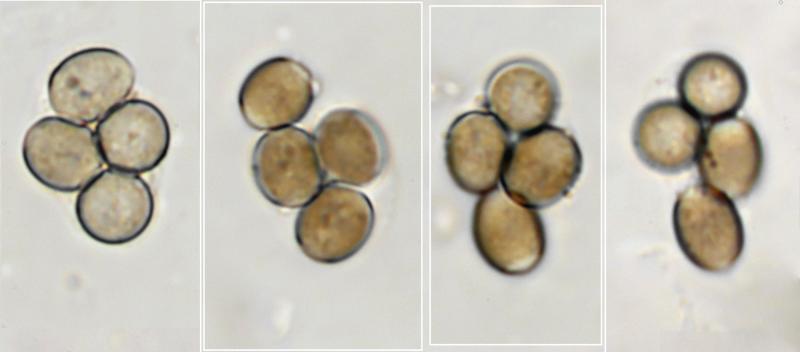
Spores: 6 [6.3 ; 6.5] 6.9 x 4.9 [5 ; 5.2] 5.3 µm, Q = 1.2 [1.24 ; 1.3] 1.4 ; N = 20 ; C = 68%, Me = 6.4 x 5.1 µm ; Qe = 1.3
Unfortunately it was only one ascocarp...
Thank you very much in advance
Regard
Per
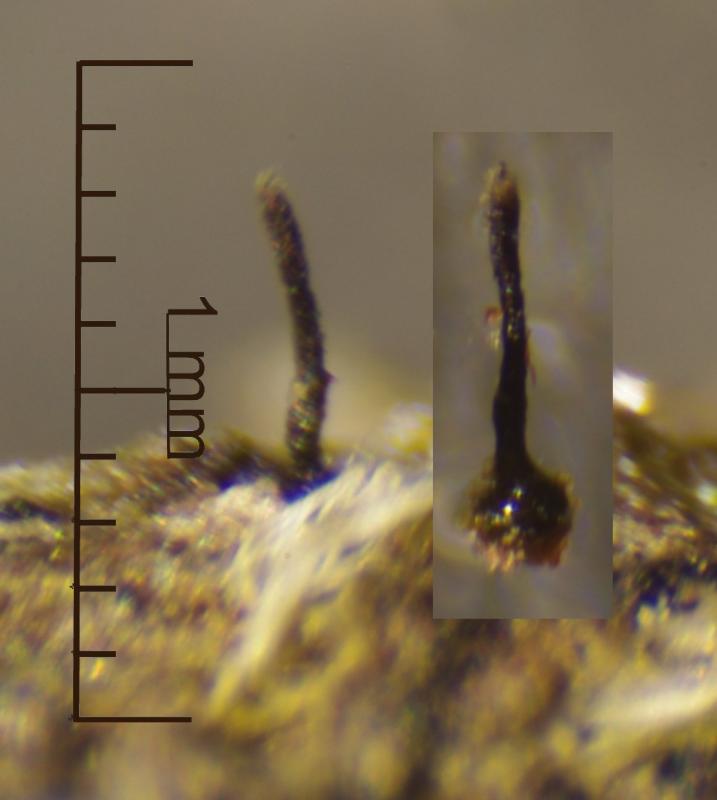
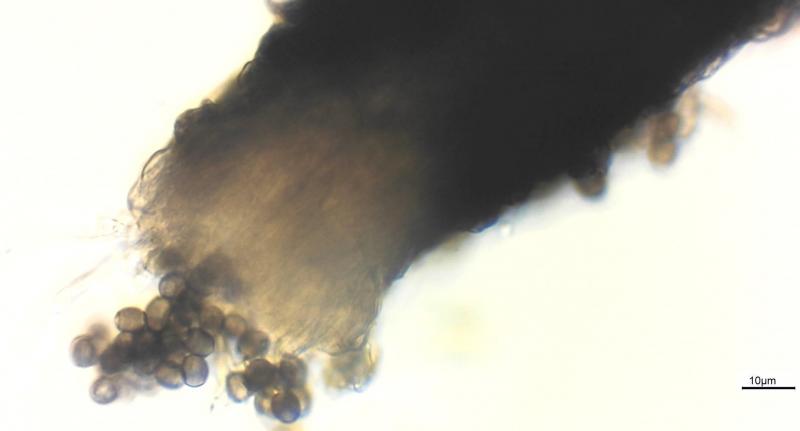
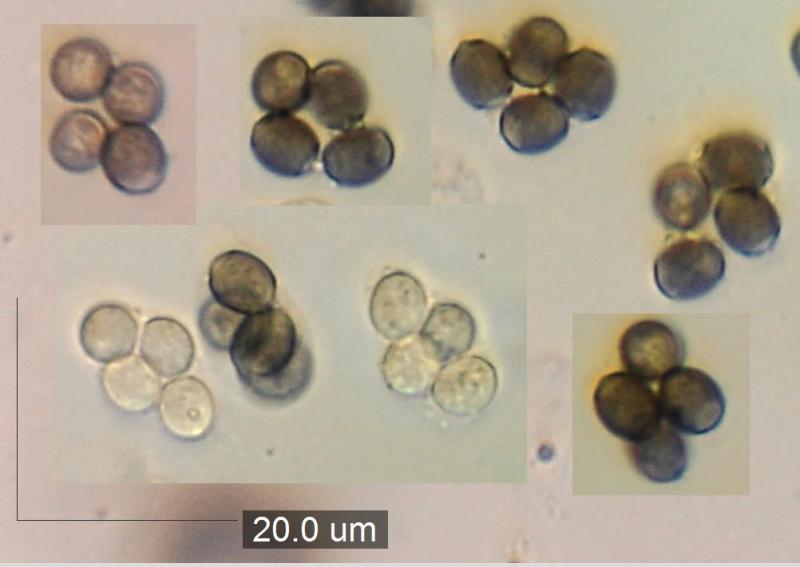
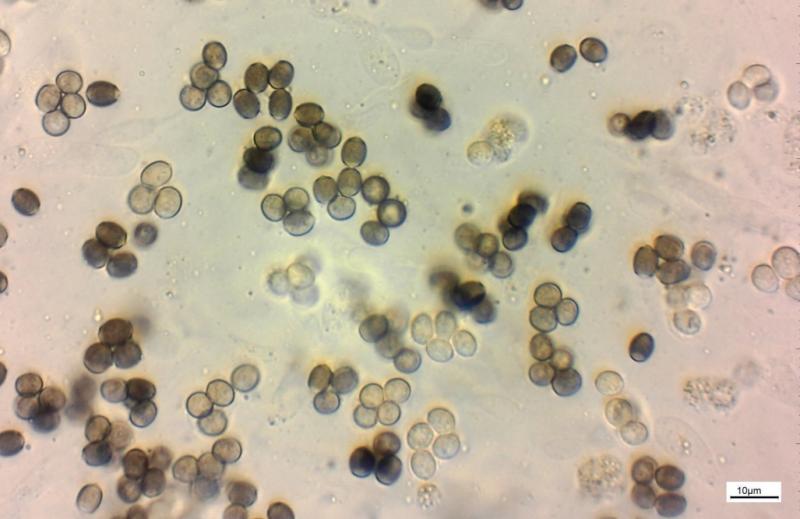
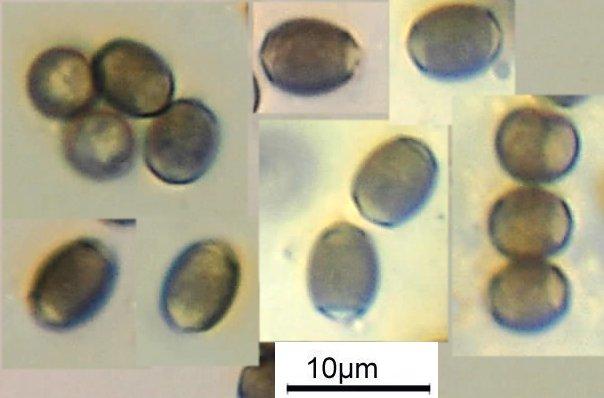

You may have an undescribed species of Scopinella. Only S. gallicola, growing on rust galls, has 4-spored asci. It is possible that S. gallicola, the only species described with 4-spored asci, is not restricted to rusts, but only careful study would be able to answer that question.
As far as I know, there has been only one new species added to the genus since Perz Piotr put his key to species on AscoFrance (http://www.ascofrance.fr/search_forum/8198). This new species, S. pyramidospora from grasses in Argentina, has 8-spored asci and ascospores having an unusual shape (Mycotaxon 122: 265–270. 2012.). It seems very close to S. caulincola. It is obviously not the same as yours.
Dave
I was thinking that it could possibly be an undescribed species. It is a pity that there is no more material, so that one could have made a proper description. I'll see if I can find more the next time I'm in Rotlia, but the chances are small.
Either way it will be presented in the report about Ascomycetes in Rotlia Nature Reserve that will be finished next year.
Thanks for thorough answer.
Per
did you found this species again?
BR,
Peter

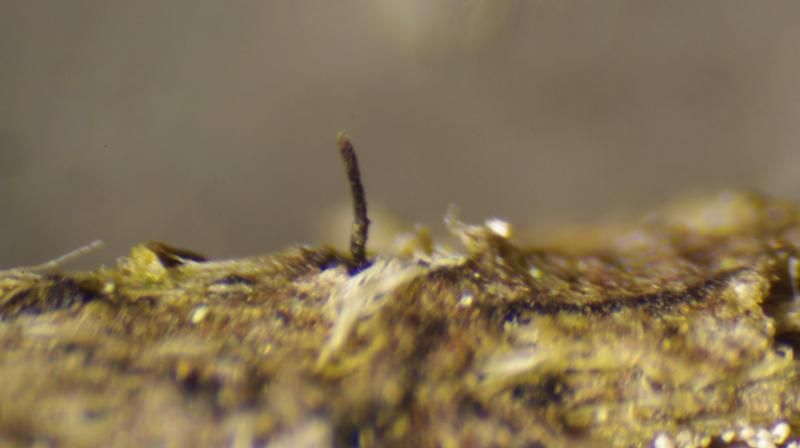
here I have the same species, on twigs of Salix cf caprea. At least one of the fruitbodies likely grew out of an old perithecia of what I think was Nigrograna fuscidula.
spores: (6.1) 6.3 - 7.1 (7.4) × (4.6) 4.7 - 5.2 (5.6) µm.
@Piotr: If you want to have the collection, write me an email or a message on FB. Thanks.
regards
björn