
08-04-2026 20:33
 Vasileios Kaounas
Found 07-04-26, in Abies cephalonica. Diameter 1,
08-04-2026 10:39
FRANCIS FOUCHIERBonjour , je recherche en pdf cet article: KORF R

06-04-2026 21:36
 Viktorie Halasu
Hello, could anyone please send me the article wi
06-04-2026 19:40
 David Gibbs
Help with this one much appreciated, on rotting Fa
06-04-2026 11:07
Louis DENYBonjour forum, Trouvé sur bois de feuillu très d
06-04-2026 16:24
Juuso ÄikäsLast Tuesday I found some tiny white Helotiales gr
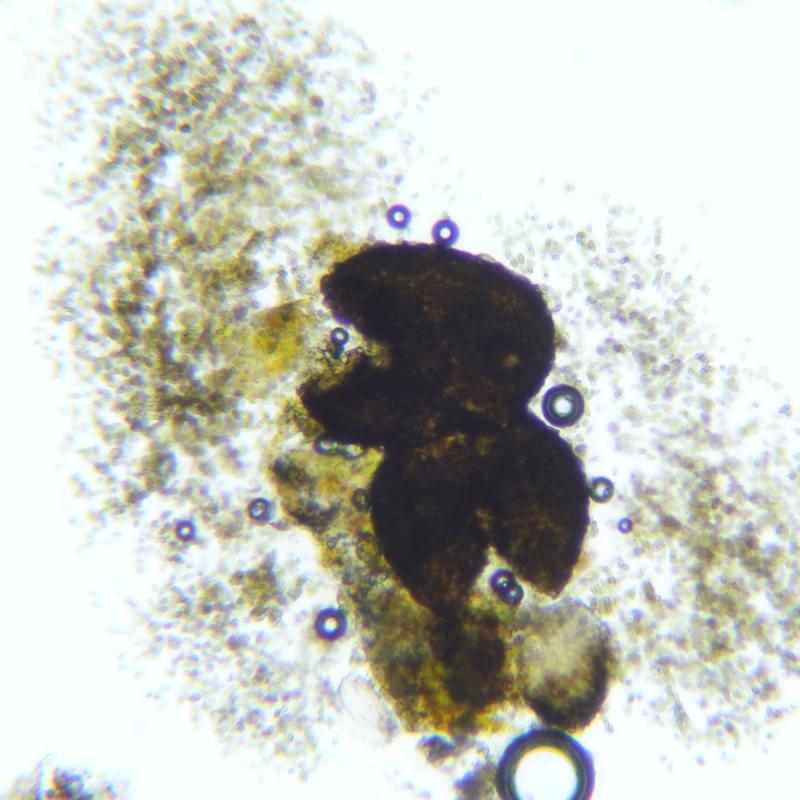
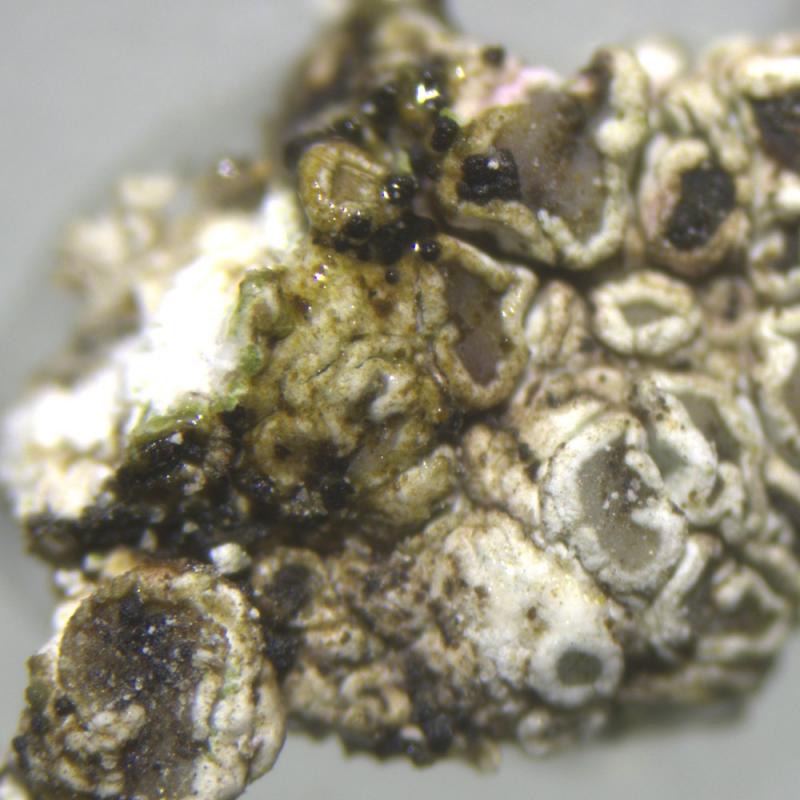
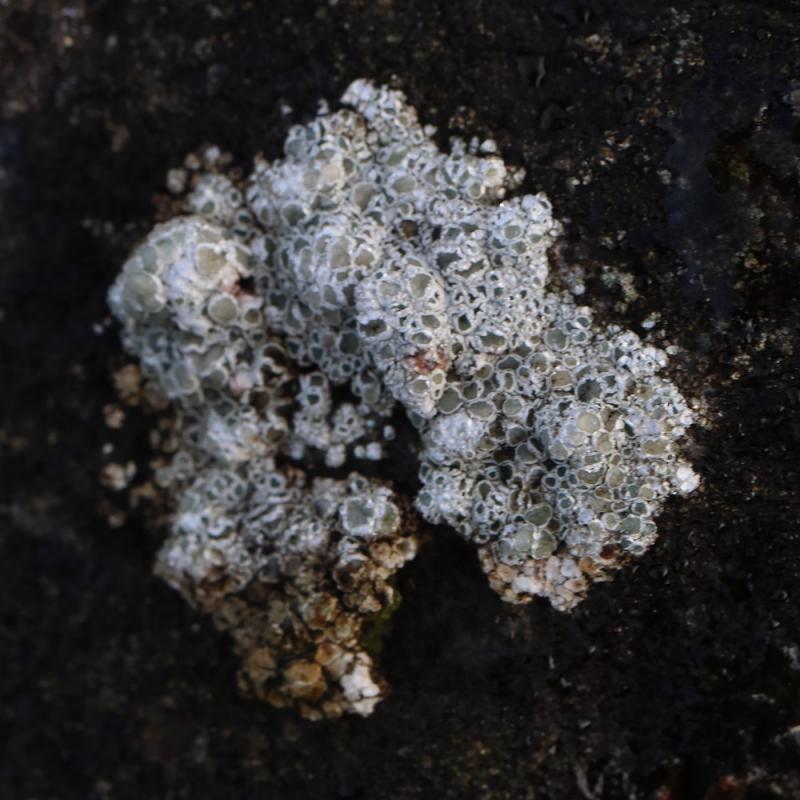
We found groups of perithecia on a Lecanora/Myriolecis spec (probably Myriolecis dispersa) and can't find a name for it.
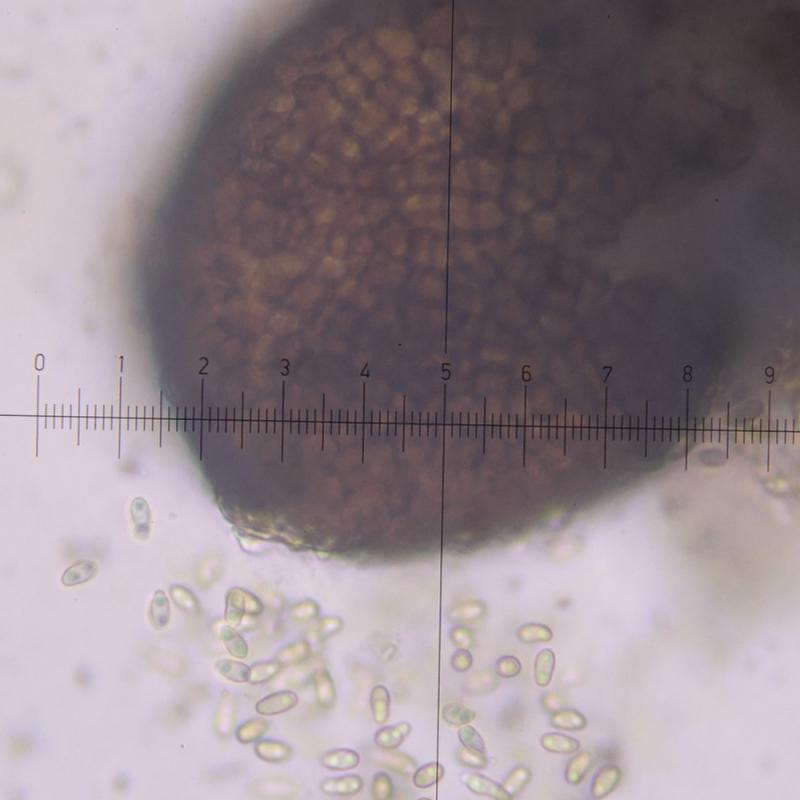
Host lichen was growing on basalt blocks near the waterline of a dyke. Perithecia mainly on the apothecia of the host. Conidia bigutate, ellipsoid sometimes with little deformations, measuring 7,5-8,5 x 3,0-3,5 ?m.
So far I considered the genus Unguiculariopsis, but dismissed it because of the lack of asci.
Does anyone have any suggestions? Thanks in advance.
Kind regards,
Niek and Tom Schrier
For more pics, see https://waarneming.nl/observation/382858810/
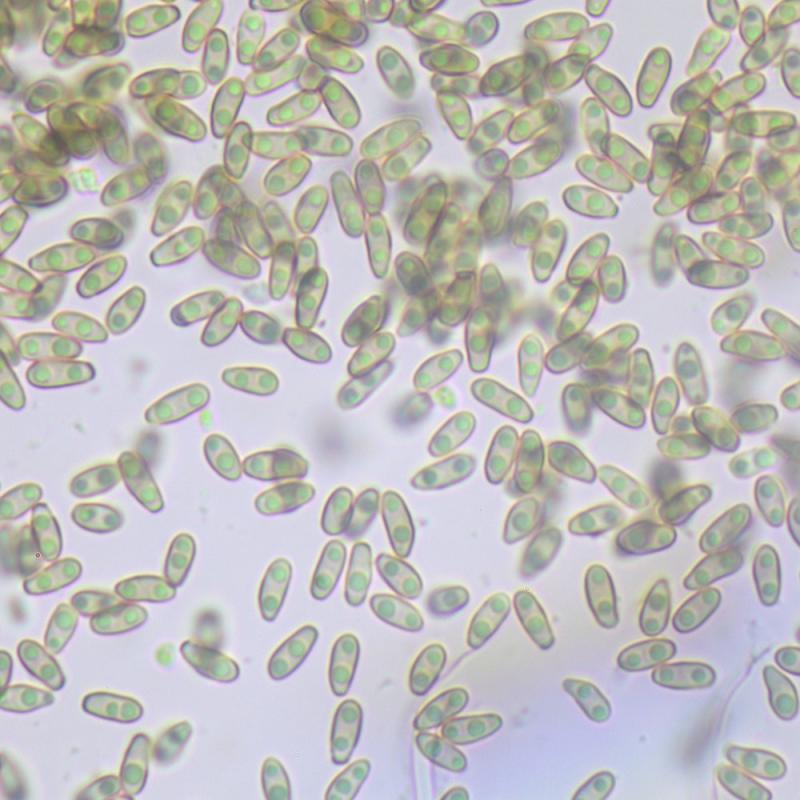


Mais je n'oublie pas tous les autres membres de ce forum, soyez tous en pleine forme cette année pour continuer de faire vivre l'étude des ascomycètes.
Meilleurs voeux à Ascofrance !
And ofcourse best wishes for 2026 (Alain aswell)!
Sorry for the confusion. We only saw pycnidia, so my search into Unguiculariopsis was not a smart move. But due to the fruiting bodies that looked to be on top of the apothecia, this Genus came to mind.
I took a look at Didymocyrtis and used the key in Ertz et al. 2015 (https://www.researchgate.net/publication/283945855), leading to D. bryonthae. That matches in conidia and protruding pycnidia, however it is only found on Lecanora epibryon (which looks to grow similar as the infected thallus we saw, but is a different species not found in the Netherlands). Are other hosts possible for bryonthae? Or could it be D. slaptoniensis? I only found slaptoniensis on
Xanthoria and Physcia.
Kind regards,
Niek