
08-04-2026 20:33
 Vasileios Kaounas
Found 07-04-26, in Abies cephalonica. Diameter 1,
08-04-2026 10:39
FRANCIS FOUCHIERBonjour , je recherche en pdf cet article: KORF R

06-04-2026 21:36
 Viktorie Halasu
Hello, could anyone please send me the article wi
06-04-2026 19:40
 David Gibbs
Help with this one much appreciated, on rotting Fa
06-04-2026 11:07
Louis DENYBonjour forum, Trouvé sur bois de feuillu très d
06-04-2026 16:24
Juuso ÄikäsLast Tuesday I found some tiny white Helotiales gr
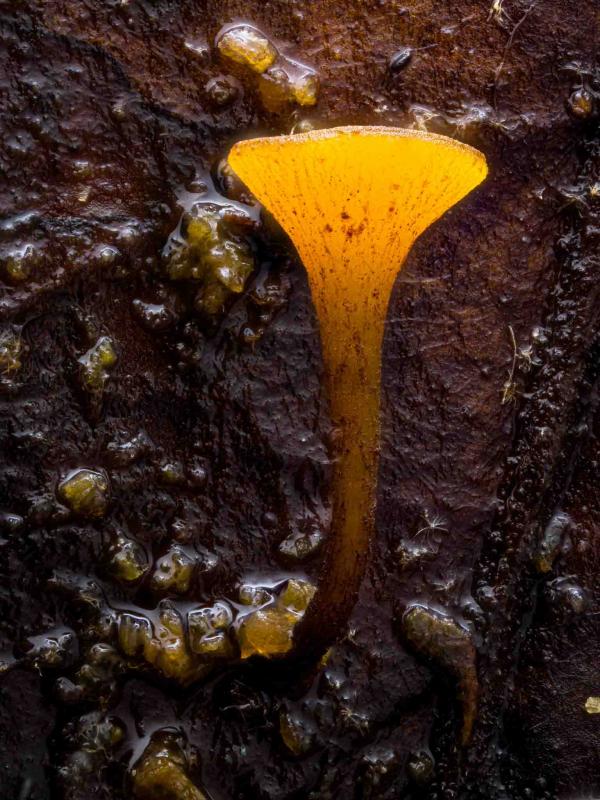
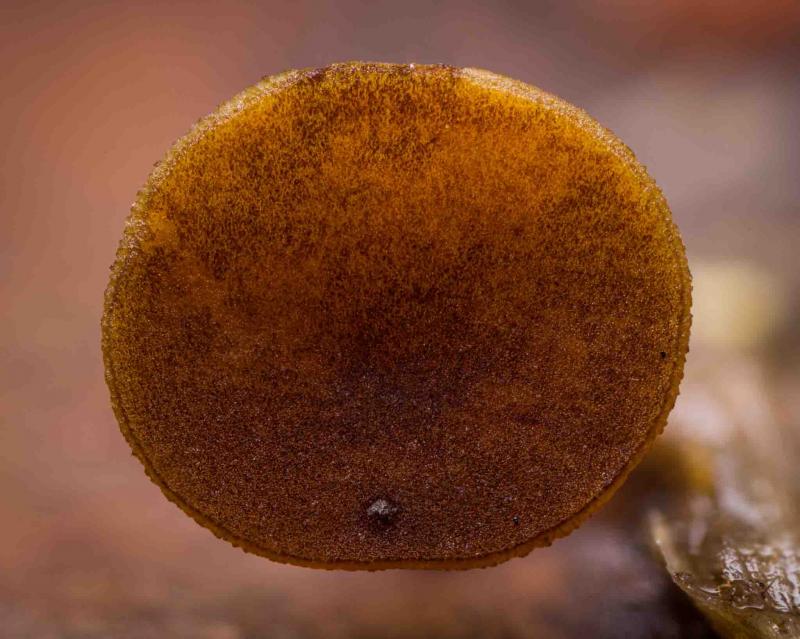
indet. Rutstroemiaceae sp. on unk. fallen leaves
Danny Newman,
15-12-2025 07:09
 indet. Rutstroemiaceae sp. on unk. fallen leaves
McKee Branch Trail, Great Smoky Mountains National Park, Haywood County, North Carolina, USA
https://www.inaturalist.org/observations/304109723
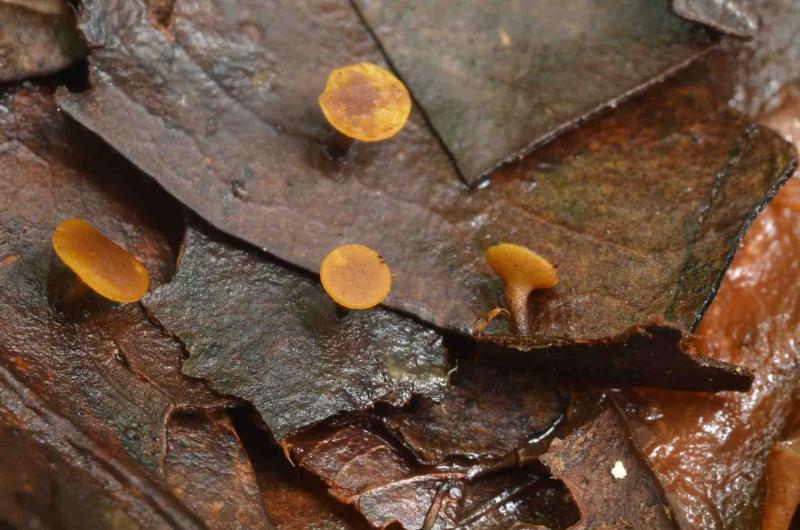
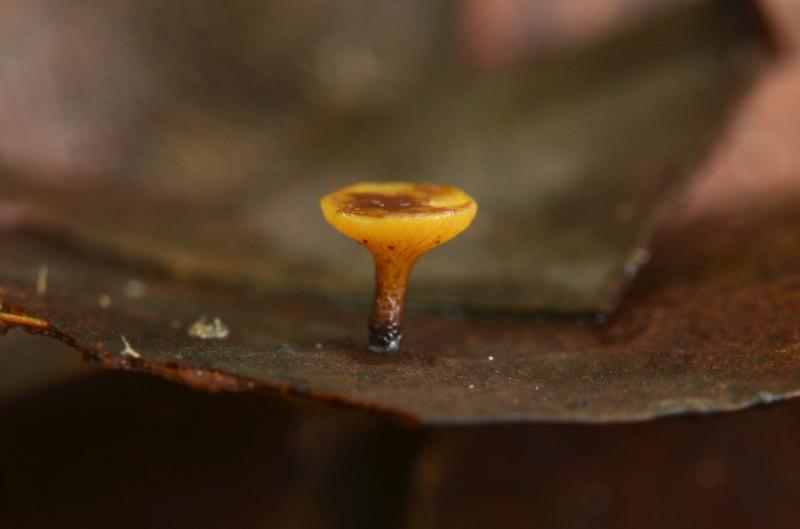
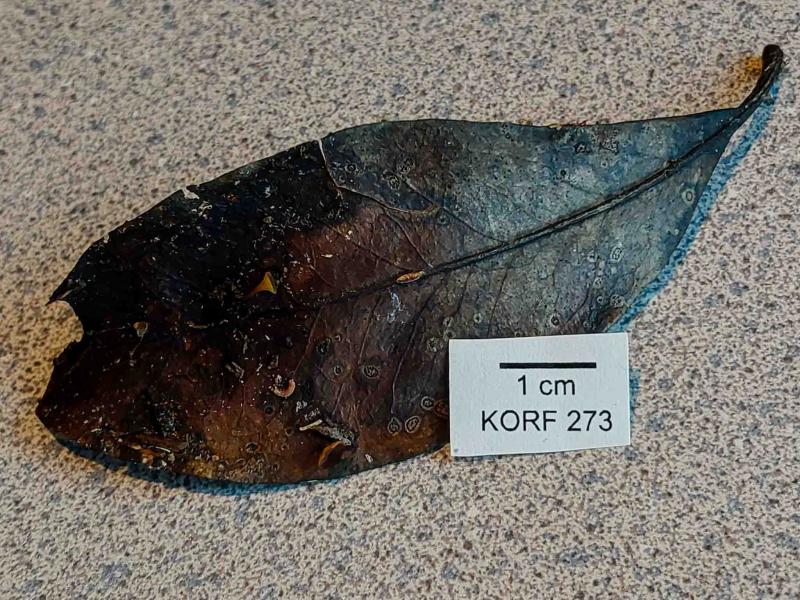
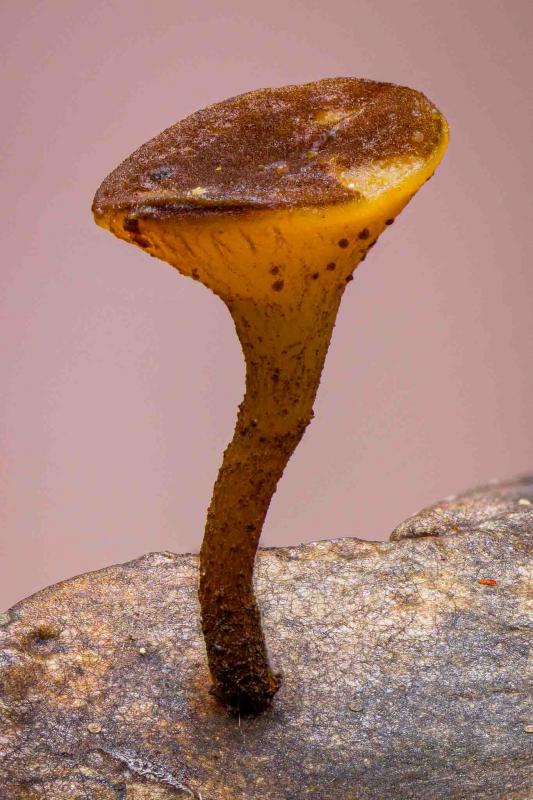
Collected during the 2025 Richard P. Korf Memorial North American Ascomycete Foray (aka "The Korf Foray), held at the Appalachian Highlands Science Learning Center in Purchase Knob, North Carolina.
ITS sequence available at iNat link
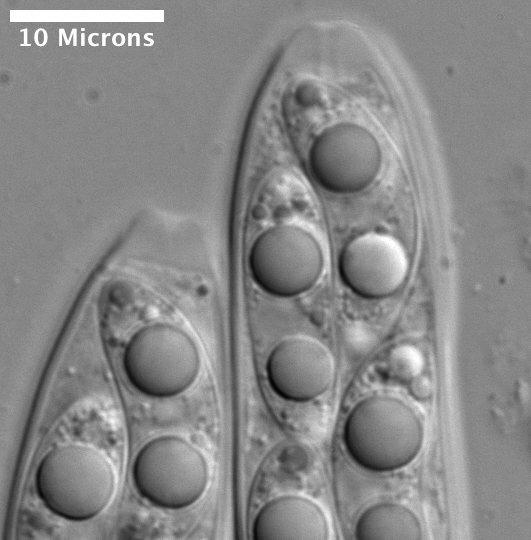
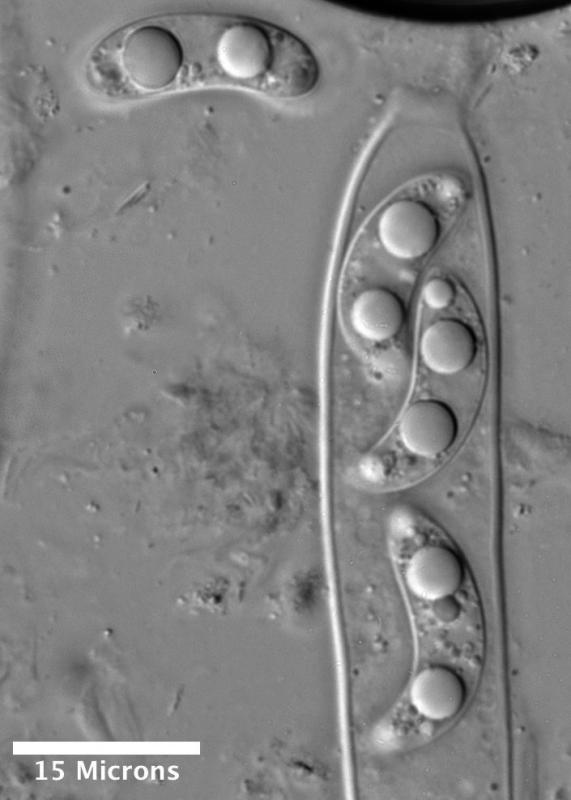
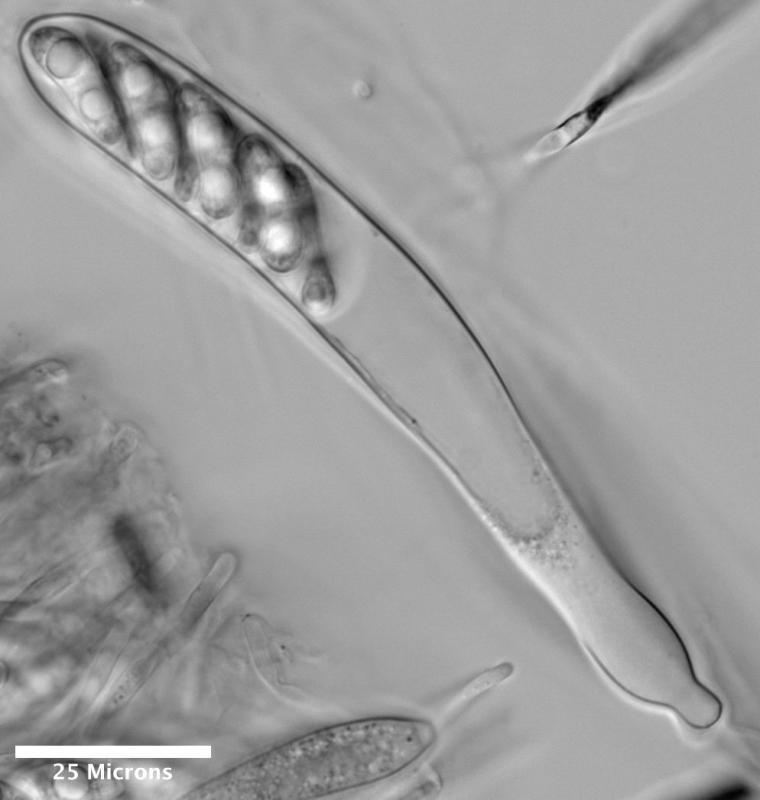
photo credits: Danny Newman & Connor Dooley
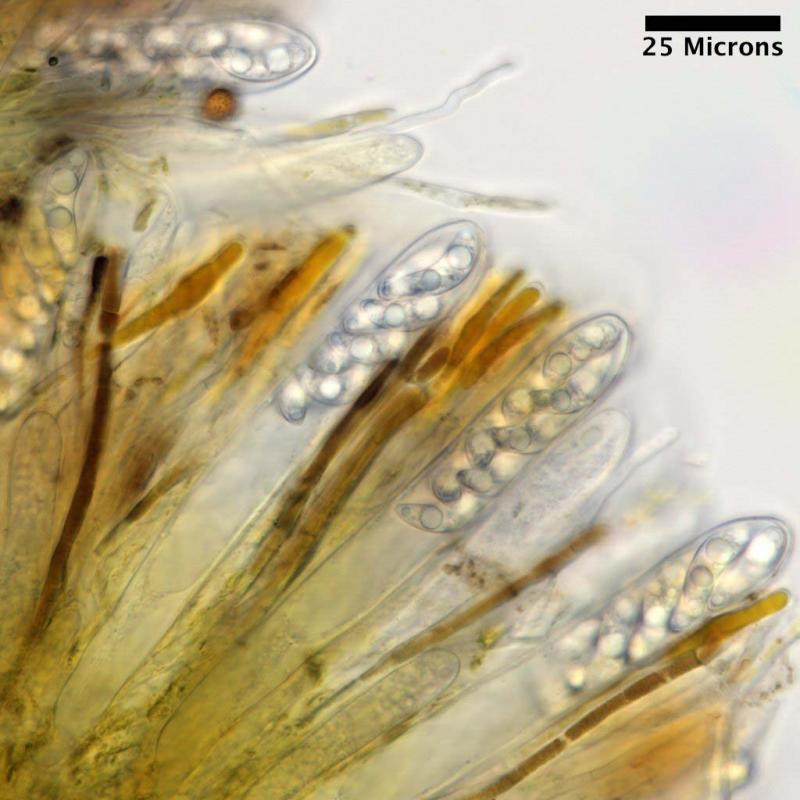
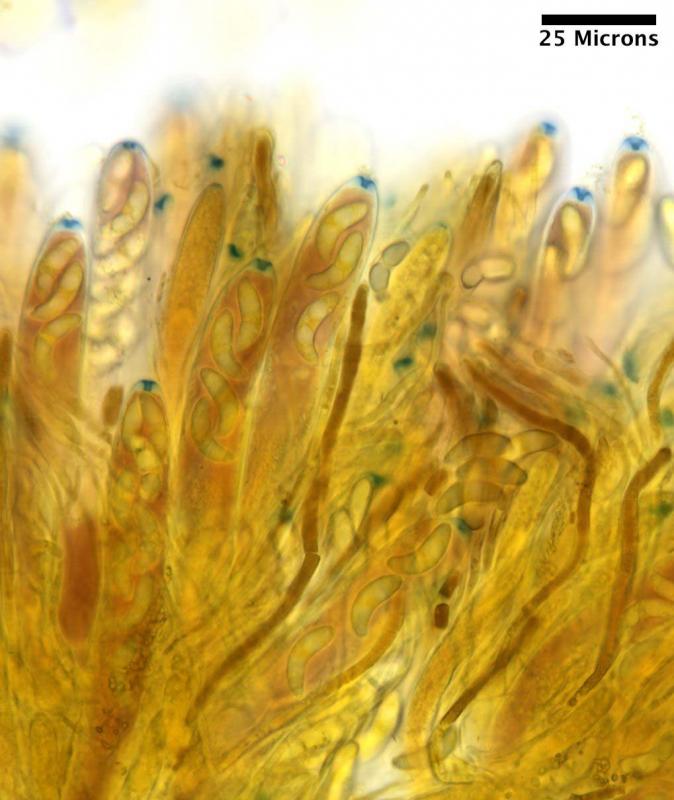
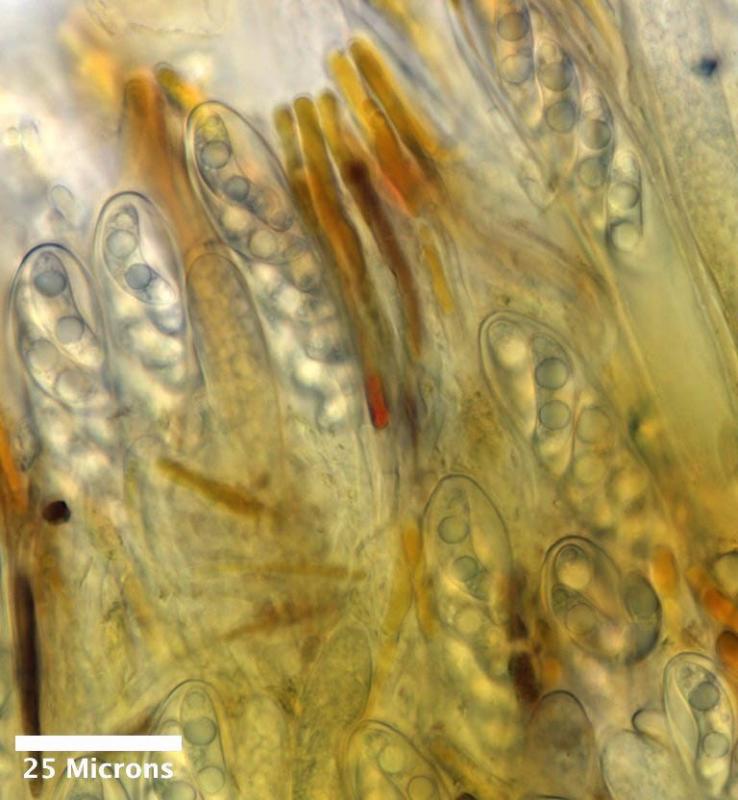
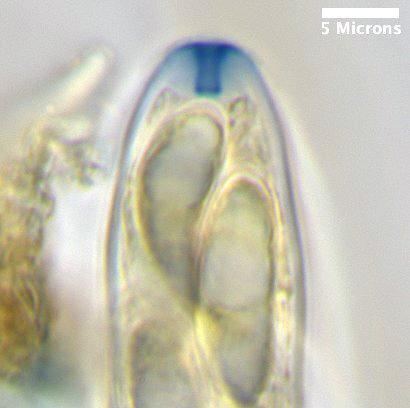
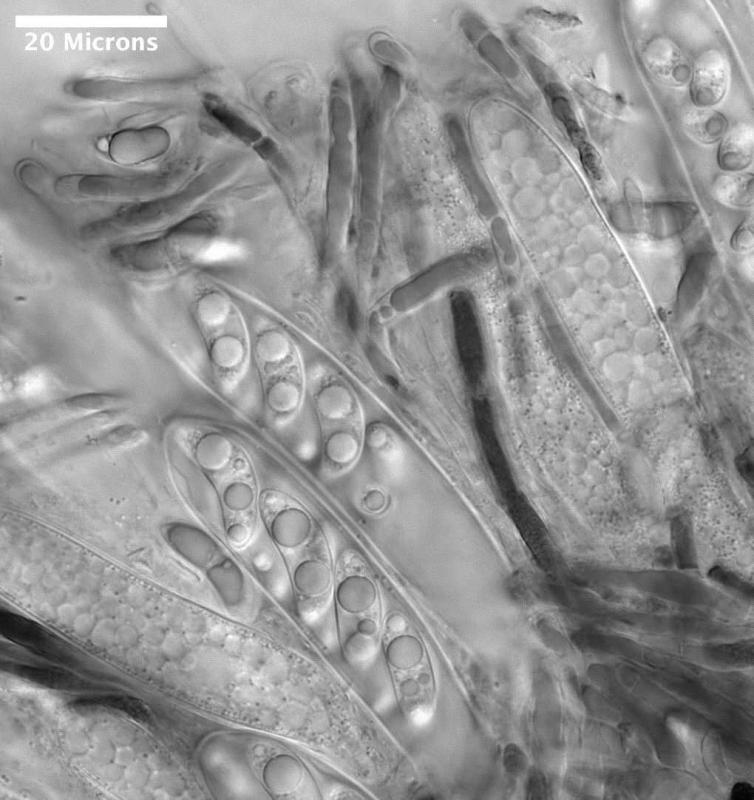
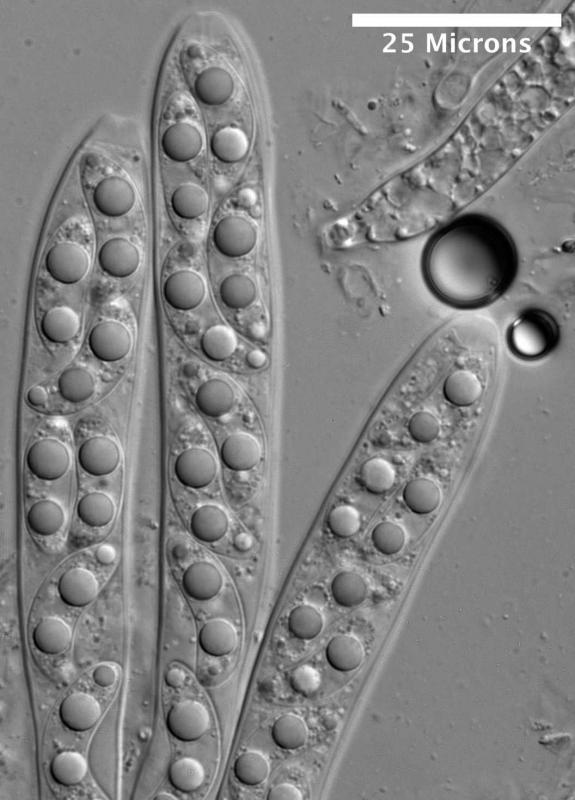
micrograph credits: Patrick A Verdier
Any and all ID help is greatly appreciated. Additional micrographs may be generated upon request
cross posted on Ascomycetes of the World at https://www.facebook.com/groups/ascomycetes/permalink/4143559412562898/
Hans-Otto Baral,
15-12-2025 09:30

Re : indet. Rutstroemiaceae sp. on unk. fallen leaves
This is difficult. One should check White's monograph of Rutstroemia.
Splendid photos! Did you measure the spores? Are some photos greyscale? The excipulum should be a prismatica-porrecta.
ITS Blast gives with 99% (4 nt & 1 gap) an Uncultured isolate (dfmo0688_132) from USA, North Carolina, isolated from mixed hardwood litter layer. - More distantly 96% R. punicae, 95.5% R. tiliacea, 95.3% R. echinophila, 94.5-95.5% R. firma
Zotto
Splendid photos! Did you measure the spores? Are some photos greyscale? The excipulum should be a prismatica-porrecta.
ITS Blast gives with 99% (4 nt & 1 gap) an Uncultured isolate (dfmo0688_132) from USA, North Carolina, isolated from mixed hardwood litter layer. - More distantly 96% R. punicae, 95.5% R. tiliacea, 95.3% R. echinophila, 94.5-95.5% R. firma
Zotto
Danny Newman,
15-12-2025 11:59
Re : indet. Rutstroemiaceae sp. on unk. fallen leaves
Zotto,
As the only micrographs that exist (so far) are those shown here, no spores have yet been observed outside of their asci, which has stopped me from making any measurements. I can plug these micrographs into Piximetre and measure the unejected spores, using the scale bars to calibrate, but I wonder how useful such measurements will be. I defer to you entirely.
as for the coloration of the micrographs, some are indeed in greyscale, though what technique was used to render them, I'm not quite sure. Patrick Verdier will know, as he produced the micrographs. I've asked him to weigh in, and will post back with his remarks.
EDIT: some preliminary spore measurements:
as for the coloration of the micrographs, some are indeed in greyscale, though what technique was used to render them, I'm not quite sure. Patrick Verdier will know, as he produced the micrographs. I've asked him to weigh in, and will post back with his remarks.
EDIT: some preliminary spore measurements:
19.67 6.17
19.51 6.41
18.97 5.94
19.26 5.69
17.02 6.15
19.77 6.26
19.81 6.10
17.69 6.48
18.21 6.36
19.98 6.46
19.51 6.41
18.97 5.94
19.26 5.69
17.02 6.15
19.77 6.26
19.81 6.10
17.69 6.48
18.21 6.36
19.98 6.46
(17) 17.7 - 19.8 (20) × (5.7) 5.9 - 6.46 (6.5) µm
Q = (2.7) 2.8 - 3.2 (3.4) ; N = 10
Me = 19 × 6.2 µm ; Qe = 3.1
Q = (2.7) 2.8 - 3.2 (3.4) ; N = 10
Me = 19 × 6.2 µm ; Qe = 3.1
Hans-Otto Baral,
15-12-2025 14:53
Re : indet. Rutstroemiaceae sp. on unk. fallen leaves
This is good, thanks. You can find out yourself if you have both in a preparation. Inside dead turgorless asci it makes no difference if the spore contents are the same. In turgescent asci they may be smalle due to pressure.
Danny Newman,
16-12-2025 01:08
Re : indet. Rutstroemiaceae sp. on unk. fallen leaves
Zotto,
Is the information provided sufficient to assign this collection to the genus Rutstroemia, or are other genera still a possibility pending the details of the ectal excipulum?
Hans-Otto Baral,
16-12-2025 08:49
Re : indet. Rutstroemiaceae sp. on unk. fallen leaves
It is clearly a Rutstroemia, at least since the R. tiliacea group was transferred from Encoelia there. But microscopically it is a typical Rutstroemia. Anyway, I would check the ectal excipulum, there is one species (R. bolaris) which has an angularis, but that species has very different spores.
Hans-Otto Baral,
19-12-2025 22:20
Re : indet. Rutstroemiaceae sp. on unk. fallen leaves
I have tried White's (1945) key but there is nothing that fits perfectly, except for Rutstroemia petiolorum which has some similarities. Actually, your sequence fully fits the only one in GB of R. petiolorum, which comes from Norway, "on Quercus or Fagus leaves": U21822 (Carbone & Kohn 1993, only ITS1). I assume this is not typical R. petiolorum, but I am not sure, the article is only molecular.
When comparing the spores, I have the impression that their content difffers, typical R. petiolorum having more multiguttulate contents. I also do not see brown vacuoles in the paraphyse, but hyaline VBs in typical petiolorum.
You can view the differences on my petiolorum folder in IVV.