
08-04-2026 20:33
 Vasileios Kaounas
Found 07-04-26, in Abies cephalonica. Diameter 1,
08-04-2026 10:39
FRANCIS FOUCHIERBonjour , je recherche en pdf cet article: KORF R

06-04-2026 21:36
 Viktorie Halasu
Hello, could anyone please send me the article wi
06-04-2026 19:40
 David Gibbs
Help with this one much appreciated, on rotting Fa
06-04-2026 11:07
Louis DENYBonjour forum, Trouvé sur bois de feuillu très d
06-04-2026 16:24
Juuso ÄikäsLast Tuesday I found some tiny white Helotiales gr
Hymenoscyphus on blueberry.
Josep Torres,
04-11-2025 09:07
 Hello.
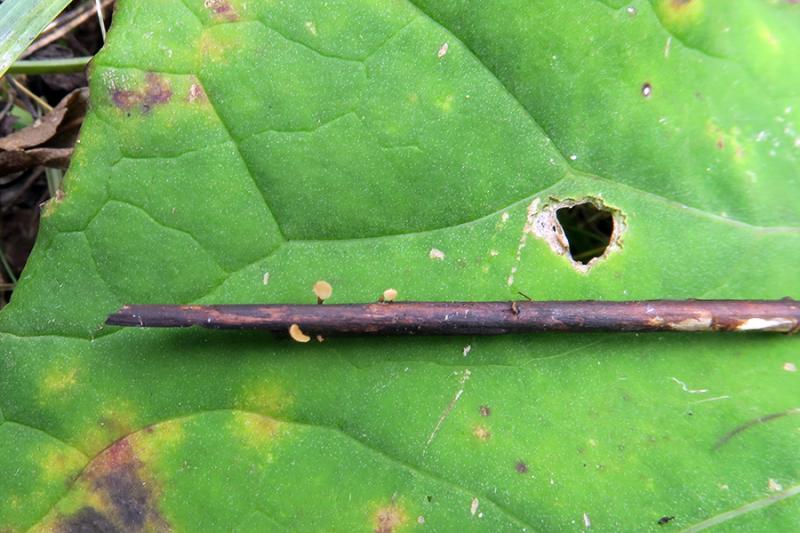
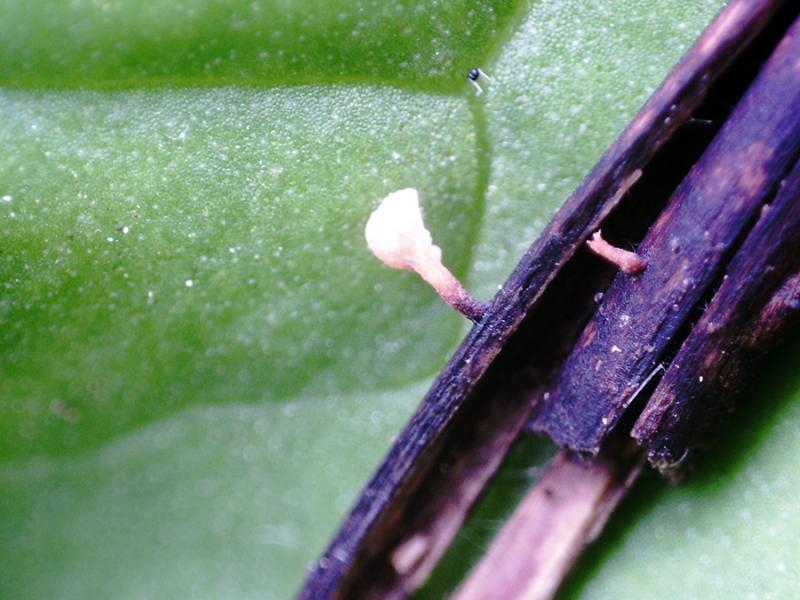
A suspected Hymenoscyphus sprouting on a thin blueberry (Vaccinium) stem.
Apothecia barely 1 mm in diameter and 1.6 mm high, whitish in color with a blackish base.
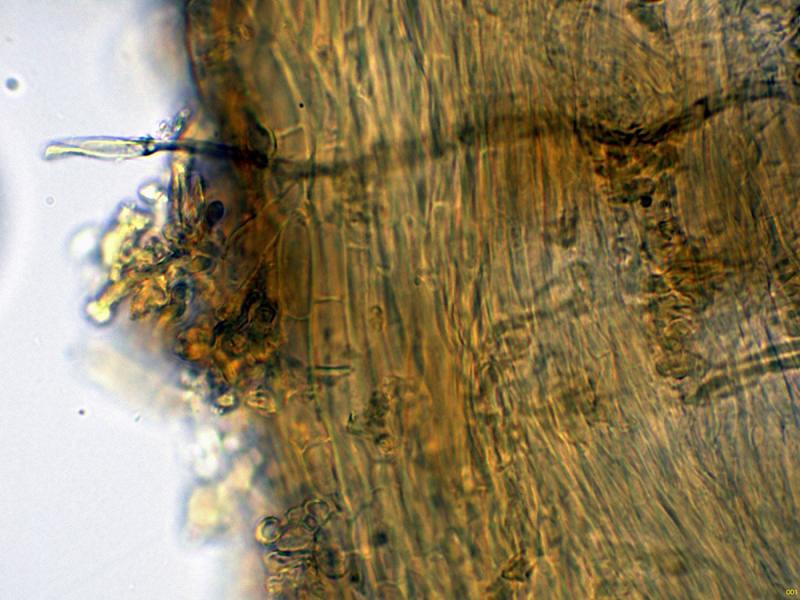
Stem hyphae arranged parallel to each other, with brown intracellular pigment.
Marginal hairs with rounded tips and short septa.
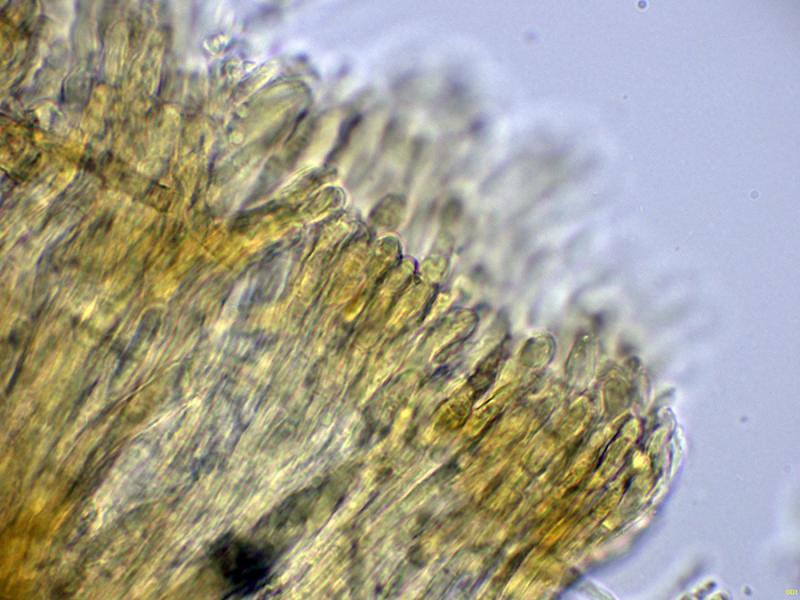
Hyphae of the excipulum with an intricate texture.
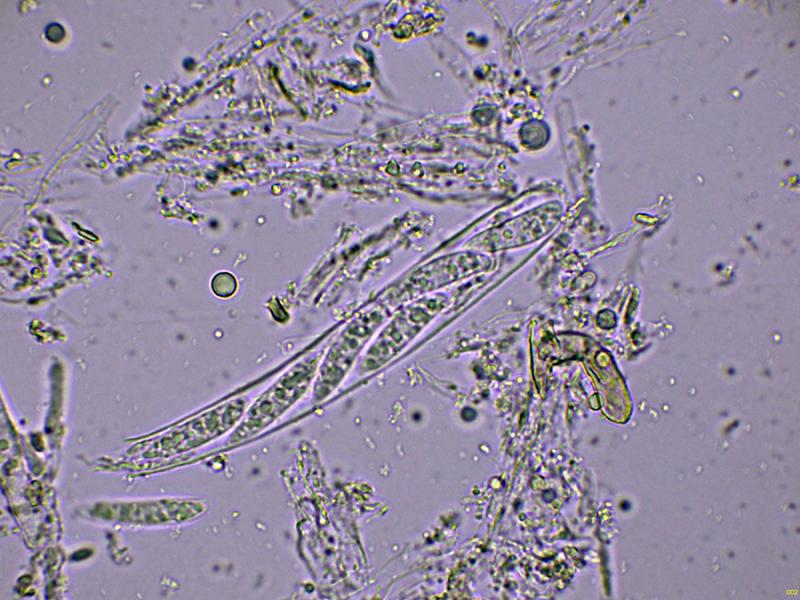
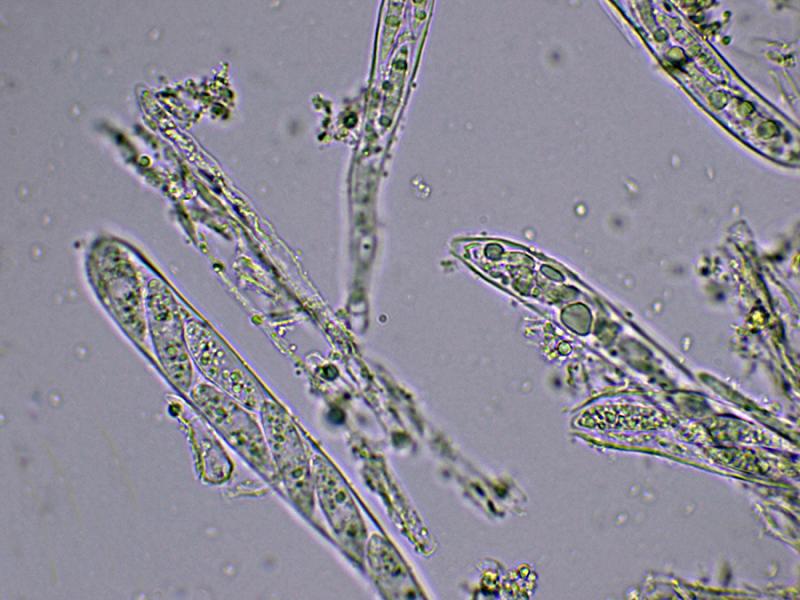
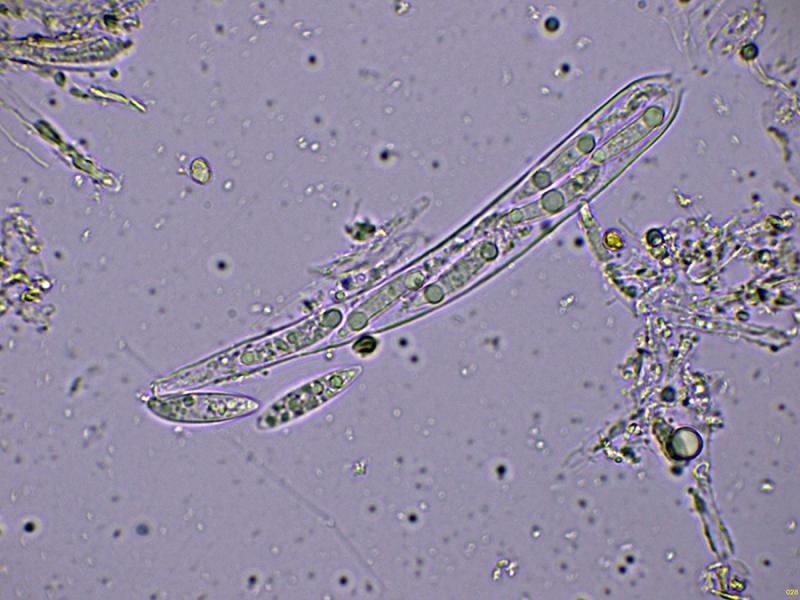
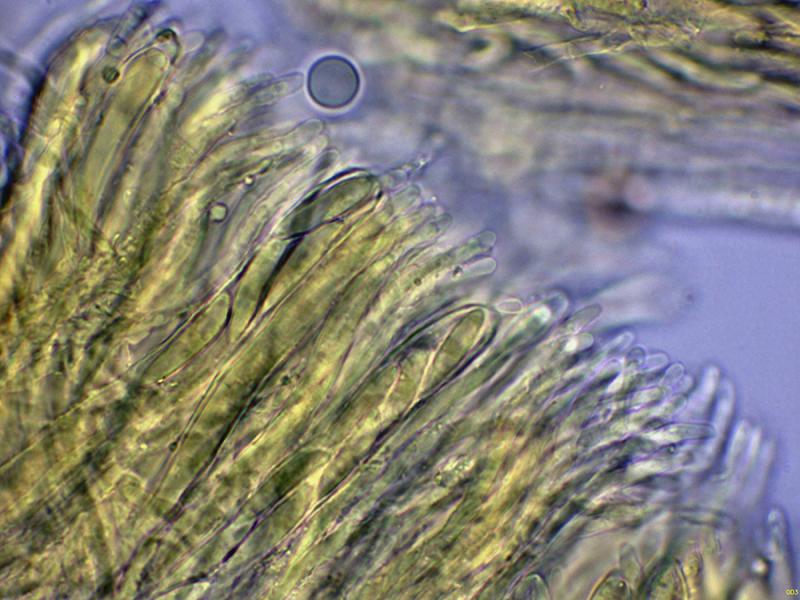
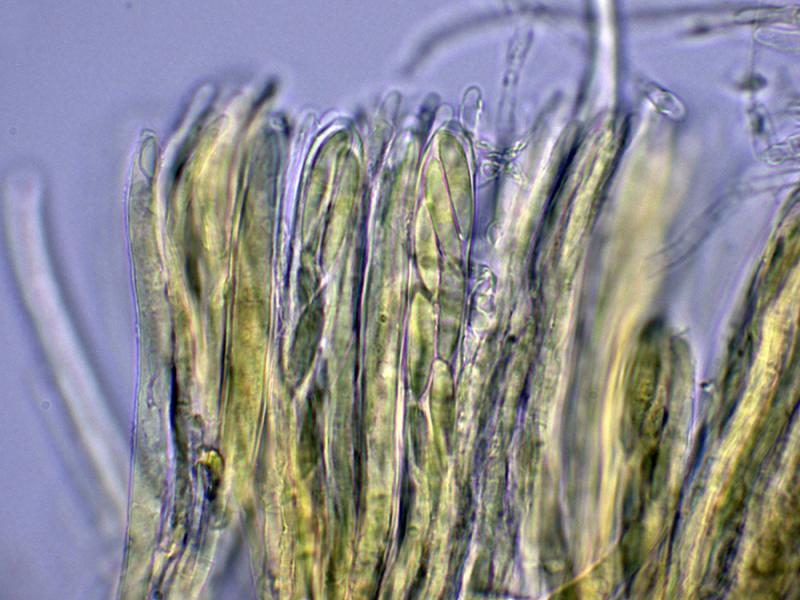
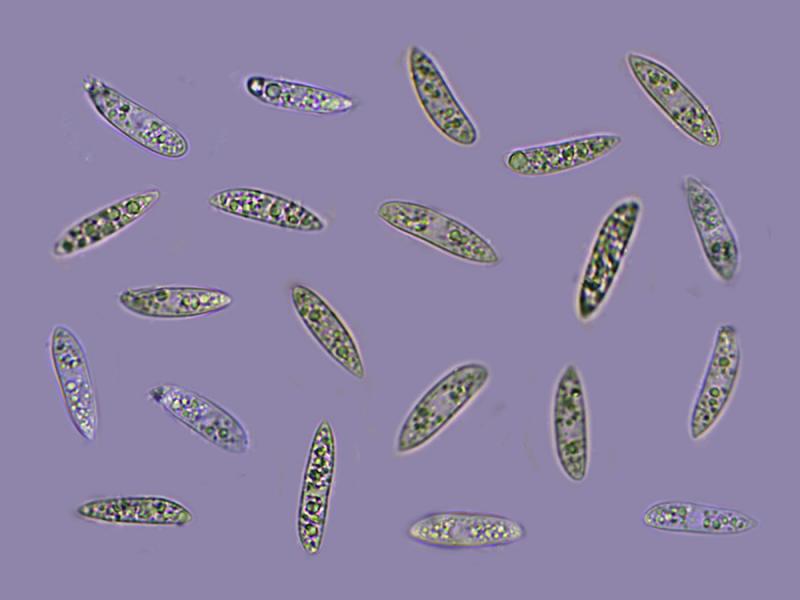
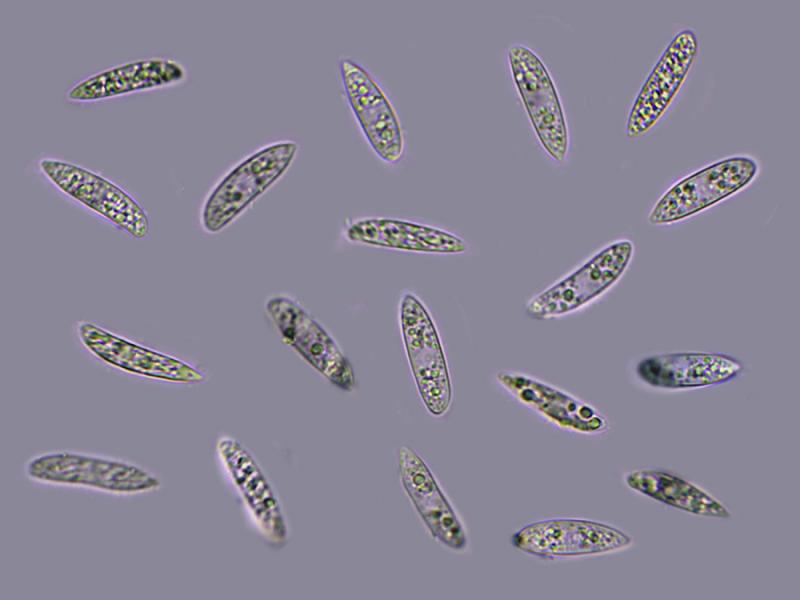
Octosporous asci, with a very slight amyloid reaction to Melzer's reagent in their tiny apical apparatus. Filiform paraphyses that protrude very slightly above the level of the asci. Ascospores between cylindrical and fusiform, with one pointed end and the opposite end more rounded, containing numerous lipid droplets, and with the following measurements of mature spores free in water:
(18.2) 19.8 - 22.4 (23.6) × (4.5) 4.7 - 5.9 (6.2) µm
Q = (3.1) 3.4 - 4.6 (5.1) ; N = 40
Me = 21.1 × 5.3 µm ; Qe = 4
Based on its characteristics and following the keys (which we cannot name), I am led to believe it is Hymenoscyphus vacini, apparently only associated with Acer, although it does not appear in the keys. Then we also have the very similar Hymenoscyphus fraxineus, apparently associated with Fraxinus, a species I have already studied once and whose presence on Vaccinum I am unsure of.
Any opinions you may have would be greatly appreciated.
Thank you in advance.
Best regards.
Hans-Otto Baral,
04-11-2025 09:46

Re : Hymenoscyphus on blueberry.
The substrate looks a bit herbaceous, are you sure with a woody stem? Species of the H. fraxineus group on petioles have larger oil drops and a bit smaller spores.
Josep Torres,
04-11-2025 14:26
Re : Hymenoscyphus on blueberry.
Hi Zotto.
A colleague gave me the small log and said it was a blueberry log, but I'm not entirely sure.
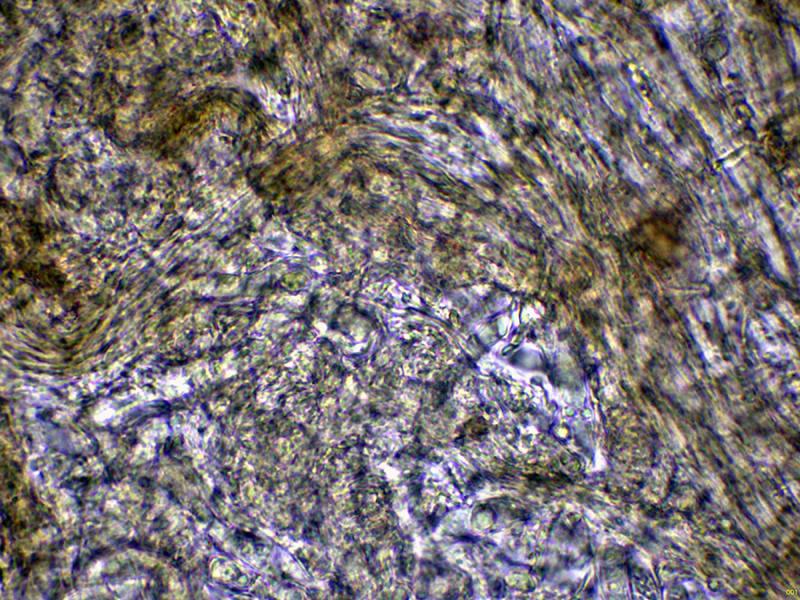
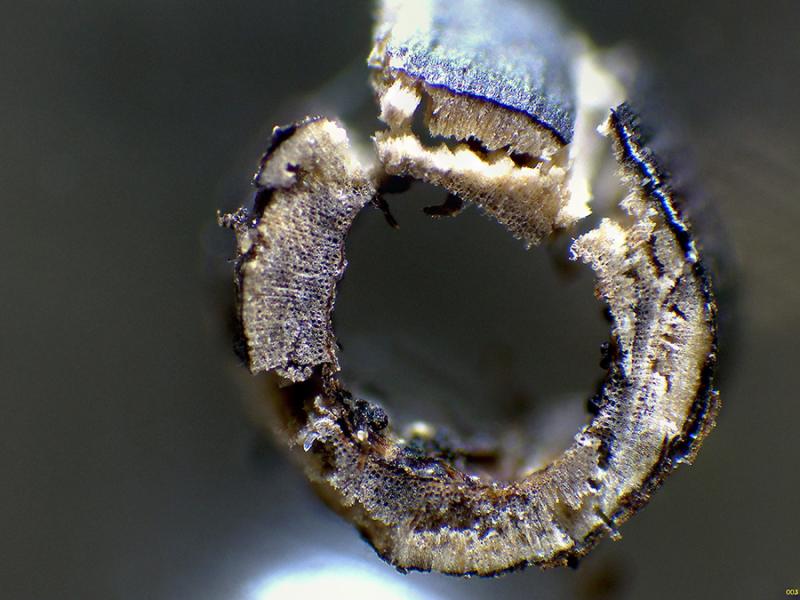
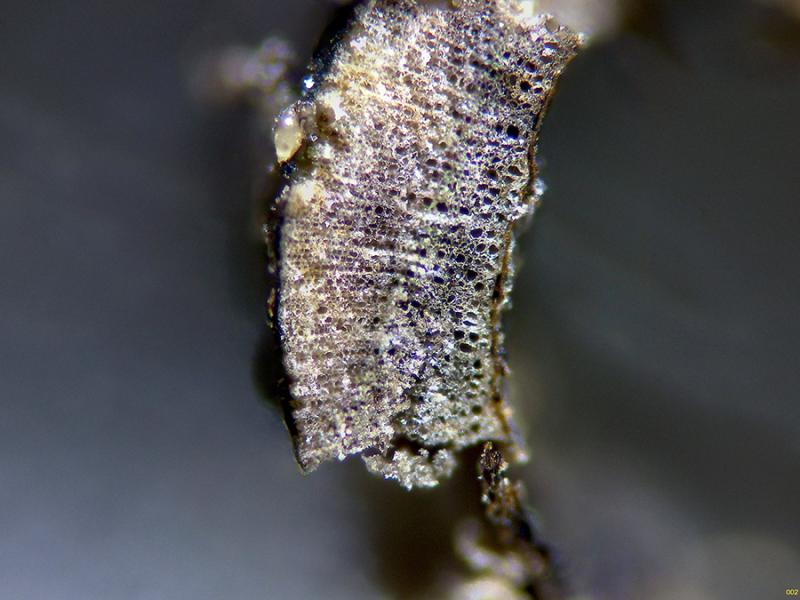
The log was about 2.2 mm in diameter, and in case it helps to identify it correctly, I've attached a couple of cross-sectional images, one at 40x magnification and the other at 100x magnification.
Best regards.
A colleague gave me the small log and said it was a blueberry log, but I'm not entirely sure.
The log was about 2.2 mm in diameter, and in case it helps to identify it correctly, I've attached a couple of cross-sectional images, one at 40x magnification and the other at 100x magnification.
Best regards.
Hans-Otto Baral,
04-11-2025 17:14
Re : Hymenoscyphus on blueberry.
A log of 2.2 mm diam. sounds funny. A log has usually 20 cm diam. or even 1 m.
For me this looks much like a herbaceous stem. So it could be a member of the H. scutula complex, but I do not know a black stipe base there. Petioles of trees are usually bilateral-symmetrical, which I do not see here.
Josep Torres,
05-11-2025 08:21
Re : Hymenoscyphus on blueberry.
Thanks, Zotto.
I apologize for the slip; of course, I should have referred to a stem, not a trunk. I think I know Hymenoscyphus scutula well, and as you correctly stated, the base of the stem is completely white. In this case, I have practically no material to sequence, so for now, I'll leave it in my files as the closest match, that is, Hymenoscyphus aff. scutula.
Best regards.
I apologize for the slip; of course, I should have referred to a stem, not a trunk. I think I know Hymenoscyphus scutula well, and as you correctly stated, the base of the stem is completely white. In this case, I have practically no material to sequence, so for now, I'll leave it in my files as the closest match, that is, Hymenoscyphus aff. scutula.
Best regards.