

06-04-2026 21:36
 Viktorie Halasu
Hello, could anyone please send me the article wi
06-04-2026 19:40
 David Gibbs
Help with this one much appreciated, on rotting Fa
06-04-2026 11:07
Louis DENYBonjour forum, Trouvé sur bois de feuillu très d
06-04-2026 16:24
Juuso ÄikäsLast Tuesday I found some tiny white Helotiales gr
05-04-2026 20:40
 Robin Isaksson
Hi!Found i Japan on bark of Abies sp. Spores 35-4
06-04-2026 08:15
 Lothar Krieglsteiner
some days ago, on the lower surface of leaf of Que
vernal violaceous Pezizaceae - not Geoscypha ampelina?
Lothar Krieglsteiner,
23-04-2025 10:47
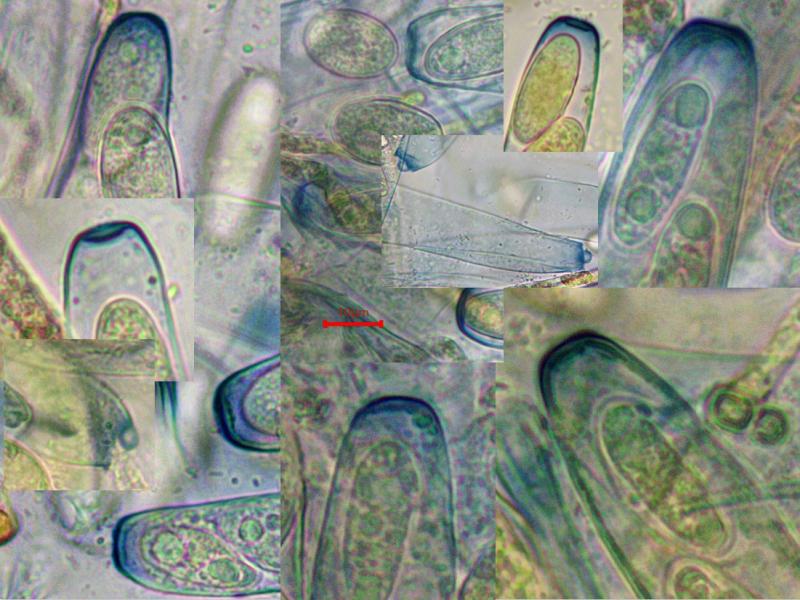
found first by my wife, some days ago, two days later findplace revisited. Calcareous side of rivulet, in vicinity of Fraxinus (known findplace of Morchella esculenta, Verpa conica etc.).I hesitate if the type of ascus-amyloidity is WTR? I would say so.
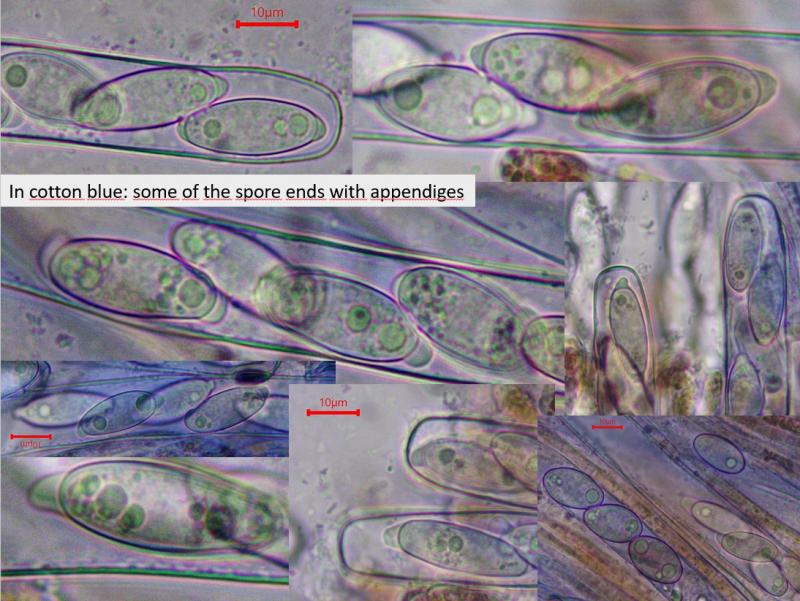
The spores are very variable in size and content, within and also outside the ascus - I found more ellispoid spores about 16-20/9-12 and more elongate ones about 19-23/8-10 µm, the latter likely being the better ripe ones (?). Some of these spores I noted to bear appendages, I noticed this only when preparating in cotton blue/lactophenole. The spores seem to be fully smooth.
I would have tried to identify this as Geosypha ampelina, but I hesitate by some details, especially the amyloidity (should be WT in ampelina), and the vernal growth.
Who can provide me with a proposal to the species?
Yours, Lothar
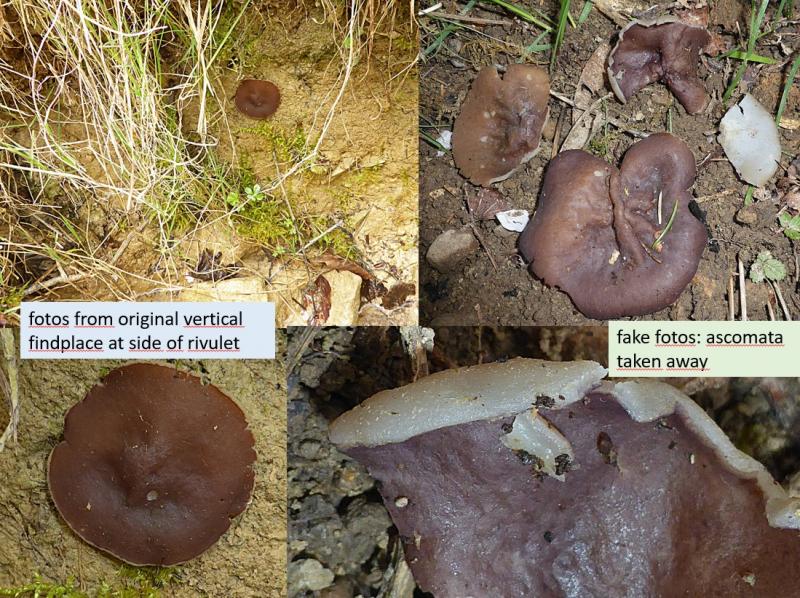
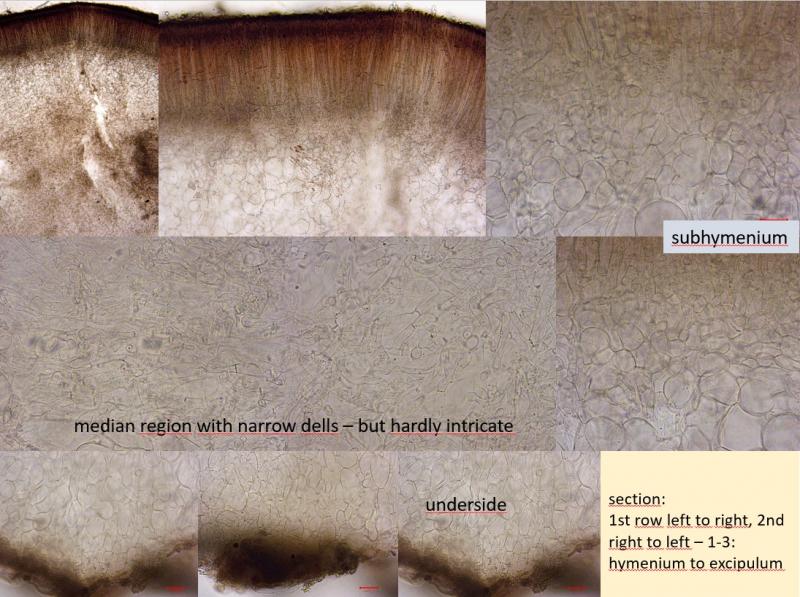
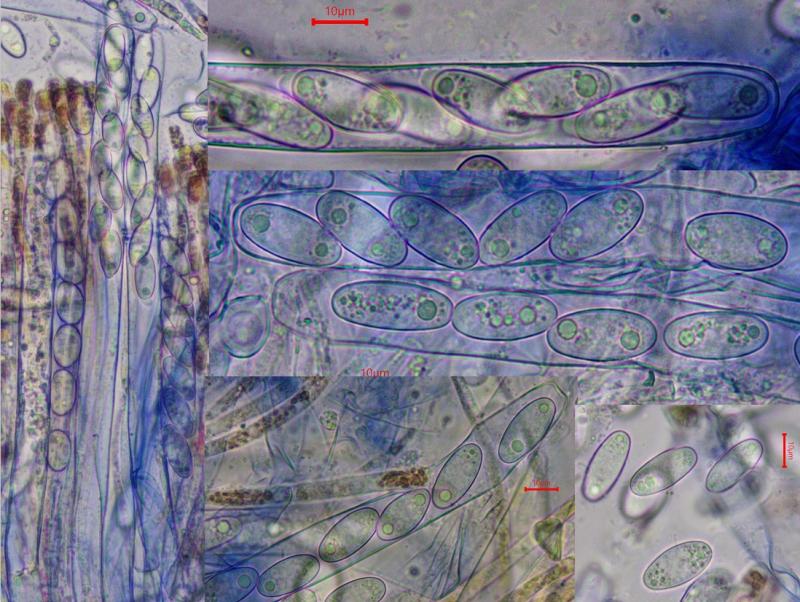
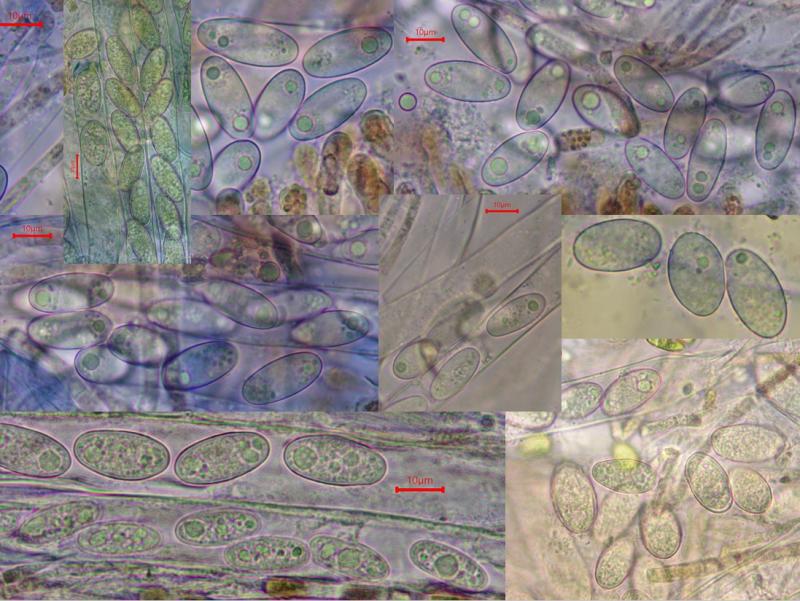
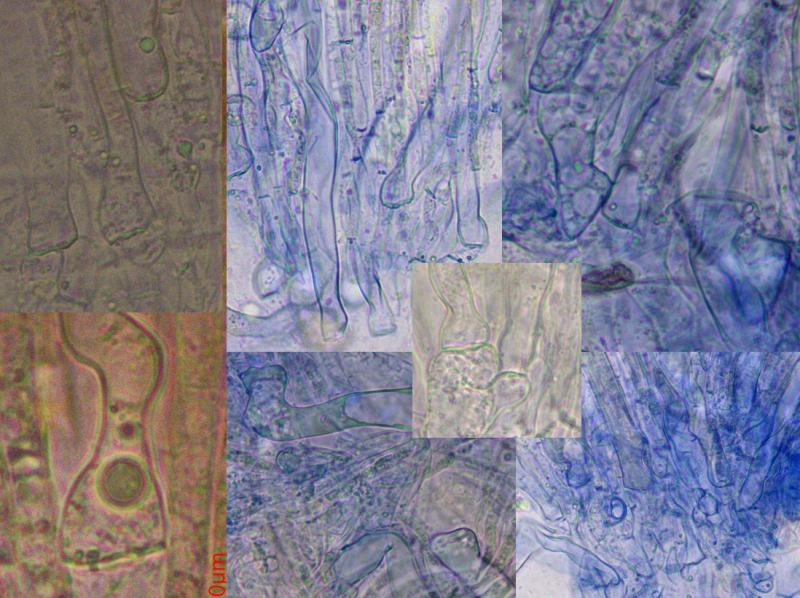
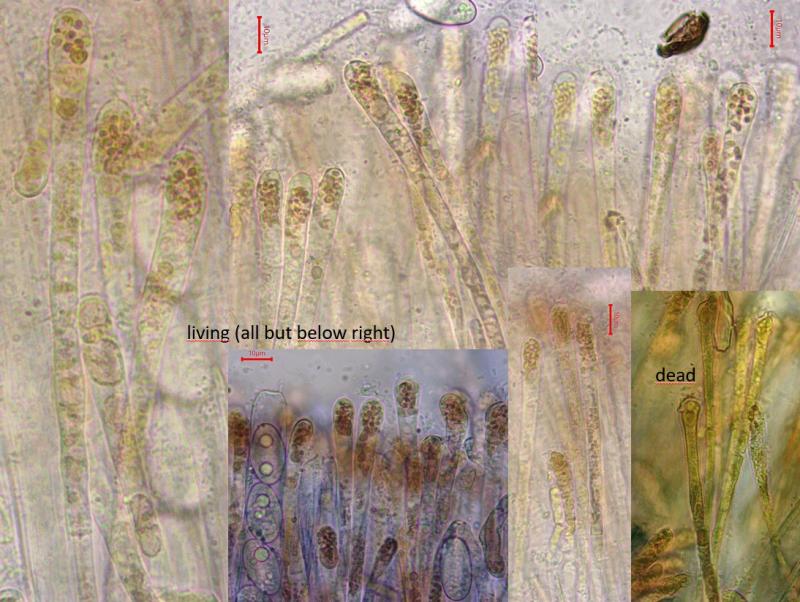
Nicolas VAN VOOREN,
23-04-2025 10:53

Re : vernal violaceous Pezizaceae - not Geoscypha ampelina?
No doubt, this is G. ampelina.
The presence of apical sheath on the ascospores is typical. The type of amyloid reaction is often intermediate between WT and WTR. In your collection, this is close to WTR, but the ring is not very thick as observed in Peziza spp. s. str.
The presence of apical sheath on the ascospores is typical. The type of amyloid reaction is often intermediate between WT and WTR. In your collection, this is close to WTR, but the ring is not very thick as observed in Peziza spp. s. str.
Lothar Krieglsteiner,
23-04-2025 10:55
Geoscypha ampelina
Hello Nicolas,
thank you very much for confirmation and comments.
Yours, Lothar
thank you very much for confirmation and comments.
Yours, Lothar