

06-04-2026 21:36
 Viktorie Halasu
Hello, could anyone please send me the article wi
06-04-2026 19:40
 David Gibbs
Help with this one much appreciated, on rotting Fa
06-04-2026 11:07
Louis DENYBonjour forum, Trouvé sur bois de feuillu très d
06-04-2026 16:24
Juuso ÄikäsLast Tuesday I found some tiny white Helotiales gr
05-04-2026 20:40
 Robin Isaksson
Hi!Found i Japan on bark of Abies sp. Spores 35-4
06-04-2026 08:15
 Lothar Krieglsteiner
some days ago, on the lower surface of leaf of Que
 Hi,
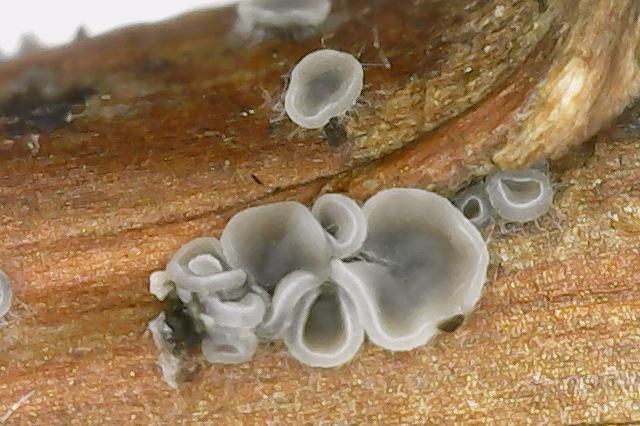
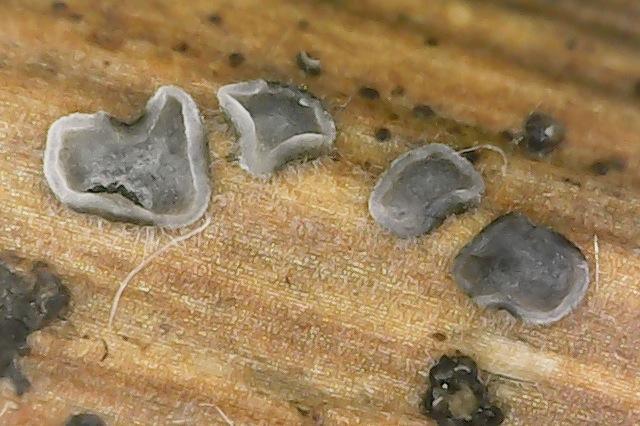
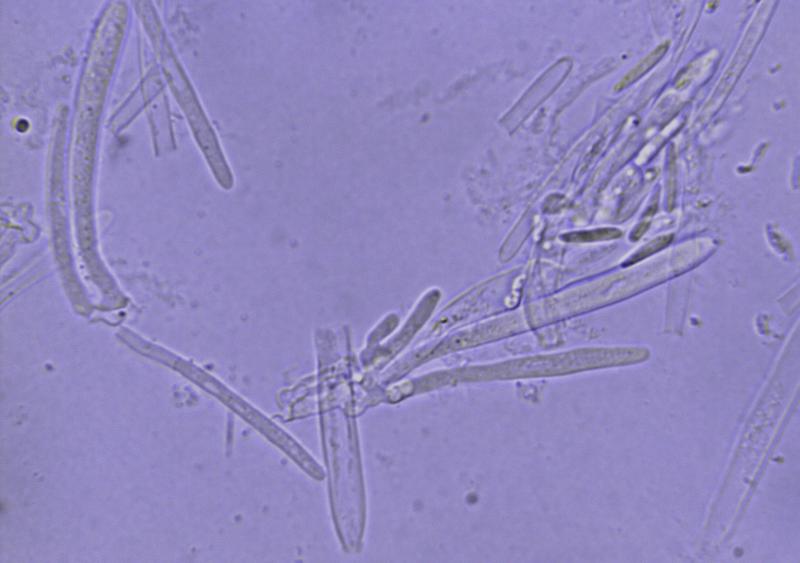
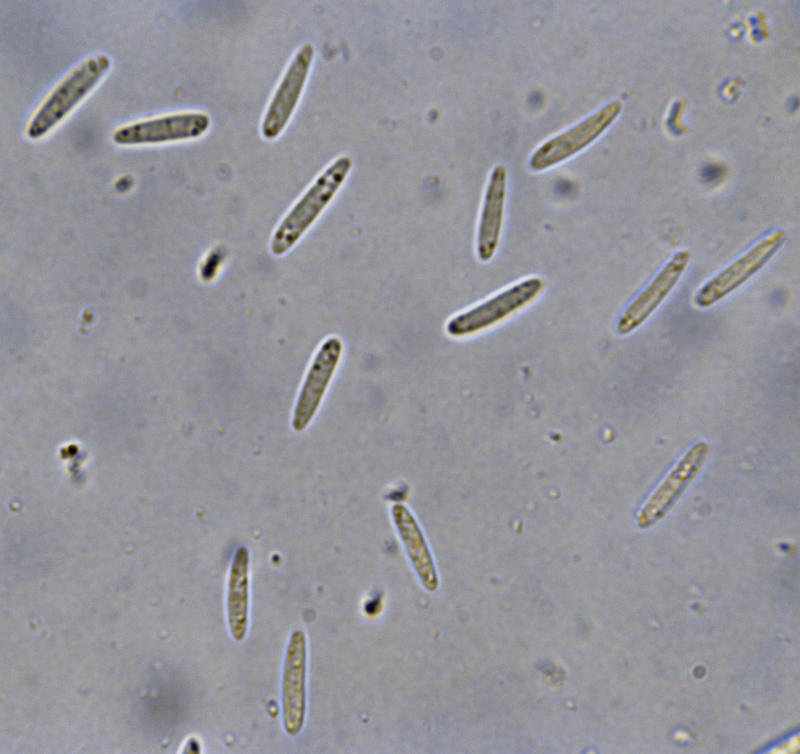
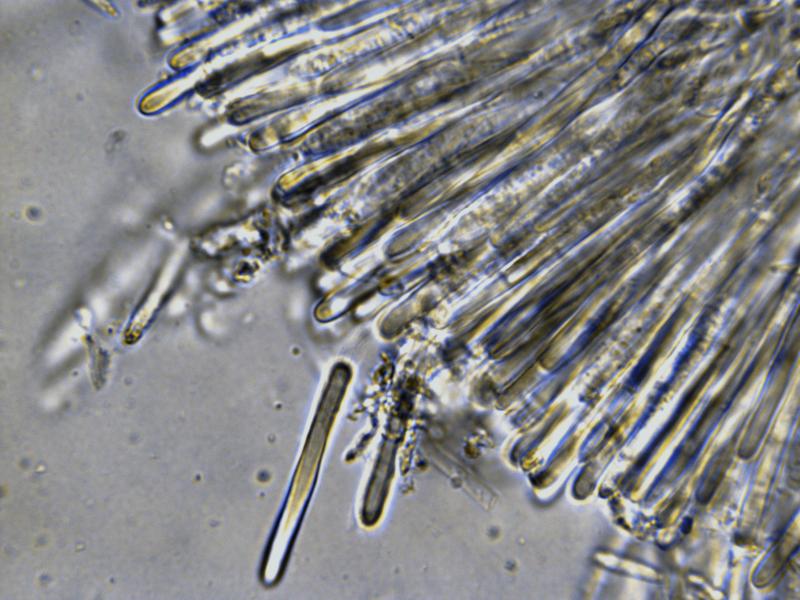
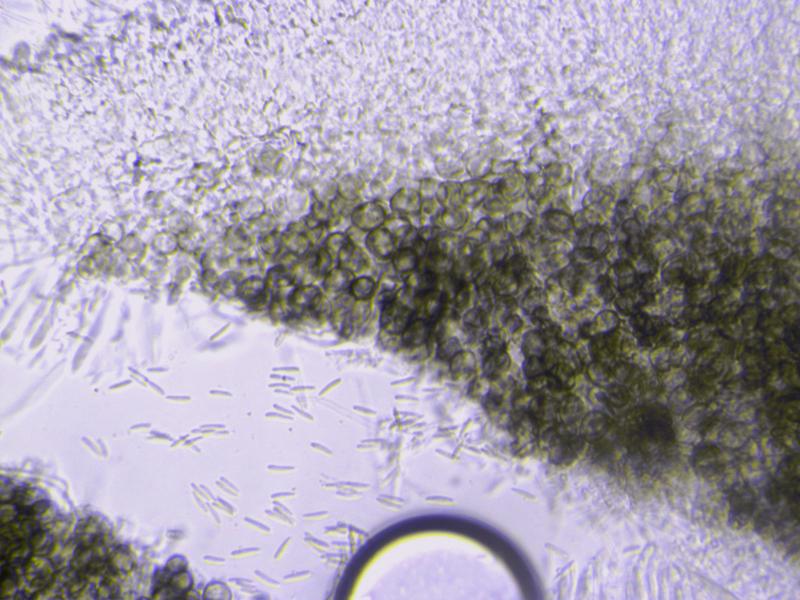
Hi,Found in March on last years stick from Rubus idaeus, Denmark.
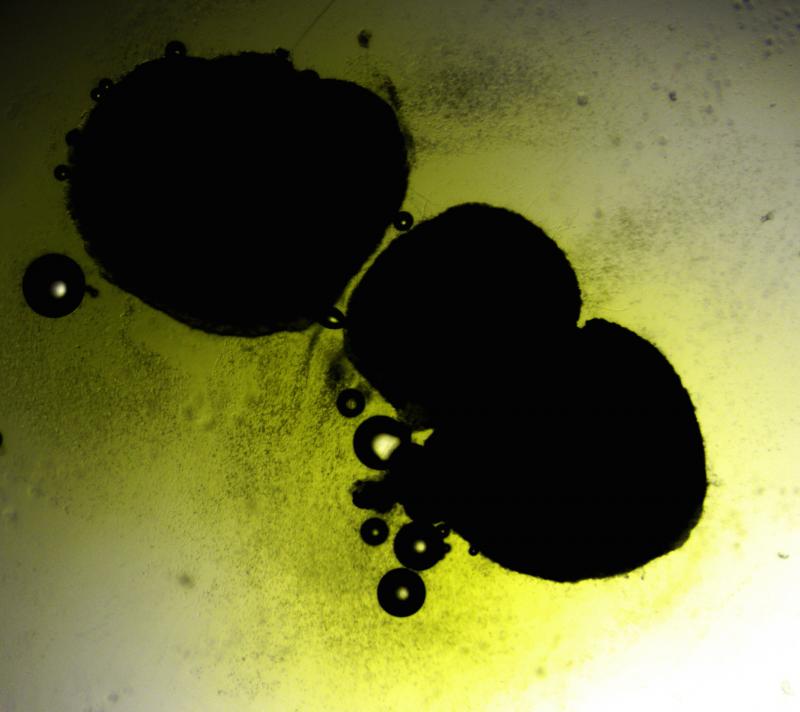
Apotecia: Do not seem to be erumpent, sessile, smooth grey disk, with anchoring hyphae, bright yellow colour extracted with KOH.
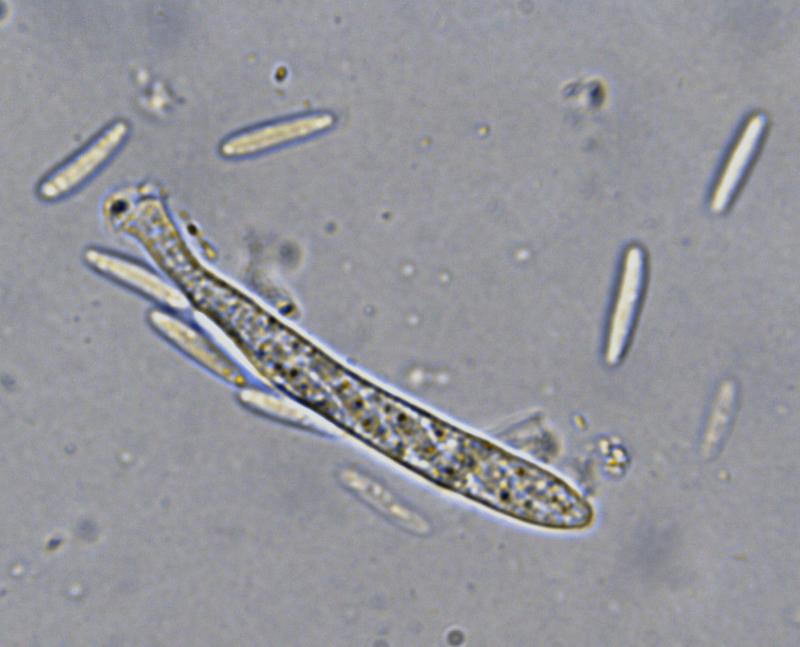
Asci: IKI+, I think with croziers, approx. 53 (40-55) x 5-5,5 my.
Ascospores: 1-celled, mostly clavate, 10,2 (8,3-12,4) x 2,1 (1,7-2,5) my, Q=4,9 , n=20. With some droplets.
Paraphyses: Cylindrical, 3 my wide, with large light diffracting LBs.
Excipulum: Mostly roundish dark cells, some dark hairlike cells seen.
Any help much appreciated.
Kind Regards
Mathias
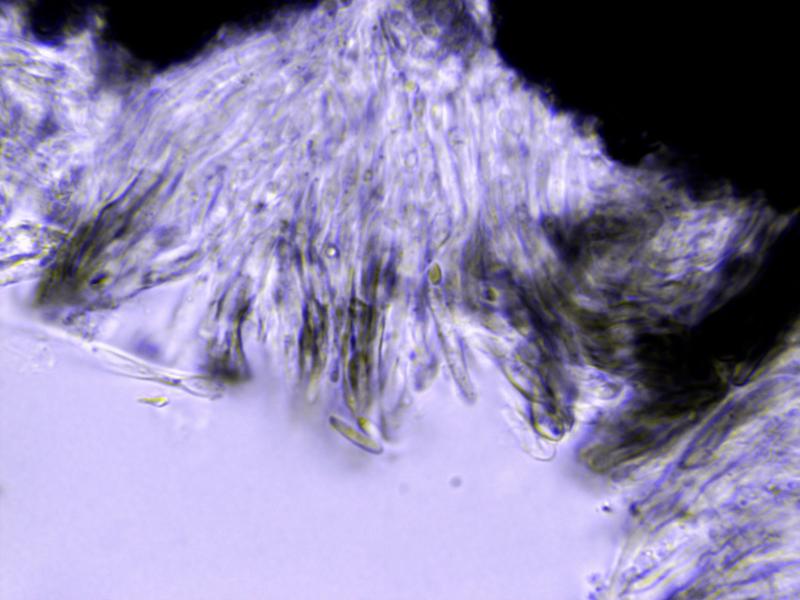
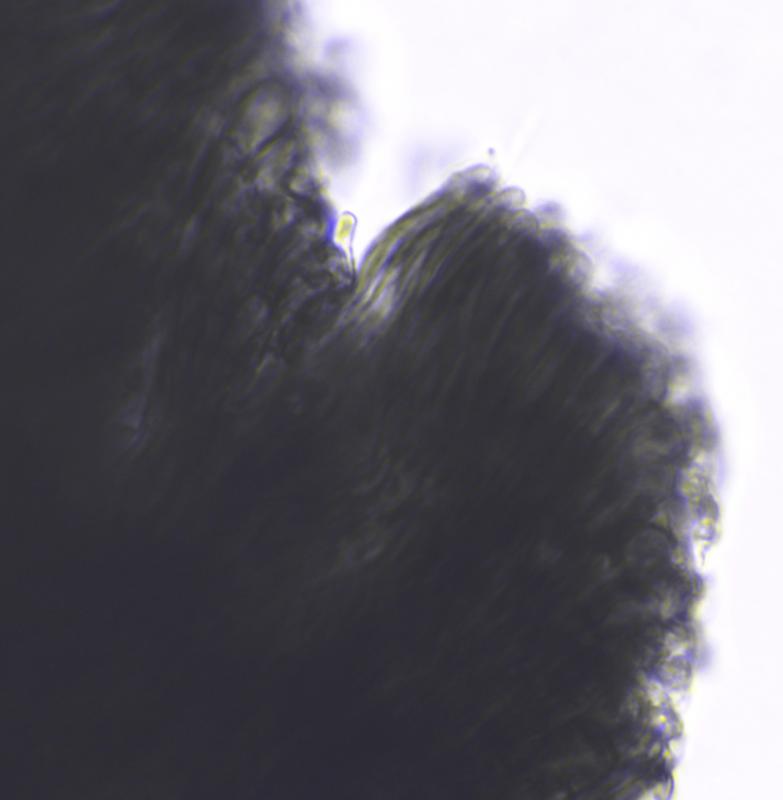
Yours, Lothar
Hier kannst Du wertvolle Infos lesen:
https://asco-sonneberg.de/pages/gallery/mollisia-revincta-epilobium-koh-110910-01xs21751.php
Dort steht u.a. auch:
Auf die KOH-Reaktion kann man sich wahrscheinlich nicht gut verlassen. Zwar ist sie meist mittelstark und vergänglich, jedoch sind mir von Rubus auch stark gelbe und anhaltende Reaktionen bekannt
Dein Fund ist ja von Rubus.
Yours, Lothar

Mollisia revincta is a complex of species with small spores on herbaceous stems. According to my own collections there are quite many genetically different species which I used to "determine" as revincta. There are collections with strong and with weak yellow reaction and even without. I did not study that complex ion detail, but I'm convined that Mollisia clavata is a different species characterized by the marginal cells. What concerns Mollisia alcalireagens, there is the problem that the i examined the holotype collection PRM899458 and found it to be completely KOH-negative (also NH3-negative). I don't know how to interprete this. On the other hand I have collections from Rubus which are strng yellow whereas collections from Filipendula (which I think to be the "true" revincta" are usually only weakly positive.
No great information all in all, I know. That group needs revision ....
all the best,
Andreas