

06-04-2026 21:36
 Viktorie Halasu
Hello, could anyone please send me the article wi
06-04-2026 19:40
 David Gibbs
Help with this one much appreciated, on rotting Fa
06-04-2026 11:07
Louis DENYBonjour forum, Trouvé sur bois de feuillu très d
06-04-2026 16:24
Juuso ÄikäsLast Tuesday I found some tiny white Helotiales gr
05-04-2026 20:40
 Robin Isaksson
Hi!Found i Japan on bark of Abies sp. Spores 35-4
06-04-2026 08:15
 Lothar Krieglsteiner
some days ago, on the lower surface of leaf of Que
Anamorphe sur Stereum
Thierry Blondelle,
23-03-2025 12:01
 Bonjour à tous,
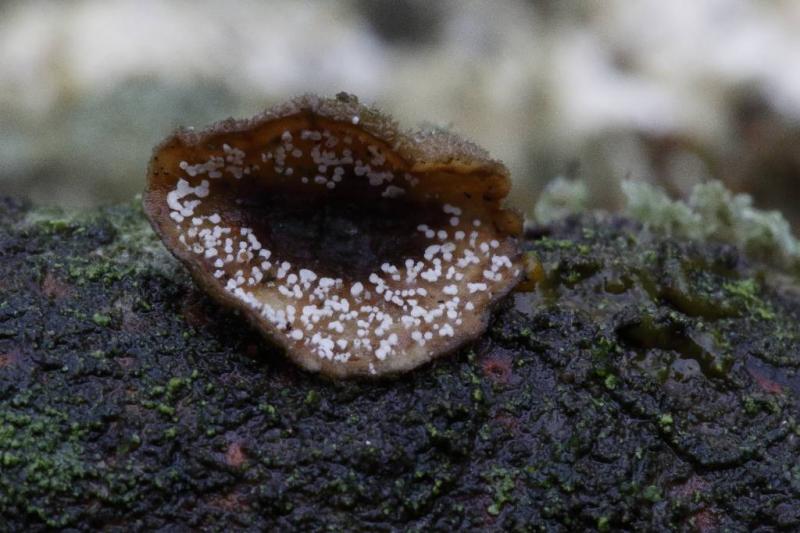
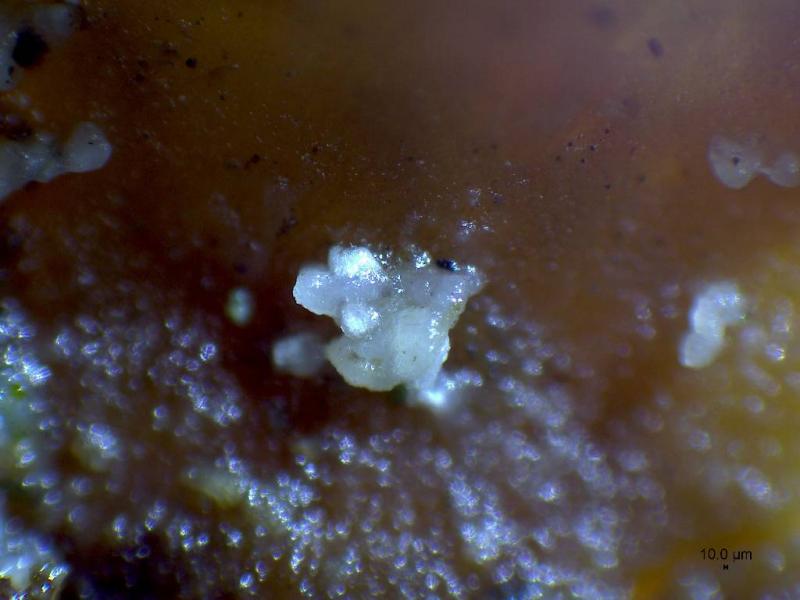
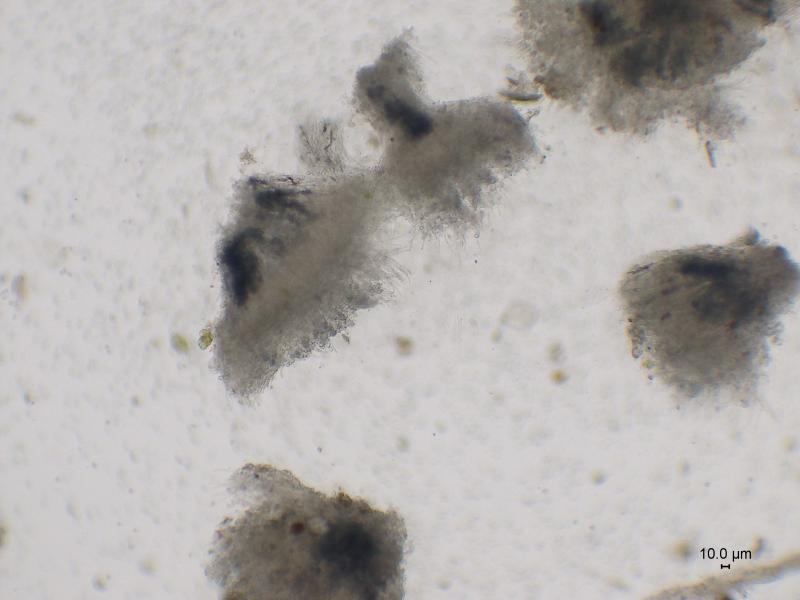
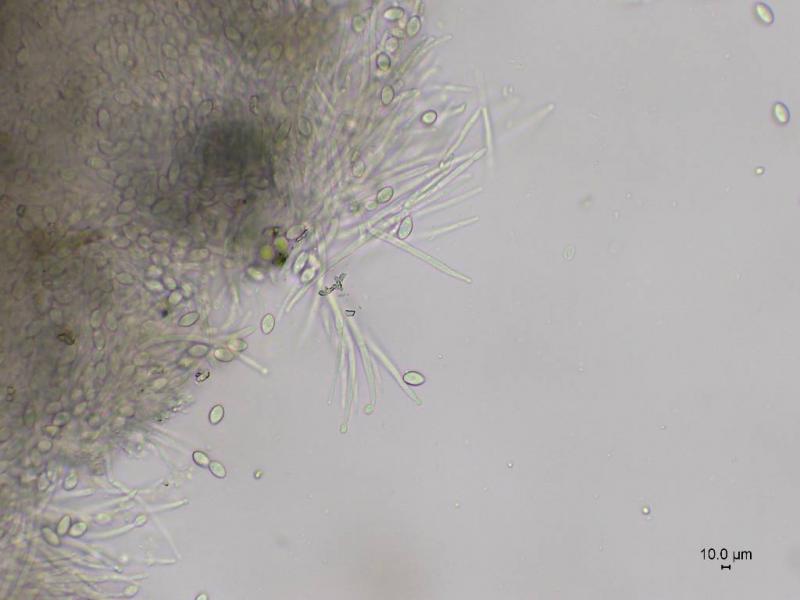
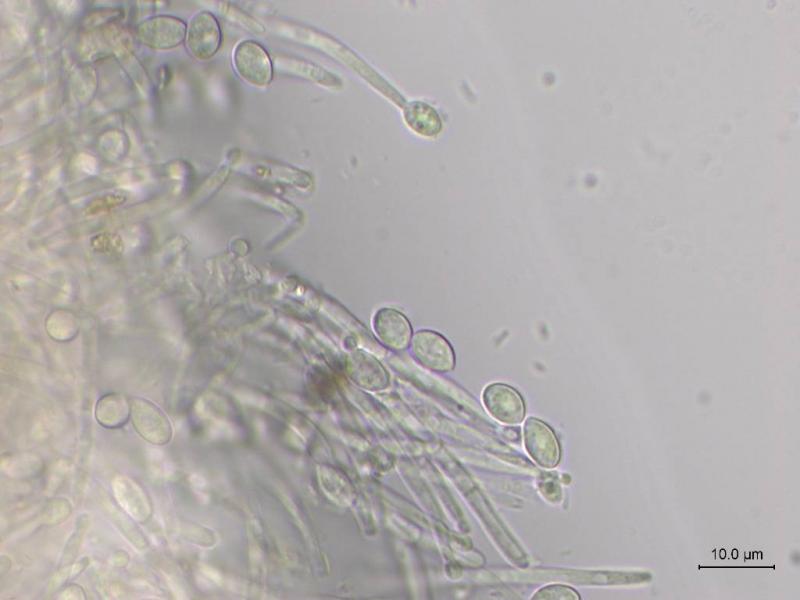
Ce sont de petits coussinets blancs ressemblants à des sporodochies qui colonisent ce basidiome de Stéreum. La sporulation à l'extrémité d'hyphes simples me fait penser à une forme anamorphe du genre Chrysosporium que l'on retrouve sur d'autres champignons.
conidies: 6.2-6.6 x 3.9-4.1 µm
Si l'un d'entre vous a déjà rencontré une forme ressemblante, je suis intéressé par vos observations.
Merci d'avance
Thierry
Josep Torres,
24-03-2025 14:32

Re : Anamorphe sur Stereum
Hi Thierry.
We've seen this around here before.
http://www.ascofrance.com/search_forum/68601
I've seen something very similar as a possible Stilbella sebacea. It all fits, though according to Angel Pintos, it could be Clonostachys.
Best regards.
We've seen this around here before.
http://www.ascofrance.com/search_forum/68601
I've seen something very similar as a possible Stilbella sebacea. It all fits, though according to Angel Pintos, it could be Clonostachys.
Best regards.
Thierry Blondelle,
24-03-2025 19:28
Re : Anamorphe sur Stereum
Hello Josep
Microscopy looks seemly like mine. Just a difference in the fruitbody shape. Rather a sporodochia than a synnemata to my mind. A positive point of Stilbella is its growth on Stereum but few pictures on the web. The only alternative way I found is Helicogloea compressa where hyphae closed in an external gelatinous matrix.
Greetings
Microscopy looks seemly like mine. Just a difference in the fruitbody shape. Rather a sporodochia than a synnemata to my mind. A positive point of Stilbella is its growth on Stereum but few pictures on the web. The only alternative way I found is Helicogloea compressa where hyphae closed in an external gelatinous matrix.
Greetings
Josep Torres,
25-03-2025 08:03
Re : Anamorphe sur Stereum
Hi Thierry.
I'm not saying that your case is Stilbella sebacea, I'm just saying that I have something very similar to what you're presenting as Stilbella sebacea. You're right in appearance, but it may be due to excess moisture. I also don't see in the few conidia you show the thick walls that Stibella sebacea conidia should have, up to 0.5 microns thick. Everything fits in my study: the width of the hyphae, conidiogenesis, the measurements of the phialides, and also, of course, the morphology and measurements of the conidia.
I think you should measure all these parameters carefully before choosing one species or another.
I'm not aware that the Helicogloea compressa you're suggesting can appear on Stereum basidiomata, and it would be more likely a lignicolous species.
Good luck with your fungus.
Best regards.
I'm not saying that your case is Stilbella sebacea, I'm just saying that I have something very similar to what you're presenting as Stilbella sebacea. You're right in appearance, but it may be due to excess moisture. I also don't see in the few conidia you show the thick walls that Stibella sebacea conidia should have, up to 0.5 microns thick. Everything fits in my study: the width of the hyphae, conidiogenesis, the measurements of the phialides, and also, of course, the morphology and measurements of the conidia.
I think you should measure all these parameters carefully before choosing one species or another.
I'm not aware that the Helicogloea compressa you're suggesting can appear on Stereum basidiomata, and it would be more likely a lignicolous species.
Good luck with your fungus.
Best regards.