

06-04-2026 21:36
 Viktorie Halasu
Hello, could anyone please send me the article wi
06-04-2026 19:40
 David Gibbs
Help with this one much appreciated, on rotting Fa
06-04-2026 11:07
Louis DENYBonjour forum, Trouvé sur bois de feuillu très d
06-04-2026 16:24
Juuso ÄikäsLast Tuesday I found some tiny white Helotiales gr
05-04-2026 20:40
 Robin Isaksson
Hi!Found i Japan on bark of Abies sp. Spores 35-4
06-04-2026 08:15
 Lothar Krieglsteiner
some days ago, on the lower surface of leaf of Que
Discomycetes with spherical spores
Vasileios Kaounas,
13-02-2025 07:41
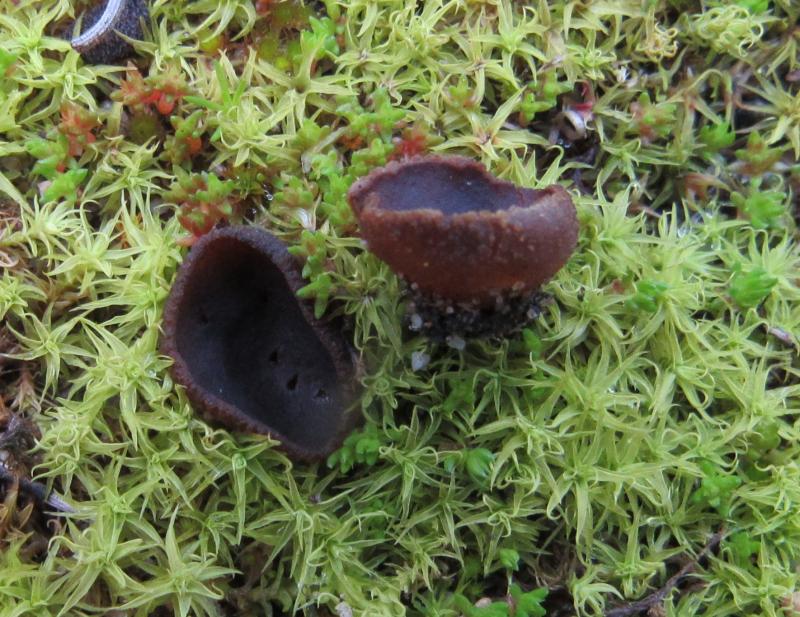
 first time I encounter it. I didn't expect to see spherical spores
on sandy soil, coastal pine forest, among in moss.
asci 170-244 x 11-13,5 ?m
spores 9.3 [9.9 ; 10.2] 10.9 × 9 [9.7 ; 10.1] 10.8 µm
Q = 1 [1.0] 1 ; N = 30 ; C = 95%
Me = 10.1 × 9.9 µm ; Qe = 1
Q = 1 [1.0] 1 ; N = 30 ; C = 95%
Me = 10.1 × 9.9 µm ; Qe = 1
 8447-0001.pdf
Lothar Krieglsteiner,
13-02-2025 09:05
Re : Discomycetes with spherical spores
without looking up - perhaps Smardaea planchonis?
Regards, Lothar
Regards, Lothar
Vasileios Kaounas,
13-02-2025 09:55
Re : Discomycetes with spherical spores
thanks Lothar, there was nowhere Cuprecacea and I know the species, I also thought about Plicaria, but there was nothing burnt there.
Mario Filippa,
13-02-2025 11:58
Re : Discomycetes with spherical spores
Hi Vasileios,
try in Marcelleina maybe... M. benkertii?
Ciao
Nicolas VAN VOOREN,
14-02-2025 17:07

Re : Discomycetes with spherical spores
Marcelleina benkertii is uniguttulate, and this is not the case here (numerous granules). And I cannot see any purplish pigment that characterizes species of Marcelleina.
I can't see clearly if the asci are amyloid or not, this is an important feature to clarify. Vasileios, can you check this point using Melzers reagent?
The result will fix if it is a Plicaria or not.
I can't see clearly if the asci are amyloid or not, this is an important feature to clarify. Vasileios, can you check this point using Melzers reagent?
The result will fix if it is a Plicaria or not.