28-05-2026 16:15
James MitchellHello,Does anyone have the original publication of
28-05-2026 11:06
Thomas Læssøehttps://svampe.databasen.org/observations/10596750
23-05-2026 11:44
 Charles Grapinet
Hello, I am having trouble identifying this copro
25-05-2026 16:44
François BartholomeeusenHi forum members,During an excursion organised by
26-05-2026 21:25
Dirk GerstnerHello everyone, I'm completely stumped by this li
26-05-2026 22:44
Ethan CrensonHi all, I think I have Incrucipulum capitatum her
22-05-2026 14:44
 Lothar Krieglsteiner
in unripe condition citrine yellow, then soon fadi
25-05-2026 16:35
 Bernard CLESSE
Bonjour à toutes et tous,J'ai trouvé récemment,
22-05-2026 13:29
Gernot FriebesHi,I am curious to hear your opinion on this mater
23-05-2026 18:57
Sylvie Le GoffBonjour à tousRécolté sur une branchette de Sal
I having a hard time identifying this Orbilia, so obviously this query is directed to Zotto, and I hope I can provide enough detail to get a identification.
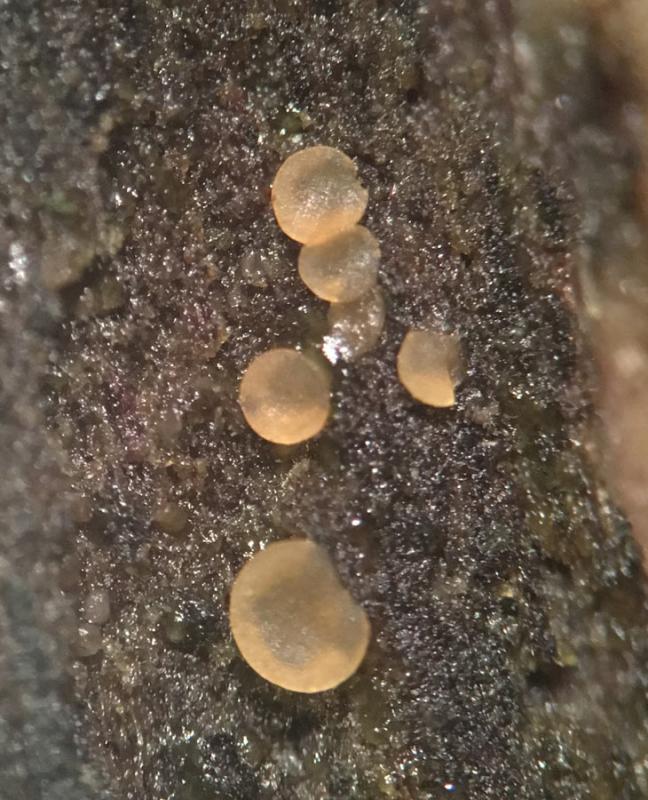
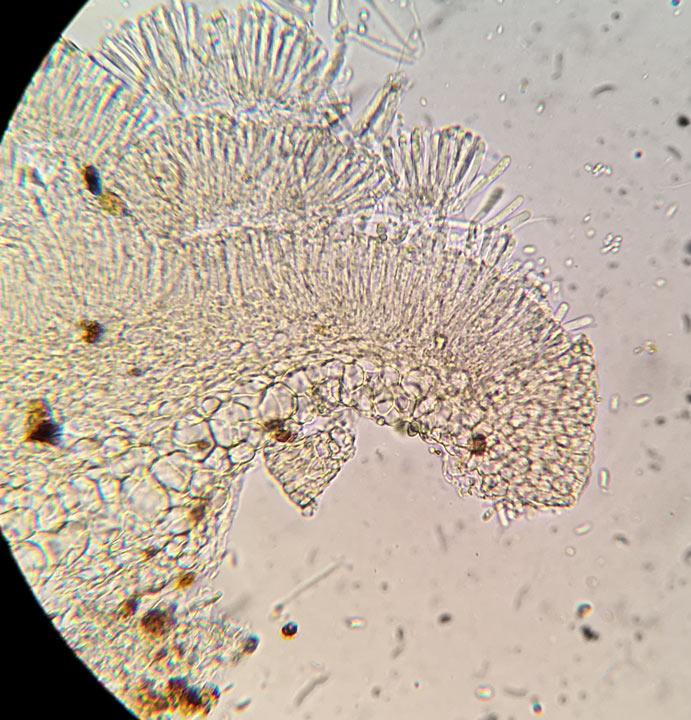
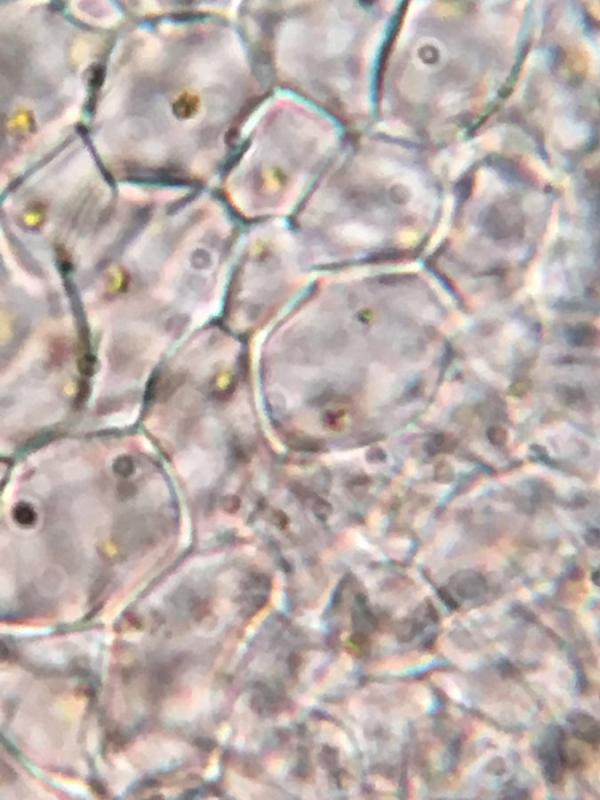
Last weekend in upstate New York I was handed a piece of well rotted hardwood with a scattering of orange to pale orange-yellow or slightly orange-rose Orbilia fruiting bodies. There doesn't appear to be any margin.
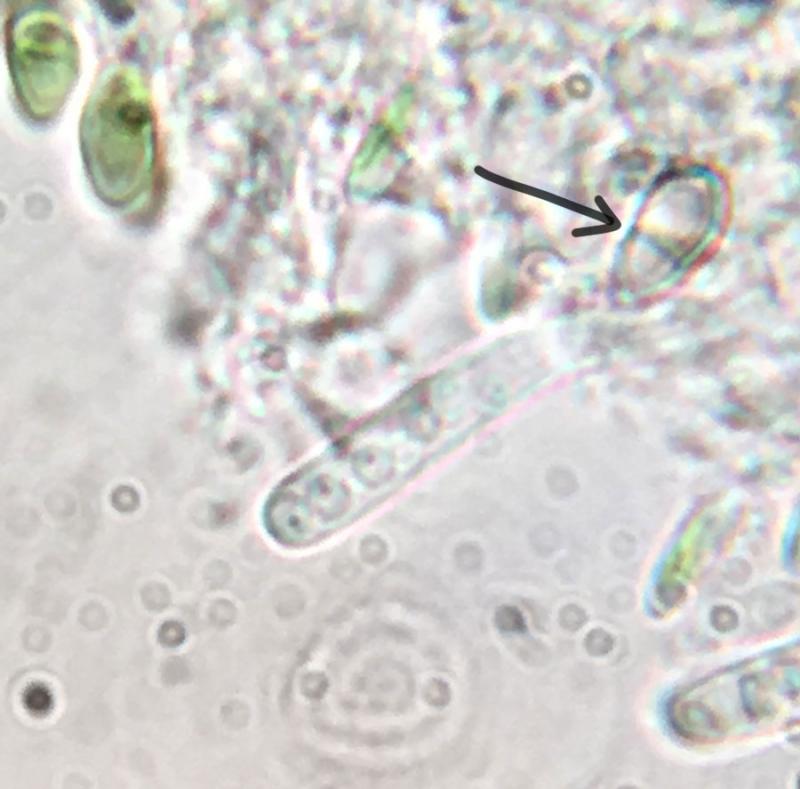
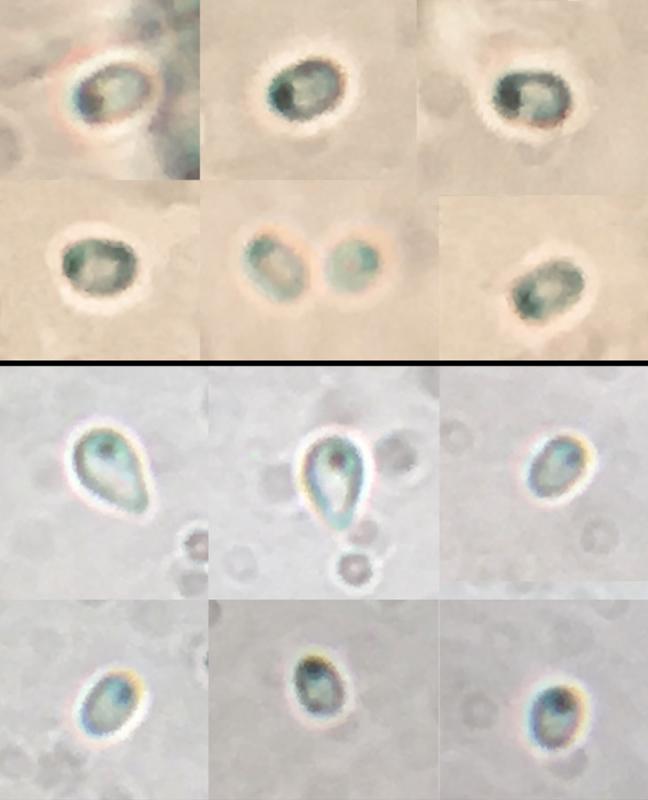
Spores are small, ellipsoid, occasionally with one acute end. At first my interpretation of the spore body (given the poor optics of my current microscope) was lens shaped. But I don't think that is correct. SBs are more likely sub globose. Spore measurements: 2.3-2.4 x 1.5-1.7µm. The SB 0.5-1.0µm (the distortions of my optics may make the measurements a bit unreliable).
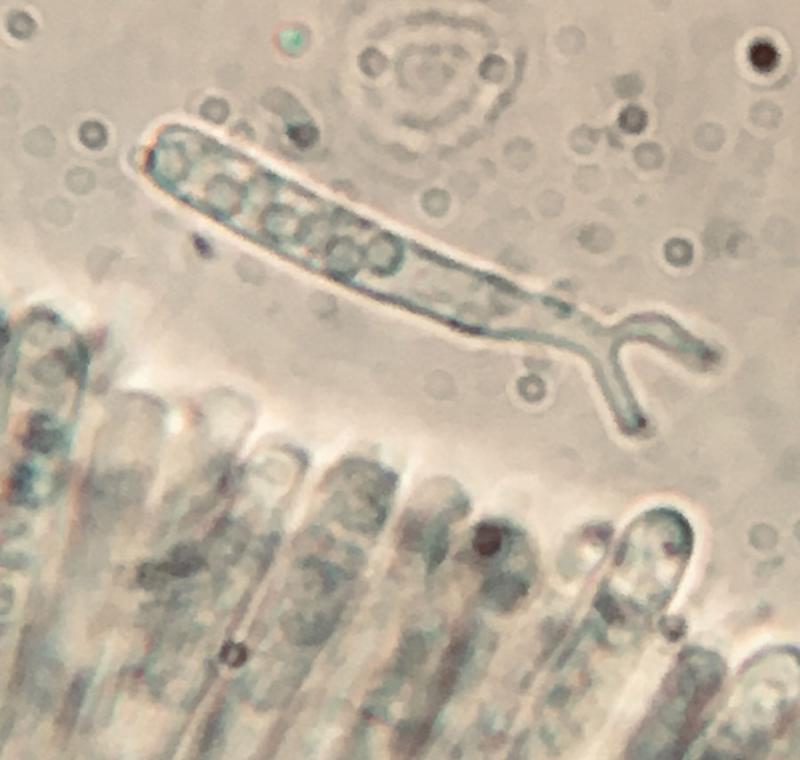
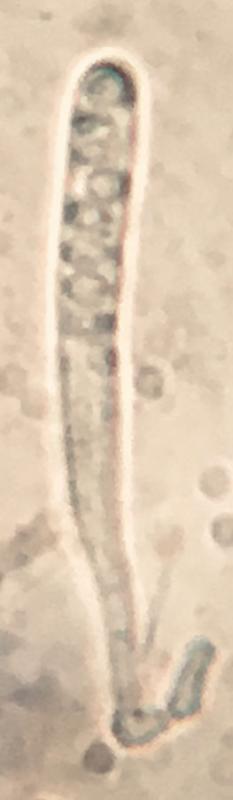
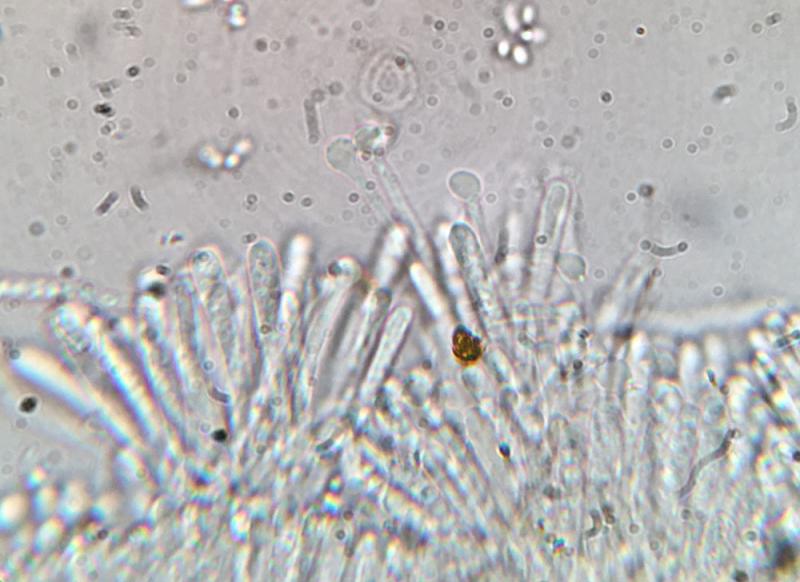
Asci sometimes truncate, h-shaped at the base, 22-33.5 x 3.0-3.6µm. The spores in the asci are sometimes arranged with the SBs facing laterally.
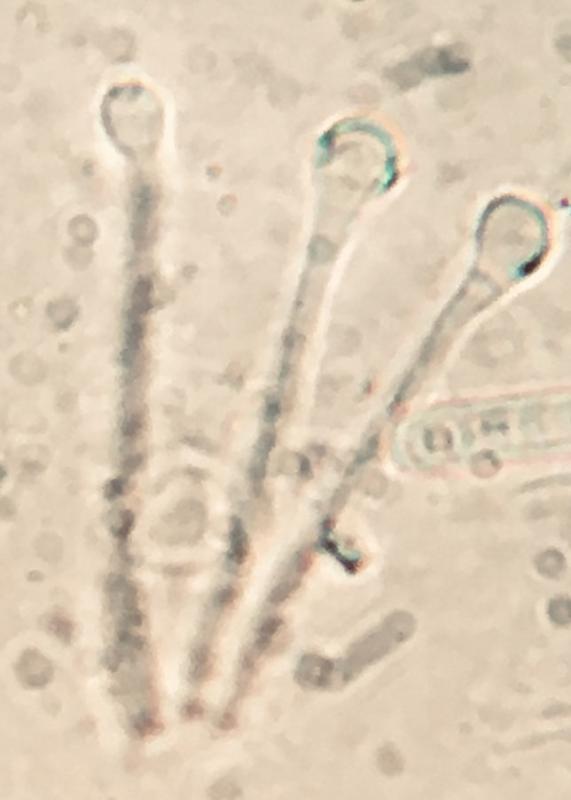
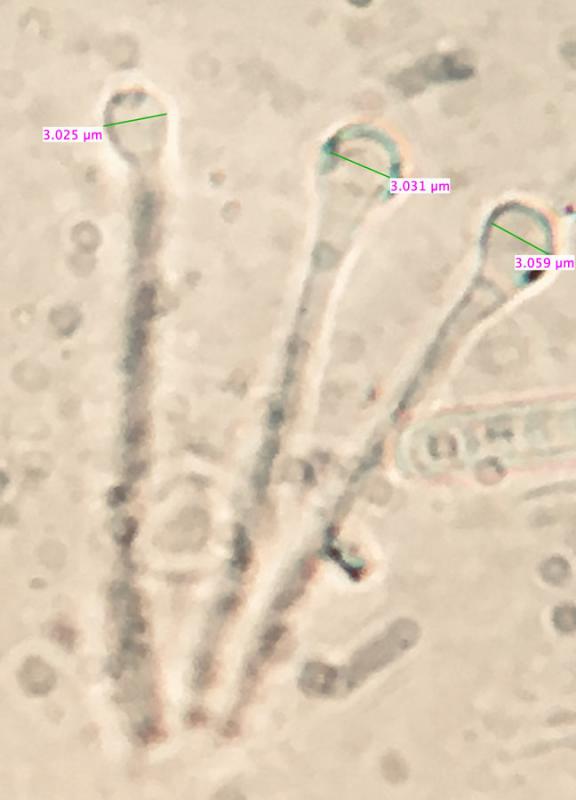
Paraphyses often capitate, the width reaching 3µm. Some refractive material at the apex.
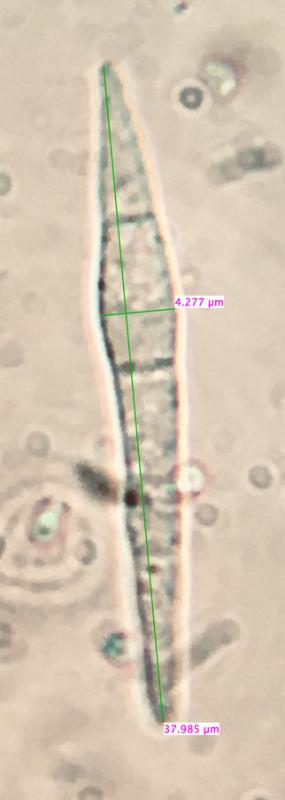
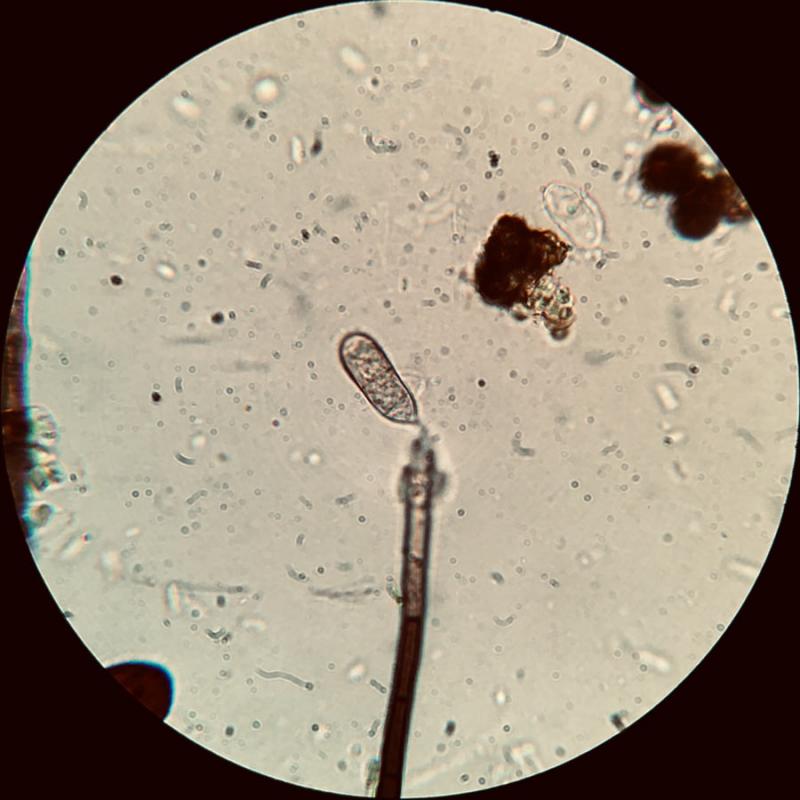
Conidiospores. Here is part of my difficulty. This collection was rife with additional spore types which I am not always able to identify or accurately assign to the teleomorph. I have provided some images of some of th candidates. I even noticed one in a the 4th photo of an ascus.
My initial impression is that this could be Orbilia cejpii.
As always, thanks for the help!
Ethan