
28-05-2026 16:15
James MitchellHello,Does anyone have the original publication of
28-05-2026 11:06
Thomas Læssøehttps://svampe.databasen.org/observations/10596750
23-05-2026 11:44
 Charles Grapinet
Hello, I am having trouble identifying this copro
25-05-2026 16:44
François BartholomeeusenHi forum members,During an excursion organised by
26-05-2026 21:25
Dirk GerstnerHello everyone, I'm completely stumped by this li
26-05-2026 22:44
Ethan CrensonHi all, I think I have Incrucipulum capitatum her
22-05-2026 14:44
 Lothar Krieglsteiner
in unripe condition citrine yellow, then soon fadi
25-05-2026 16:35
 Bernard CLESSE
Bonjour à toutes et tous,J'ai trouvé récemment,
22-05-2026 13:29
Gernot FriebesHi,I am curious to hear your opinion on this mater
23-05-2026 18:57
Sylvie Le GoffBonjour à tousRécolté sur une branchette de Sal
Help with a black discomycete
Josep Torres,
20-04-2024 09:56
 Hello.
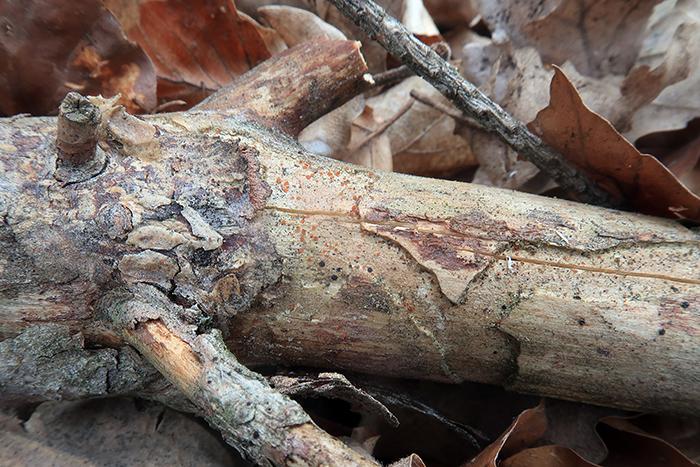
A few apothecia collected on Sunday, April 7, under beech and oak trees, on the stripped surface of a trunk lying on the ground, sharing space with what appears to be Orbilia eucalypti.
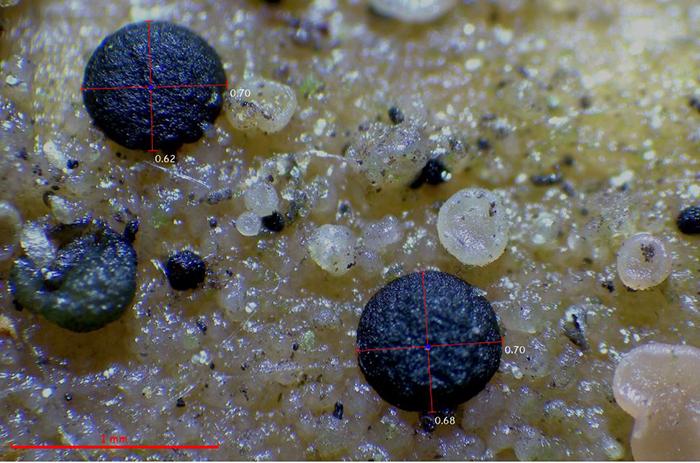
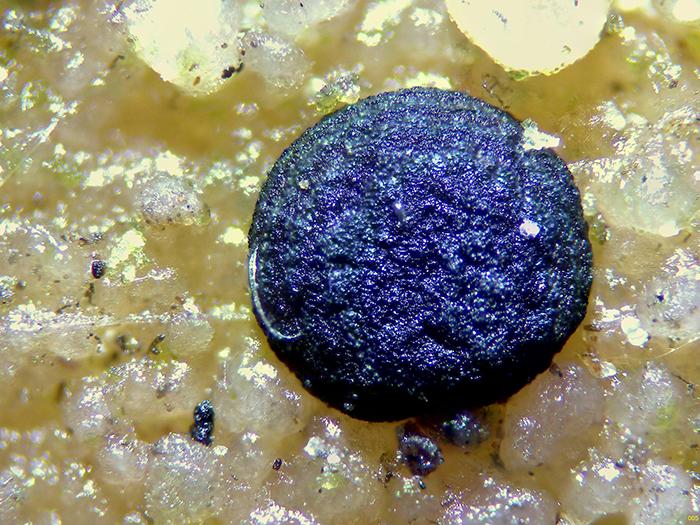
Ascomas in the form of black grains of about 0.7 mm. in diameter, little rooted in the substrate.
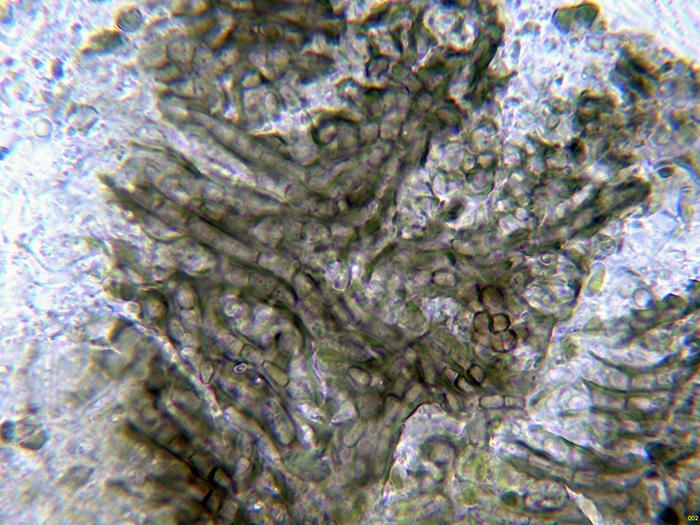
Hyphae of the excipule angular, more or less rectangular, strongly pigmented.
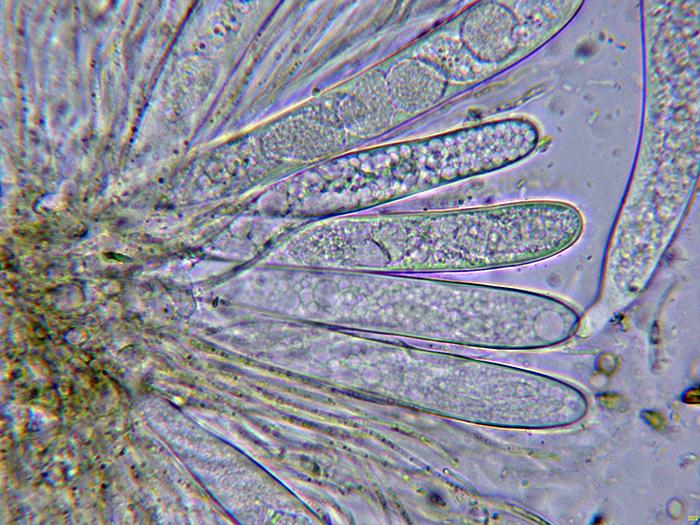
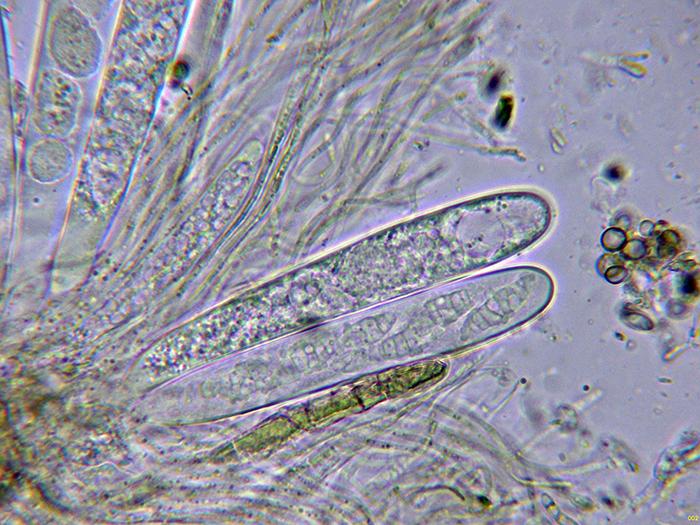
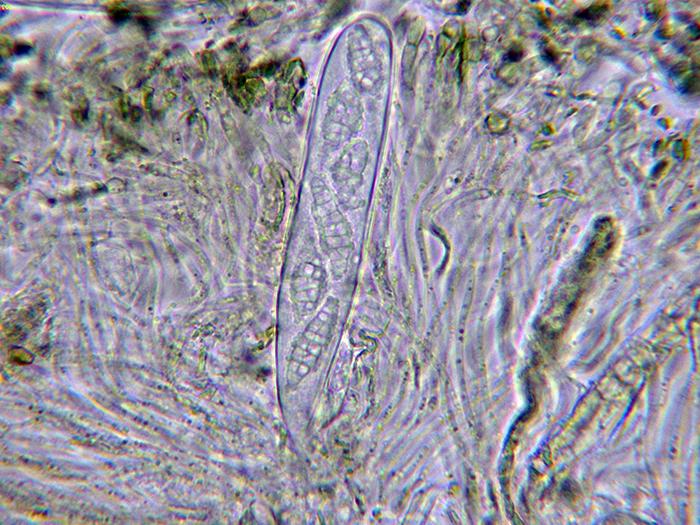
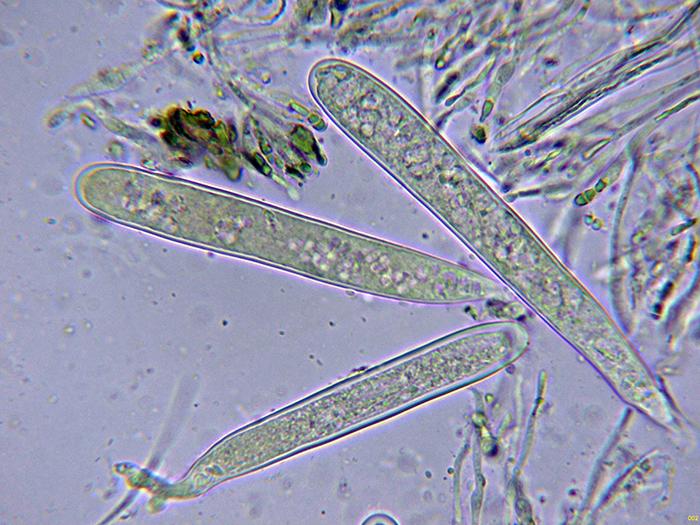
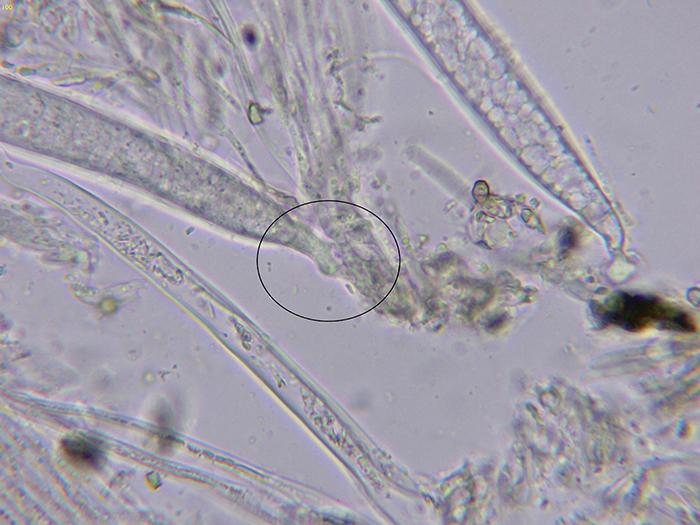
Octosporic asci, apparently bitunicate, with measurements of (75.8) 78.9 - 96.8 (101.9) × (11) 11.1 - 14.4 (16.1) µm. with an average of Me = 89 × 12.9 µm., without any considerable reaction to Lugol.
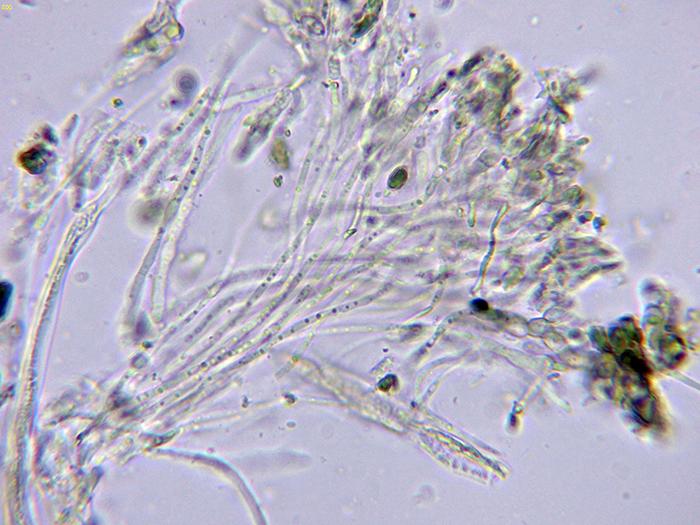
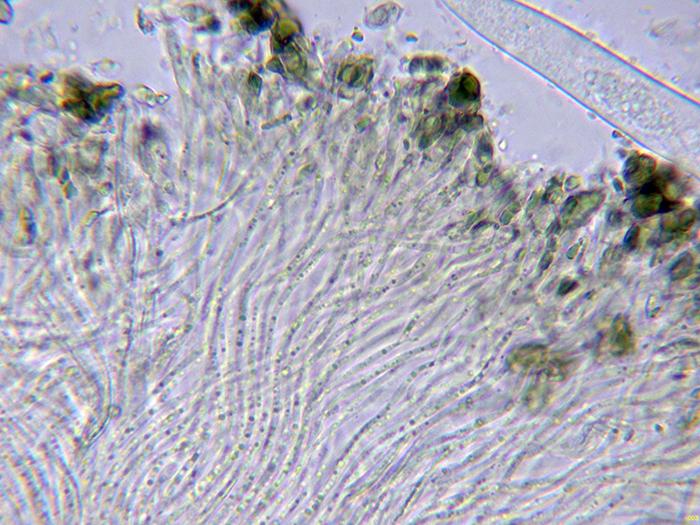
Interascal matter like a paraphysis, filiform, with a width of just 1 µm, with a dark amorphous substance at the apex and protruding slightly above the level of the asci.
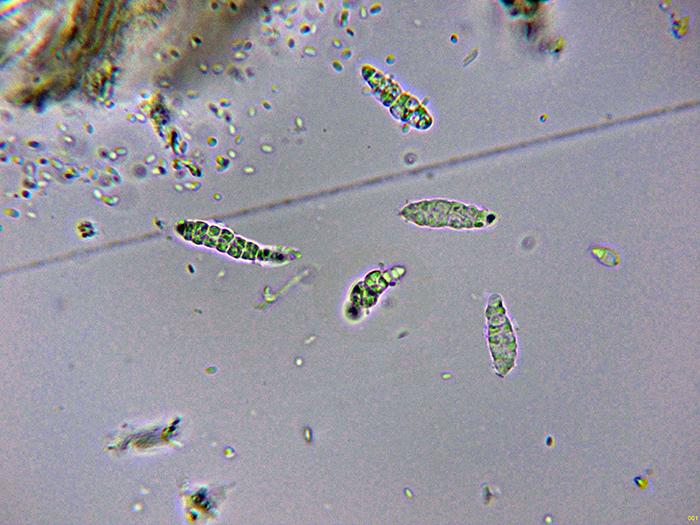
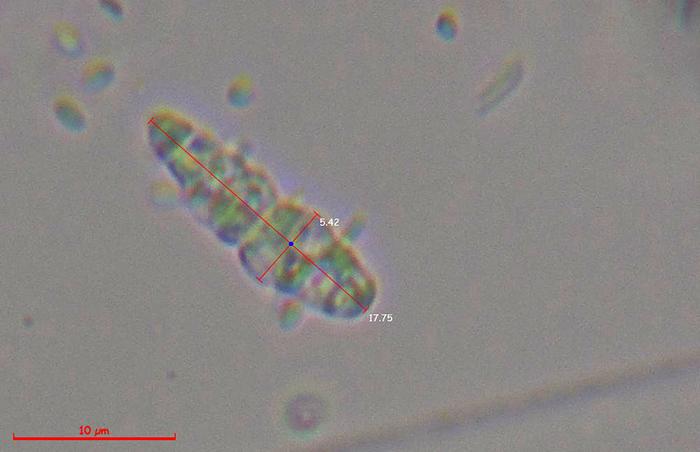
Free ascospores scarce in the samples, these ascospores between fusiform and moriform, with a somewhat more pointed end, with 8 to 10 transverse septa and some longitudinal septa, with measurements of 15.1 - 21.1 × 4.8 - 5.4 µm.
Any suggestion from you will be welcome.
Thank you very much in advance.
Kind regards.
Hans-Otto Baral,
20-04-2024 11:20

Re : Help with a black discomycete
The asci are not really bitunicate like in Patellaria, the wall is too thin. But this is gradual.
Should be Vexillomyces (formerly Claussenomyces) atrovirens or something closely related. The ascoconidia finally form balls around the spores (upper ascus in your first ascus photo) and are ellipsoid.
Josep Torres,
20-04-2024 14:17
Re : Help with a black discomycete
Thanks Zotto.
I didn't know about the ascoconidia balls, and it does fit perfectly with the bibliography that I have been able to consult on Vexillomyces atrovirens.
Vexillomyces atrovirens sl. is therefore very likely.
Again, thank you very much.
Kind regards.
I didn't know about the ascoconidia balls, and it does fit perfectly with the bibliography that I have been able to consult on Vexillomyces atrovirens.
Vexillomyces atrovirens sl. is therefore very likely.
Again, thank you very much.
Kind regards.