
10-06-2026 21:16
 François Freléchoux
Bonsoir,Le dernier du jour, en attendant votre avi
10-06-2026 21:07
François Freléchoux
Toutes les tiges de gentianes jaunes de l'an passÃ
10-06-2026 13:41
François Freléchoux
Bonjour à nouveau, Voici une trouvaille d'hier.
09-06-2026 18:32
Camille MertensSur morceau de roseau immergé 0,5 - 0,7 mm de dia
10-06-2026 11:53
Steve ClementsBonjour, This disco is abundant on dead stems of
10-06-2026 12:54
Steve ClementsBonjour encore, Pouvez-vous m'aider, s'il vous pl
10-06-2026 10:45
François Freléchoux
Bonjour à nouveau, Encore une détermination qui
08-06-2026 10:16
 Spooren Marco
I don`t have a clou about this fungus,it is not in
10-06-2026 09:24
François Freléchoux
Bonjour, J'imagine que cette détermination ne do
08-06-2026 17:00
François BartholomeeusenGood day everyone, On June 5 2026, I collected de
Kotlabaea?
Malcolm Greaves,
27-04-2023 18:52
 Hello
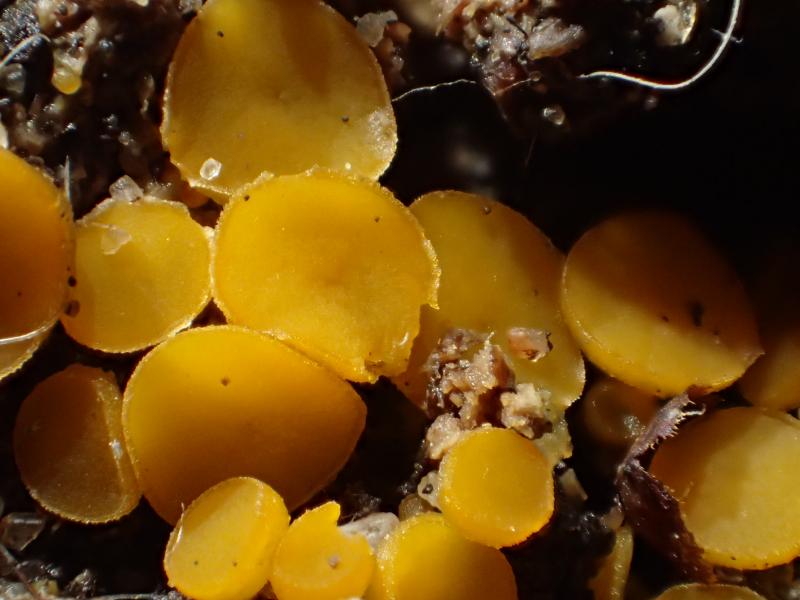
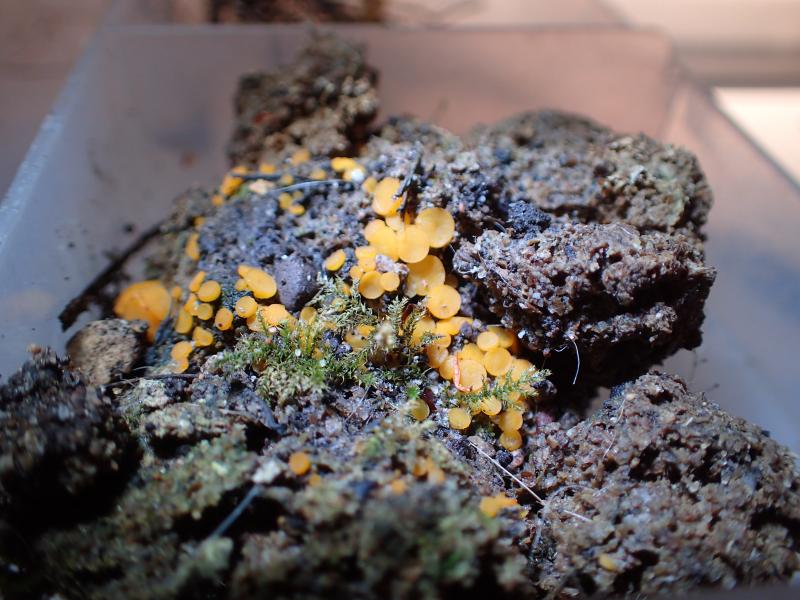
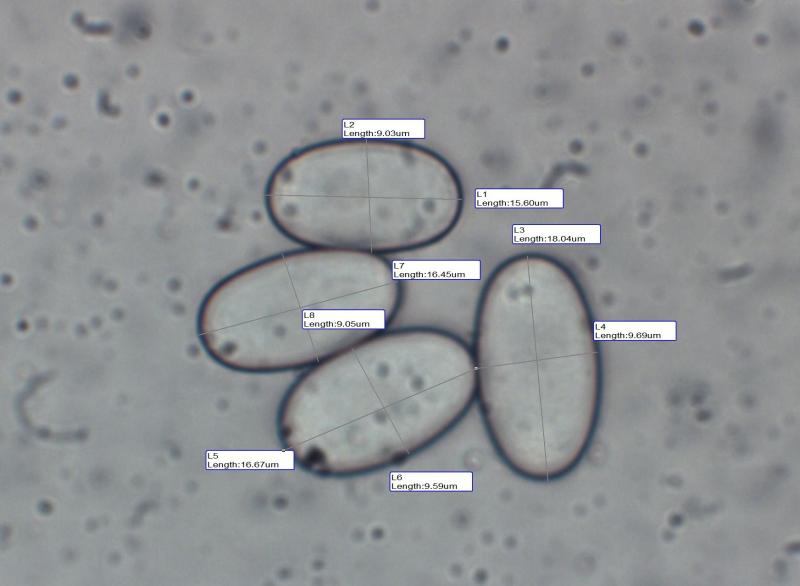
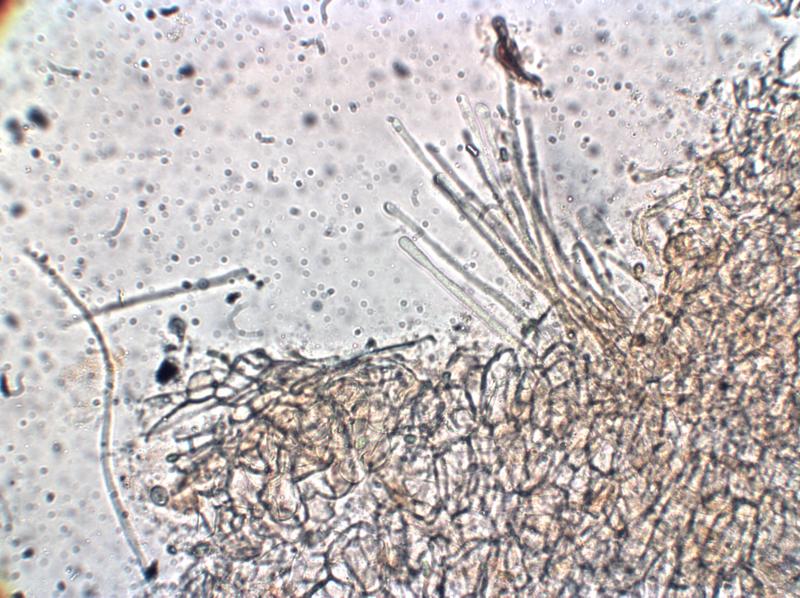
HelloA small group of these were found in a patch of damp soil. Orange/Yellow Spores were smooth with no internal guttules. and were 15-16.5 x 9-9.7. Asci had no reaction to Meltzers. Paraphyses were granular and swollen at the apex.
This suggested Kotlabaea deformis.
I struggled to see the granular contents of the spores which Kotlabaea is supposed to have. I then also found a few septate hairs but this species should not have them. I did notice that the entry for this species in the Database does show minute hairs and although the sketches show them as non-septate the description given mentions septa.
Is this likely to be Kotlabaea or am I missing another species.
Thanks
Mal
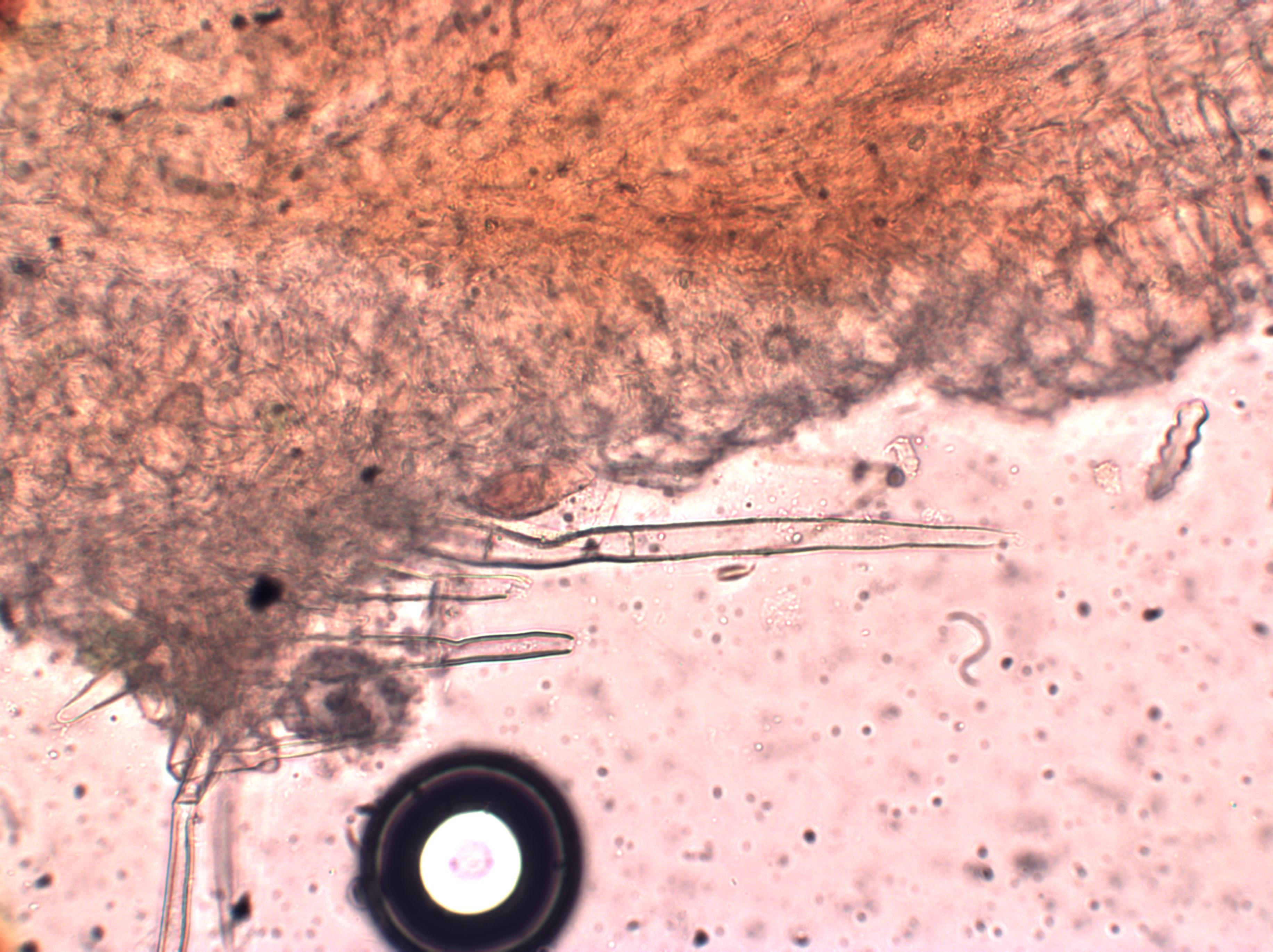 Hairs
Hairs
Uwe Lindemann,
27-04-2023 19:18

Re : Kotlabaea?
Hello Malcom,
this is not K. deformis. It has ascospores with many small guttules, paraphyses with red pigment droplets and is macroscopically red (seldomly yellow) and has no hairs.
Look at this paper: https://www.researchgate.net/publication/281525896_Revision_der_Gattung_Kotlabaea_K_deformis_K_delectans_und_K_benkertii
I would think of a Cheilymenia species.
Best,
Uwe
this is not K. deformis. It has ascospores with many small guttules, paraphyses with red pigment droplets and is macroscopically red (seldomly yellow) and has no hairs.
Look at this paper: https://www.researchgate.net/publication/281525896_Revision_der_Gattung_Kotlabaea_K_deformis_K_delectans_und_K_benkertii
I would think of a Cheilymenia species.
Best,
Uwe
Malcolm Greaves,
27-04-2023 21:49
Re : Kotlabaea?
Thanks Uwe
Although my find is a shade more orange than the photo shows it is nowhere near the deep orange as shown in your paper. There were only one or two hairs on the outer surface and could easily have been missed but I will go to the Cheilymenia key now.
Mal
Although my find is a shade more orange than the photo shows it is nowhere near the deep orange as shown in your paper. There were only one or two hairs on the outer surface and could easily have been missed but I will go to the Cheilymenia key now.
Mal