10-06-2026 09:24
 François Freléchoux
Bonjour, J'imagine que cette détermination ne do
09-06-2026 18:32
Camille MertensSur morceau de roseau immergé 0,5 - 0,7 mm de dia
08-06-2026 10:16
 Spooren Marco
I don`t have a clou about this fungus,it is not in
08-06-2026 17:00
François BartholomeeusenGood day everyone, On June 5 2026, I collected de
07-06-2026 15:10
 William Slosse
Hello everyone,On 05-06-26, I found following asco
05-06-2026 11:02
Thomas Læssøehttps://svampe.databasen.org/observations/10596691
07-06-2026 12:09
François Freléchoux
Bonjour, Voici une brève description de ce qui m
07-06-2026 12:43
Steve ClementsBojour. This was a strange find on a stick on my
12-07-2015 00:05
 Nedim Jukic
This one from the same locality as the previous on
ascomycete on thin Picea twig from Norway
Lothar Krieglsteiner,
01-12-2022 12:46
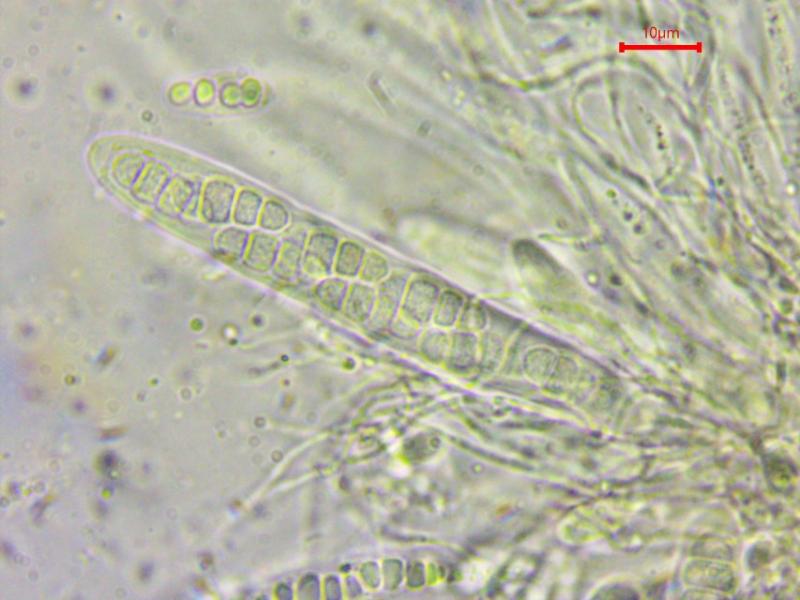
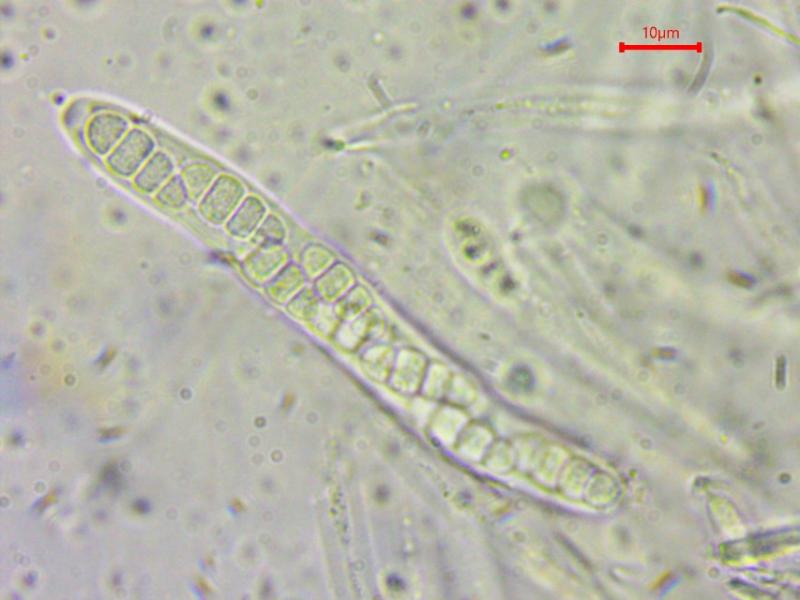
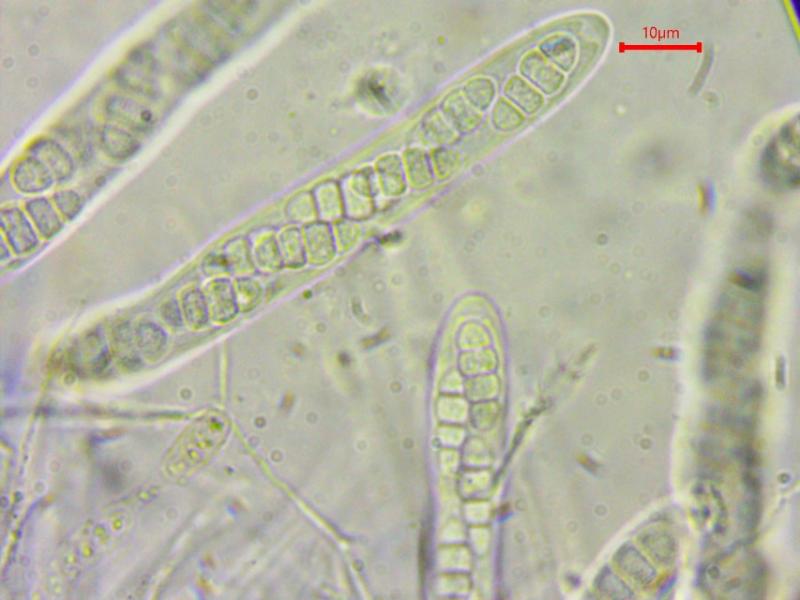
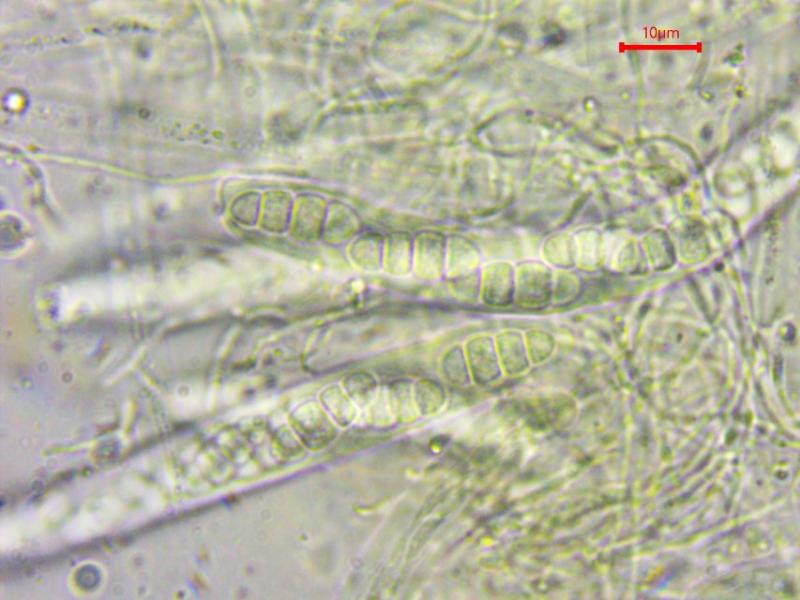
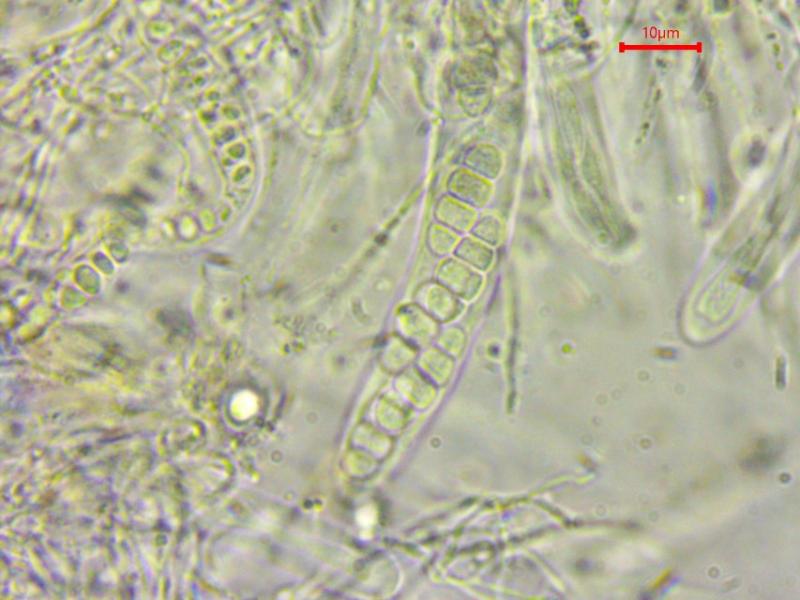
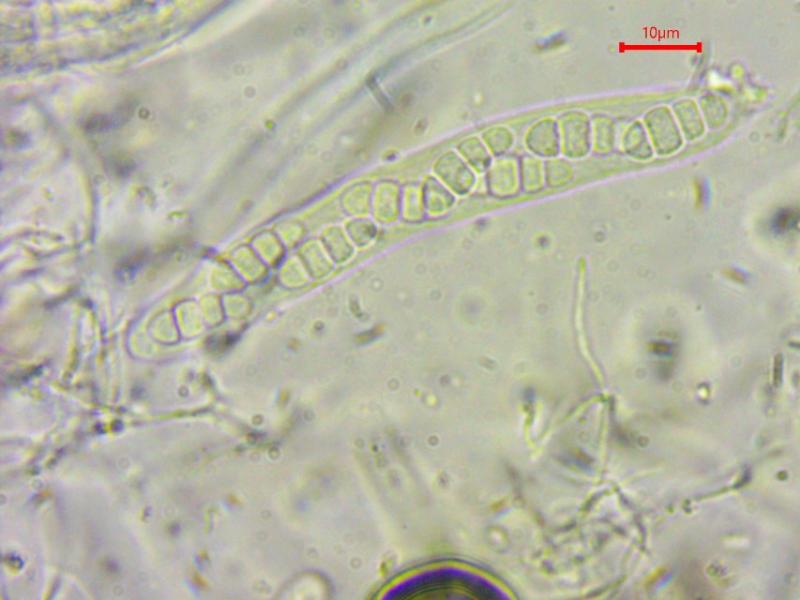
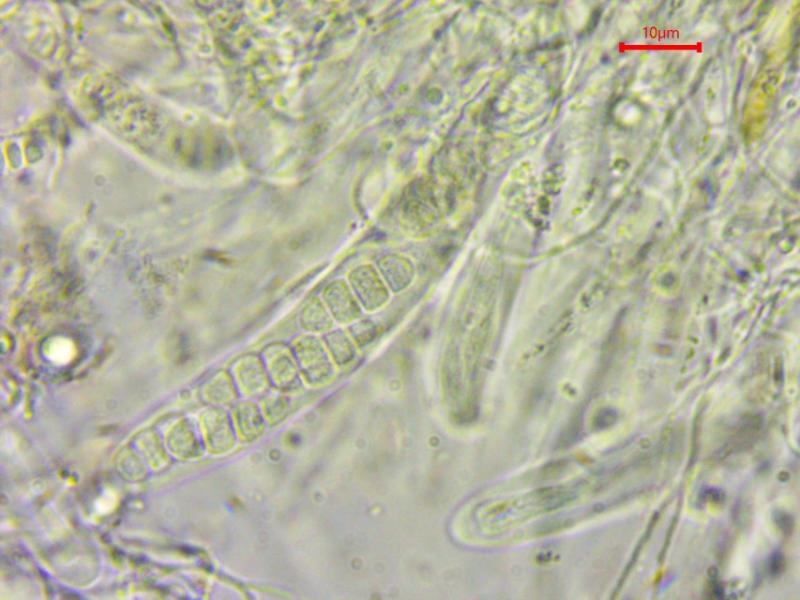
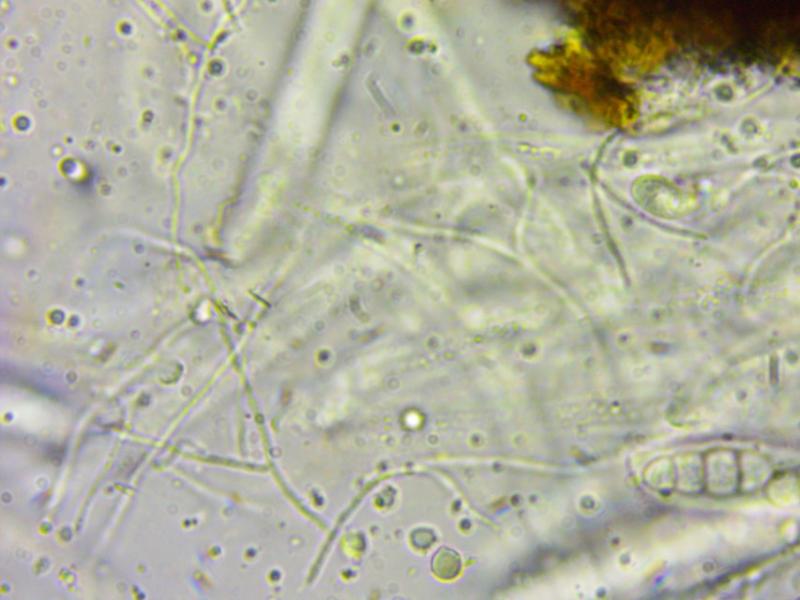
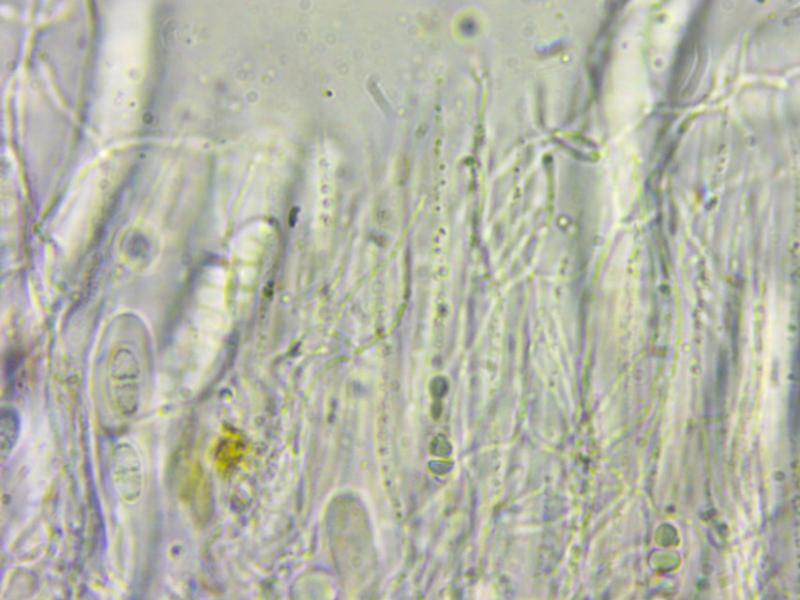
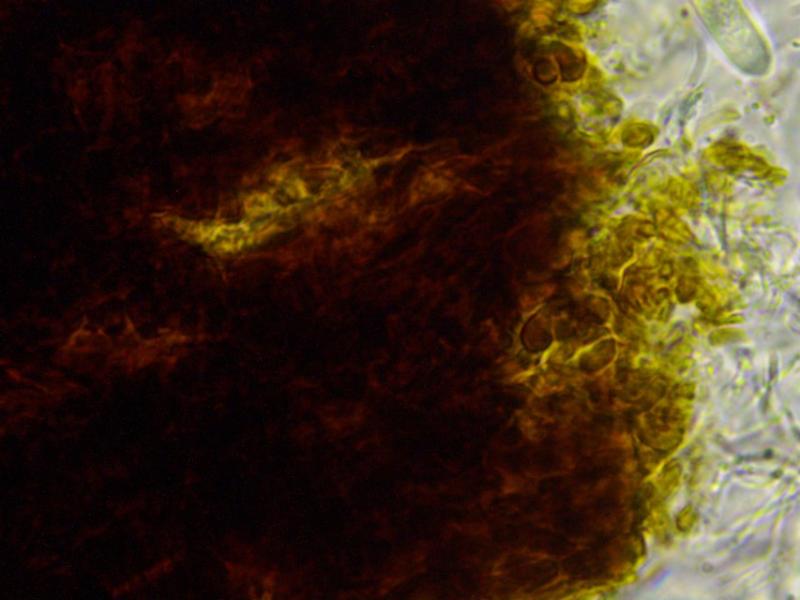
 found on 8.7.2022, on the margin of National Park of Bjafjella, on a thin twig of Picea about 1,5 m high above the ground on a still attached twig. The asomata were astonishingly soft and easy to squash - as I was first thinking of collecting a pyrenomycete. The ascomata do not look like apothecia to me (?). The spores I measured about 15-18/7-8 µm.
 Can somebody provide me with a hint?
Yours, Lothar
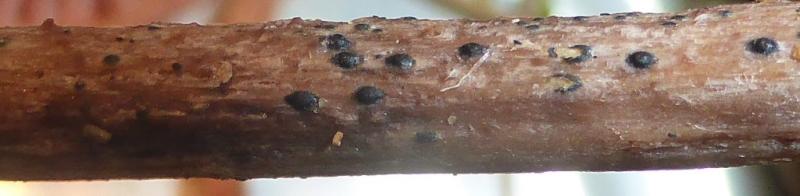
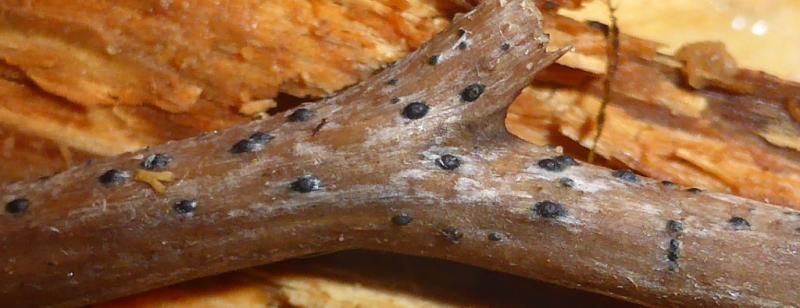
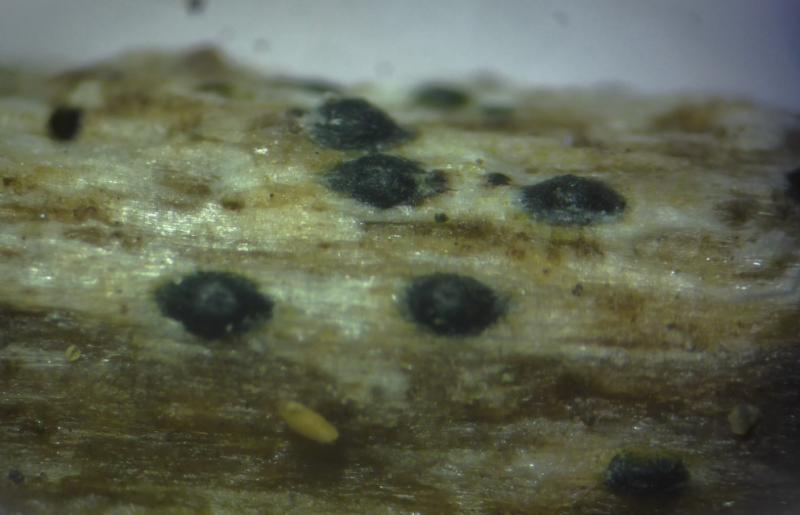
Zdenek Palice,
01-12-2022 21:52

Re : ascomycete on thin Picea twig from Norway
Hallo.
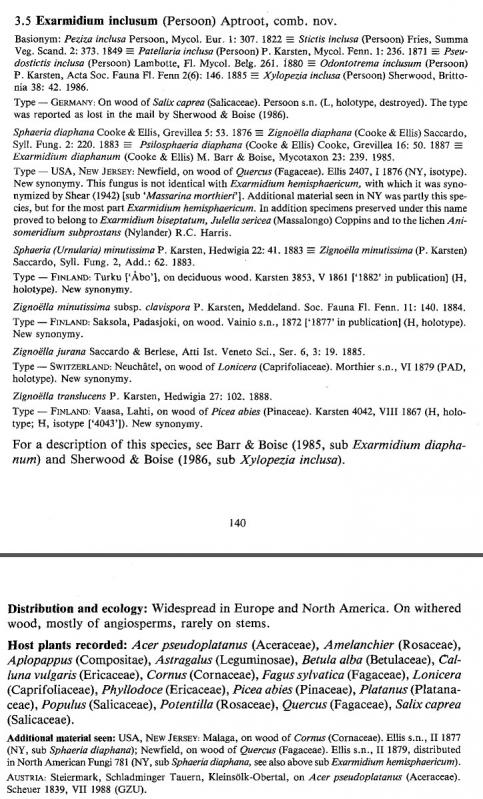
Could this perhaps be something around Mycowinteria (Protothelenella) anodonta? I do not know this species but found this "semilichen" in literature as an adept in the following paper: Sherwood-Pike M. & Boise J. (1986): Studies in lignicolous ascomycetes: Xylopezia and Mycowinteria. - Brittonia, 38(1): 35-44.
Allegedly it produces occassional longitudinal septa at ascospores that should be 3-5septate. The size fits. Slightly amyloid hymenium and broad amyloid tube in ascus apex are other features according to the authors.
Otherwise it reminds me Exarmidium that you surely know much better than me
(called as Xylopezia by the authors mentioned above)
Best wishes
Zdenek
Could this perhaps be something around Mycowinteria (Protothelenella) anodonta? I do not know this species but found this "semilichen" in literature as an adept in the following paper: Sherwood-Pike M. & Boise J. (1986): Studies in lignicolous ascomycetes: Xylopezia and Mycowinteria. - Brittonia, 38(1): 35-44.
Allegedly it produces occassional longitudinal septa at ascospores that should be 3-5septate. The size fits. Slightly amyloid hymenium and broad amyloid tube in ascus apex are other features according to the authors.
Otherwise it reminds me Exarmidium that you surely know much better than me
(called as Xylopezia by the authors mentioned above)
Best wishes
Zdenek
 sherwood-amp-boise86xylopezia-mycowinteria-0001.pdf
Lothar Krieglsteiner,
01-12-2022 22:55
Re : ascomycete on thin Picea twig from Norway
Hello Zdenek,
thank you very much for your proposal and for the file. It is a good trap and I will see if I can follow it successfullly.
Best regards, Lothar
P.S. Exarmidium looks different in my opinion, but is similar in some respects, surely.
thank you very much for your proposal and for the file. It is a good trap and I will see if I can follow it successfullly.
Best regards, Lothar
P.S. Exarmidium looks different in my opinion, but is similar in some respects, surely.
Lothar Krieglsteiner,
14-01-2023 17:54
Re : ascomycete on thin Picea twig from Norway
Hello Zdenek,
I think you had a false opinion of me: "that you surely know much better than me" (Exarmidium). I now think that I found E. inclusum (Xylopezia inclusa).
Because:
1. There is not a trace of an amyloid reaction in the asci (and not in the hymenium) - with Melzer and Baral, no difference.
2. I do not find a longitudinal septum, none.
3. The spores are not so much pointed but more rounded, as I already showed before.
So - I think Exarmidium inclusum is a good hint. I found it repeatedly in the Bavarian forest, but after the first few examinations it was only determined macroscopically from then on.
And - it was found in fresh state, more reddish brown.
The one from Norway is black, but fully dried out, and maybe more ripe.
So I learned something again ...
Thanks again for your help!
Yours, Lothar
I think you had a false opinion of me: "that you surely know much better than me" (Exarmidium). I now think that I found E. inclusum (Xylopezia inclusa).
Because:
1. There is not a trace of an amyloid reaction in the asci (and not in the hymenium) - with Melzer and Baral, no difference.
2. I do not find a longitudinal septum, none.
3. The spores are not so much pointed but more rounded, as I already showed before.
So - I think Exarmidium inclusum is a good hint. I found it repeatedly in the Bavarian forest, but after the first few examinations it was only determined macroscopically from then on.
And - it was found in fresh state, more reddish brown.
The one from Norway is black, but fully dried out, and maybe more ripe.
So I learned something again ...
Thanks again for your help!
Yours, Lothar
Zdenek Palice,
15-01-2023 15:54
Re : ascomycete on thin Picea twig from Norway
Hallo Lothar,
good to know that your specimen is Exarmidium in the end. I was not sure any way. E. inclusum seems to be a plurivorous species. Last year I saw it also on dried stems of the fern (Athyrium) in a herbarium specimen from Sweden.
all the best.
Zdenek
good to know that your specimen is Exarmidium in the end. I was not sure any way. E. inclusum seems to be a plurivorous species. Last year I saw it also on dried stems of the fern (Athyrium) in a herbarium specimen from Sweden.
all the best.
Zdenek
Martin Bemmann,
15-01-2023 17:50

Re : ascomycete on thin Picea twig from Norway
Many years ago I made a collection that was identified by Zotto as an Exarmidium (documentation attached), then called E. cf. diaphanum. E. diaphanum is for Aptroot 1998 (Massarina): 140 a synonym for E. inclusum (attached as well).
The ascocarps of my collection were way more light brownish, not black. But this can be due to a more mature and dry state of Lothar's collection.
Regards
Martin