
19-04-2026 21:23
Steve ClementsBonjour, I found this anamorphic fungus on old pl
19-04-2026 20:46
Steve Clements1 mm diameter approx spherical conidiophores on pl
12-04-2026 17:56
 Hardware Tony
Found on dead stems in February earlier this year
17-04-2026 19:16
 Enrique Rubio
Hi to everybodyI would appreciate any assistance r
14-04-2026 05:32
Ethan CrensonHi all, A few weeks back a friend pointed out som
17-04-2026 15:14
 Bruno Coué
Bonjour.Récoltes du 16/04/2026, sur feuilles mort
12-04-2026 15:52
Gernot FriebesHi,I'm looking for help with this anamorph collect
14-04-2026 21:52
Gernot FriebesHi,found on dead leaves of Carex elata. Conidia: 4
16-04-2026 22:09
Buckwheat PeteHello, I'd like to ask about this older specimen:
15-04-2026 19:33
Fátima Durán ManzanequeHi!! I need help, I found this Ascomycete but I d
Ascobolus carletonii - a close look
Chris Yeates,
04-03-2020 19:52

Bonsoir tous
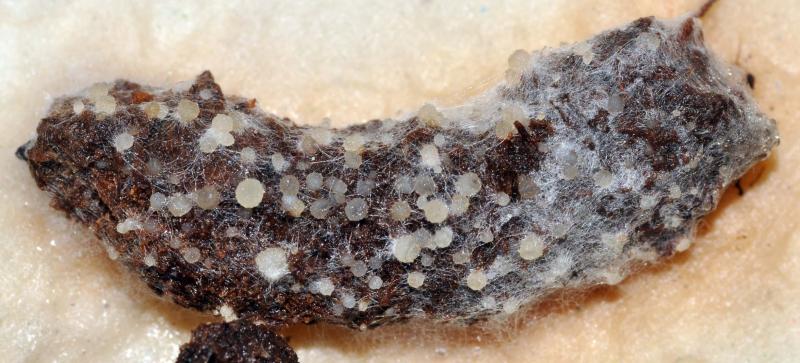
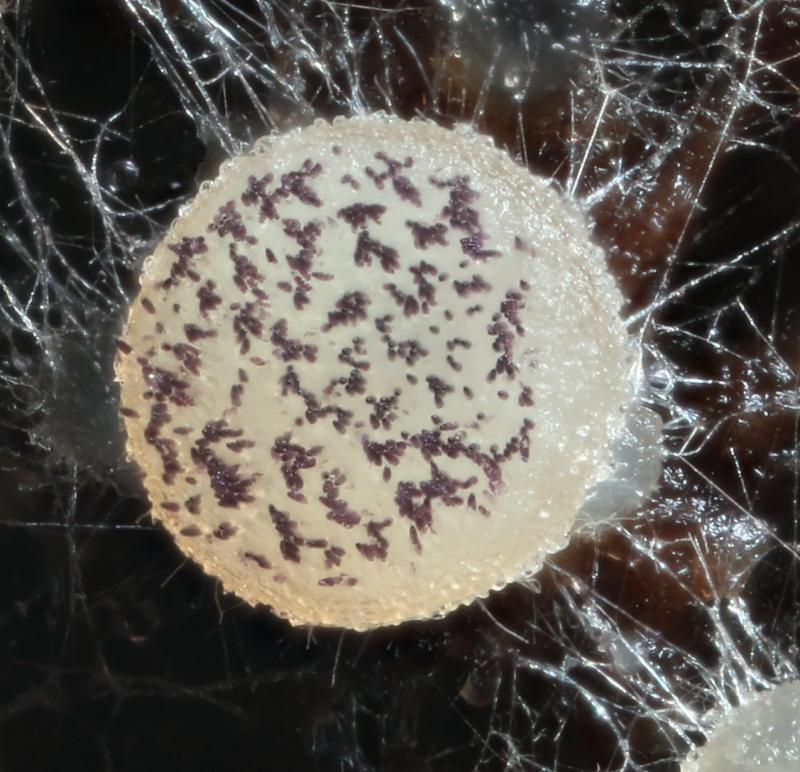
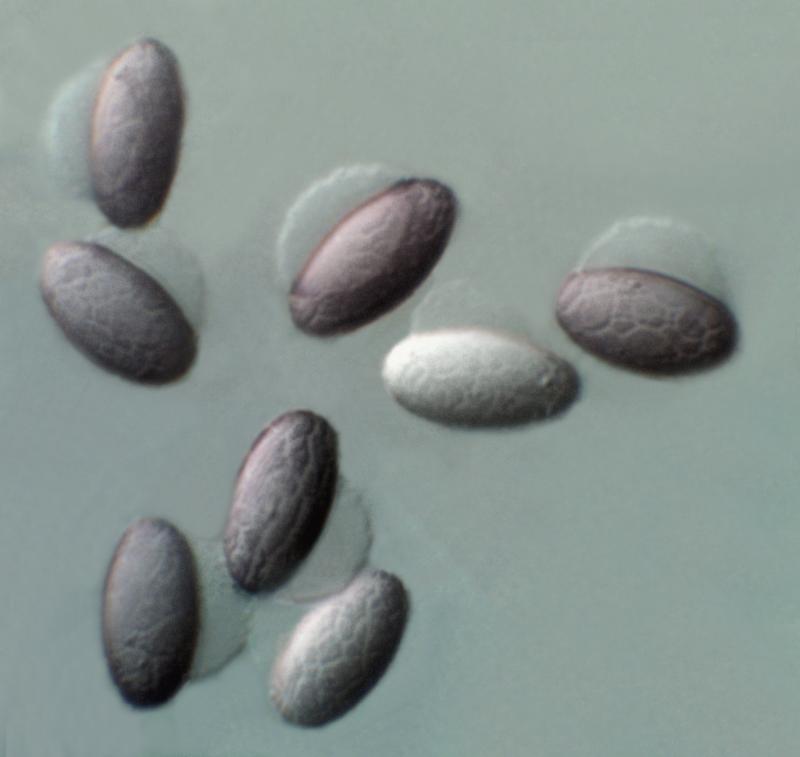
A collection of dung of the British race of willow grouse / red grouse Lagopus lagopus scotica has produced a good fruiting of Ascobolus carletonii Boud. Interestingly this has appeared on only one of six pellets collected. The white apothecia accompanied by superficial hyphae appeared quite early - within a week or so - but it is only now, after some 7-8 weeks that mature spores are starting to appear. This may be due to light levels as the sample was cultured in a relatively unlit area (though not in the dark).
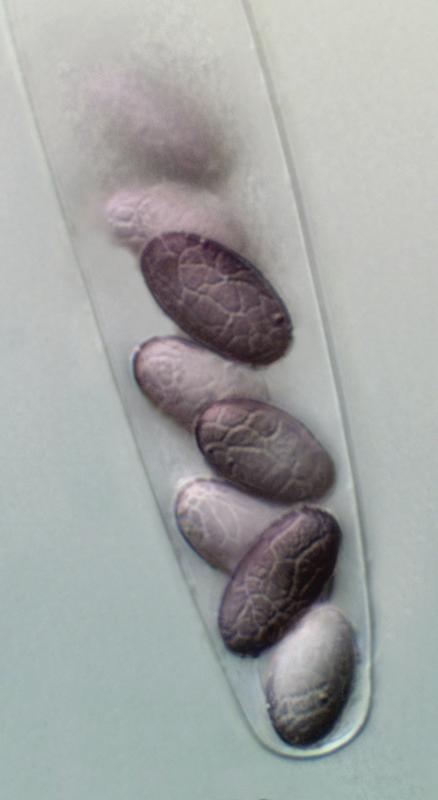
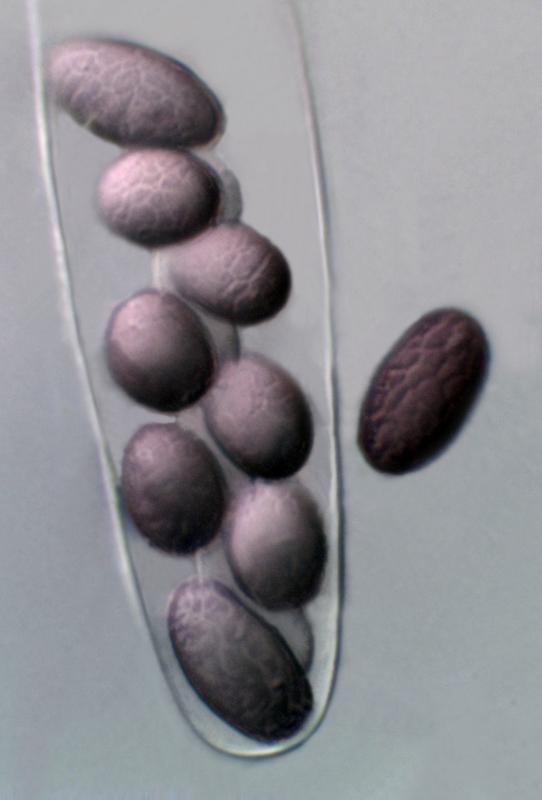
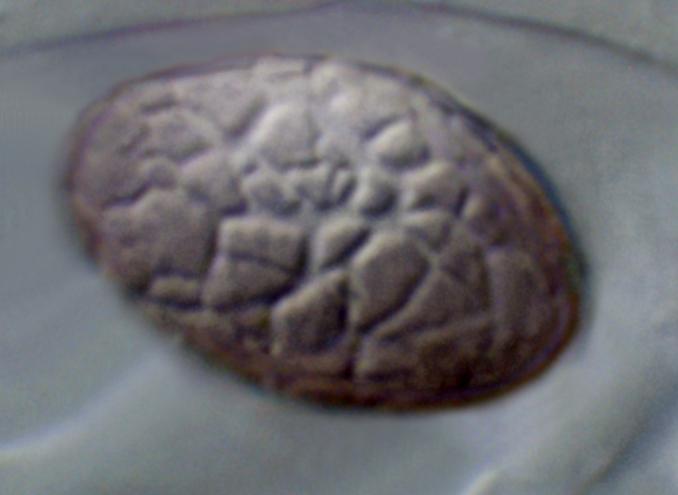
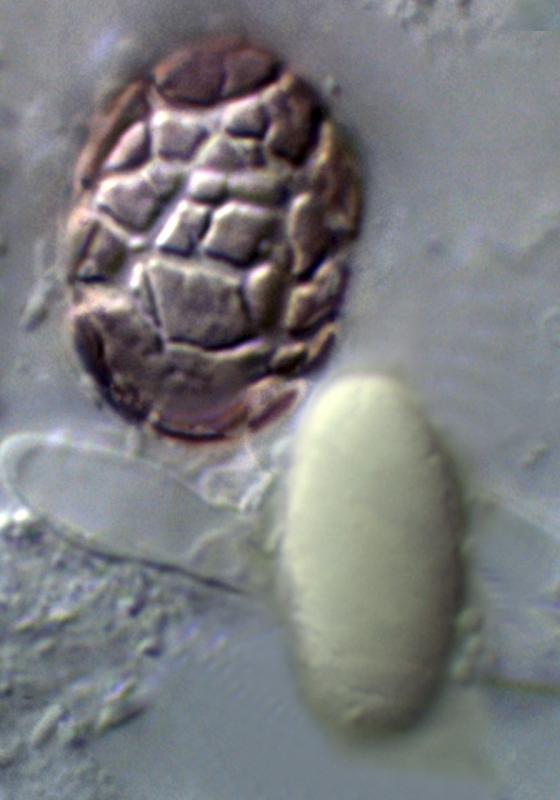
As the hosts of this species are of a mostly northern distribution this fungus may well be unfamiliar to many and so it seems a good opportunity to make some observations based entirely on living material. Identification of the fungus is fairly straightforward, based on habitat and spore characters. I have attached the paper with the protologue of this species. Boudier's description is generally good, but his description of the spores is misleading. He describes them as "diffracto verruculosae" and whereas diffracto as in "broken apart" is accurate, verruculosae gives the wrong impression as does the illustration of the spores (though he was presumably dealing with dried material). One comment which Boudier makes is very interesting: "Ces dernieres [spores] au nombre de huit dans chaque theque, ne murissent pas toujours en meme temps et on rencontre assez souvent de ces dernieres qui en presentent un certain nombre d'incolores". This can be seen in image #5 below which shows ejected spores from a single ascus, with different amounts of pigmentation. A considerable number of asci become hypertrophied, with larger, apparently aborted spores. This may explain Malcolm Greaves' comments here: http://www.ascofrance.com/search_forum/46023 where he comments on a disparity in spores sizes.
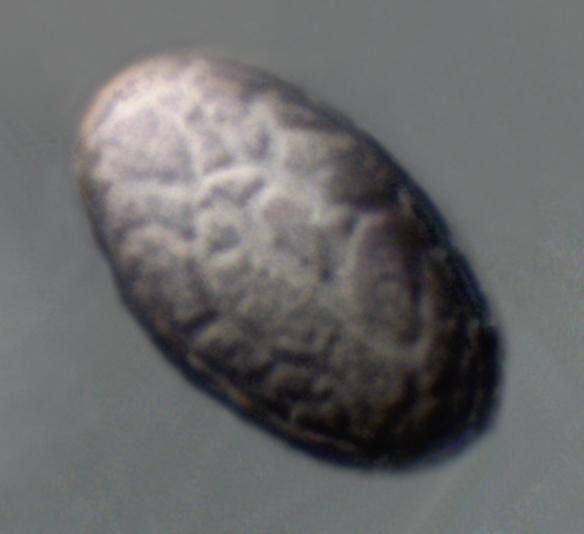
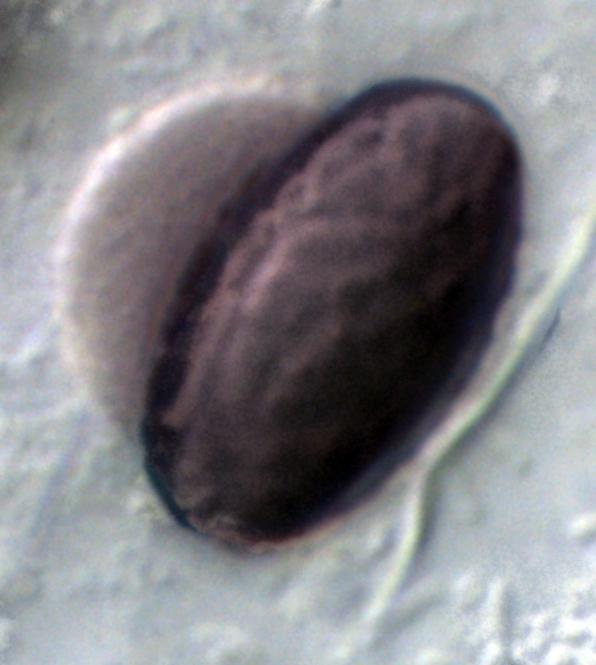
The spore ornament develops slowly, but is clearly a random pattern and not derived from an earlier longitudinal pattern as one finds in overmature spores of some other ascoboli. Older spores show a tendency to collapse, as in image #8. The unilateral spore gel is described by van Brummelen as "transparent"; this is true unless transparent is interpreted as colourlessI in this collection there were occasional spores - generally the ones with most pigmenation which had purple-reddish pigmentation (image #9). In some cases the spores arranged themselves(image #4) in the asci in the manner discussed on this thread: http://www.ascofrance.com/search_forum/34786
With regard to the distribution of the fungus, this is clearly limited by the hosts. Originally collected on western capercaillie, Tetrao urogallus, dung in Scotland (the type collection), since 1966 Mike Richardson has made a number of collections on willow grouse, rock ptarmigan, Lagopus muta and capercaillie dung from Scotland and there are four recent collections from Yorkshire, England. A 1920 collection on horse dung from Leeds, Yorkshire, seems odd, but it was checked by Carleton Rea himself; unfortunately there does not appear to be any voucher material. A. carletonii has also been recorded on odd occasions from Sweden, Norway, Iceland and Russia (the latter on goose and "partridge" dung. Richardson's paper Ascomycete.org, 11(6), pp.205-209 gives the references. There is also a record on capybara dung from Brazil, examined by van Brummelen; the large geographic and host distances again makes it seem unlikely, and perhaps this is just a very similar-looking fungus; I don't think a lot of sequencing has been undertaken in this area.
Lagopus muta does occur in mountainous areas of central Europe -https://upload.wikimedia.org/wikipedia/commons/2/2e/Rock_Ptarmigan_Lagopus_muta_distribution_in_Europe_map.png. It would be interesting to know whether the fungus is in those areas.
 tbms-1912-v4-p62-0001.pdf