
23-05-2026 11:44
 Charles Grapinet
Hello, I am having trouble identifying this copro
25-05-2026 16:44
François BartholomeeusenHi forum members,During an excursion organised by
25-05-2026 16:35
 Bernard CLESSE
Bonjour à toutes et tous,J'ai trouvé récemment,
22-05-2026 13:29
Gernot FriebesHi,I am curious to hear your opinion on this mater
23-05-2026 18:57
Sylvie Le GoffBonjour à tousRécolté sur une branchette de Sal
22-05-2026 14:44
 Lothar Krieglsteiner
in unripe condition citrine yellow, then soon fadi
22-05-2026 21:35
Steve ClementsBonjour, I expected this find on old wood on our
22-05-2026 18:12
Lothar Krieglsteiner
... in moist chamber from Portugal.As the fungus s
22-05-2026 20:08
Ethan CrensonHello all, Yesterday in NYC I was visiting an e
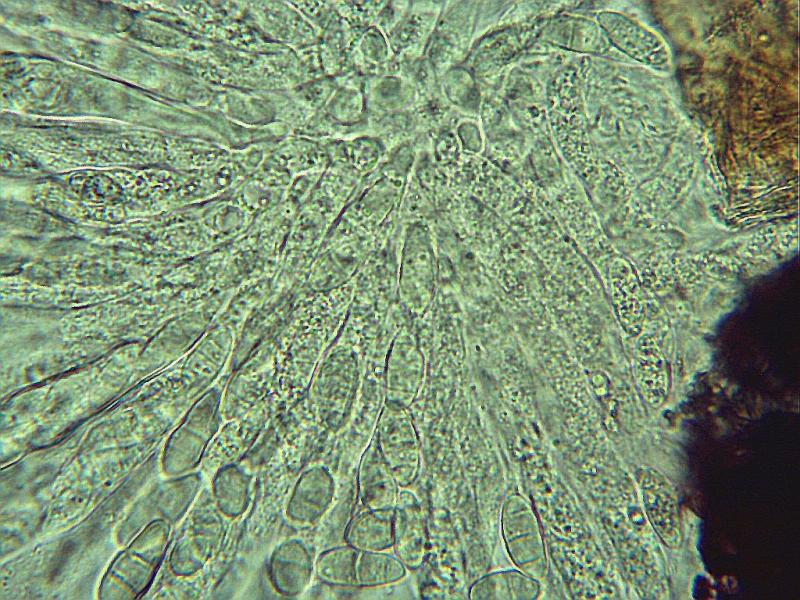
 Found on dead stems in February earlier this year and following regrowth confirmed this substrate. Seeking help identify at least for the genus as at a loss where this belongs, spores shape probably important but apprecaite any help.
Substrate: Nepteta cataria (Catmint) dead lower stem.
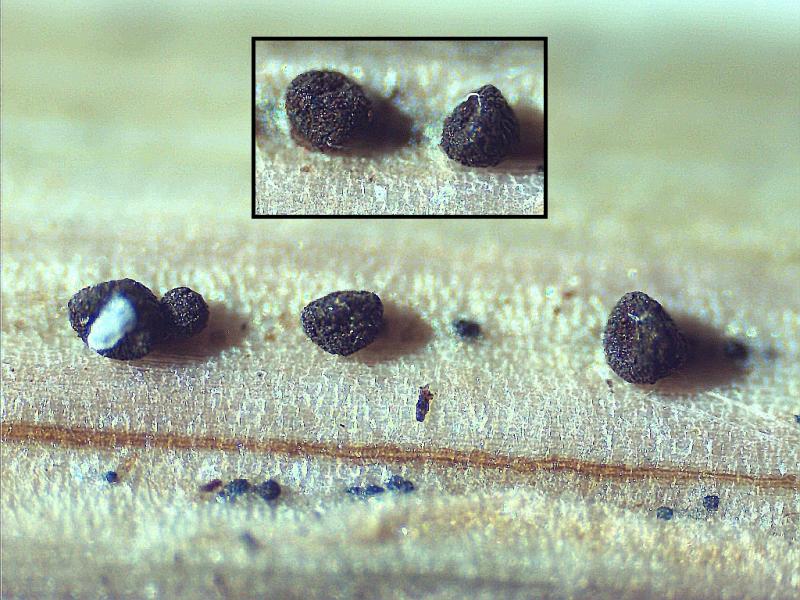
Ascocarps: Superficial, gregarious, subglobose, 0.1mm rounded black. No obvious ostiole. Surface roughened.
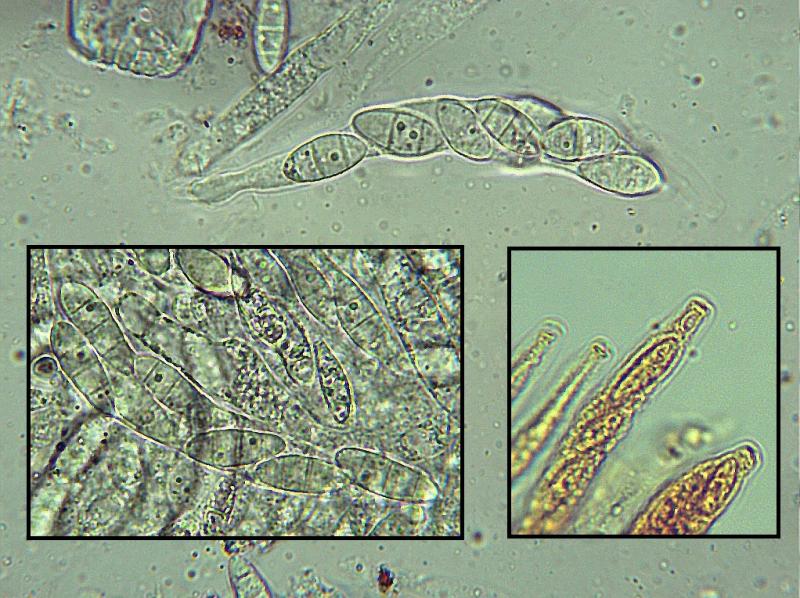
Asci: Clavate, fairly thin-walled, up to 89 – 93 x 9.7 – 10.3 µm, IKI -, 8-spored, uniseriate spores, croziers not obvious and appears negative.
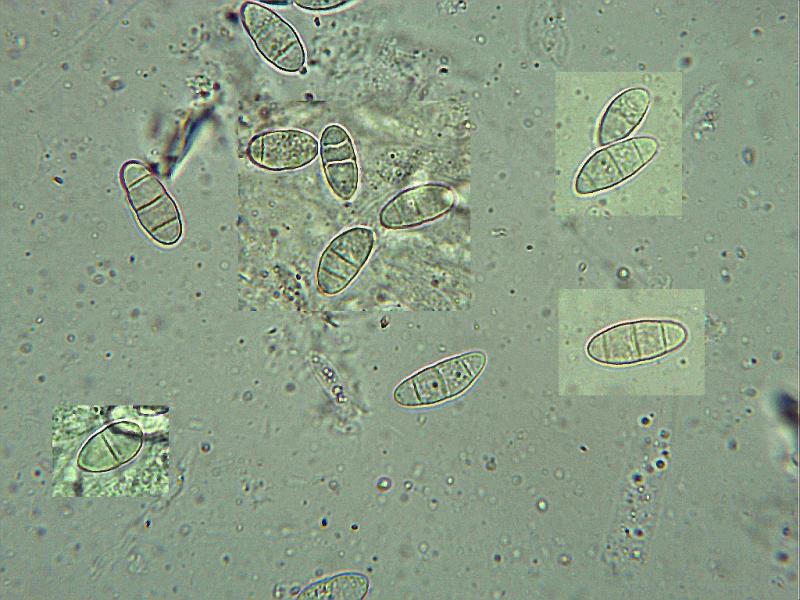
Ascospores: Ellipsoid-fusoid, 1 – 3 septate, 1-2 inside ascus, 3 – matured, turning into one side flattened slightly, with 2-5 fairly large random oil drops, thin walled, no constriction, hyaline 17.0 – 21.5 x 6.0 – 8.0 µm
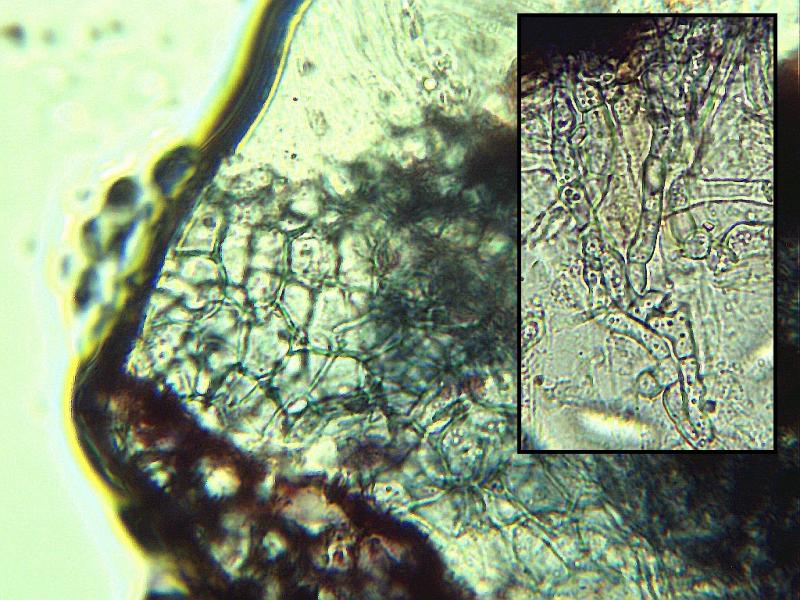
Excipulum: Textura angularis, hymenium bluing reaction in water.
With many thanks Tony Hardware

The current name of Gibberella pulicaris (s.str.) is Fusarium sambucinum. However determinetion of Gibberella/Fusarium species is not simple. There are multiple taxa with very similar morphology, see for example:
Maybe helpful, maybe not.
cheers Mathias