
20-04-2026 22:00
 Malcolm Greaves
These pale yellow, hairy ascos were growing on cul
19-04-2026 21:23
Steve ClementsBonjour, I found this anamorphic fungus on old pl
19-04-2026 20:46
Steve Clements1 mm diameter approx spherical conidiophores on pl
12-04-2026 17:56
 Hardware Tony
Found on dead stems in February earlier this year
17-04-2026 19:16
 Enrique Rubio
Hi to everybodyI would appreciate any assistance r
14-04-2026 05:32
Ethan CrensonHi all, A few weeks back a friend pointed out som
17-04-2026 15:14
 Bruno Coué
Bonjour.Récoltes du 16/04/2026, sur feuilles mort
12-04-2026 15:52
Gernot FriebesHi,I'm looking for help with this anamorph collect
14-04-2026 21:52
Gernot FriebesHi,found on dead leaves of Carex elata. Conidia: 4
16-04-2026 22:09
Buckwheat PeteHello, I'd like to ask about this older specimen:
Pithyella frullaniae ?
Marcel Heyligen,
01-02-2020 18:48
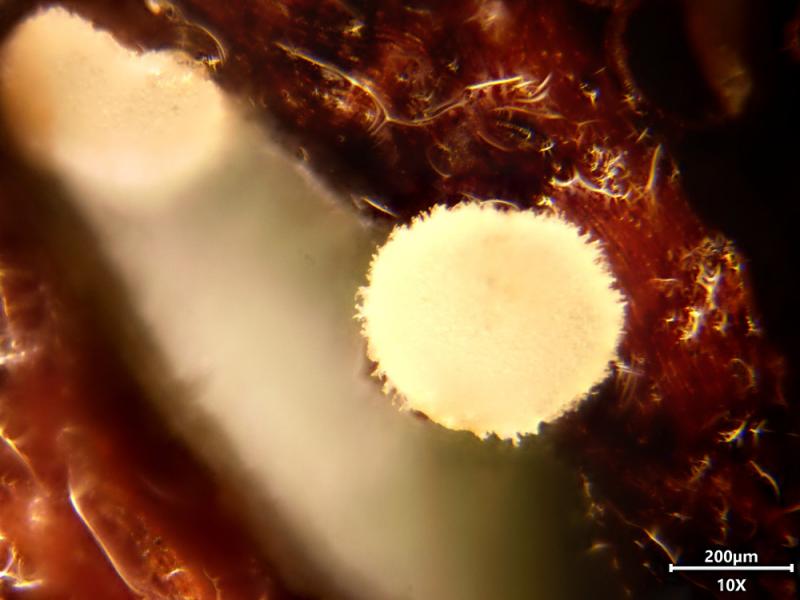
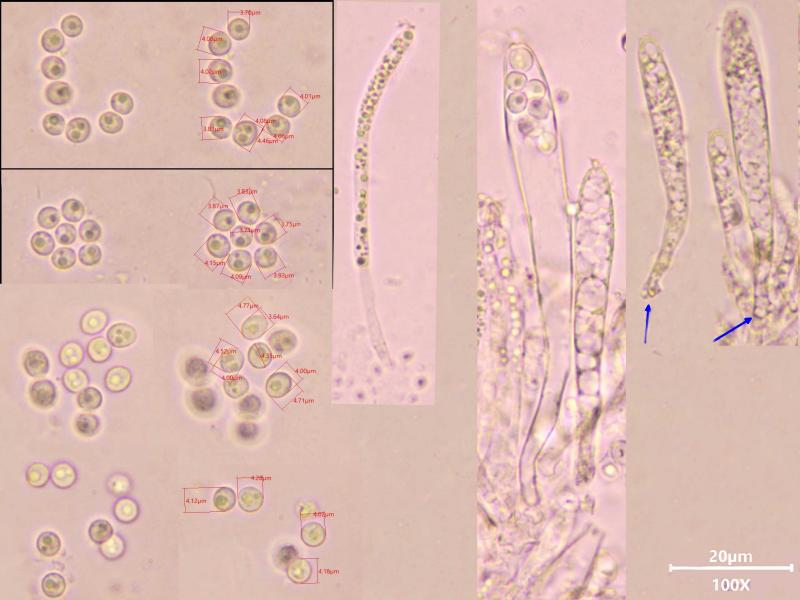
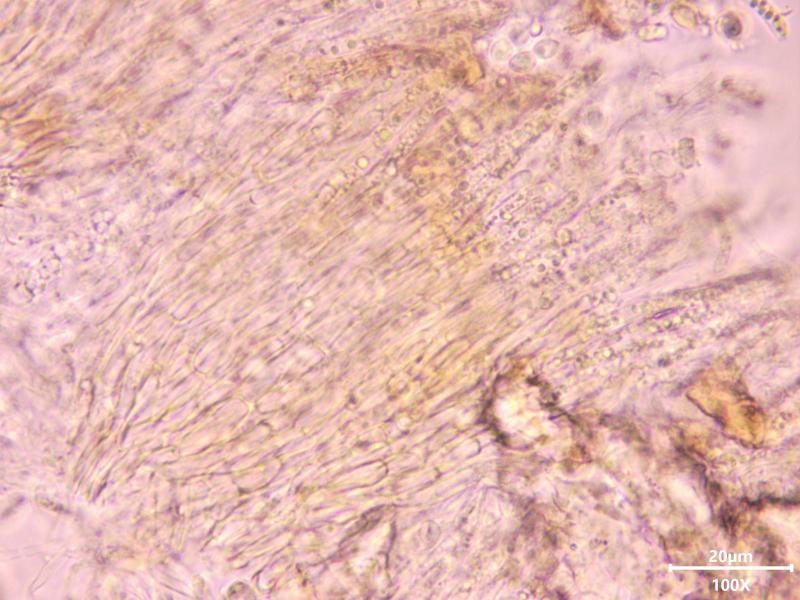
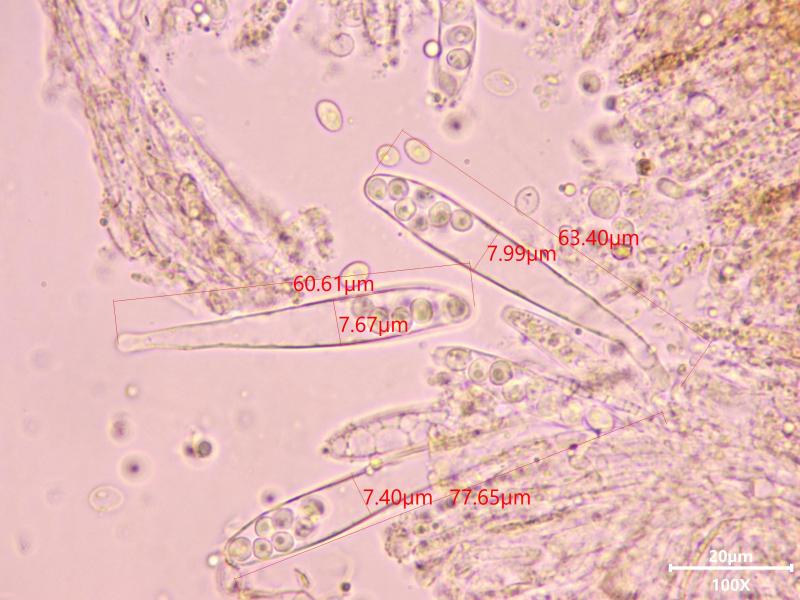
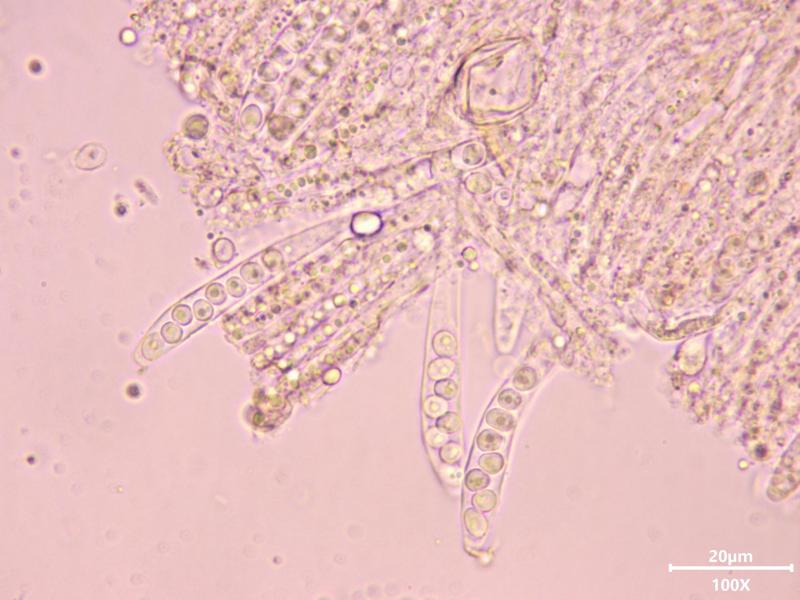
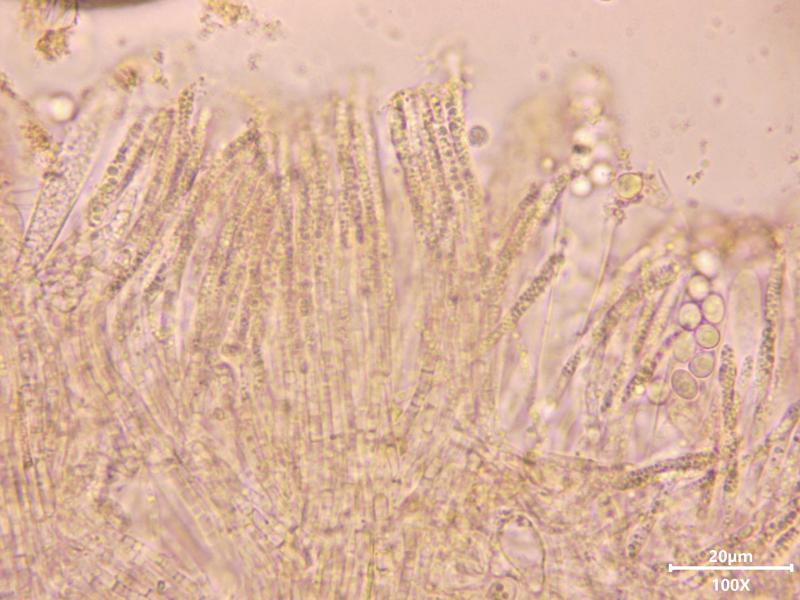
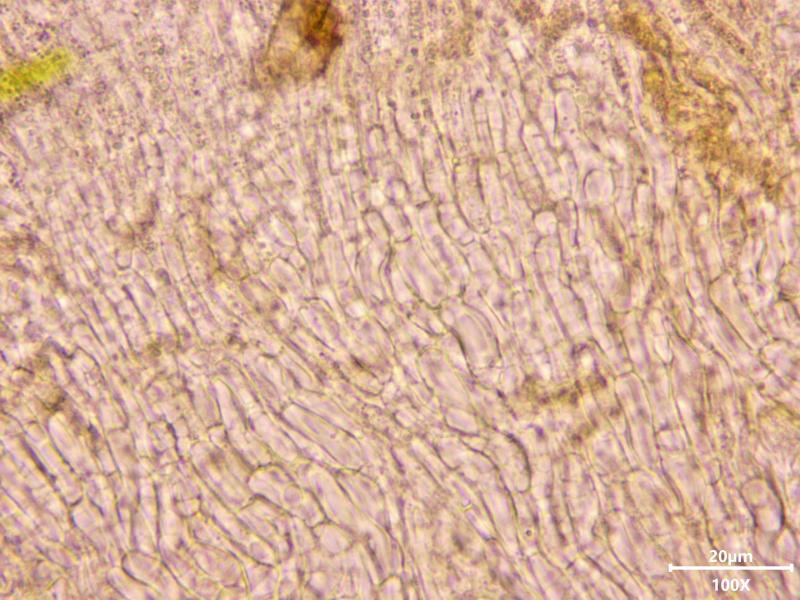
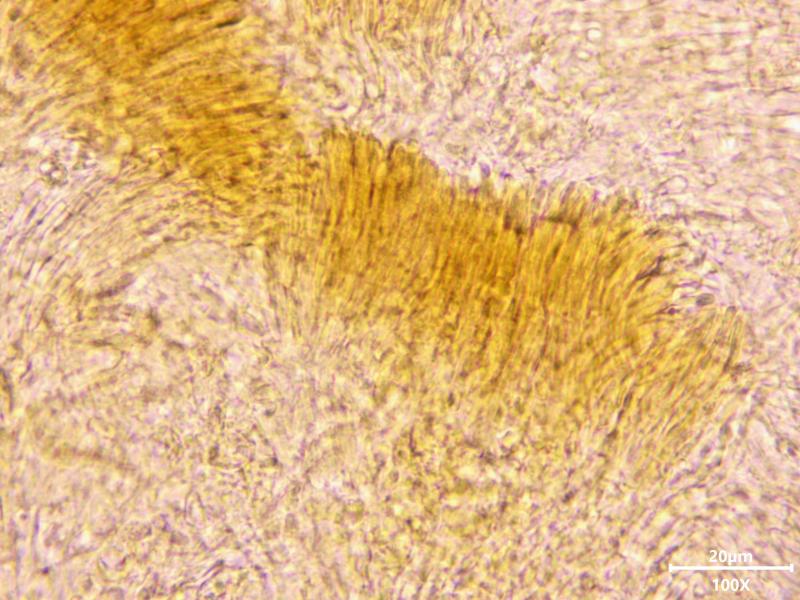
 Found not on Frullaniae but on Orthotrichum affine on a tree. Ascomata apothecioid, 290-450µm, pale ocher to almost white, no stalk, sessile. Tracks 3.75-5.15 x 3.44-4.55 µm (n = 27). asci 48.90-71.36 x 6.55-8.73µm, croziers, Lugol negative, unitunicate and bitunicate.
My first thought was Pithyella frullaniae but the mc is not really correct
Can someone give me advice.
Thanks in advance
Marcel
Hans-Otto Baral,
01-02-2020 20:58

Re : Pithyella frullaniae ?
Hi Marcel
The term bitunicate is not appropriate, because in case you saw a wall thickening (in dead asci?) it does not separate from the outer wall layer.
In fact the spores are too large and only indistinctly rough, also the asci are too large, especially to long.
The tropical Pithyella apicalis has a similar spore size but even more pronounced spore warts.
You can see in my folder there is also an ovoid-spored "apicalis" on Neckera. So it seems there is a group of little known species.
Did you study the hairs, are they rough or perhaps curved?
Jean-Paul Priou renamed P. frullaniae to P. chalaudii - not sure why, because I think the invalid name frullaniae could have been validated. Oddly enough he did not illustrate his new holotype made in the type forest, describing it with 2.5-4.5 µm large (sub)globose, more or less warted spores, whereby 4.5 µm sounds to me too large for this species on Frullania. Chalaud said 2.2-2.5 µm diam. for dad spores, smooth, and I found 2.5-3.4 x 2.5-3 µm for living spores.
Zotto
Marcel Heyligen,
01-02-2020 23:40
Re : Pithyella frullaniae ?
Thank you, Zotto
I don't have any photos of the hair and the material has been dried for more than a month, too bad.
I cannot find the ovoid-spored "apicalis" on Neckera in your folder.
Thanks again for your help.
With kind regards
Marcel
I don't have any photos of the hair and the material has been dried for more than a month, too bad.
I cannot find the ovoid-spored "apicalis" on Neckera in your folder.
Thanks again for your help.
With kind regards
Marcel
Hans-Otto Baral,
02-02-2020 09:52
Re : Pithyella frullaniae ?
o.k. Have you been in the 5a Helotiaceae folder? The subfolder is Calyptellopsis - Pithyella, and here "apicalis ovoid Neckera".
Marcel Heyligen,
02-02-2020 20:46
Re : Pithyella frullaniae ?
ok i found it. It takes some searching to get to know the system of your folder. Thank you for including my find in your folder so that it will certainly not be lost. thank you again for your help. Marcel
Hans Meulenbelt,
03-02-2020 13:08

Re : Pithyella frullaniae ?
Hello Zotto,
if you mention folders, I guess you refer to your DVD. Is Your DVD still available?
Regards, Hans.
Hans-Otto Baral,
03-02-2020 14:56
Re : Pithyella frullaniae ?
Hi Hans
indeed it is online accessible.
At present it works only this way:
whereas usually it is
Go to Ascomycetes illustrations.
Good luck!
Zotto
Hans Meulenbelt,
03-02-2020 16:19
Re : Pithyella frullaniae ?
Thanks a lot, Zotto.
I had been trying the "usual" link, without success.
Marcel Heyligen,
03-02-2020 23:43
Re : Pithyella frullaniae ?
Hans-Otto Baral,
03-02-2020 23:55
Re : Pithyella frullaniae ?
This is good, thanks :-)