Accès membres

Mot de passe perdu? S'inscrire

21-04-2026 21:00

Sylvie Le Goff

Bonjour à tousJe sollicite votre aide pour cet as

21-04-2026 13:36

Gernot Friebes

Hi,I am out of ideas for this one. I collected Sal

21-04-2026 13:19

Gernot Friebes

Hi,this Lophodermium on Typha has ascospores measu

21-04-2026 13:05

Gernot Friebes

Hi,this hyphomycete feels familiar but I was not a

20-04-2026 22:00

Malcolm  Greaves Malcolm Greaves

These pale yellow, hairy ascos were growing on cul

19-04-2026 21:23

Steve Clements

Bonjour, I found this anamorphic fungus on old pl

19-04-2026 20:46

Steve Clements

1 mm diameter approx spherical conidiophores on pl

12-04-2026 17:56

Hardware Tony Hardware Tony

Found on dead stems in February earlier this year

17-04-2026 19:16

Enrique Rubio Enrique Rubio

Hi to everybodyI would appreciate any assistance r

14-04-2026 05:32

Ethan Crenson

Hi all, A few weeks back a friend pointed out som
« < 1 2 3 4 5 > »
Scutellinia sp. - please help with identification
Sergey Markov, 21-10-2019 21:53
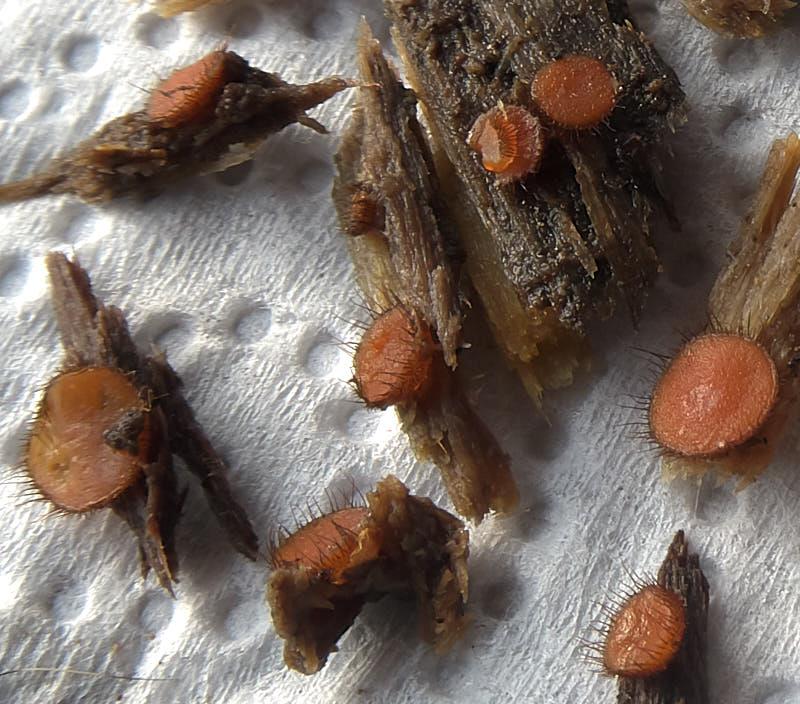
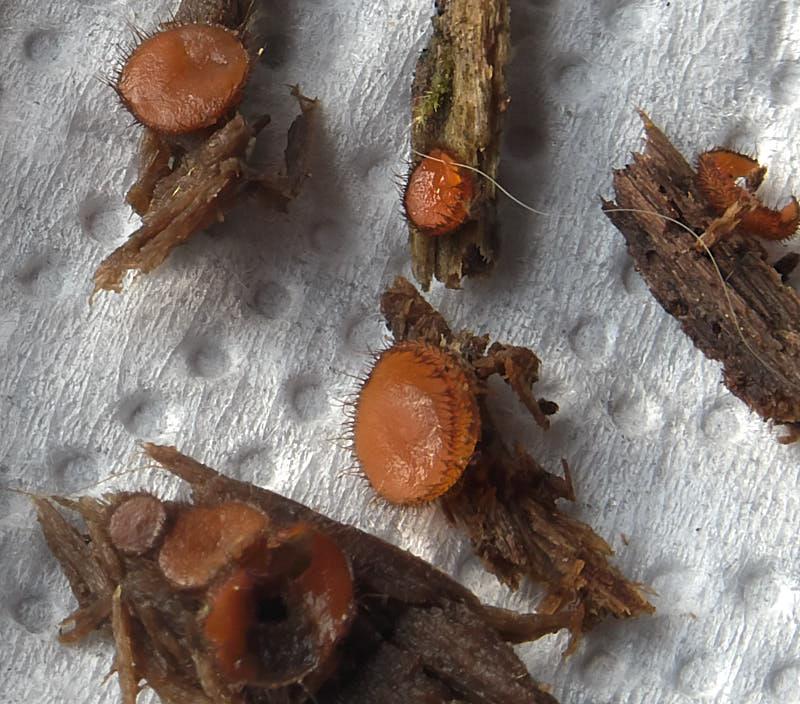
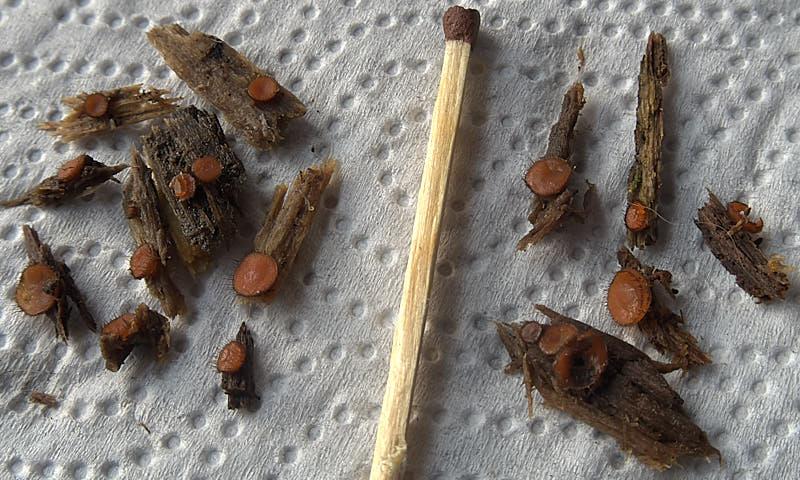
I found small Scutellinia species on very wet very rotten wood of Populus tremula and Betula pendula in Russia near east of Moscow region (left from match - on Populus, right - on Betula).

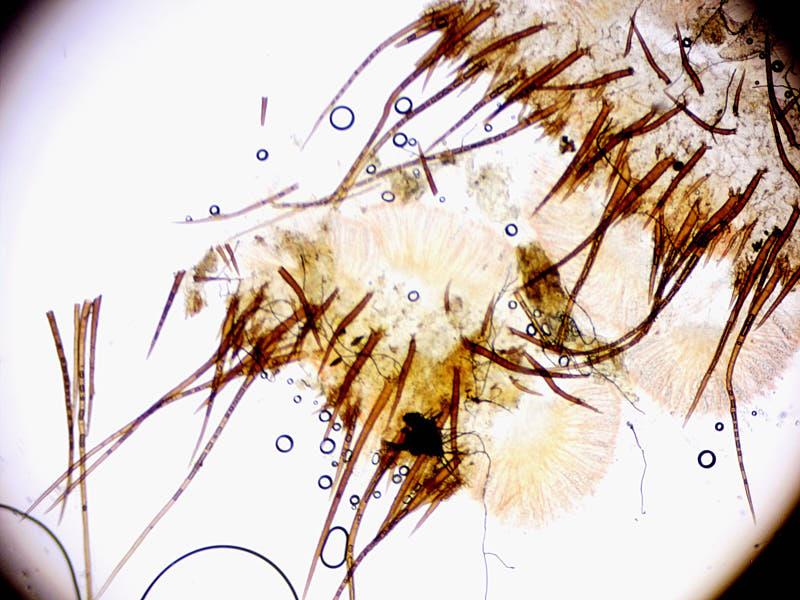
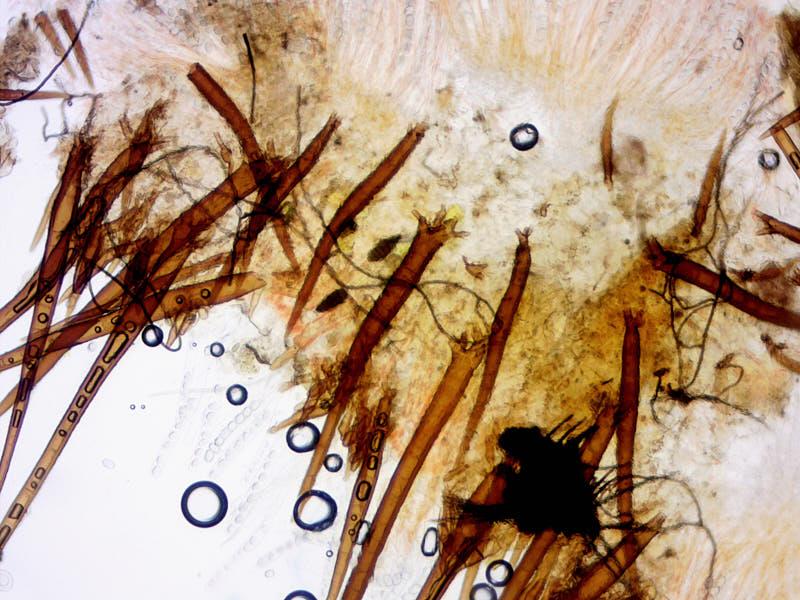
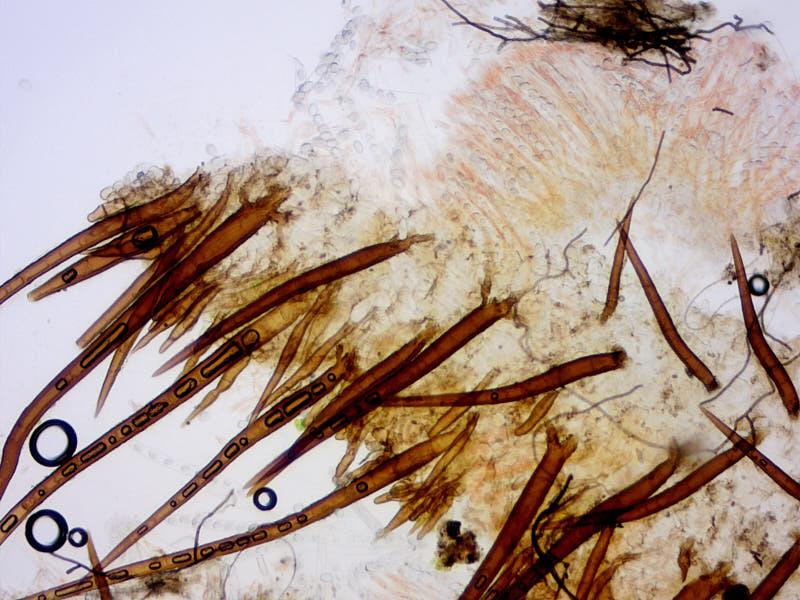
Ascomata size is up to 5 mm of pale orange color. Marginal hairs up to 1.5 mm long (may be longer, I measured only seven hairs) and up to 42 um wide, non-septate, at base from non-furcate to multifurcate.

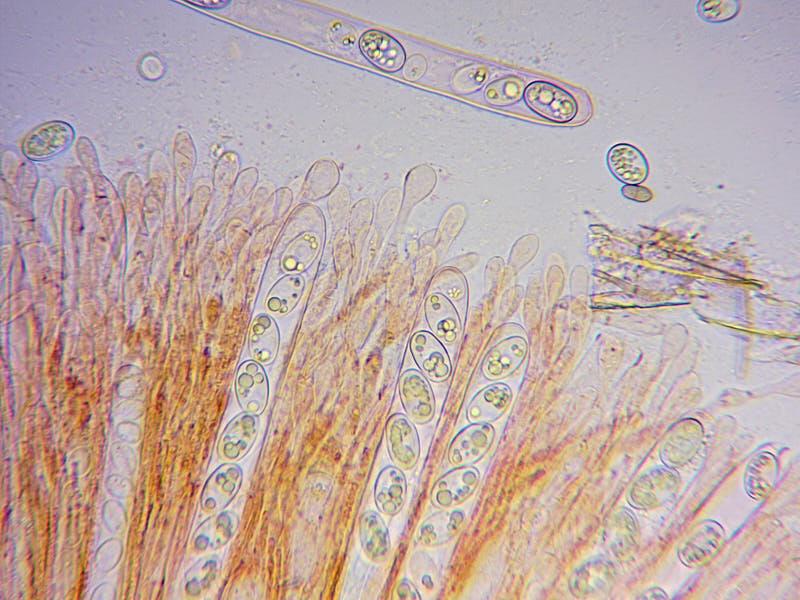
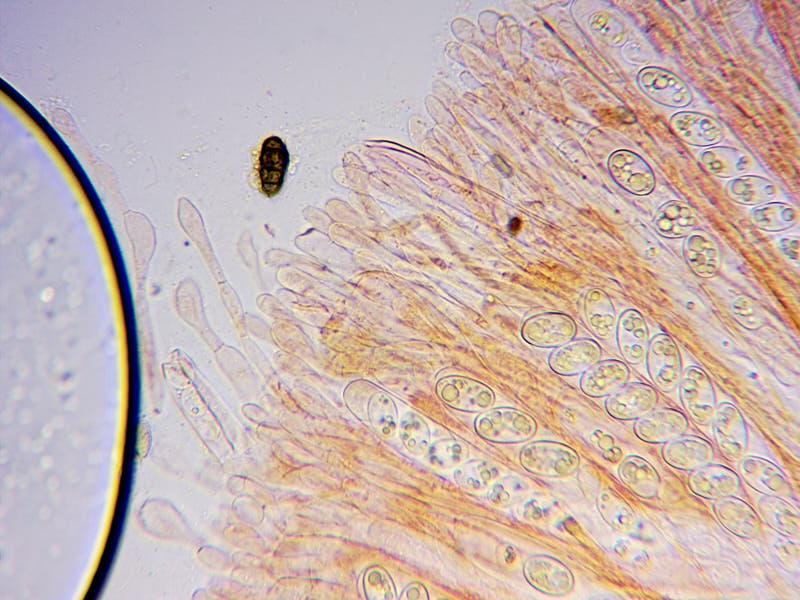
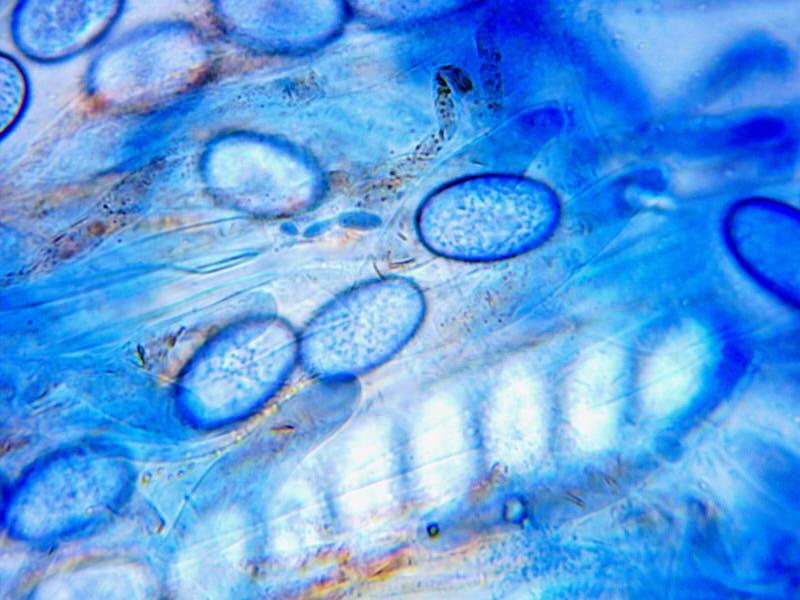
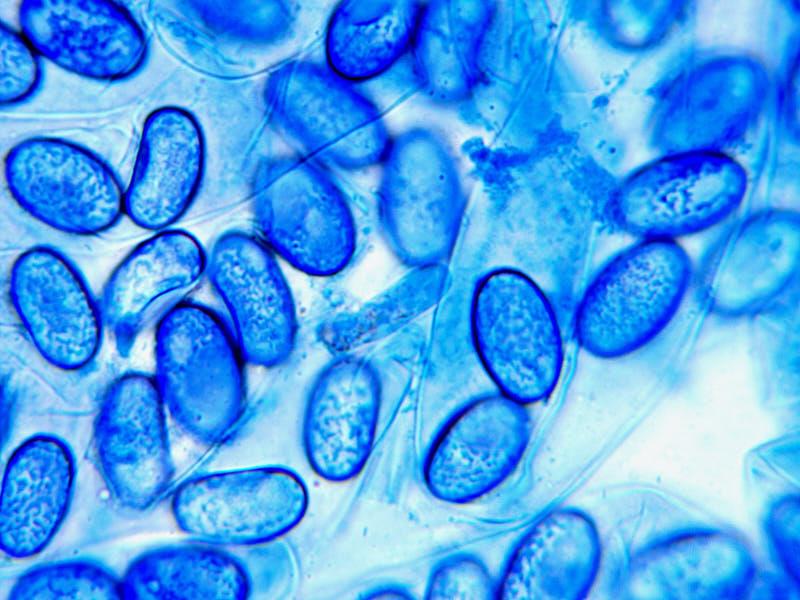
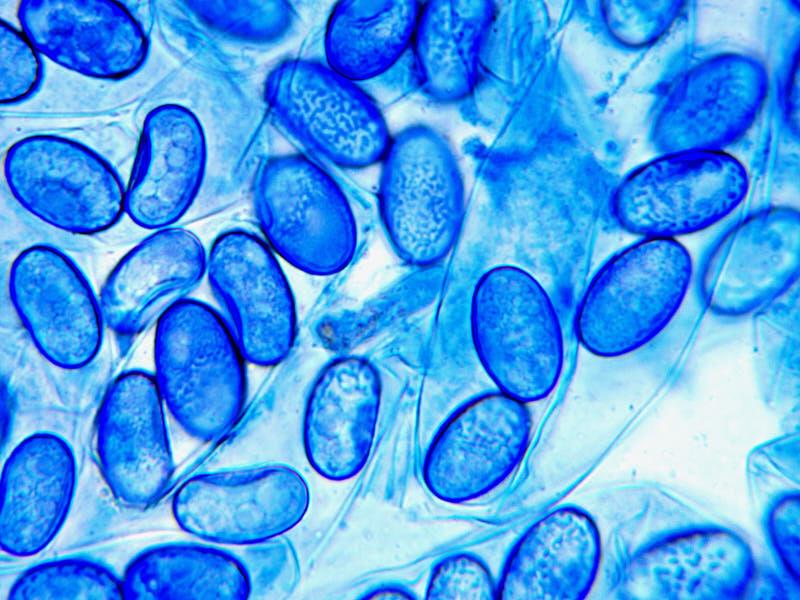
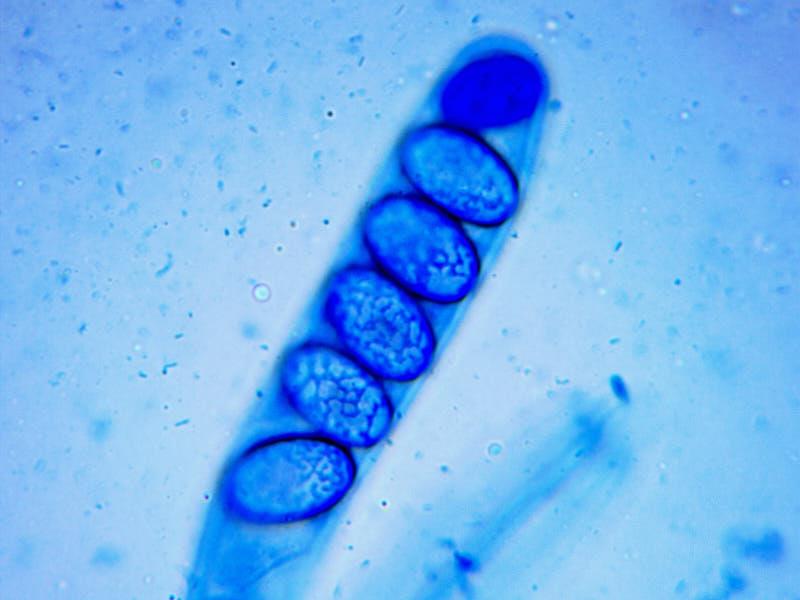
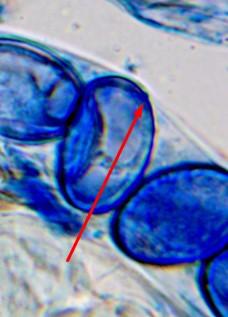
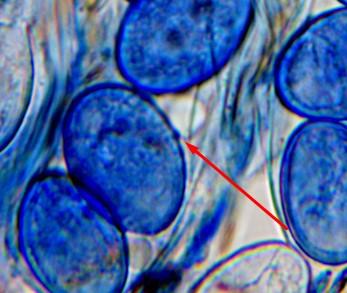
Ascospores ellipsoid or broadly ellipsoid, (17.57) 19.03 - 20.66 (21.70) × (11.84) 12.38 - 13.60 (14.19) µm; Q = (1.39) 1.47 - 1.58 (1.67); N = 49; Me = 19.78 × 13.01 µm ; Qe = 1.52. Ornamentation very small, mostly invisible in light microscope, most spores visible as smooth, but contains rare "big" warts up to 0.2...0.3um high. Ornamentation visible in lactic CB, contains ultra-small to small warts, some rare bigger warts and ridges, and some rare mesh-like structures. Paraphyses clavate, some septate, some moniliform.

I checked several versions - S.crinita (apothecia too small; spore ornamentation not suitable), S.kerguelensis (hairs too long, non septate), S.nigrohirtula (Qe too small, hairs too long, aseptate), S,setosissima (Southern specie, should not be found in my region), S.olivascens (hairs too long, Qe may be smaller than needed). I think that none of this versions are suitable.

Please help with identification.
  • message #59652
  • message #59652
  • message #59652
  • message #59652
  • message #59652
  • message #59652
  • message #59652
  • message #59652
  • message #59652
  • message #59652
  • message #59652
  • message #59652
  • message #59652
  • message #59652
  • message #59652
  • message #59652
  • message #59652
  • message #59652
Malcolm Greaves, 22-10-2019 08:48
Malcolm  Greaves
Re : Scutellinia sp. - please help with identification
How about S scutellata?
Sergey Markov, 22-10-2019 11:31
Re : Scutellinia sp. - please help with identification
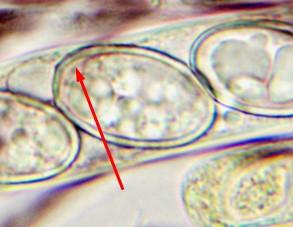
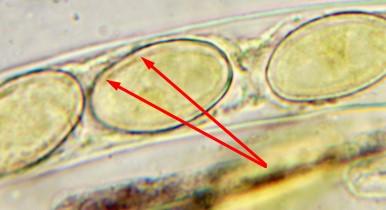
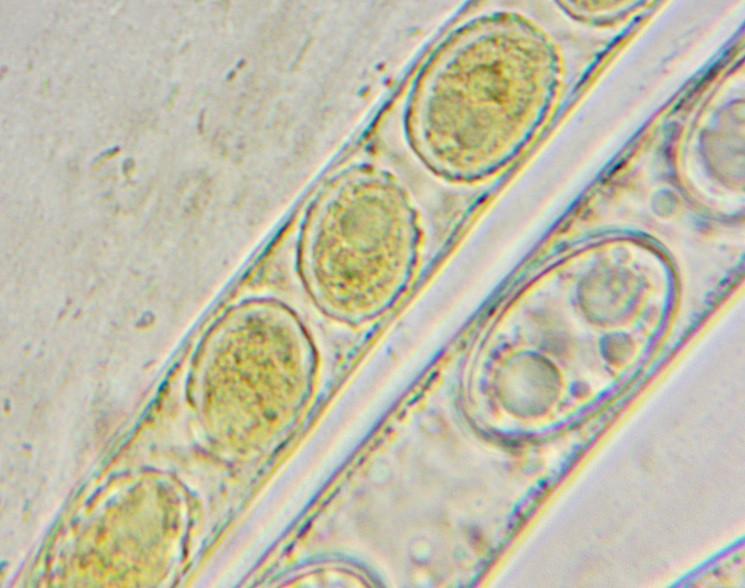
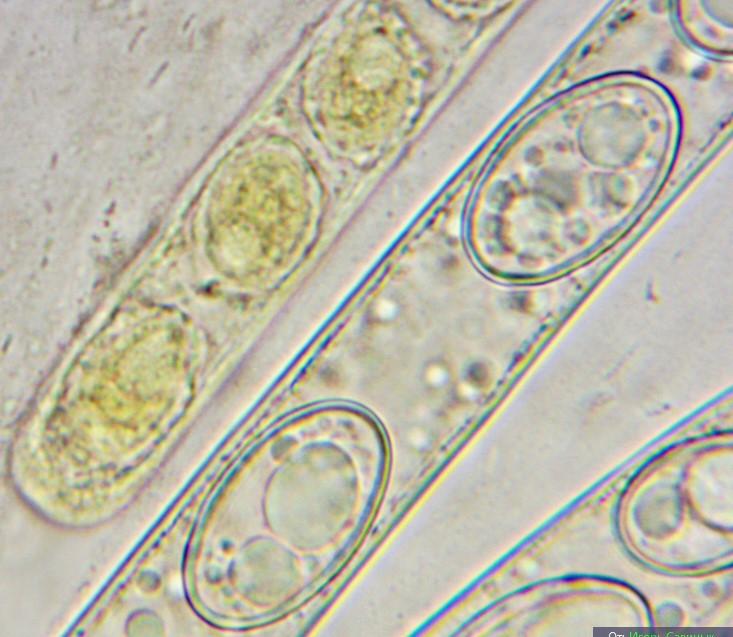
According to T.Schumacher (1990) S.scutellata has ascospores with warts with height of 0.5...0.9 um, clearly visible in light microscope. Spores of my Scutellinia sp. visible as almost smooth with 100x oil lens in Melzers reagent and in lactic CB. Ornamentation visible only in CB as pattern on spore surface, but not as relief on spore periphery. Warts, that are visible as relief, have maximum height of 0.2...0.3 um are very rare, hard to find, and may be also artefacts. i'm not sure that they are true warts.
If this (almost smooth mature spores with ornamentation visible as pattern, but not as relief) in conjunction with small ascomata is normal for S.scutellata, this may be acceptable version.

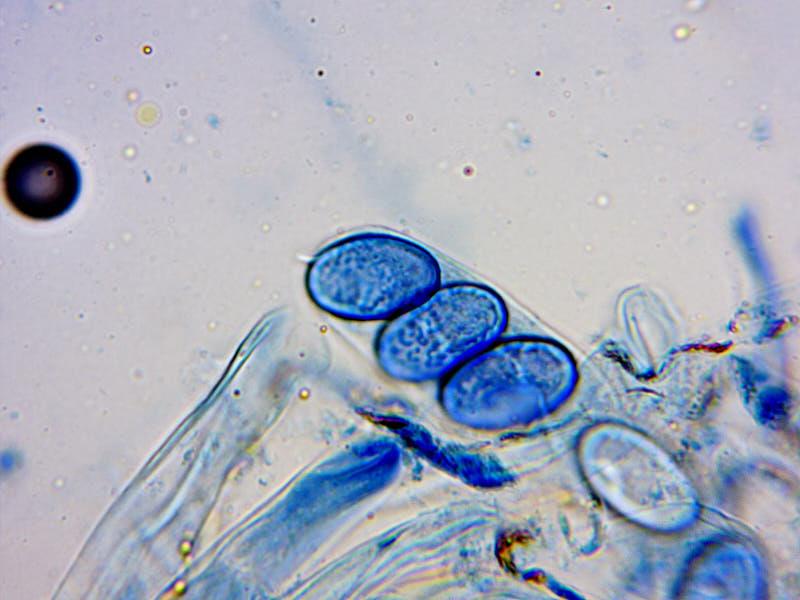
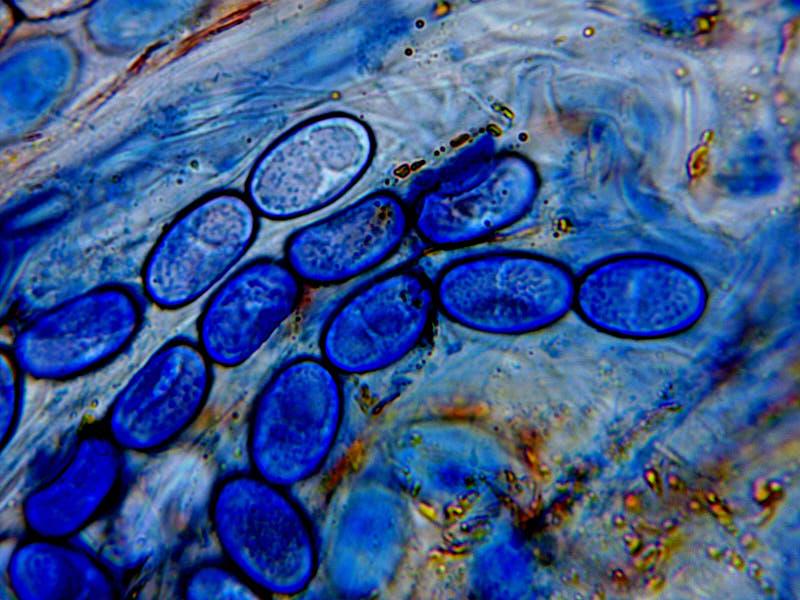
There are two new microphotos (in Melzer's). I previously did not pay attention to this, but immature spores have a clearly visible ornamentation, warts with height up to 0.7 um, that disappears on mature spores.
  • message #59658
  • message #59658
Malcolm Greaves, 22-10-2019 23:21
Malcolm  Greaves
Re : Scutellinia sp. - please help with identification
The sculpturing often changes when spores are ejected. Sometimes smaller sometimes greater so mature spores should always be used. S crinita is described as having minute sculpturing.
Sergey Markov, 27-10-2019 18:25
Re : Scutellinia sp. - please help with identification
Thank You. S crinita was my first version. I was later confused with some microphotos of S.crinita ornamentation, but these photos was mixed up. I reviewed Schumachers's description and drawings, and S. crinita seems to be almost suitable. Only with a minor incongruities - according to Schumacher S.crinita has simple septate paraphyses, and i see moniliform paraphyses in my species, and the spore ornamentation of my species looks lower than in the Schumacher's description (mainly invisible under 100x oil immersion lens as relief). Is this OK for S.crinita?
Malcolm Greaves, 27-10-2019 23:15
Malcolm  Greaves
Re : Scutellinia sp. - please help with identification
I would accept it.