
22-04-2026 01:06
 Richard VALERI
Bonjour à tous.Je vous présente cette Nectria s.
21-04-2026 22:14
Margot en Geert VullingsThis cup fungus was found on April 10, 2026, on lo
21-04-2026 13:36
Gernot FriebesHi,I am out of ideas for this one. I collected Sal
21-04-2026 13:19
Gernot FriebesHi,this Lophodermium on Typha has ascospores measu
21-04-2026 13:05
Gernot FriebesHi,this hyphomycete feels familiar but I was not a
20-04-2026 22:00
 Malcolm Greaves
These pale yellow, hairy ascos were growing on cul
19-04-2026 21:23
Steve ClementsBonjour, I found this anamorphic fungus on old pl
19-04-2026 20:46
Steve Clements1 mm diameter approx spherical conidiophores on pl
12-04-2026 17:56
 Hardware Tony
Found on dead stems in February earlier this year
Hymenoscyphus
Nicolas VAN VOOREN,
28-09-2019 10:32
 Hello.
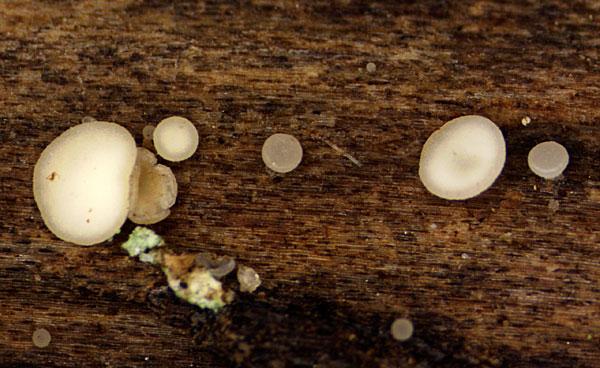
Here is a Hymenoscyphus growing on a small dead branch (hardwood), in a wet place.
Excipulum of textura subprismatica, becoming ± a t. subglobulosa at the base, mixed with clavate cells.
Paraphyses without VBs.
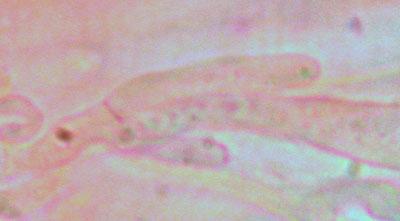
Asci without crozier, IKI+ (bb)
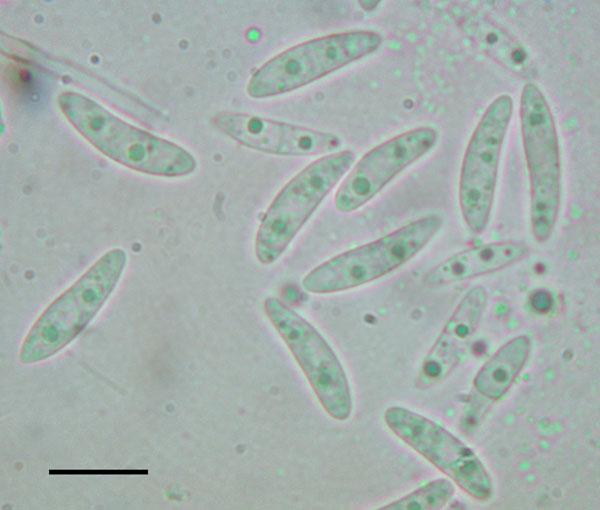
Spores 13-16 × (3.2) 3.5-4 µm
Any suggestion?
Hans-Otto Baral,
28-09-2019 10:39

Re : Hymenoscyphus
Hi Nicolas
with this spore characters I the absence of VBs and croziers sounds strange. Can you give photos of them? The apothecia are completely stalkless? What diameter?
with this spore characters I the absence of VBs and croziers sounds strange. Can you give photos of them? The apothecia are completely stalkless? What diameter?
Nicolas VAN VOOREN,
28-09-2019 10:42
Re : Hymenoscyphus
Thanks Zotto for your reply. I'm going to make a new prep, now the specimens are dried.
Apothecia are very short-stalked, reaching 1.5 mm diam.
Apothecia are very short-stalked, reaching 1.5 mm diam.
Nicolas VAN VOOREN,
28-09-2019 13:30
Re : Hymenoscyphus
No crozier (after me).
Hans-Otto Baral,
28-09-2019 15:36
Re : Hymenoscyphus
No doubt! That could point to Ph. fulvidulum which is usually dark-coloured, but when there were no VBs in the living paraphyses, then this is ruled out.