
22-04-2026 01:06
 Richard VALERI
Bonjour à tous.Je vous présente cette Nectria s.
21-04-2026 13:36
Gernot FriebesHi,I am out of ideas for this one. I collected Sal
21-04-2026 13:19
Gernot FriebesHi,this Lophodermium on Typha has ascospores measu
21-04-2026 13:05
Gernot FriebesHi,this hyphomycete feels familiar but I was not a
20-04-2026 22:00
 Malcolm Greaves
These pale yellow, hairy ascos were growing on cul
19-04-2026 21:23
Steve ClementsBonjour, I found this anamorphic fungus on old pl
19-04-2026 20:46
Steve Clements1 mm diameter approx spherical conidiophores on pl
12-04-2026 17:56
 Hardware Tony
Found on dead stems in February earlier this year

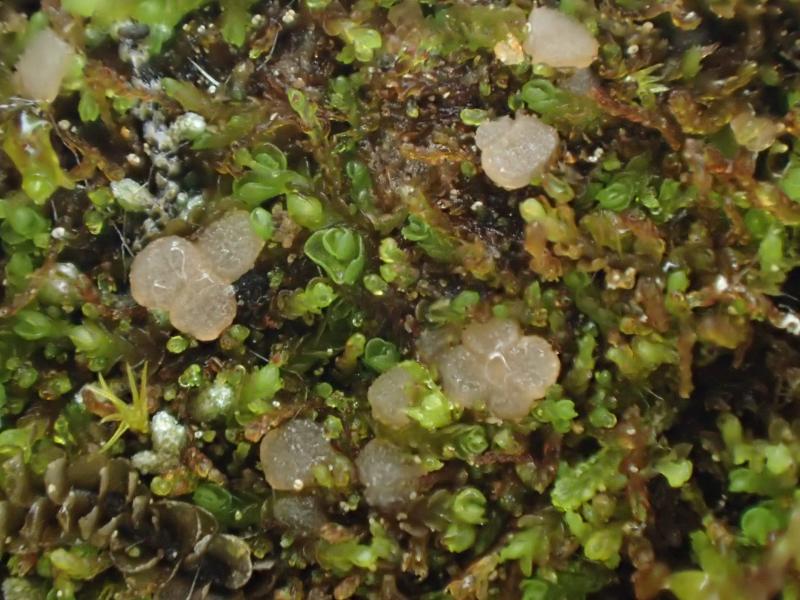
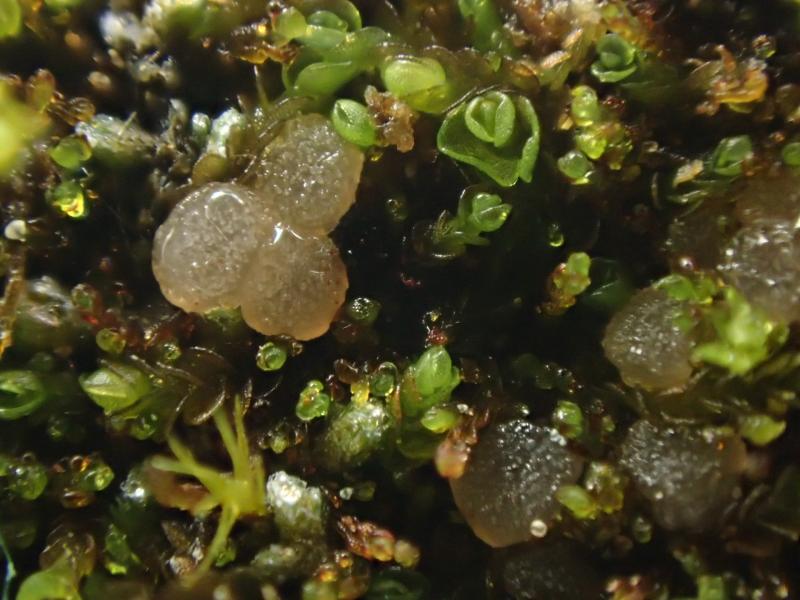
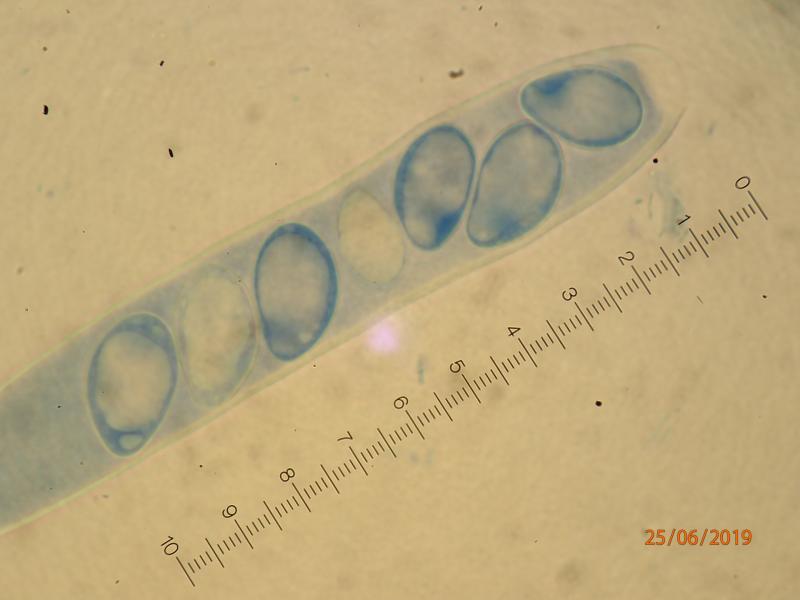
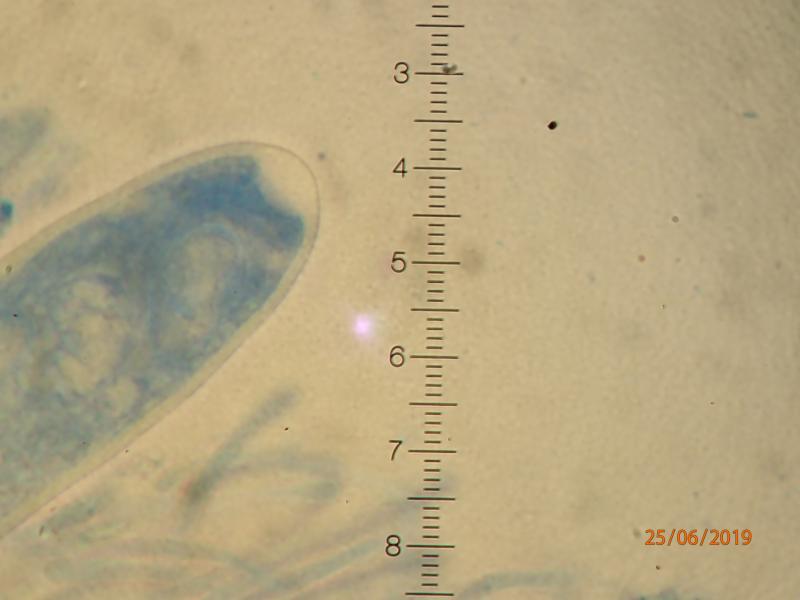
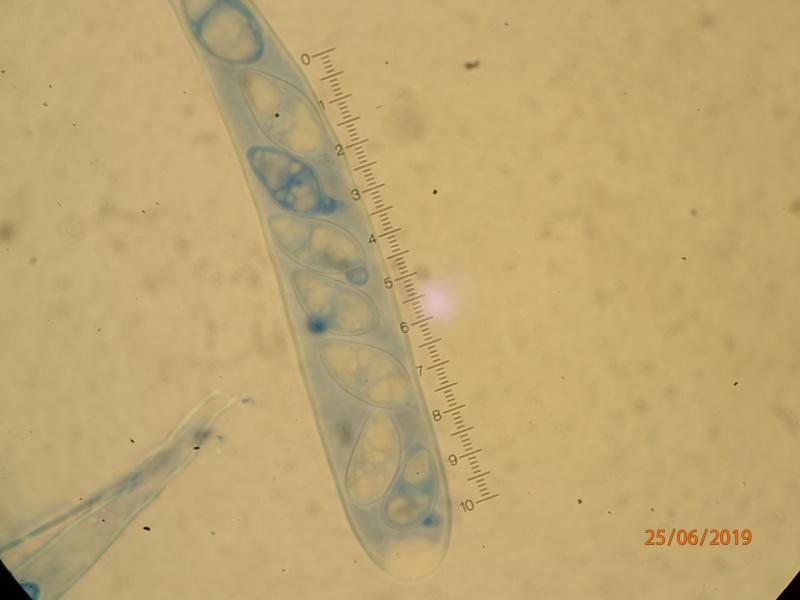
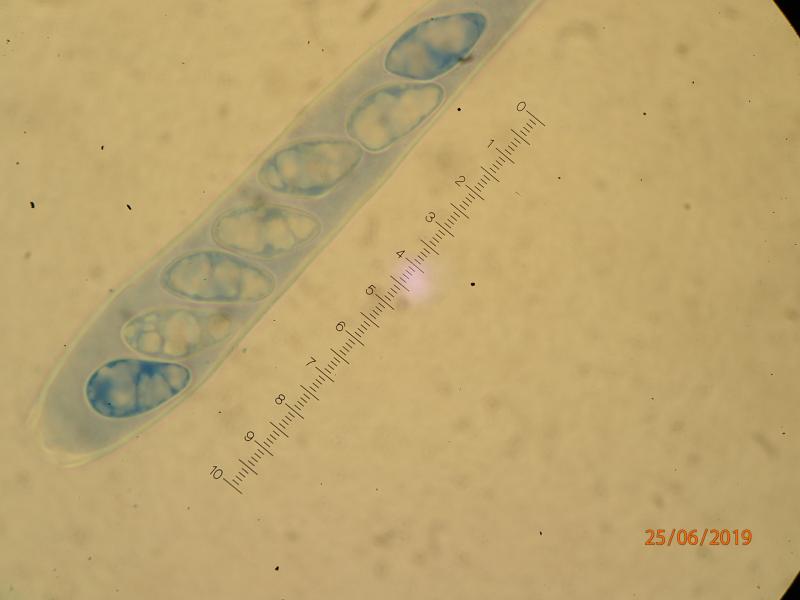
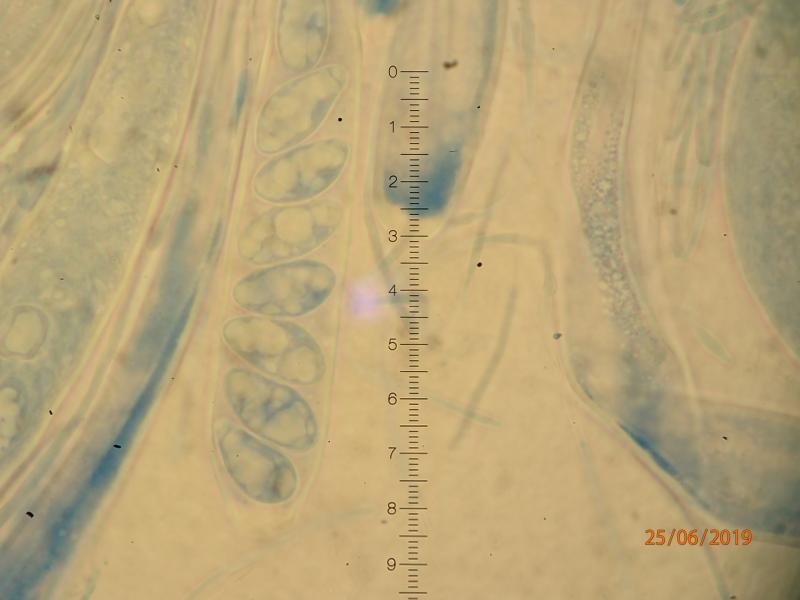
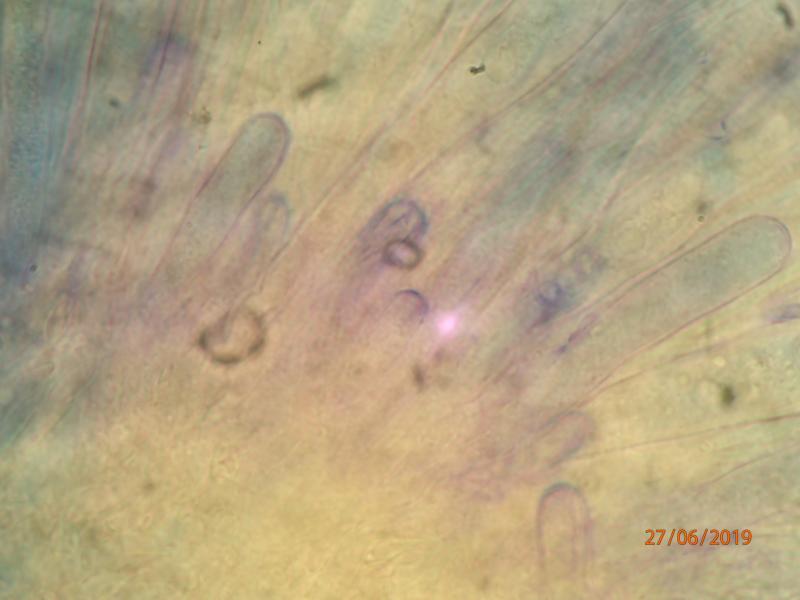
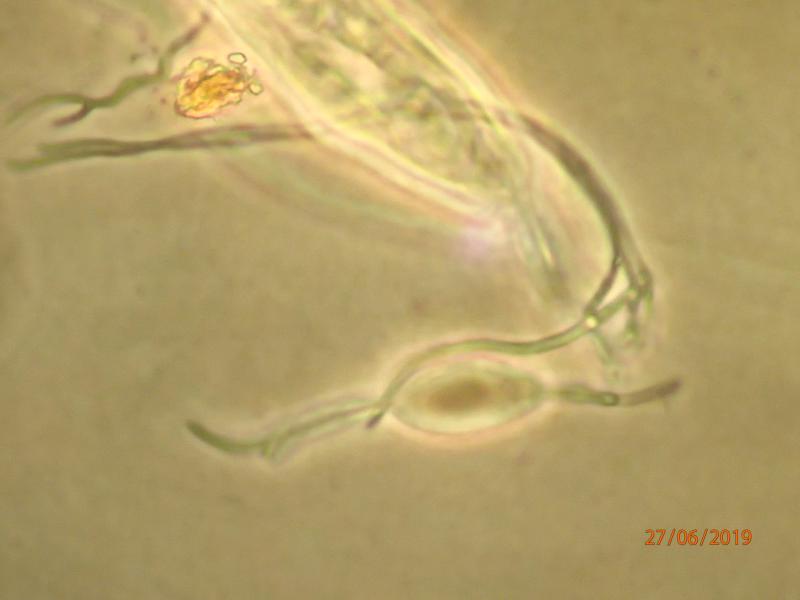
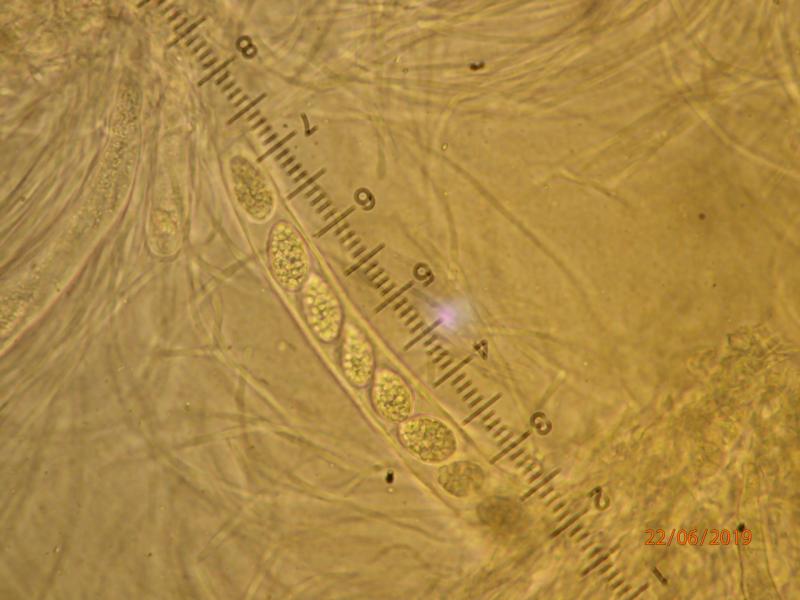


Hello Edvin,
perhaps something around Mniaecia nivea (and gloeocapsae) - the liverworts on the foto are characteristic.
I once found a collection in Norway, too :-) - it had larger spores.
I think the group is very insufficiently known.
Best regards, Lothar

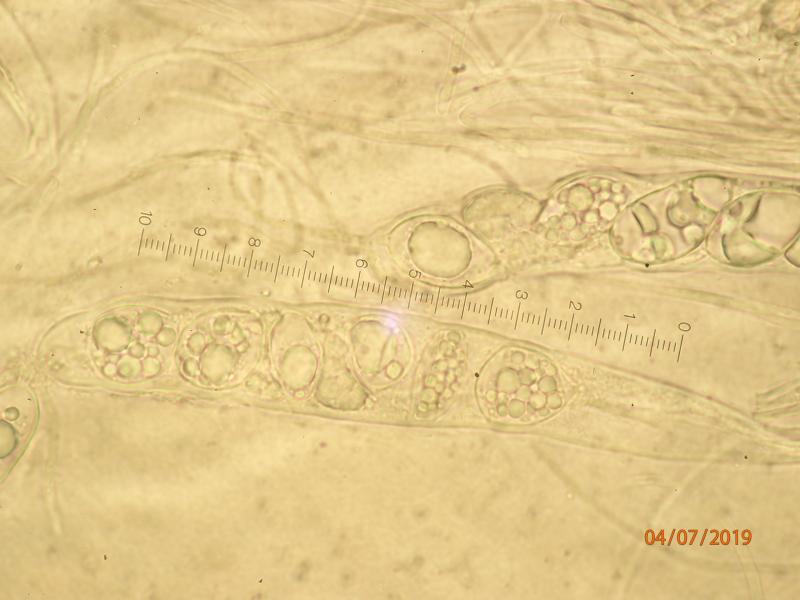
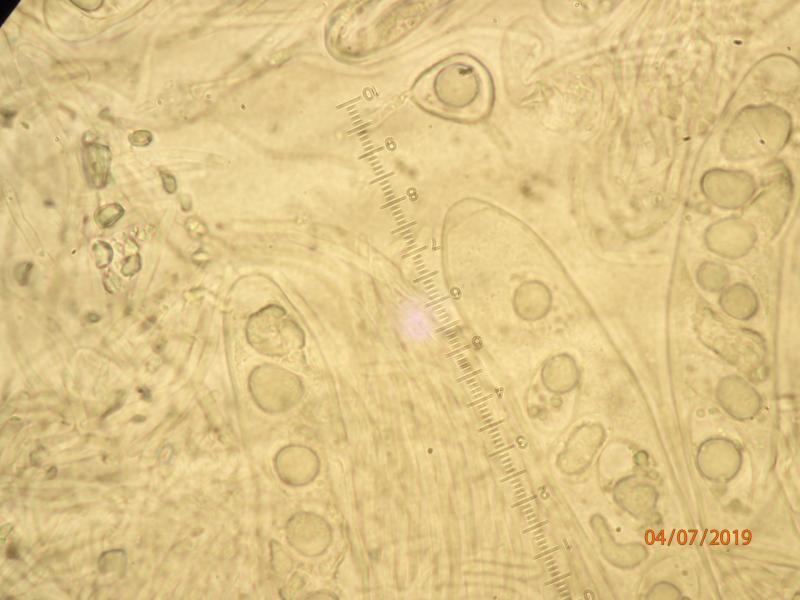
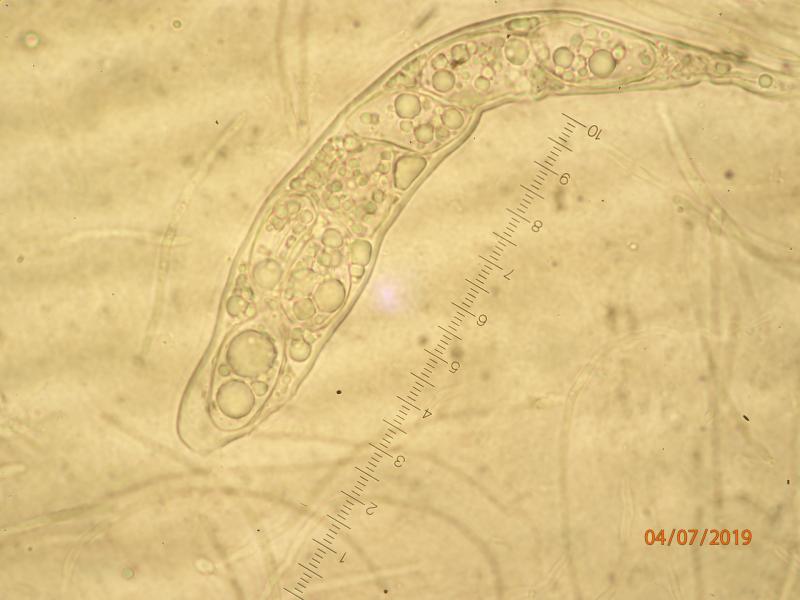
do you have more photos in water? In CB I would not describe the oil drops, you get artifacts there. One large drop is surely due to coalescence provoked by lactophenol.
A weakly amyloid reaction is possible, do you have Lugol as well? I remember Trizodia has such reaction and something related to it, whereas Mniaecia is inamyloid.
Maturity you can only estimate in water, then you see which asci are alive and mature.
Zotto
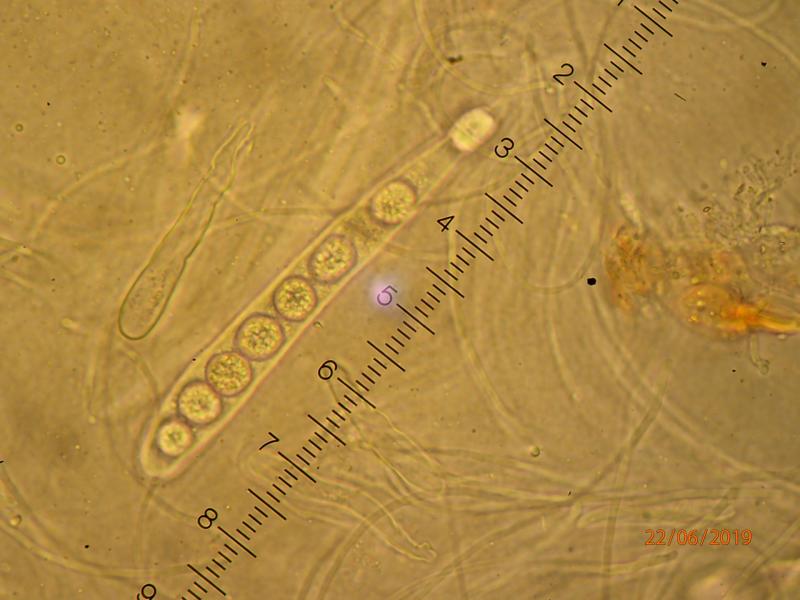
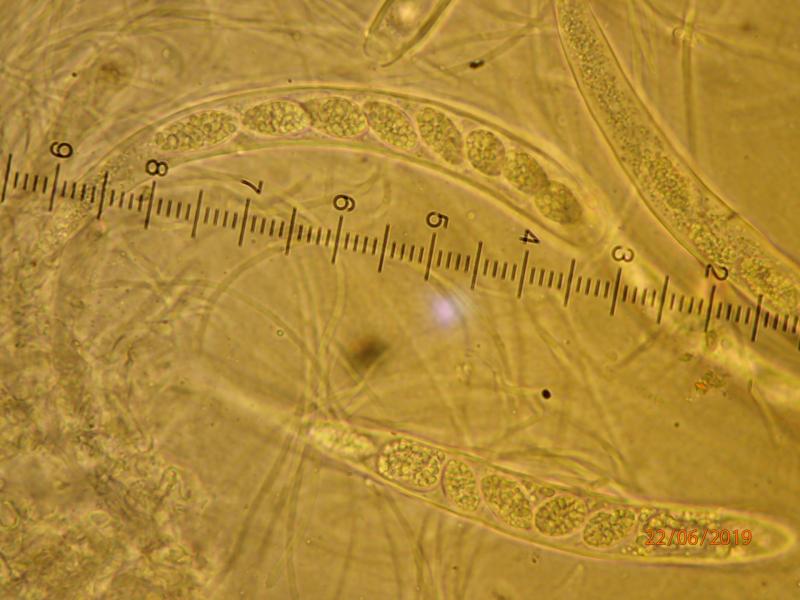
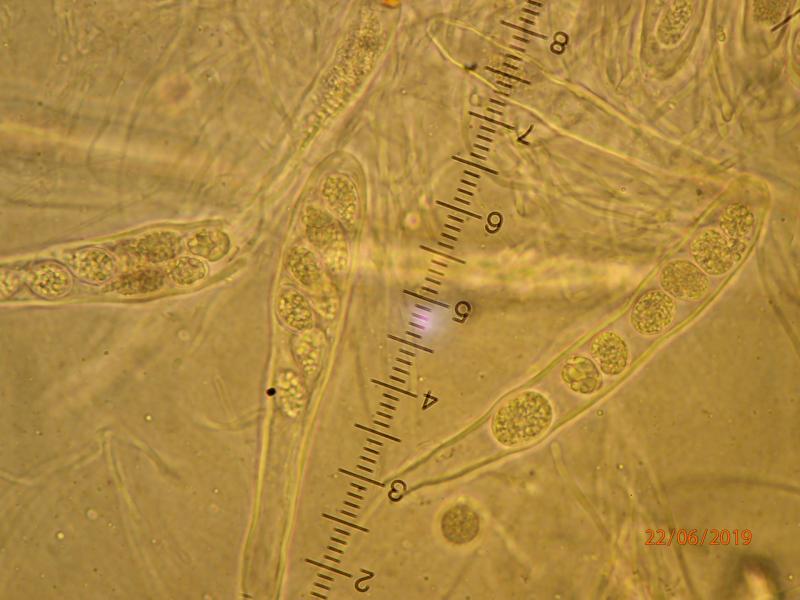
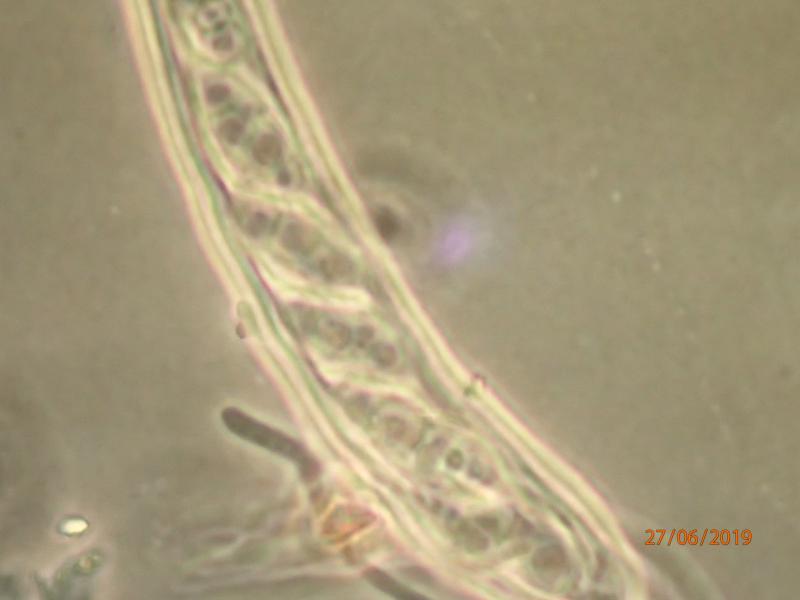
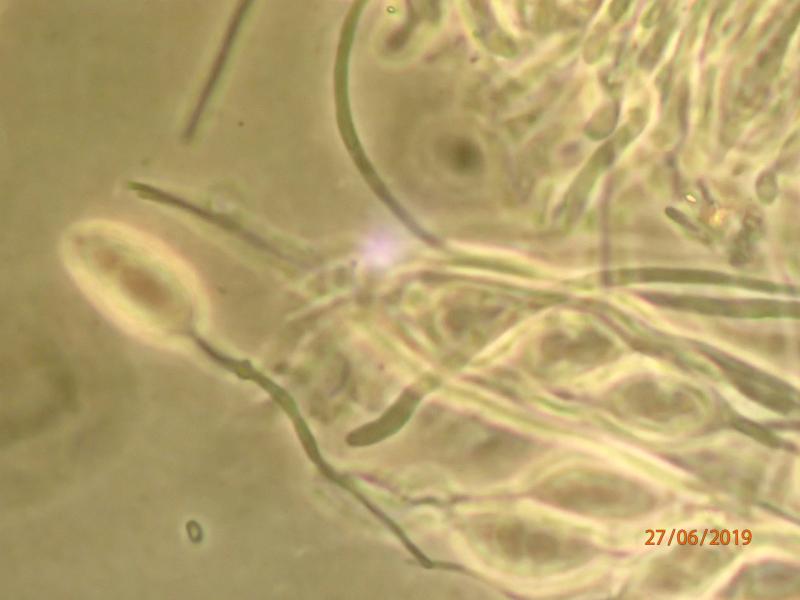
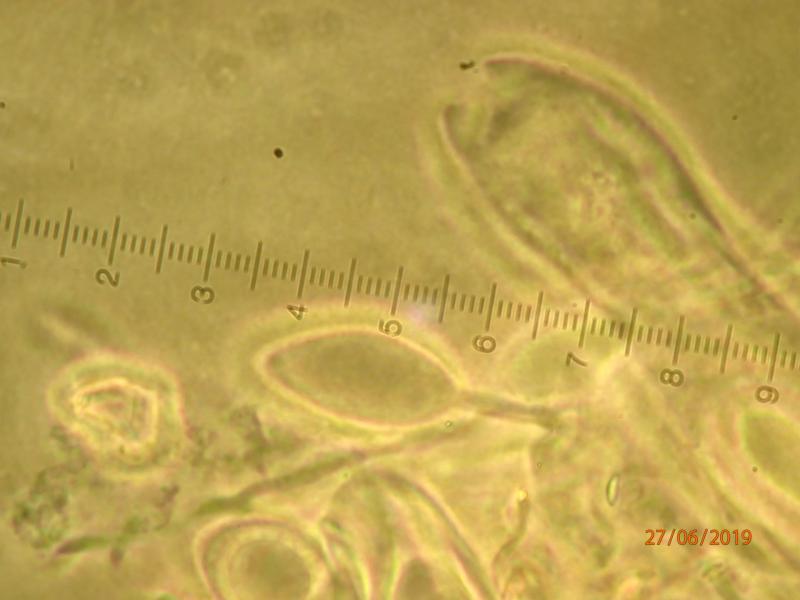
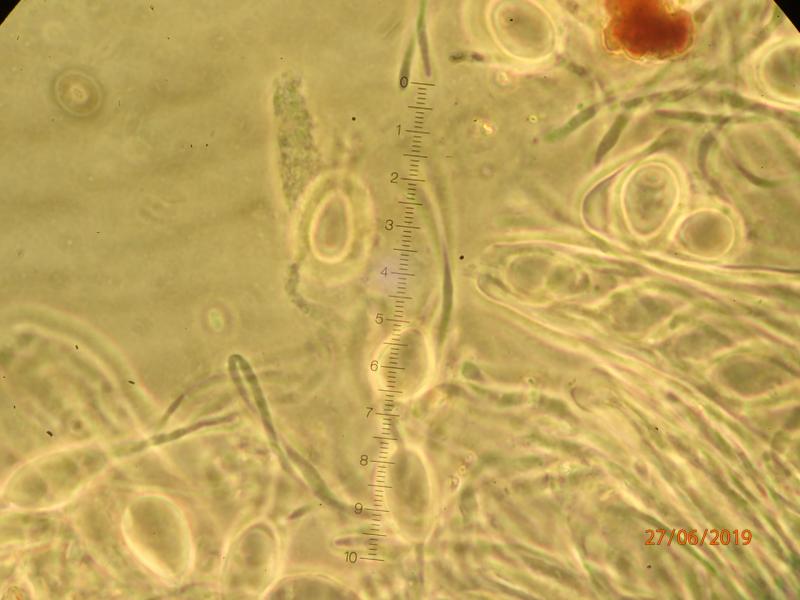
Apparently the species has inamyloid asci, when you did not get a reaction.
For Mniaecia nivea and M. gloeocapsa I see only LSU in GenBank, no ITS. Also Trizodia includes LSU, so when trying a sequence, LSU would be important.
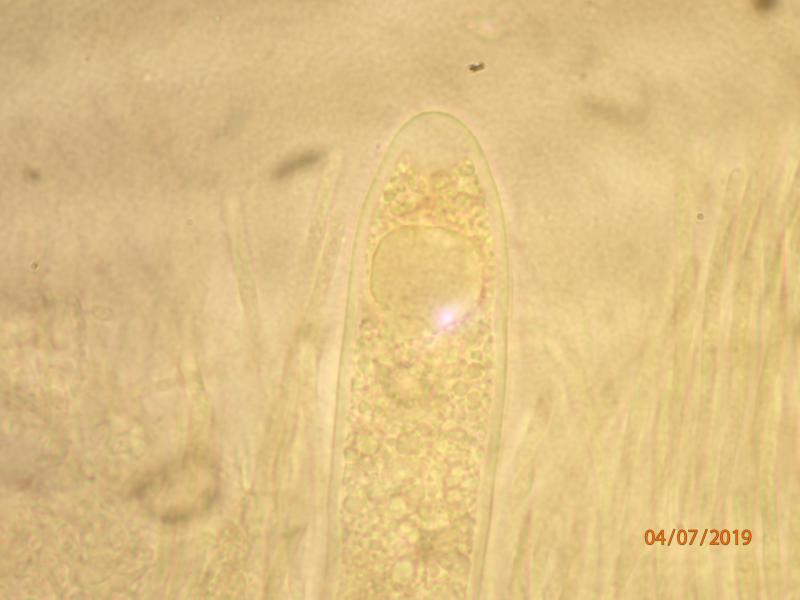
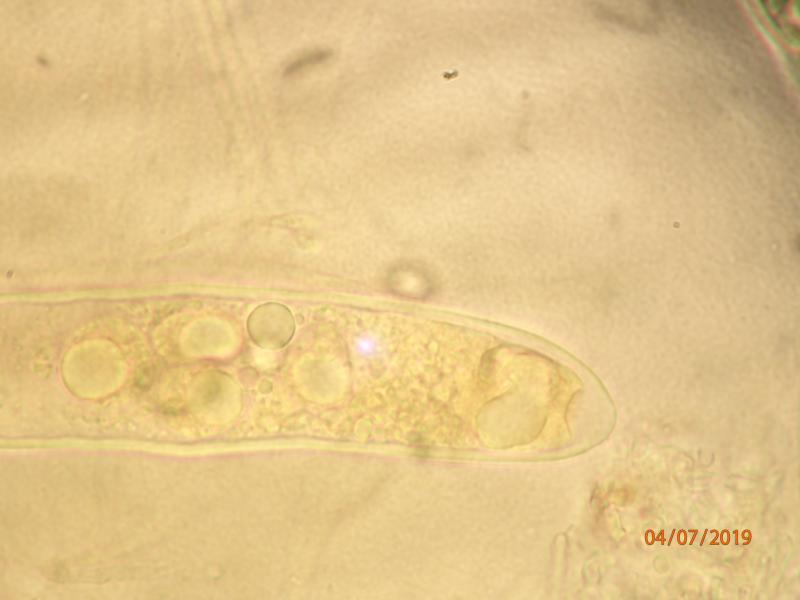
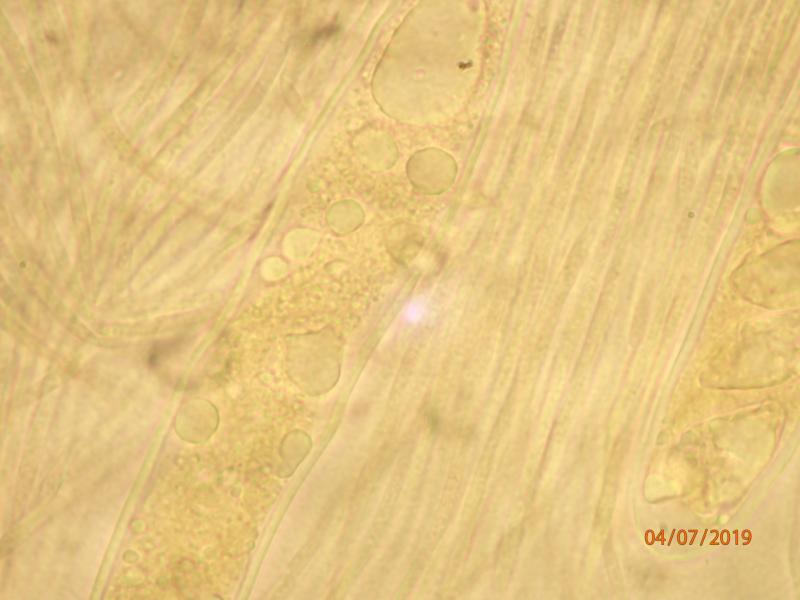
Hi Edvin,
for me this looks negative :-)
Best regards, Lothar