
22-04-2026 01:06
 Richard VALERI
Bonjour à tous.Je vous présente cette Nectria s.
21-04-2026 13:36
Gernot FriebesHi,I am out of ideas for this one. I collected Sal
21-04-2026 13:19
Gernot FriebesHi,this Lophodermium on Typha has ascospores measu
21-04-2026 13:05
Gernot FriebesHi,this hyphomycete feels familiar but I was not a
20-04-2026 22:00
 Malcolm Greaves
These pale yellow, hairy ascos were growing on cul
19-04-2026 21:23
Steve ClementsBonjour, I found this anamorphic fungus on old pl
19-04-2026 20:46
Steve Clements1 mm diameter approx spherical conidiophores on pl
12-04-2026 17:56
 Hardware Tony
Found on dead stems in February earlier this year
 Nocesito ayuda para mis dudas con dos especies
 Entomophthora muscae (Cohn) Fresen. 1856
Y
Pandora muscivora (J. Schröt.) S. Keller, Sydowia 57 (1): 41 (2005), que antes fue Entomophtosa muscivora
No se si se trata de la misma especie o una distinta,
A ver si algun colega es especialista en estos Zygomycetos
Saludos
Joseba
Saludos
Joseba

Hi Joseba,
I do not know much about Entomophthora. Only that it is not an ascomycete - so you are out of topic here :-(
Best, Lothar

Si estoy interesado en las claves de Entomophthoraceae, te agradeceria si me las mandas a mi correo munsuri45@hotmail.com
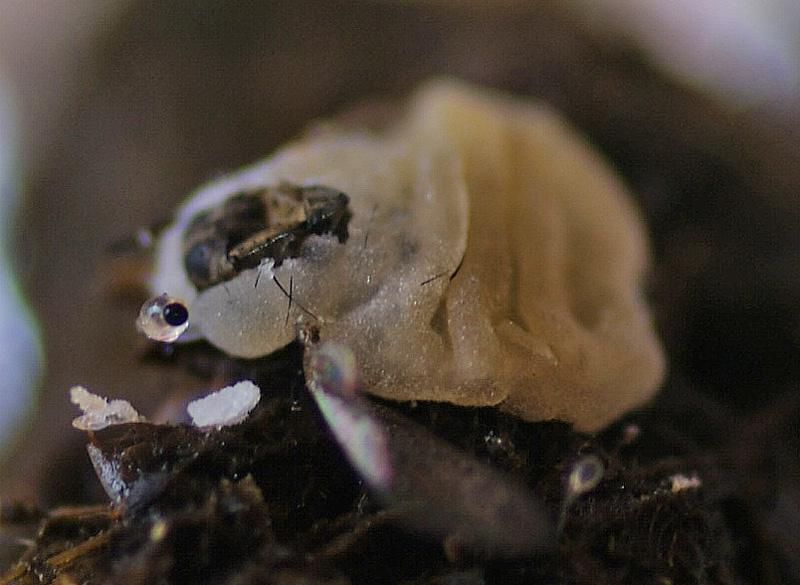
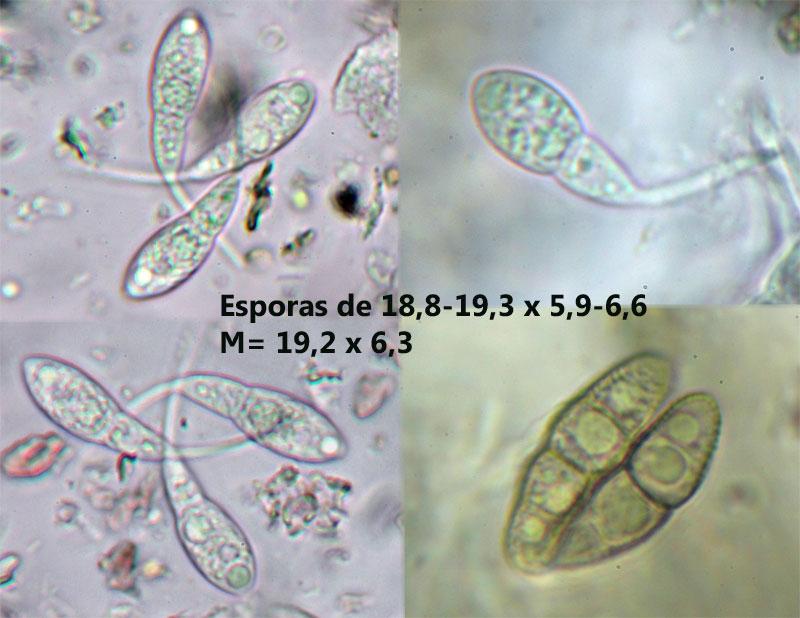
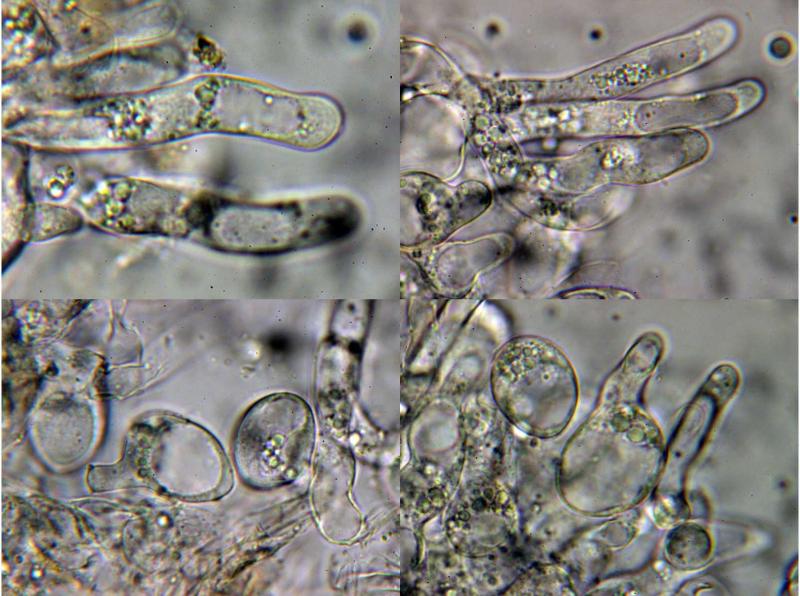
Encontré sobre KK de vacuno lo que yo creo que es Pandora muscivora, pero al hacer la micro lo que vi me pareció mas relacionado con lo que veo en Google como Entomophthora muscae y esto me dejo muchas dudas.
Pongo unas fotos macro y micro a ver que te parecen
Saludos
Joseba
Entomophthoraceae are very difficult to determine and many of them are unknown, because there aren't so much people who work with them and few experts :(
As with the ascomycetes, you also have to work out some characteristics.
The host is very important to know, best with genus.
You must look for primary- and secondary conidia with the following method by Siegfried Keller and sometimes there are another conidia in the host.
This method take a long time 3-4 hours for the primary conidia and another 3-4 hours for the secondary conidia (if there are any).
You must measure the conidia, make pictures from the conidiophores and look for cystidia (if there are any).
And at the end you can consult literature or better you found an expert.
best regards,
Thorben
 "Obtaining and observing conidia" by Siegfried Keller
Joseba
Hello Chris,
not that I very likely use it much, but anyway I would be interested in the key.
Thanks and best regards, Lothar