22-04-2026 20:54
 Enrique Rubio
Hi to everybody.This Pyrenopeziza grew in moist le
24-04-2026 03:16
 David Chapados
Found while looking at something else from wood in
22-04-2026 01:06
 Richard VALERI
Bonjour à tous.Je vous présente cette Nectria s.
22-04-2026 20:17
 Marian Jagers
Is anyone familiar with the Hyphomycetes genus Pse

Scutellinia minor (?) en pelouse calcicole xérique sur sol dolomitique détrempé
Bernard CLESSE,
31-01-2018 13:05
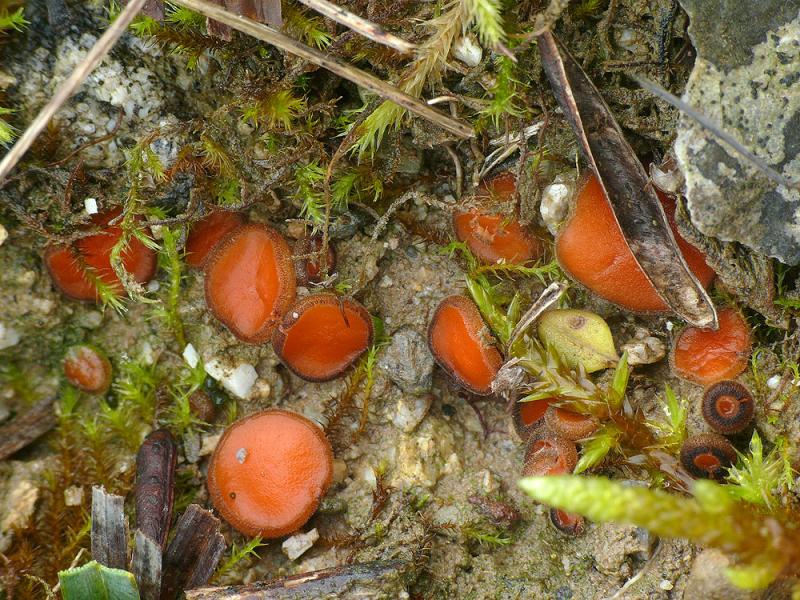
 Bonjour à toutes et tous,
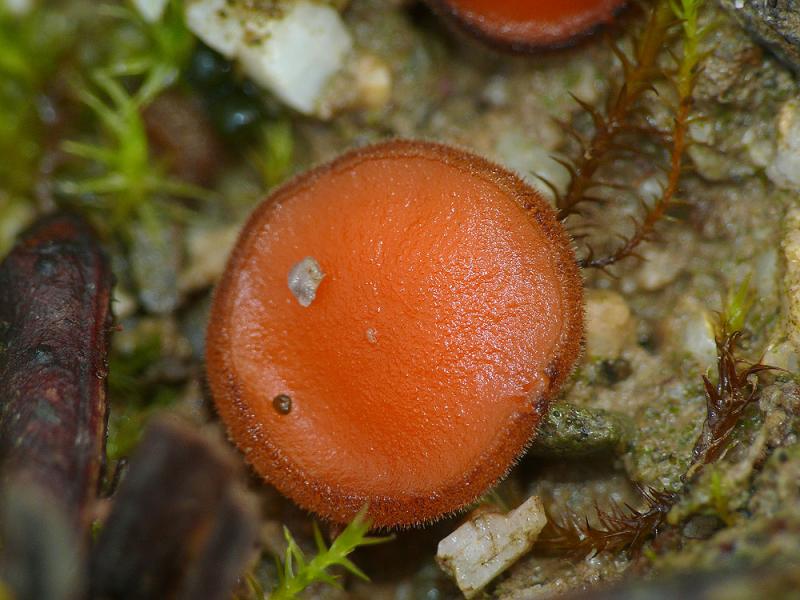
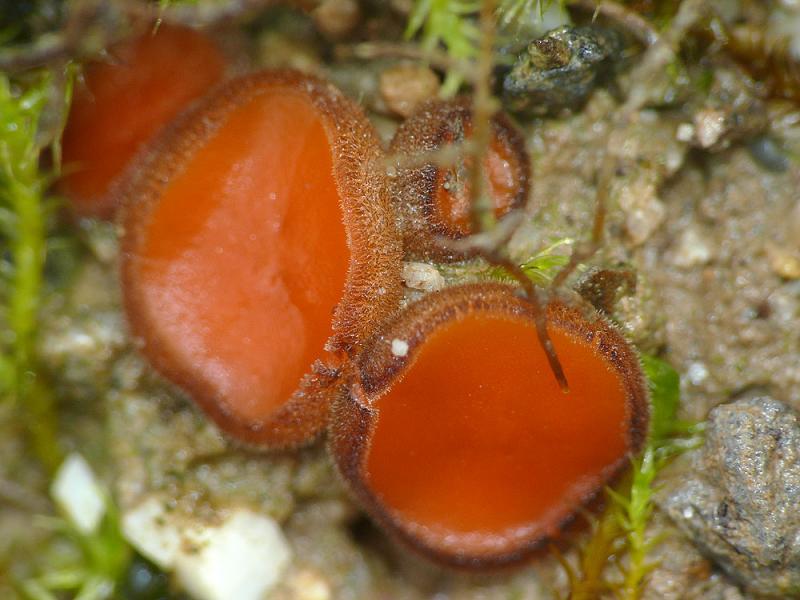
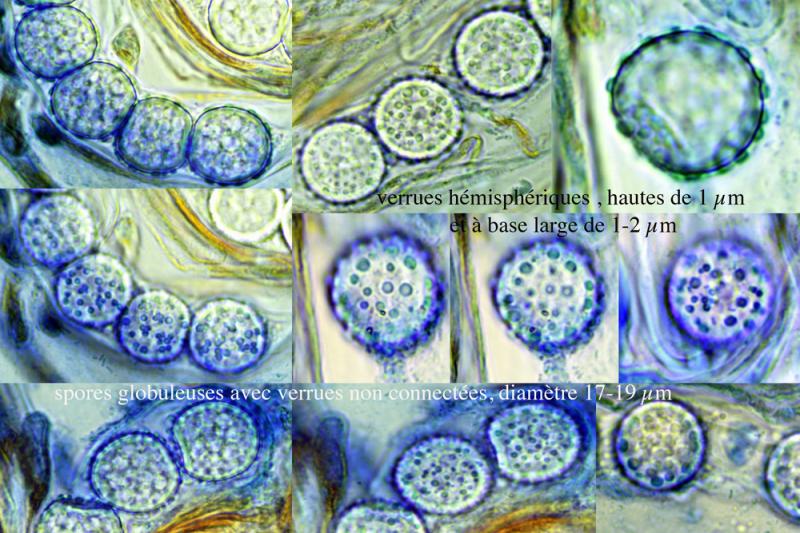
Que pensez-vous de ce Scutellinia trouvé récemment en pelouse calcicole xérique sur sol dolomitique détrempé ?
Je pense à Scutellinia minor (avec une petite hésitation avec Scutellinia hyperborea).
Un avis ?
Merci d'avance !
Bernard
Michel Delpont,
31-01-2018 13:30

Re : Scutellinia minor (?) en pelouse calcicole xérique sur sol dolomitique détrempé
Salut Bernard!
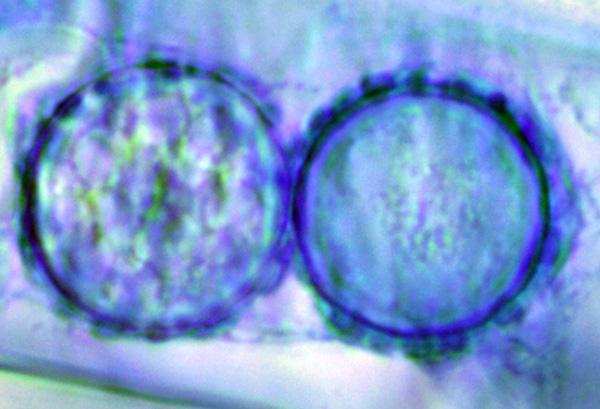
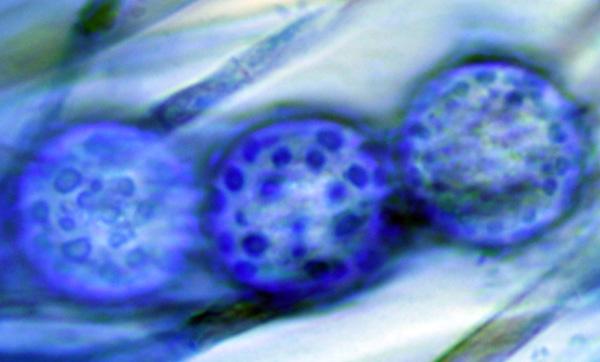
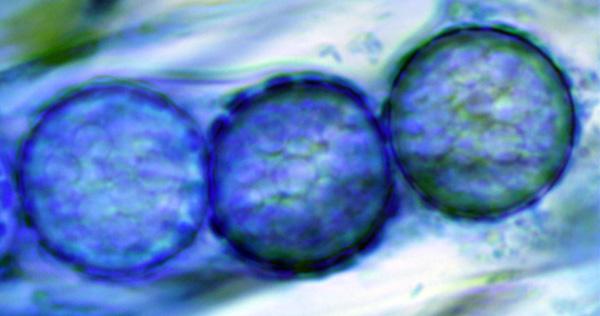
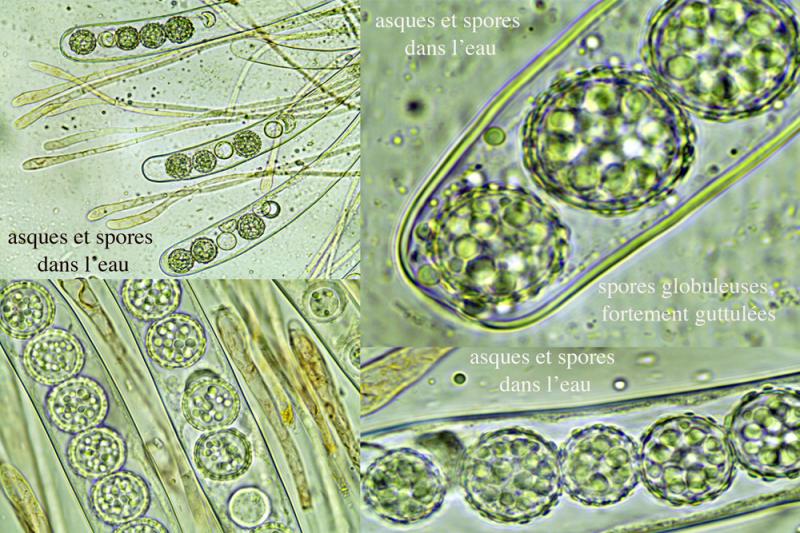
La différence entre minor et hyperborea se situe surtout au niveau de l'ornementation des spores; tes photos semblent montrer des verrues assez grosses et irregulières qui correspondent mieux à S.minor, celles de S.hyperborea sont plus petites et plus régulièrement réparties.
Michel.
La différence entre minor et hyperborea se situe surtout au niveau de l'ornementation des spores; tes photos semblent montrer des verrues assez grosses et irregulières qui correspondent mieux à S.minor, celles de S.hyperborea sont plus petites et plus régulièrement réparties.
Michel.
Bernard CLESSE,
31-01-2018 13:45
Re : Scutellinia minor (?) en pelouse calcicole xérique sur sol dolomitique détrempé
C'est ce qu'il me semblait, merci pour ton avis Michel !
Bernard
Bernard
Viktorie Halasu,
31-01-2018 17:36

Re : Scutellinia minor (?) en pelouse calcicole xérique sur sol dolomitique détrempé
Hello Bernard,
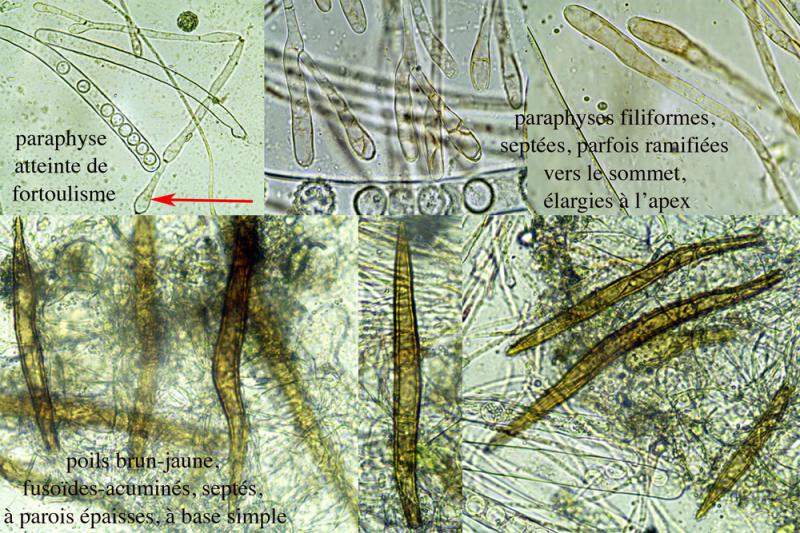
did you notice any bi- or trifurcate hair bases? Schumacher (1990) writes "simple or 2-3furcate" bases (not saying if one type is in majority), whereas R. Dougoud (2010) describes the base as bifurcate only on some hairs at the margin but otherwise usually simple. My single collection of this species agrees more with the description by Dougoud.
Viktorie
did you notice any bi- or trifurcate hair bases? Schumacher (1990) writes "simple or 2-3furcate" bases (not saying if one type is in majority), whereas R. Dougoud (2010) describes the base as bifurcate only on some hairs at the margin but otherwise usually simple. My single collection of this species agrees more with the description by Dougoud.
Viktorie
Bernard CLESSE,
31-01-2018 17:44
Re : Scutellinia minor (?) en pelouse calcicole xérique sur sol dolomitique détrempé
Hi Viktorie,
I looked a little quickly hairs but all had a simple base, only one was bifurcate.
Bernard
Malcolm Greaves,
31-01-2018 17:47

Re : Scutellinia minor (?) en pelouse calcicole xérique sur sol dolomitique détrempé
What length were the hairs?
Mal
Mal
Bernard CLESSE,
31-01-2018 18:01
Re : Scutellinia minor (?) en pelouse calcicole xérique sur sol dolomitique détrempé
Hi Malcolm,
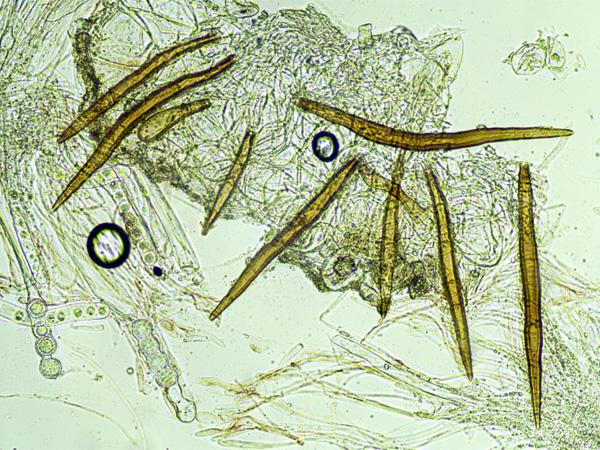
Hairs length : 125-270 µm
Bernard
Hairs length : 125-270 µm
Bernard
Bernard CLESSE,
31-01-2018 18:03
Re : Scutellinia minor (?) en pelouse calcicole xérique sur sol dolomitique détrempé
Here is a new picture of hairs.
Bernard
Bernard
Bernard CLESSE,
31-01-2018 18:06
Re : Scutellinia minor (?) en pelouse calcicole xérique sur sol dolomitique détrempé
Here is the picture…… :o)
Malcolm Greaves,
31-01-2018 19:32
Re : Scutellinia minor (?) en pelouse calcicole xérique sur sol dolomitique détrempé
Bernard
With simple hairs of that length and globose spores with rounded warts S barlae fits best for me.
Mal
With simple hairs of that length and globose spores with rounded warts S barlae fits best for me.
Mal
Bernard CLESSE,
31-01-2018 20:14
Re : Scutellinia minor (?) en pelouse calcicole xérique sur sol dolomitique détrempé
Thank you for your opinion Malcolm.
I admit I can not decide, not knowing enough Scutellinia ...
Bernard
Bernard CLESSE,
31-01-2018 20:33
Re : Scutellinia minor (?) en pelouse calcicole xérique sur sol dolomitique détrempé
Nicolas, tu aurais une idée là-dessus ?
Bernard
Bernard
Malcolm Greaves,
31-01-2018 22:43
Re : Scutellinia minor (?) en pelouse calcicole xérique sur sol dolomitique détrempé
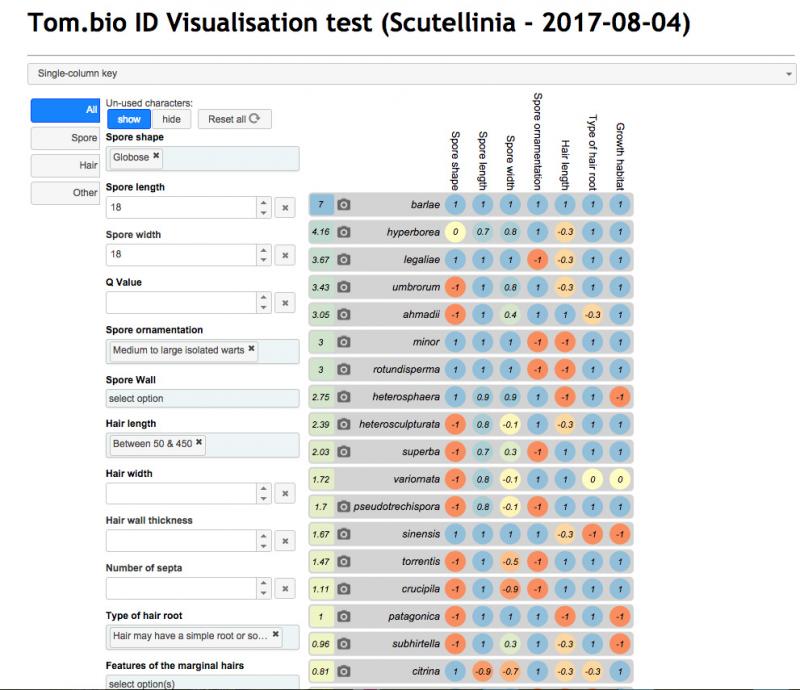
Still not fully tested but try this interactive key Bernard.
http://myfg.org.uk/tombiovis/tombiovis-1.3.2/scutellinia.html
Mal
http://myfg.org.uk/tombiovis/tombiovis-1.3.2/scutellinia.html
Mal
Gilbert MOYNE,
31-01-2018 23:12
Re : Scutellinia minor (?) en pelouse calcicole xérique sur sol dolomitique détrempé
Je pense aussi à Scutellinia minor. Au fait, je n'ai pas vu la taille des spores ?
S. minor présente souvent des spores globuleuses et subglobuleuses.
Bonne soirée
Gilbert
S. minor présente souvent des spores globuleuses et subglobuleuses.
Bonne soirée
Gilbert
Bernard CLESSE,
01-02-2018 07:25
Re : Scutellinia minor (?) en pelouse calcicole xérique sur sol dolomitique détrempé
Hi Malcolm,
Interesting and original this interactive key of Scutellinia! I just tested it and S. barlae is at the top of the ranking.
I will still try to see what separates S. minor from S. barlae.
Bernard
Interesting and original this interactive key of Scutellinia! I just tested it and S. barlae is at the top of the ranking.
I will still try to see what separates S. minor from S. barlae.
Bernard
Bernard CLESSE,
01-02-2018 09:01
Re : Scutellinia minor (?) en pelouse calcicole xérique sur sol dolomitique détrempé
Avec des spores très majoritairement globuleuses et des verrues tronquées, je pense rester sur Scutellinia barlae.
Bernard
Bernard