
24-03-2026 21:37
Elisabeth StöckliBonsoir,Sur bois (tronc) très pourri de conifère
25-03-2026 10:35
Hulda Caroline HolteHello,I collected this species growing on a dead b
26-03-2026 15:31
 Åke Widgren
Hello,I found this one in October last year, on r


25-03-2026 22:23
 Marc Detollenaere
Dear Forum,On a debarked stem of Tilia, we found s
24-03-2026 15:44
Åge OterhalsI hope someone can confirm the name of this collec
25-03-2026 20:53
François BartholomeeusenDear forum members,On 23 March 2026, I found sever
23-03-2026 20:16
 Miguel Ángel Ribes
Good eveningI'm unable to identify this Coprotus o
25-03-2026 15:06
 Bernard CLESSE
Bonjour à toutes et tous,Pourriez-vous me confirm
Lophiostoma vigheffulensis?
Per Vetlesen,
13-05-2017 20:58
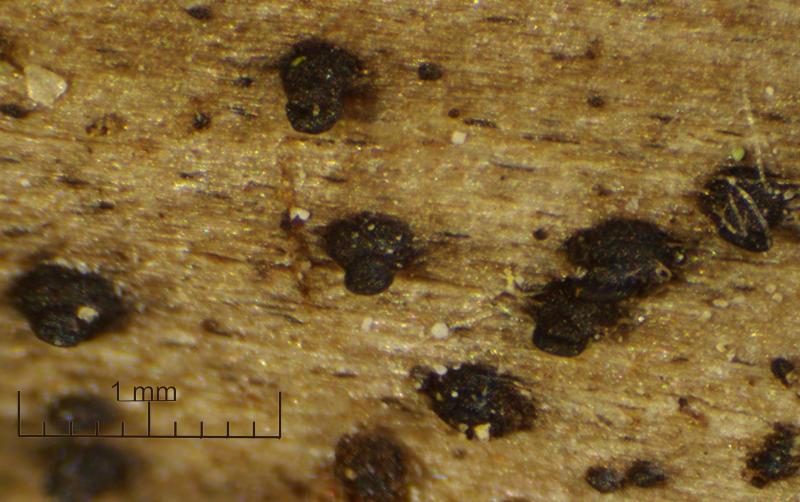
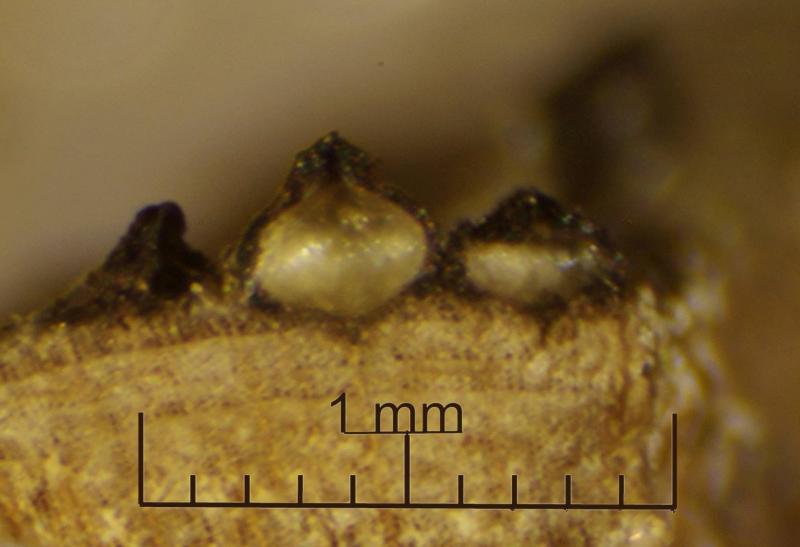
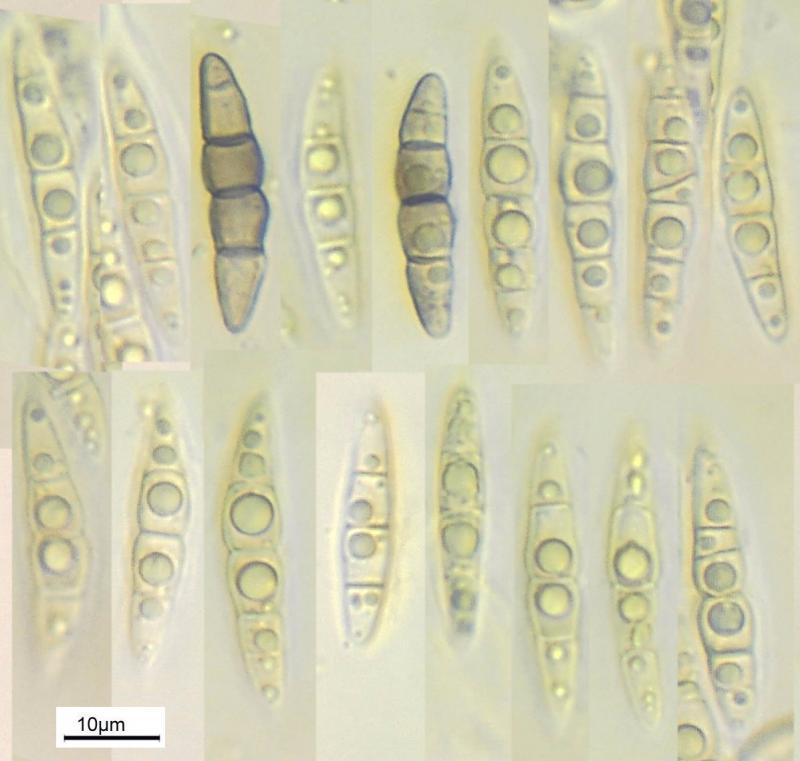
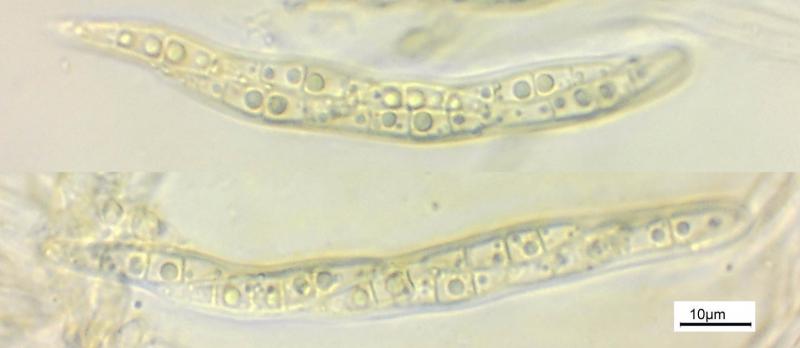
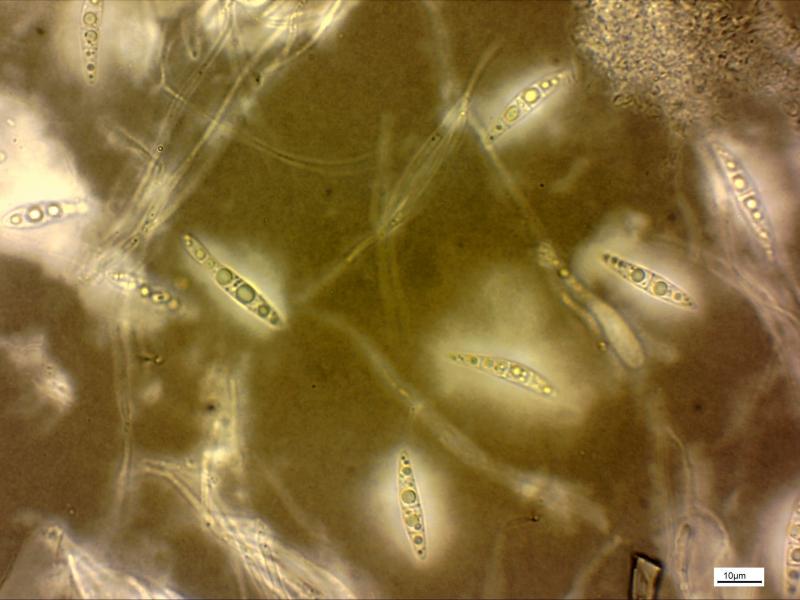
Asci clavate (- cylindrical) (84.9) 86.4 - 97.6 (102.4) × (8.5) 8.6 - 10.4 (11) µm; Q = (8.1) 8.4 - 10.8 (11.4) ; N = 10; Me = 93.7 × 9.5 µm ; Qe = 10
Using Holm & Holm 1988 it comes out as Lophiostoma myriocarpum, but I do not think it is that one because the spores do not have numerous droplets and have mocuos sheat. In the notes they mention L. vigheffulense and I understand it as they mean they are synonym?
I have not been able to find a good description of L. vigheffulense (do any of you have one?), but I think it looks much like this one, despite that the spore size is a bit different: http://www.ascofrance.com/forum/18183/interesting-lophiostoma-on-fagus
Is it L. vigheffulense?
Thanks in advance for help!
Best wishes
Per
Eduard Osieck,
13-05-2017 21:57
Re : Lophiostoma vigheffulensis?
Hi Per,
That species is described in the following paper: Chesters, C.G.C. & A. Bell (1970) Studies in the Lophiostomataceae. Mycological Papers 120: 1-55. I will send you a copy by email. I do not think it concerns the species you have found because L. vigheffulensis appears to have rather narrow spores,is only 3-septate and no constrictions: "Ascospores are 17-25 x 3 um, hyaline, fusiform, the outer wall not constricted at the junctions of the 3 transverse septa."
Eduard
That species is described in the following paper: Chesters, C.G.C. & A. Bell (1970) Studies in the Lophiostomataceae. Mycological Papers 120: 1-55. I will send you a copy by email. I do not think it concerns the species you have found because L. vigheffulensis appears to have rather narrow spores,is only 3-septate and no constrictions: "Ascospores are 17-25 x 3 um, hyaline, fusiform, the outer wall not constricted at the junctions of the 3 transverse septa."
Eduard
Per Vetlesen,
13-05-2017 22:17
Re : Lophiostoma vigheffulensis?
Hi Eduard
Thank you very much for your comment and the paper you sent me. According to that it is obvious another species.
Per
Thank you very much for your comment and the paper you sent me. According to that it is obvious another species.
Per
Mlcoch Patrik,
18-05-2017 18:24

Re : Lophiostoma vigheffulensis?
It isn't Lophiostoma and it isn't famili Lophiostomaceae. This is probably genus Leptosphaeria, very interesting collection. On dead wood Juniperus can grow several species from the genus Leptosphaeria. L. juniperi have 3-septate ascospores 18 - 20 x 6 um, L. juniperina have as well as previous 3-septate, but 24 - 28 x 7 - 8 um and clavate asci, similary L. saprophilla. Your collection can be more likely Leptosphaeria ginima, which have ascospore 27 - 35 um length, (4)5 - 6 -septate, hyaline to yellowish-brown.
Per Vetlesen,
18-05-2017 21:02
Re : Lophiostoma vigheffulensis?
Hi Patrik,
Thank you for your comments that are very interesting.
I have no experience with Leptosphaeria, and do not have any literature about it (if you have any paper I would appreciate if you can send it to me). After Googling I understand that the genus has a papilla and circular ostiole? This asco has a flattened neck, opening by a slot-like ostiole. I have read the description L ginimia in Mycologia 93(1–6): 1006 (2001) its spores have, as you write 5-6 septa, my fungus have 3-4, and the upper mid cell are not swollen.
Per
Thank you for your comments that are very interesting.
I have no experience with Leptosphaeria, and do not have any literature about it (if you have any paper I would appreciate if you can send it to me). After Googling I understand that the genus has a papilla and circular ostiole? This asco has a flattened neck, opening by a slot-like ostiole. I have read the description L ginimia in Mycologia 93(1–6): 1006 (2001) its spores have, as you write 5-6 septa, my fungus have 3-4, and the upper mid cell are not swollen.
Per