
24-03-2026 21:37
Elisabeth StöckliBonsoir,Sur bois (tronc) très pourri de conifère
25-03-2026 10:35
Hulda Caroline HolteHello,I collected this species growing on a dead b
26-03-2026 15:31
 Åke Widgren
Hello,I found this one in October last year, on r


25-03-2026 22:23
 Marc Detollenaere
Dear Forum,On a debarked stem of Tilia, we found s
24-03-2026 15:44
Åge OterhalsI hope someone can confirm the name of this collec
25-03-2026 20:53
François BartholomeeusenDear forum members,On 23 March 2026, I found sever
23-03-2026 20:16
 Miguel Ángel Ribes
Good eveningI'm unable to identify this Coprotus o
25-03-2026 15:06
 Bernard CLESSE
Bonjour à toutes et tous,Pourriez-vous me confirm
Sordariomyetes
Bernard Declercq,
13-04-2017 18:06
 Dear all,
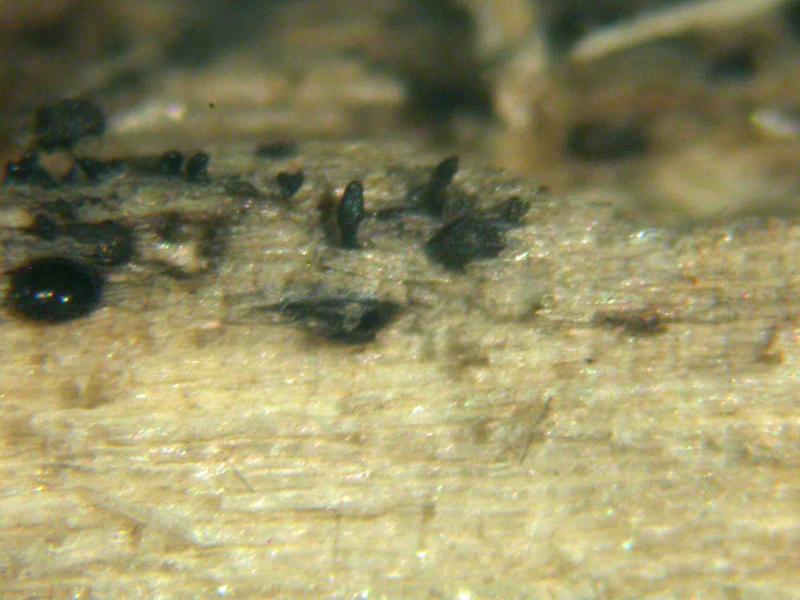
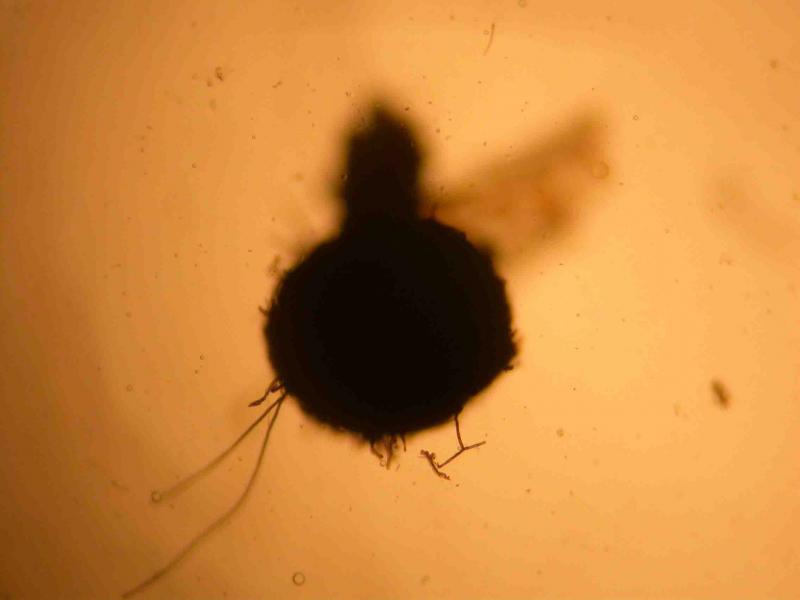
herewith another pyreno collected on decayed deciduous wood:
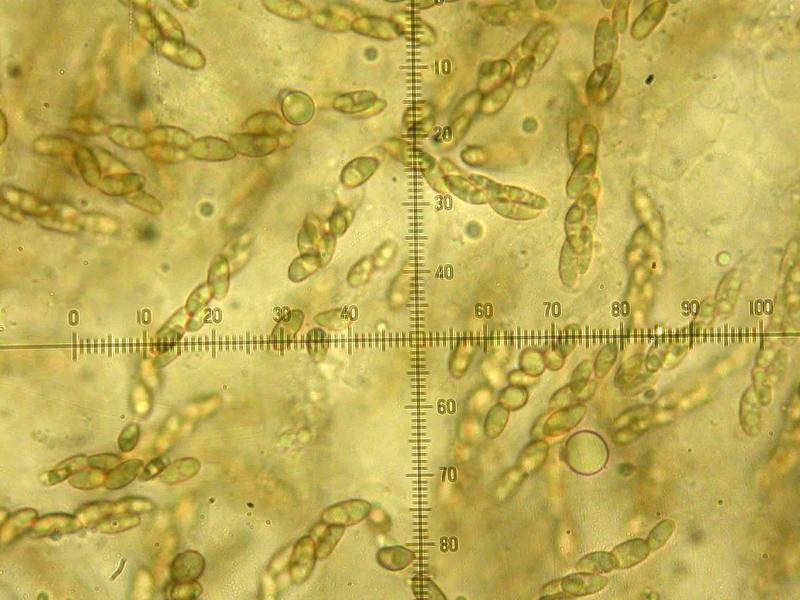
Perithecia scattered to gregarious, venter immersed, 0.35-0.5 mm diam., 0.3-0.35 mm high, blackish, surrounded by sparse mycelium, with a mostly central, straight to slightly flexuous neck, not sulcate, 150-350 µm long by 100 µm diam.Asci with truncate apex and rounded basal end, 29-37x6 µm, biseriately 8-spored, with inconspicuous IKI- apical annulus. Ascospores ellipsoid, mostly inequilateral, or reniform, 6.5-8x3-4 µm, aseptate, smooth, pale yellowish brown, with two polar guttules 2-2.5 µm diam. and a few small ones.Paraphyses not observed.Perithecial wall leathery, with textura angularis, opaque black. Mycelial hyphae 4-5 µm diam., thick-walled, dark brown.
Your help is welcome.
Cheers,
Bernard
Gernot Friebes,
13-04-2017 20:06
Re : Sordariomyetes
Hi Bernard,
I would recommend the following paper by M. Réblová (2006): Molecular systematics of Ceratostomella sensu lato and morphologically similar fungi. Mycologia, 98(1), 2006, pp. 68–93.
I think the closest fit to your find might be Ceratostomella pyrenaica. See also here: http://www.ascofrance.com/recolte/2802/sordariomycetes-position-incertaine-annulatascaceae-ceratostomella-pyrenaica
Maybe Jacques also has something to say about your fungus, after all he's the co-author of C. pyrenaica. :-)
Best wishes,
Gernot
I would recommend the following paper by M. Réblová (2006): Molecular systematics of Ceratostomella sensu lato and morphologically similar fungi. Mycologia, 98(1), 2006, pp. 68–93.
I think the closest fit to your find might be Ceratostomella pyrenaica. See also here: http://www.ascofrance.com/recolte/2802/sordariomycetes-position-incertaine-annulatascaceae-ceratostomella-pyrenaica
Maybe Jacques also has something to say about your fungus, after all he's the co-author of C. pyrenaica. :-)
Best wishes,
Gernot
Bernard Declercq,
14-04-2017 16:05
Re : Sordariomyetes - Ceratostomella
Hi Gernot,
Thanks for your comments.
Ceratostomella pyrenaica is a most interesting proposal. According Réblova & Fournier, the ascospores should have apiculate ends, but my collection, as well as Alain's collection has spores with rather broadly rounded ends. So let's maybe call it C. pyrenaica ss. Gardiennet.
Bernard
Thanks for your comments.
Ceratostomella pyrenaica is a most interesting proposal. According Réblova & Fournier, the ascospores should have apiculate ends, but my collection, as well as Alain's collection has spores with rather broadly rounded ends. So let's maybe call it C. pyrenaica ss. Gardiennet.
Bernard
Björn Wergen,
15-04-2017 11:10

Re : Sordariomyetes
Hi all,
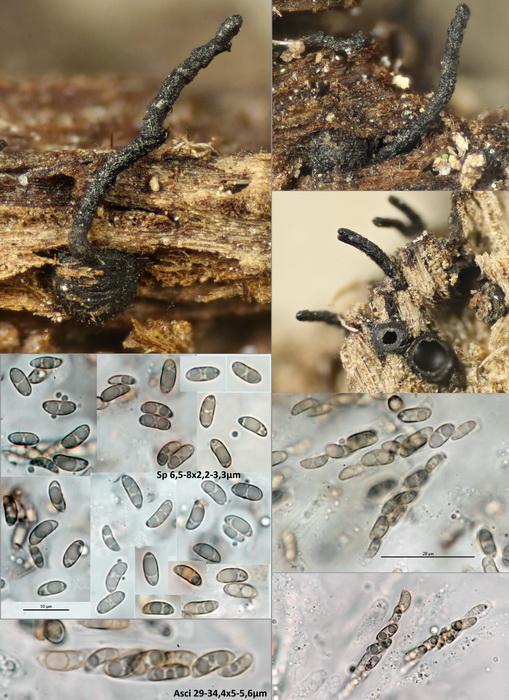
here is C. pyrenaica. I think your recolt is the same, Bernard.
regards,
björn
here is C. pyrenaica. I think your recolt is the same, Bernard.
regards,
björn
Bernard Declercq,
17-04-2017 09:33
Re : Sordariomyetes
Thank you Björn for confirming the identity of my find. So, having apiculate spore ends is not imperative.
Bernard
Bernard