24-03-2026 21:37
Elisabeth StöckliBonsoir,Sur bois (tronc) très pourri de conifère
25-03-2026 10:35
Hulda Caroline HolteHello,I collected this species growing on a dead b
26-03-2026 15:31
 Åke Widgren
Hello,I found this one in October last year, on r


25-03-2026 22:23
 Marc Detollenaere
Dear Forum,On a debarked stem of Tilia, we found s
24-03-2026 15:44
Åge OterhalsI hope someone can confirm the name of this collec
25-03-2026 20:53
François BartholomeeusenDear forum members,On 23 March 2026, I found sever
23-03-2026 20:16
 Miguel Ángel Ribes
Good eveningI'm unable to identify this Coprotus o
25-03-2026 15:06
 Bernard CLESSE
Bonjour à toutes et tous,Pourriez-vous me confirm
This pyreno was growing on the dead wood of a shrub (Myoporum) on the sand dunes close to the sea. I don't understand its features and need your help.
Thanks in advance,
zaca
Some data:
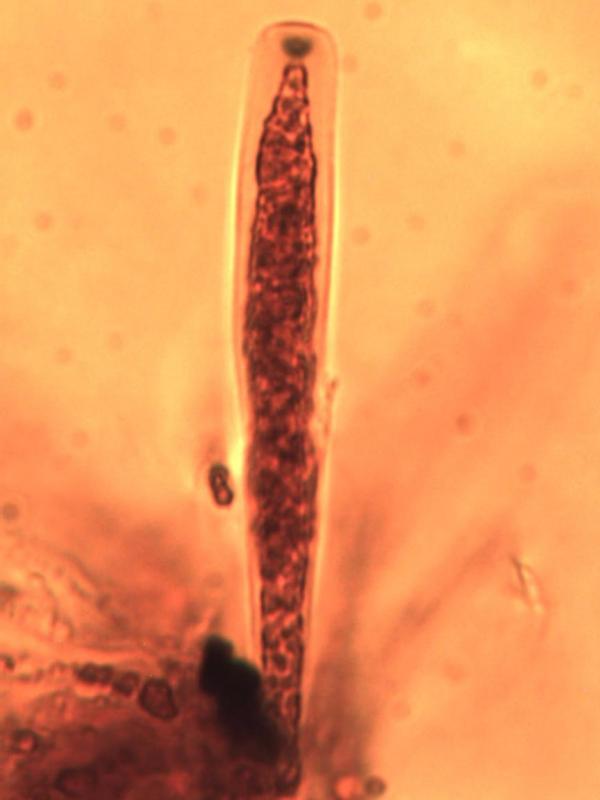
Spores: 1-septate, brown, ellipsoid with round ends, dimensions (mostly measured inside the asci):
(9.1) 9.6 - 11.7 (12.8) × (4.9) 5.3 - 6.1 (6.4) µm
Q = (1.4) 1.6 - 2.2 (2.4) ; N = 28
Me = 10.8 × 5.7 µm ; Qe = 1.9
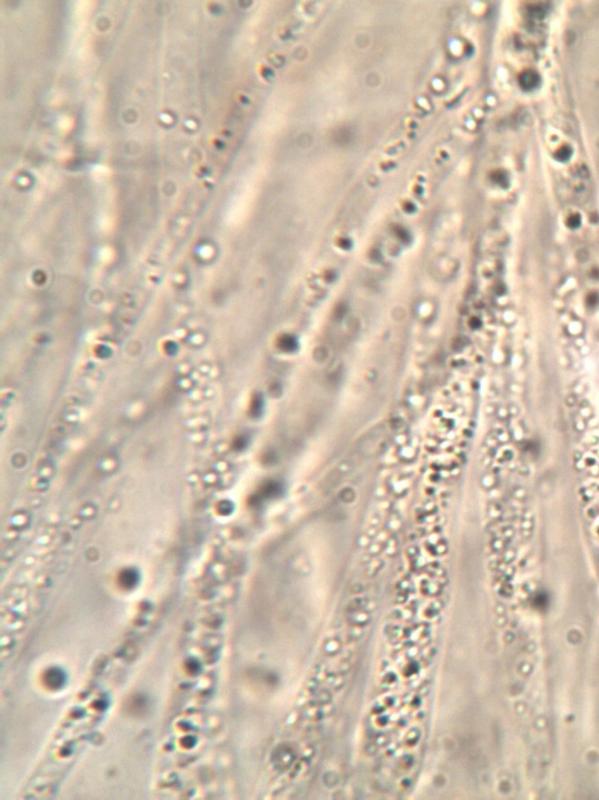
Hymenium: I-
Ascus tip: I+ blue
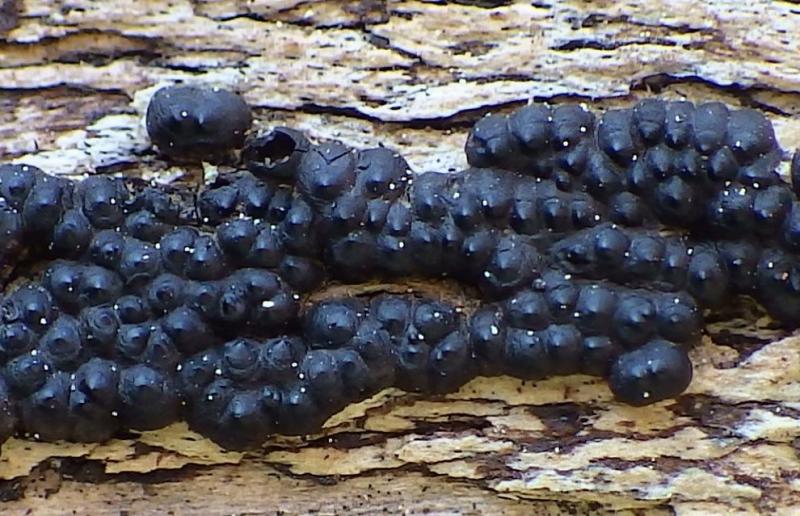
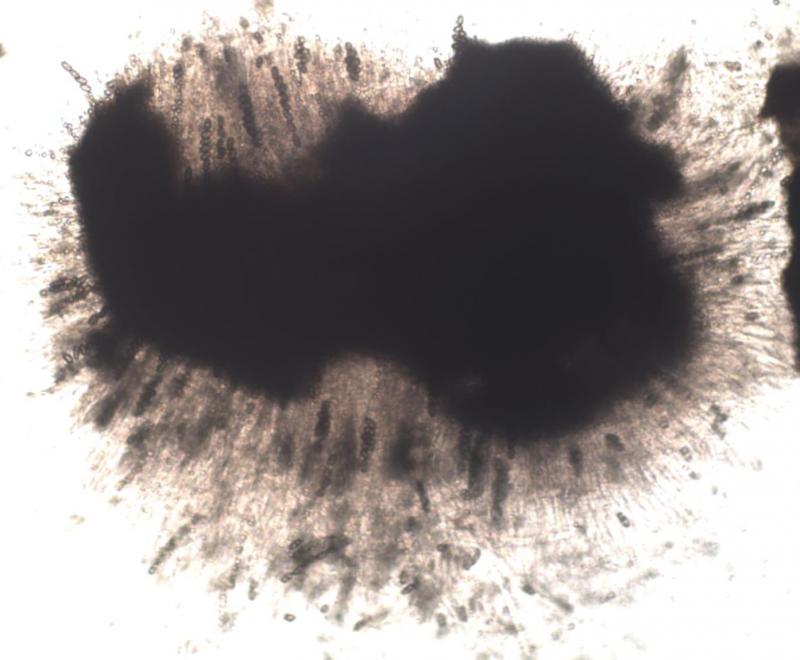
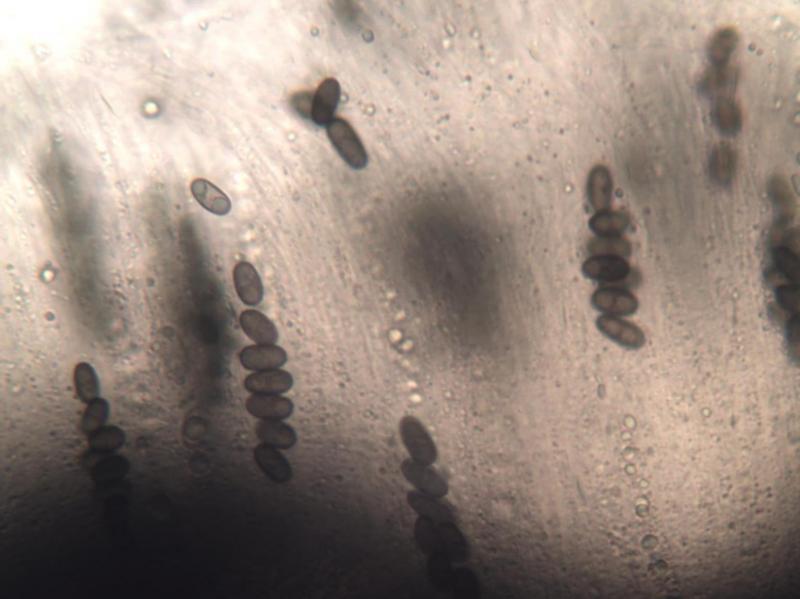
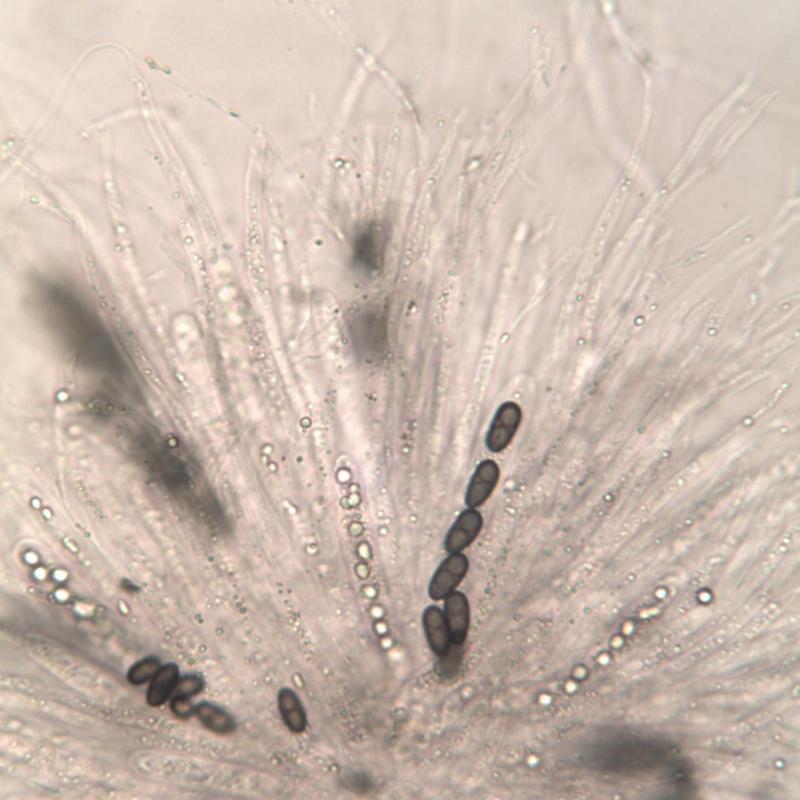
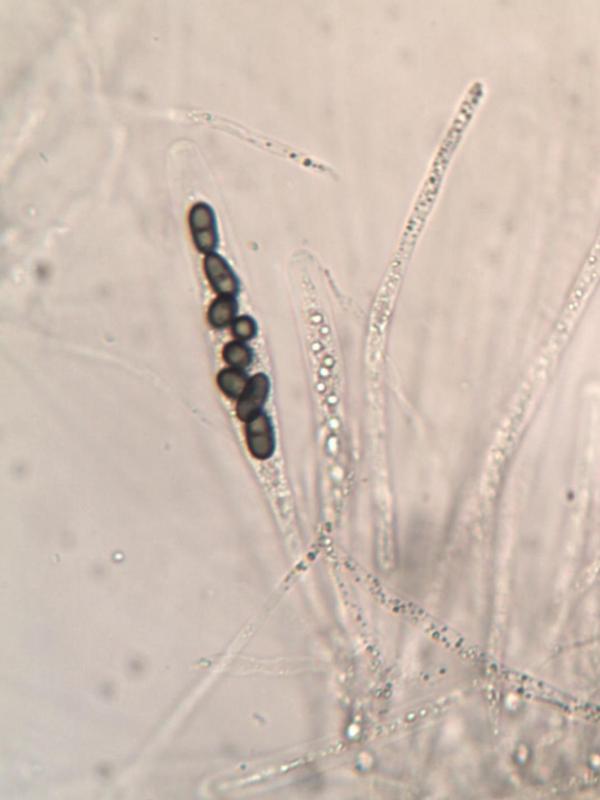
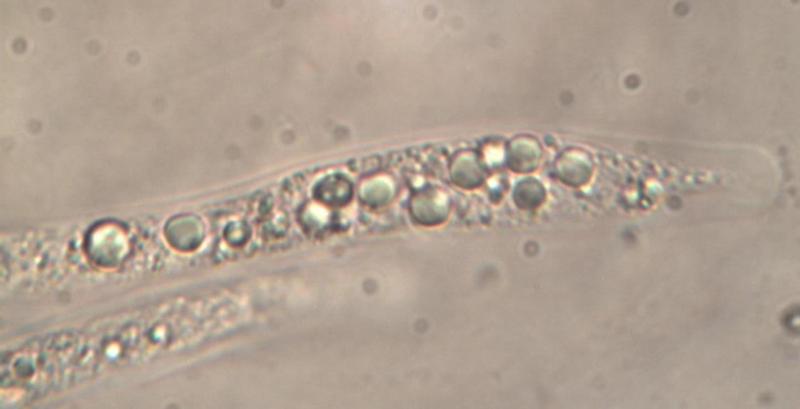
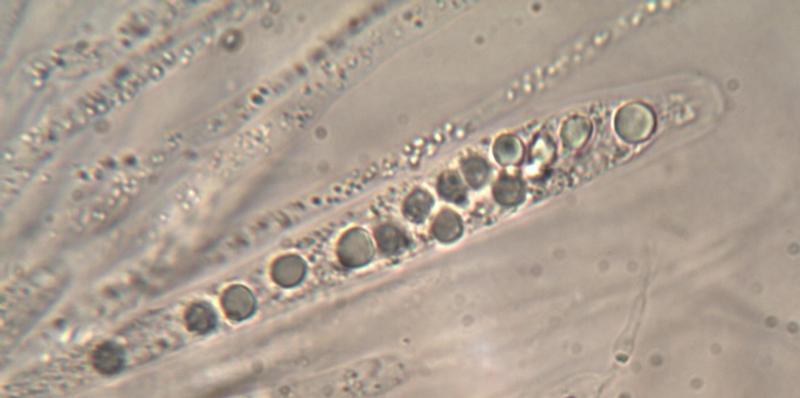
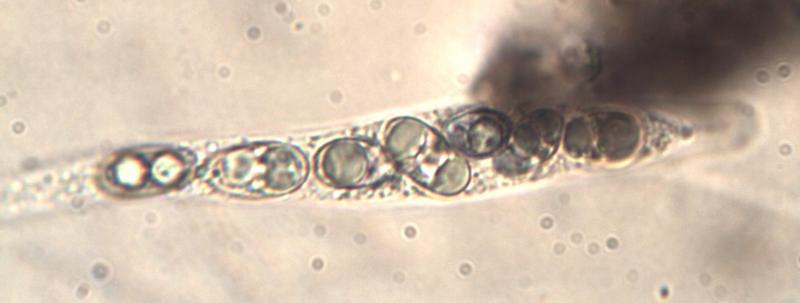
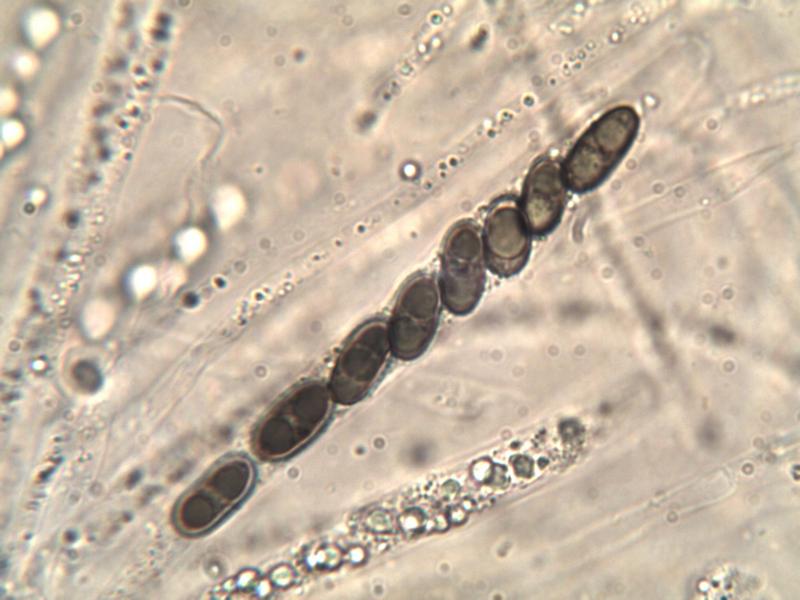

have a closer look at the spores, they are not septate. It is a Nemania, N. maritima (Xylariaceae).
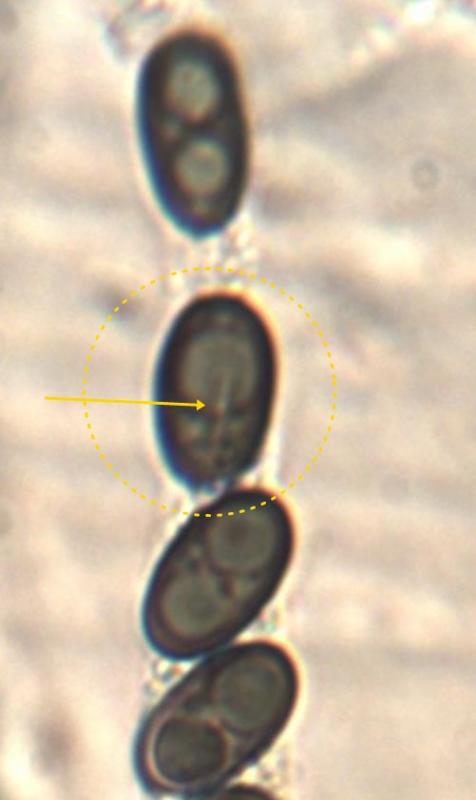
If you manage to make a better preparation you will see that the spores have a short germ slit.
Cheers,
Jacques
Firstly, I did not look closely at the spores; Right, they may look septate, but they are not; This was one of the points in doubt because with septate spores I could not go anywhere ...
Secondly, you should know this pyreno very well, since you could recognize it immediately, even with wrong accompanying data;
I looked at the topics in AscoFrance and found one by Henrique Rubio:
Http://ascofrance.com/forum/23616/nemania-maritima
where in 2013, he was able to identify the first specimen for Spain. So it's a rare species for sure.
I will look at it better in a new preparation, but as Henrique pointed out in his topic, the germ slit is difficult to observe.
Finally, can you send me a copy of the following document?
Ju Y.-M. & Rogers J. D. 2002. - The genus Nemania (Xylariaceae). New Hedwigia, 74 (1-2): 75-120
Are there any other useful references?
I do not know whether this is relevant or not, but the epithet "maritima" is certainly linked to sea influence, and my specimen was found on the sand dunes near the Atlantic Ocean.
My very best regards,
zaca
The pdf is on its way.
Cheers,
Jacques
Thanks again, Jacques.
Best regards,
zaca
Jacques
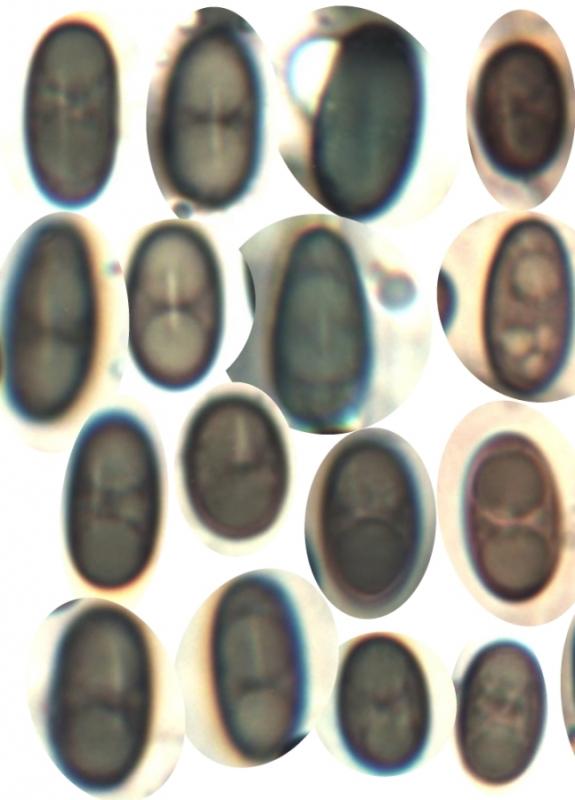
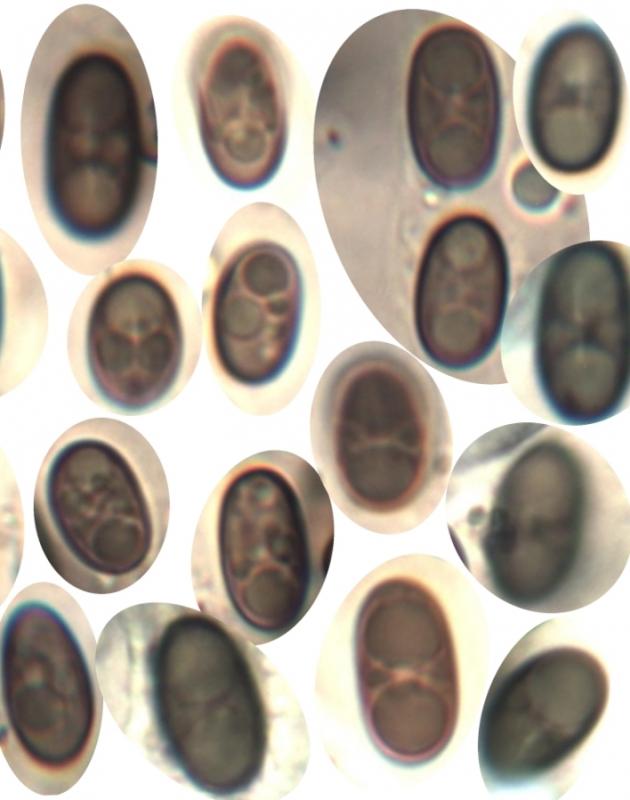
As promised I return to the microscopic observation to search for evidences of the germ slit. I found many, but again the preparation was not so good as it should. On the other hand, some slit to be observed demands to unfocus the spore and the result is a poor photo. Most of the germ slit are straight but other are curved. Anyhow I compile some of these photos and drop them into a larger one, that at the end I had to split because of the size of the file.
Regards,
zaca