
08-05-2026 11:55
Gernot FriebesHi,found on a decorticated Picea abies branch stil
11-05-2016 20:37
 Zuzana Sochorová (Egertová)
Hi,this very little ascomycete grew on soil in a m
09-05-2026 07:37
Zuzana Sochorová (Egertová)
Hello,please, could anyone share this paper?Ferná

05-05-2026 22:40
Gernot FriebesHi,I believe this is a Plagiostoma growing on a Sa
06-05-2026 11:25
 Castillo Joseba
Me mandan el material seco de Galicia (España) re
06-05-2026 17:23
Thomas Læssøehttps://svampe.databasen.org/observations/10594257
28-04-2026 20:07
 Lothar Krieglsteiner
... on twig in the air at standing Ceratonia siliq
04-05-2026 18:13
 Stephen Martin Mifsud
ID request for what seems to be a true aquatic fun
04-05-2026 16:39
Stephen Martin Mifsud
ID request: This specimen was collected in Malta o
Helotiale on Polytrichastrum formosum
Enrique Rubio,
17-02-2017 19:25
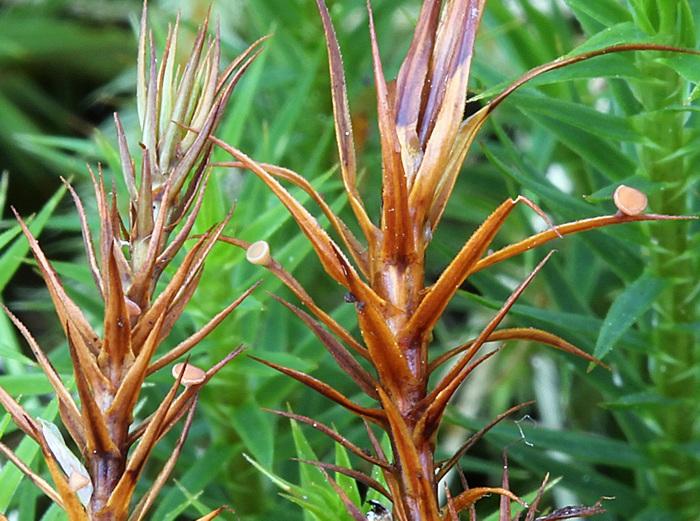
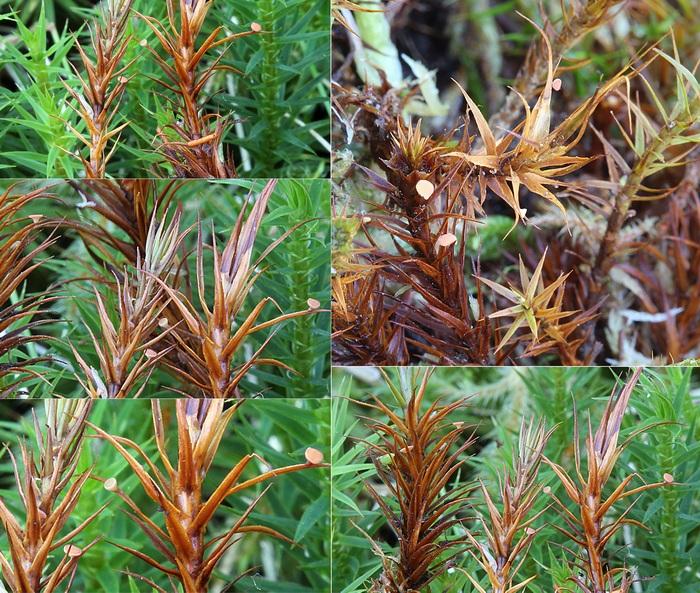
 These apothecia were growing on decaying leaves of Polytrichastrum formosusm. The apothecia are scattered, shortly stipitate. Disc brownish, briefly cupulate, later applanate or pulvinate, up to 1 mm in diameter. Excipulum minutely downy, whitish. Margin glabrous.
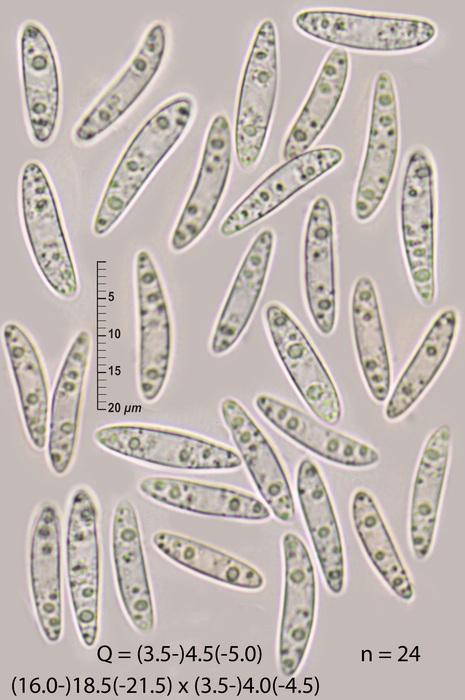
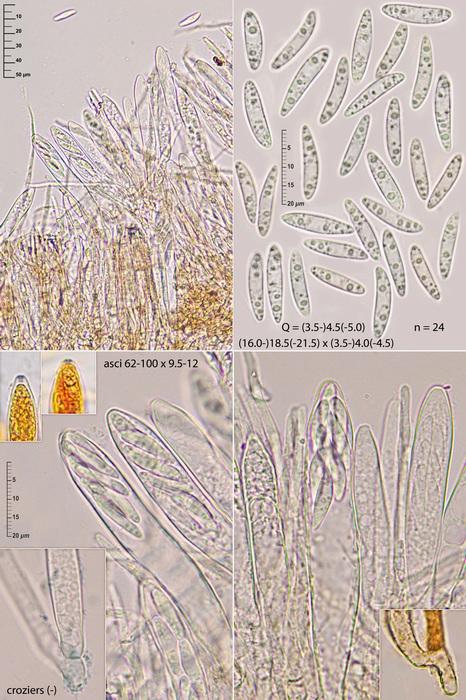
Asci 62-100 x 10-14, 8-spored, without croziers, the apical pore IKI b of the Calycina-type. Paraphyses with no refractive VBs, covered by a crystalline (?) yellowish-brown matter that stains in Crb. Ectal excipulum with hyaline textura prismatica-angularis-subglobulosa. Medullary excipulum of textura intricata, the hyphae covered by the same yellowish-brown matter of the paraphyses.
I feel this fungus is the same described by Spooner [Kew Bulletin 38(4):563-565 (1984)] under the name Bryoscyphus turbinatus (Fuckel) Spooner, but, in my opinion, the fungus is absolutely not a Bryoscyphus, because the lack of refractive VBs at the paraphyses and and the cellules of the ectal excipulum, and the apical pore of the Calycina-type. Furthermore the crystalline matter covering the paraphyses and the hyphae of the medullary excipulum is not present in the genus Bryoscyphus.
What genus is appropiate for this fungus? I don't know, but in my opinion not Bryoscyphus.
Probably the study of dry material did not allow a suitable study.
What do you think?
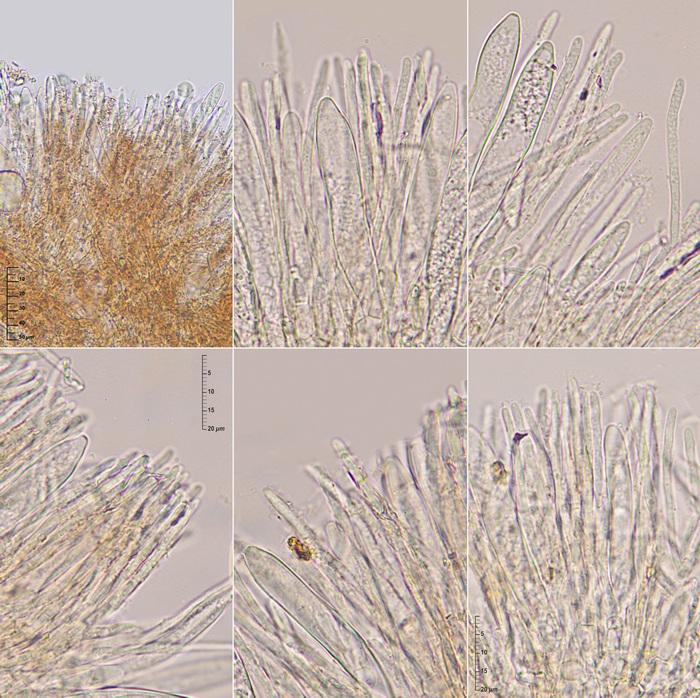
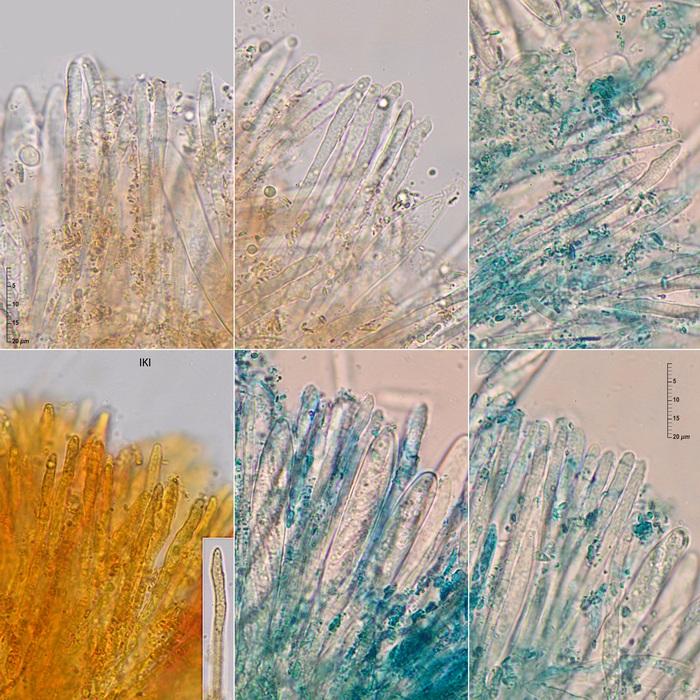
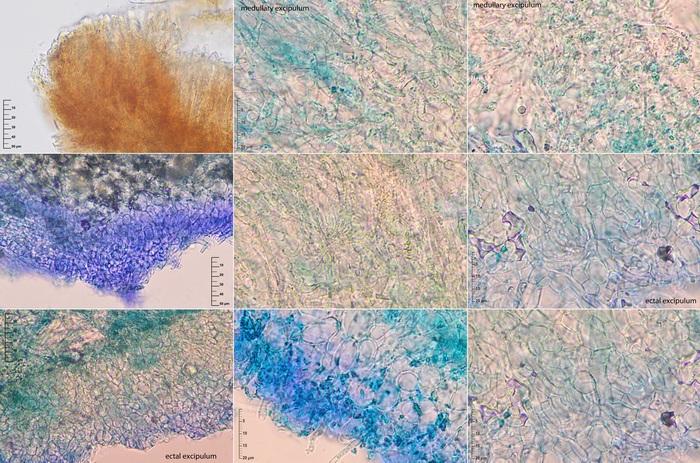
Rubén Martínez-Gil,
17-02-2017 21:30

Re : Helotiale on Polytrichastrum formosum
Hola Enrique.
Preciosas imágenes!!
Vea este otro encuentro, por si ayuda. http://www.ascofrance.fr/search_forum/39393
Saludos
Rubén
Enrique Rubio,
17-02-2017 23:54
Re : Helotiale on Polytrichastrum formosum
Hi Rubén
Yes! Yours is the same fungus!
Thanks
Yes! Yours is the same fungus!
Thanks
Stip Helleman,
18-02-2017 00:27

Re : Helotiale on Polytrichastrum formosum
Hi Enrique and Rubén,
I agree that it is the same fungus but the question remains about the appropriate genus, at the time I have no Idea although the Cryslals on the excipulum seems to be embedded in gel on your photos which is also the case in some Cyathiculas, the feature of the crystalline paraphyses I can not give place
Regards,
Stip
I agree that it is the same fungus but the question remains about the appropriate genus, at the time I have no Idea although the Cryslals on the excipulum seems to be embedded in gel on your photos which is also the case in some Cyathiculas, the feature of the crystalline paraphyses I can not give place
Regards,
Stip
Enrique Rubio,
18-02-2017 08:35
Re : Helotiale on Polytrichastrum formosum
Hi Stip
The tissue of the excipulum is nothing at all gelified, or, at least, not so conspicually. I think it could not near Cyathicula, but it is very far from Bryoscyphus.
The tissue of the excipulum is nothing at all gelified, or, at least, not so conspicually. I think it could not near Cyathicula, but it is very far from Bryoscyphus.
Michel Hairaud,
18-02-2017 08:56

Re : Helotiale on Polytrichastrum formosum
Bonjour ENrique,
Nice documention indeed !
It looks very much like the collection I showed in Ruben's cited post on Ascofrance. You also found this ''chrystal matter'' and it appears that your paraphyses are also not quite smooth (or am I wrong on this point ?)
Amitiés
Michel
Nice documention indeed !
It looks very much like the collection I showed in Ruben's cited post on Ascofrance. You also found this ''chrystal matter'' and it appears that your paraphyses are also not quite smooth (or am I wrong on this point ?)
Amitiés
Michel
Enrique Rubio,
18-02-2017 20:57
Re : Helotiale on Polytrichastrum formosum
Hi Michel
Yes. The paraphyses are no smooth, but incrusted by the same crystalline matter of the cells in the medullary excipulum. This matter stain blue in Crb.
Yes. The paraphyses are no smooth, but incrusted by the same crystalline matter of the cells in the medullary excipulum. This matter stain blue in Crb.
Stip Helleman,
18-02-2017 21:16
Re : Helotiale on Polytrichastrum formosum
I totally agree it is not a Cyathicula or close related and must admit I do not have a suggestion. Perhaps sequencing could be helpful in generic placement.
Stip
Stip
Enrique Rubio,
18-02-2017 21:20
Re : Helotiale on Polytrichastrum formosum
Hi Stip
Yes. But we need more ascomata for to sequence them
Thanks for your help
Yes. But we need more ascomata for to sequence them
Thanks for your help
Stip Helleman,
18-02-2017 21:29
Re : Helotiale on Polytrichastrum formosum
Hi Enrique,
yes that is often the limitation we are facing, unless you do have the opportunety to make a culture
Stip
yes that is often the limitation we are facing, unless you do have the opportunety to make a culture
Stip