
08-05-2026 11:55
Gernot FriebesHi,found on a decorticated Picea abies branch stil
09-05-2026 07:37
 Zuzana Sochorová (Egertová)
Hello,please, could anyone share this paper?Ferná
11-05-2016 20:37
Zuzana Sochorová (Egertová)
Hi,this very little ascomycete grew on soil in a m

05-05-2026 22:40
Gernot FriebesHi,I believe this is a Plagiostoma growing on a Sa
06-05-2026 11:25
 Castillo Joseba
Me mandan el material seco de Galicia (España) re
06-05-2026 17:23
Thomas Læssøehttps://svampe.databasen.org/observations/10594257
28-04-2026 20:07
 Lothar Krieglsteiner
... on twig in the air at standing Ceratonia siliq
04-05-2026 18:13
 Stephen Martin Mifsud
ID request for what seems to be a true aquatic fun
04-05-2026 16:39
Stephen Martin Mifsud
ID request: This specimen was collected in Malta o
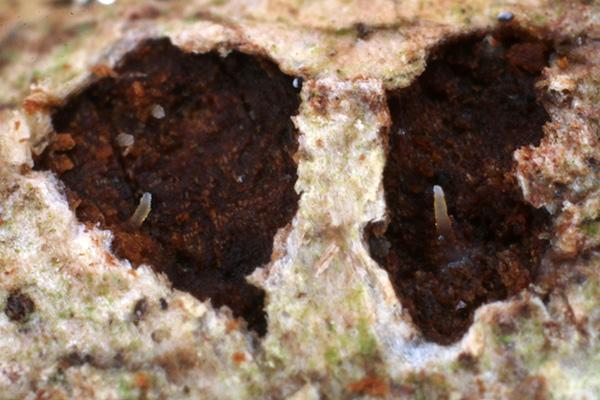
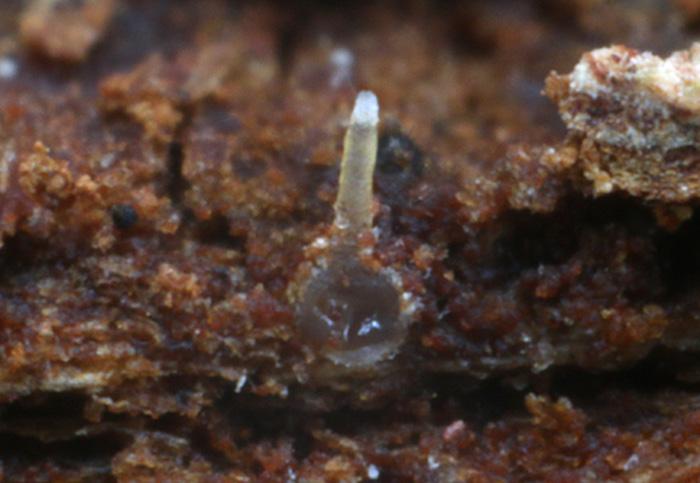
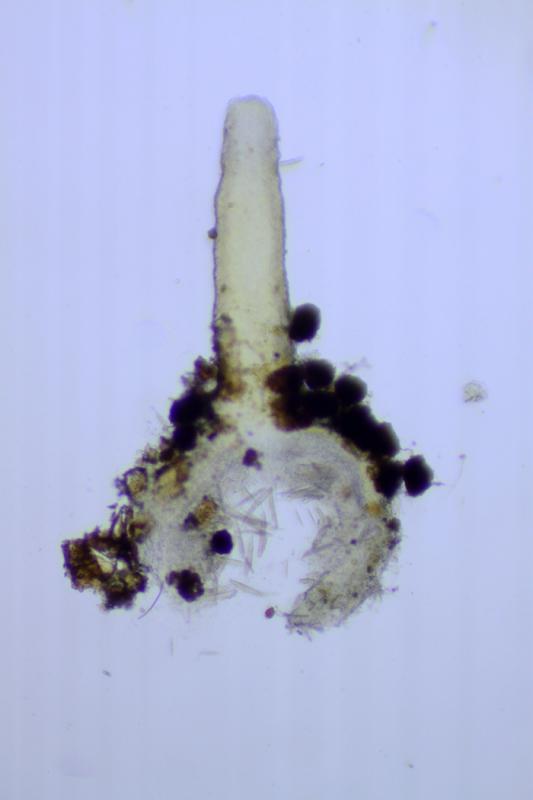
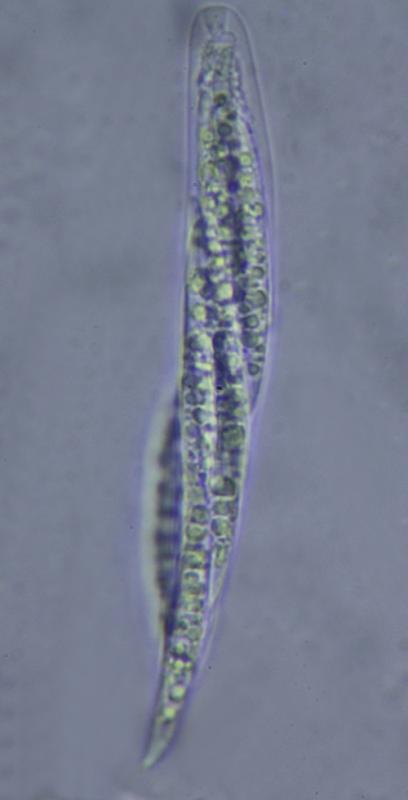
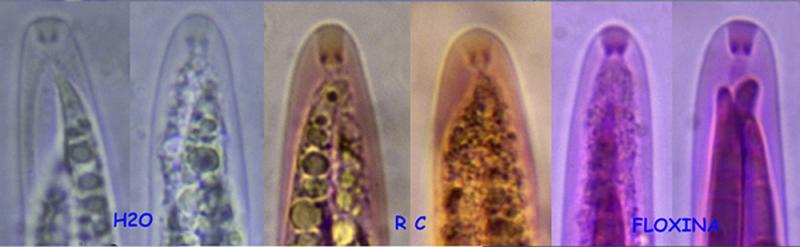
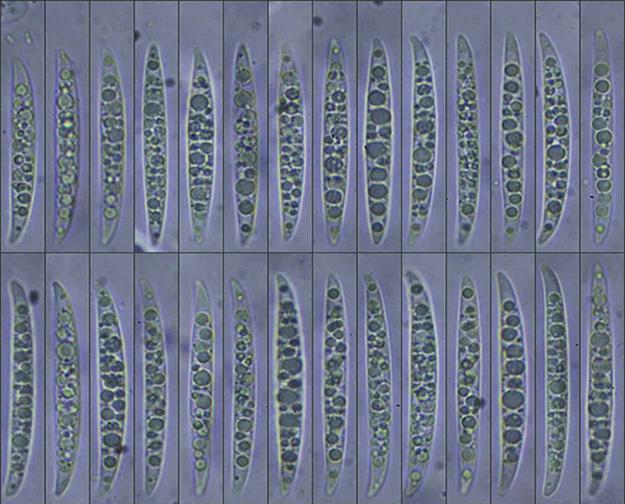
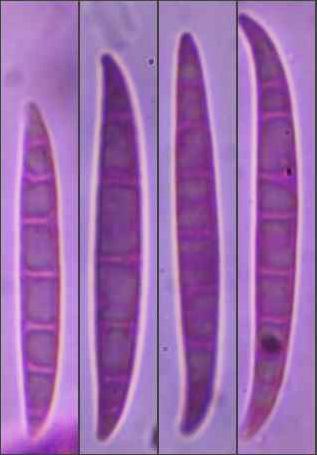
Encontré estos peritecios hialinos inmersos, de 400 x 380 µm y cuello de 490 x 115 µm, emergiendo solo el cuello, en ramas de Prunus lusitanica ssp. Hixa. Ascas con anillo apical refractivo, IKI negativo pero bien visible en Rojo Congo o Floxina. Esporas de 34,5-41,6 x 4-4,9 µm, Me = 39,1 x 4,5 µm, septadas, la mayoría aparentemente con 7 septos, cuya morfología recuerda a conidios de Fusarium. Pienso que es una especie muy similar a Conioscyphascus varius (o Conioscypha varia ??) pero me gustaría conocer la opinión de alguien que conozca este hongo.
Gracias.
Rubén Negrín

very interesting and nicely illustrated post. Thanks for sharing your notes with us.
I never encountered this fungus but it matches perfectly with the description of C. varius provided by Réblova & Seifert, which rarely happens!
Saludos,
Jacques
Thank you for presenting these very nice photos of Conioscyphascus varius on this forum! In particular the second and third photo showing the hyaline perithecium are great. It isn't easy to make such photos because of the soft and fragile fruit bodies largely hidden in the wood.
I firstly encountered the species a few years ago and that collection got its name thanks to Björn Wergen. Since then I have found it regularly especially on Fraxinus branches which were kept in a damp box for some time.
Conioscyphascus varius is the name under which the species was originally described by Réblová & Seifert (2004). The anamorph was earlier described under the name Conioscypha varius. The latter is the proper name since the adoption of the "one fungus, one name" principle.
Saludos,
rubén