
08-05-2026 11:55
Gernot FriebesHi,found on a decorticated Picea abies branch stil
09-05-2026 07:37
 Zuzana Sochorová (Egertová)
Hello,please, could anyone share this paper?Ferná
11-05-2016 20:37
Zuzana Sochorová (Egertová)
Hi,this very little ascomycete grew on soil in a m

05-05-2026 22:40
Gernot FriebesHi,I believe this is a Plagiostoma growing on a Sa
06-05-2026 11:25
 Castillo Joseba
Me mandan el material seco de Galicia (España) re
06-05-2026 17:23
Thomas Læssøehttps://svampe.databasen.org/observations/10594257
28-04-2026 20:07
 Lothar Krieglsteiner
... on twig in the air at standing Ceratonia siliq
04-05-2026 18:13
 Stephen Martin Mifsud
ID request for what seems to be a true aquatic fun
04-05-2026 16:39
Stephen Martin Mifsud
ID request: This specimen was collected in Malta o
I think it's a Hysterobrevium again (but not H. mori this time). The shape of the lirellae suggests Histeriales. On eboehm.com site I could see two possible species: H. smilacis and H. constrictum. The spores are more similar in shape to those of the latter, but the dimensions are closer to the former. On the other hand, the spores (of some) are surrounded by a gelatinous tissue, a characteristic that is also mentioned in the site for H. similacis. Can someone help?
The host is Cupressus lusitanica. The dimensions of the spores I got were:
(17.7) 18.9 - 23.3 (24.8) × (6.8) 7.2 - 9.1 (9.5) µm
Q = (2.3) 2.35 - 2.8 (3) ; N = 24
Me = 21 × 8.2 µm ; Qe = 2.6
Thanks in advance,
zaca
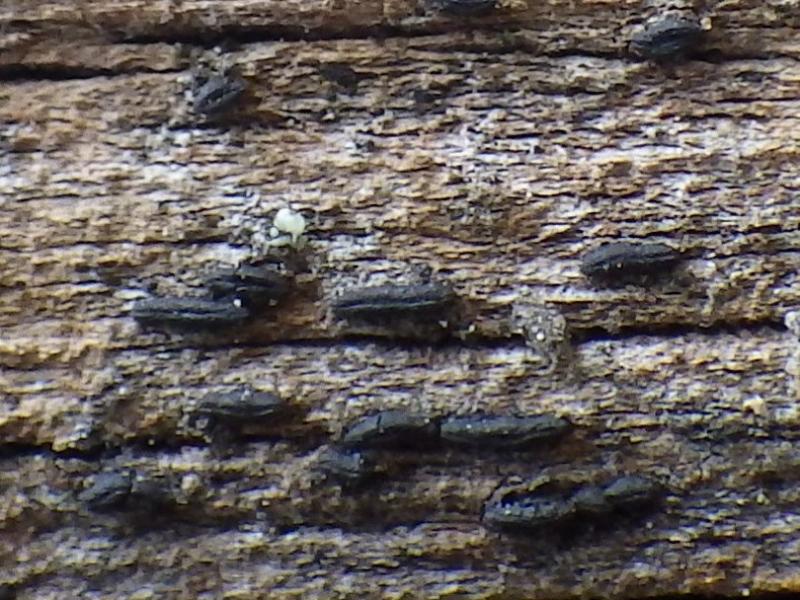
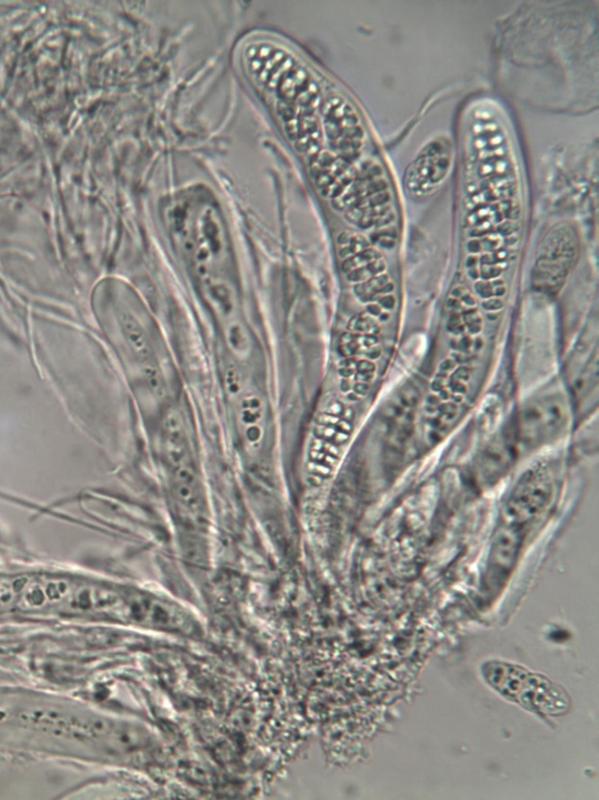
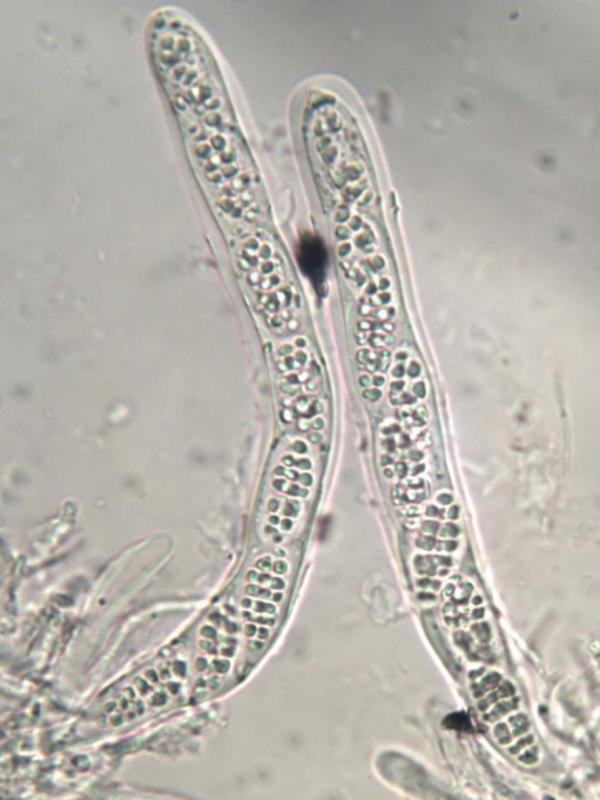
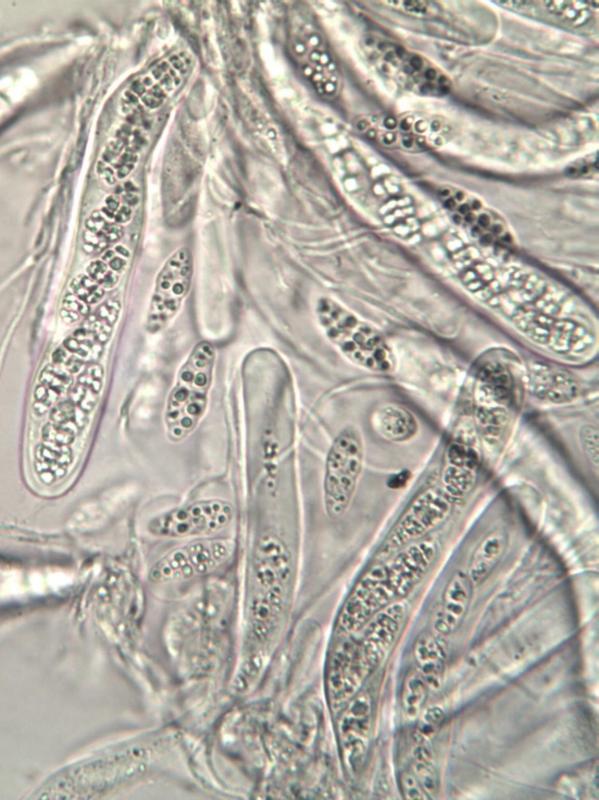
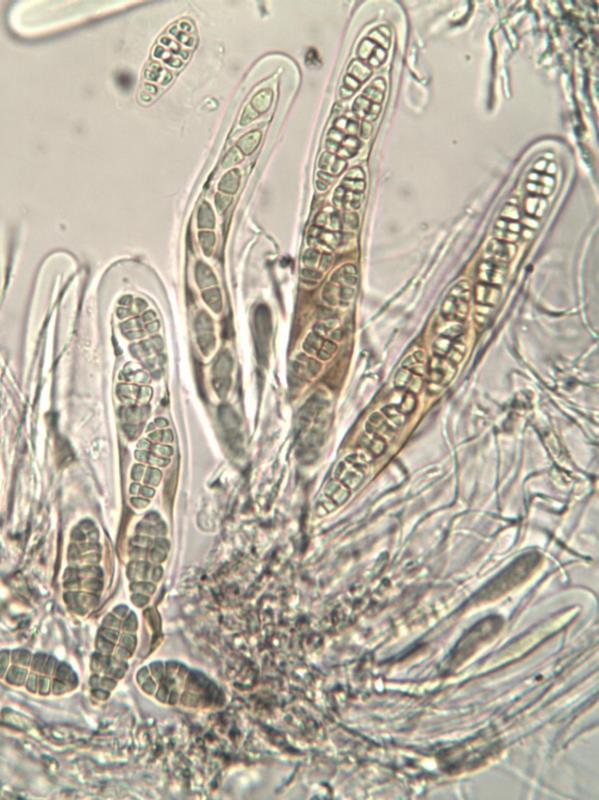
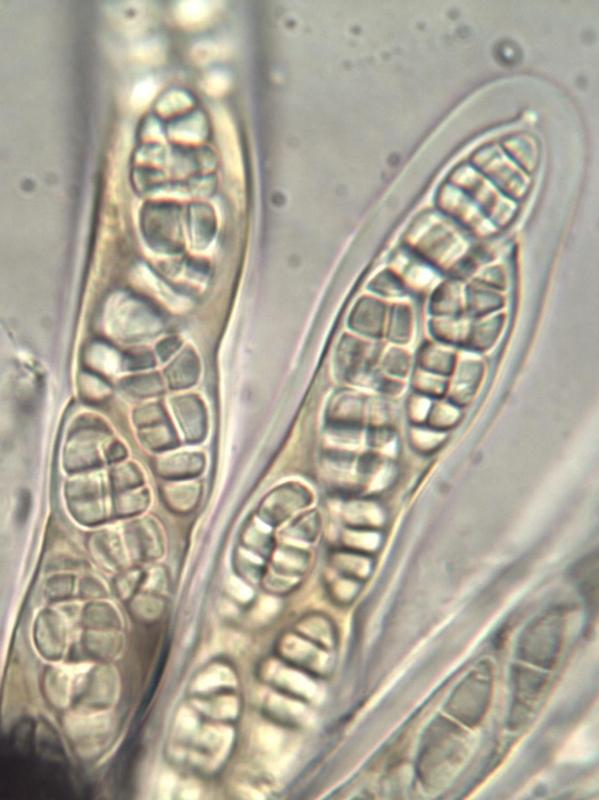
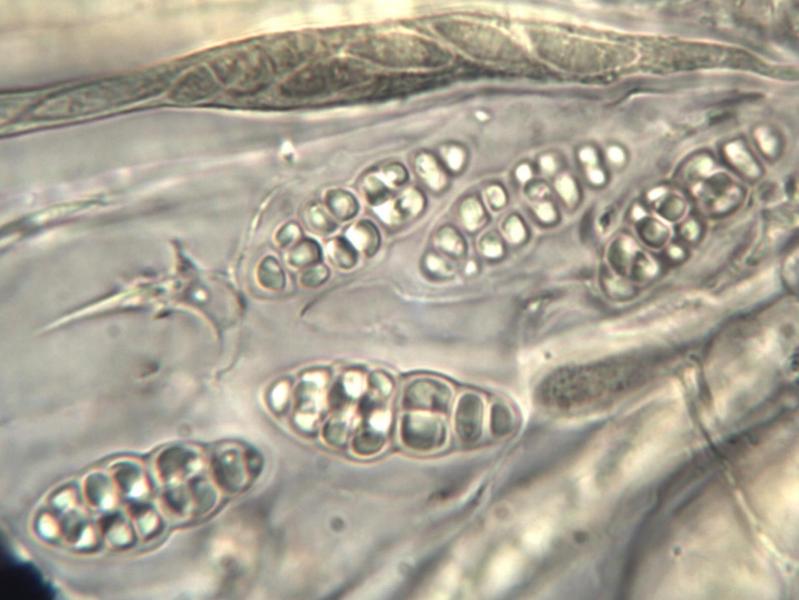
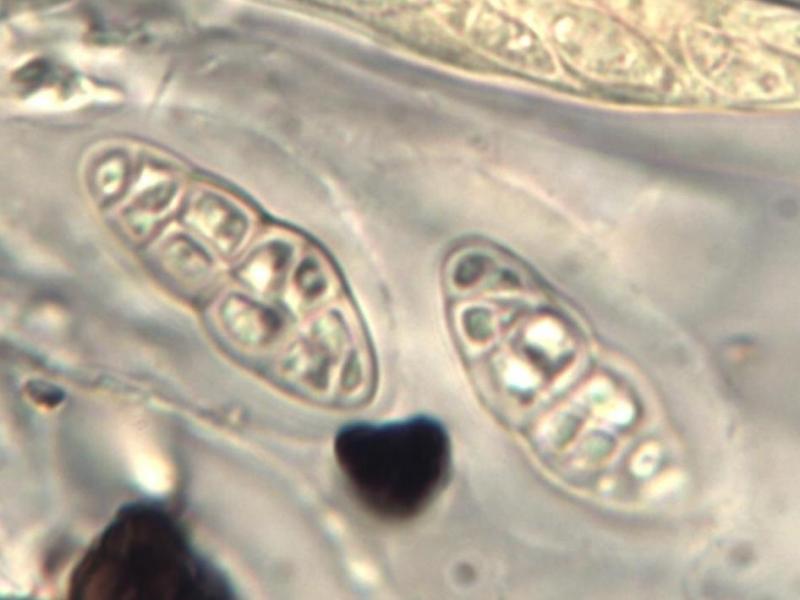

Hi Zaca,
Typical H. smilacis, I think. But you're right, it's not so far from H. constrictum. Eric Boehm wrote : "the illustrations depict a very thick wall and dictyospores highly symmetric in outline and septation". Septation is asymetrical in your collection.
Alain
Thanks for your opinion. Yes, the Septation is somewhat asymetrical.
I know that you collected it in several different hosts. DId it happen in Cupressus?
Best regards,
zaca