
08-05-2026 11:55
Gernot FriebesHi,found on a decorticated Picea abies branch stil
09-05-2026 07:37
 Zuzana Sochorová (Egertová)
Hello,please, could anyone share this paper?Ferná
11-05-2016 20:37
Zuzana Sochorová (Egertová)
Hi,this very little ascomycete grew on soil in a m

05-05-2026 22:40
Gernot FriebesHi,I believe this is a Plagiostoma growing on a Sa
06-05-2026 11:25
 Castillo Joseba
Me mandan el material seco de Galicia (España) re
06-05-2026 17:23
Thomas Læssøehttps://svampe.databasen.org/observations/10594257
28-04-2026 20:07
 Lothar Krieglsteiner
... on twig in the air at standing Ceratonia siliq
04-05-2026 18:13
 Stephen Martin Mifsud
ID request for what seems to be a true aquatic fun
04-05-2026 16:39
Stephen Martin Mifsud
ID request: This specimen was collected in Malta o
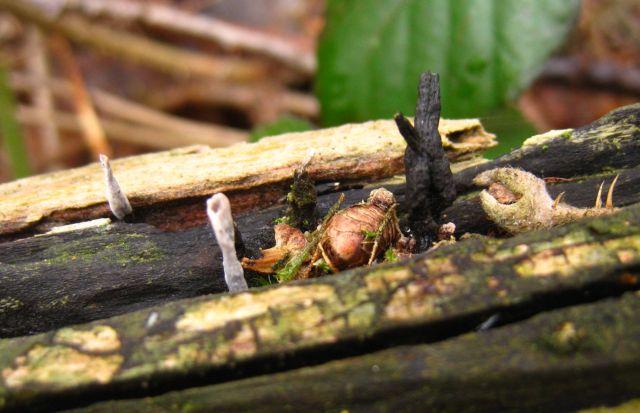
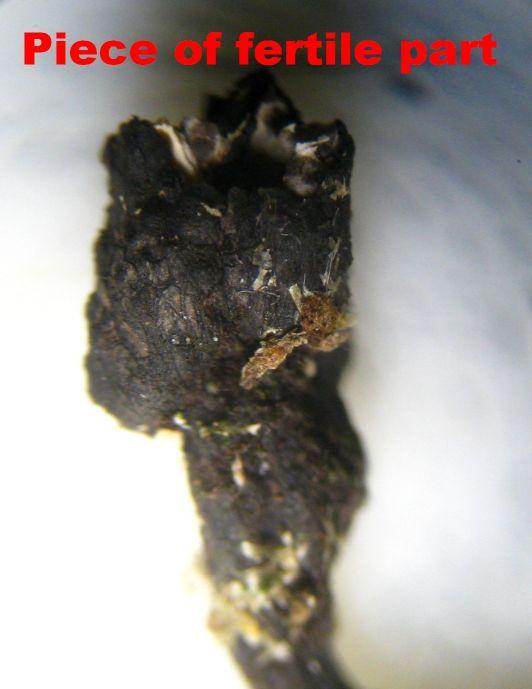
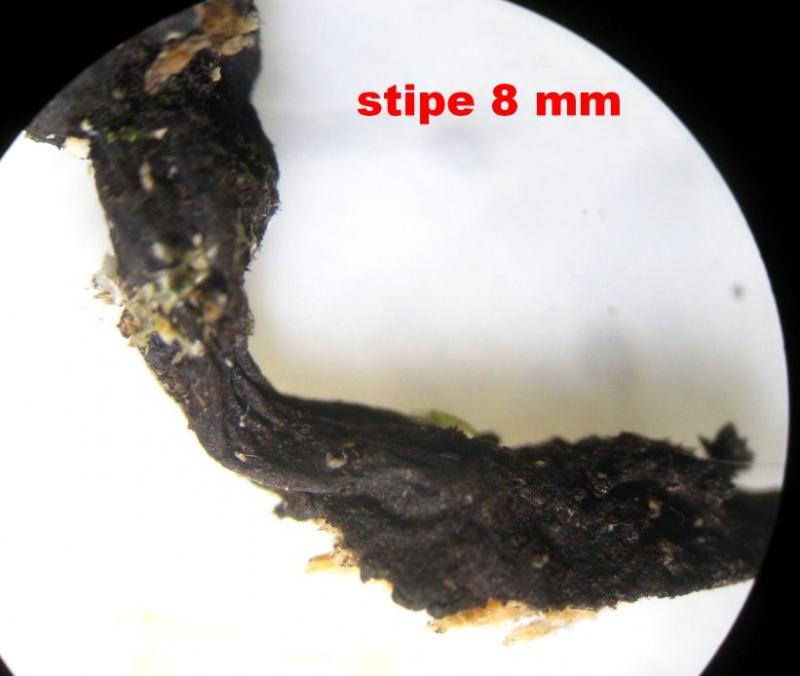
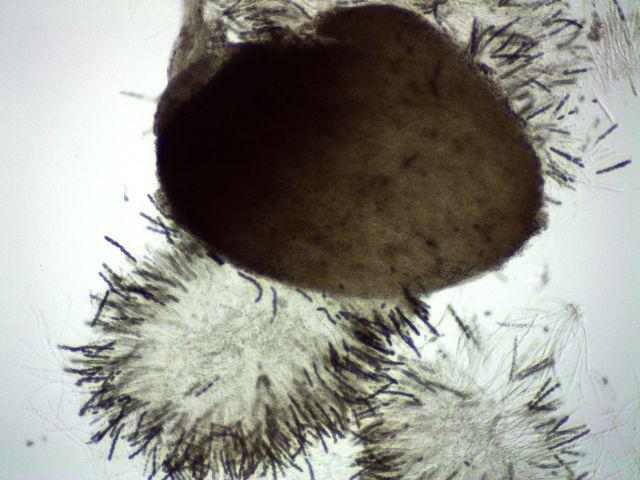
Found on a fallen branch of oak. The wood is colored black and the stromata has a stipe of 8x1 mm and a fertile part of 11x2.5 mm. The outer crust is hard and black with grey patches and lumpy as a result of the underlying perithecia.
TELEMORPHE:
Perithecia: subglobose 514 x 400 µm
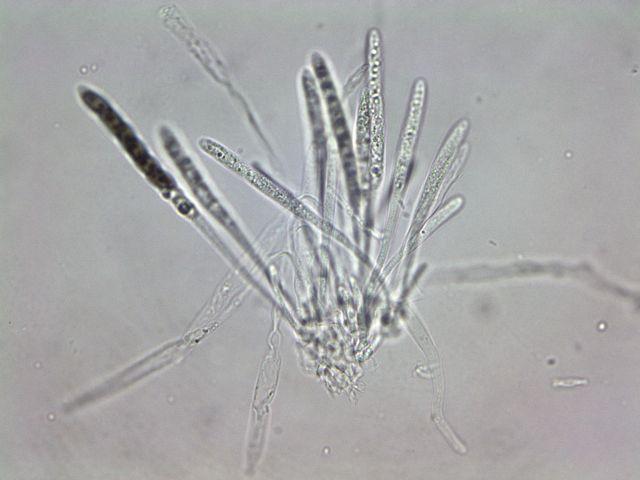
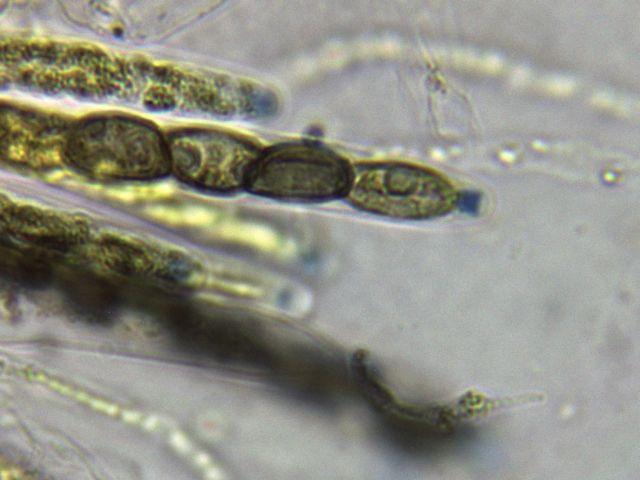
Asci: cylindrical 124-158 x 8-9,65 µm
Paraphyses: filiform
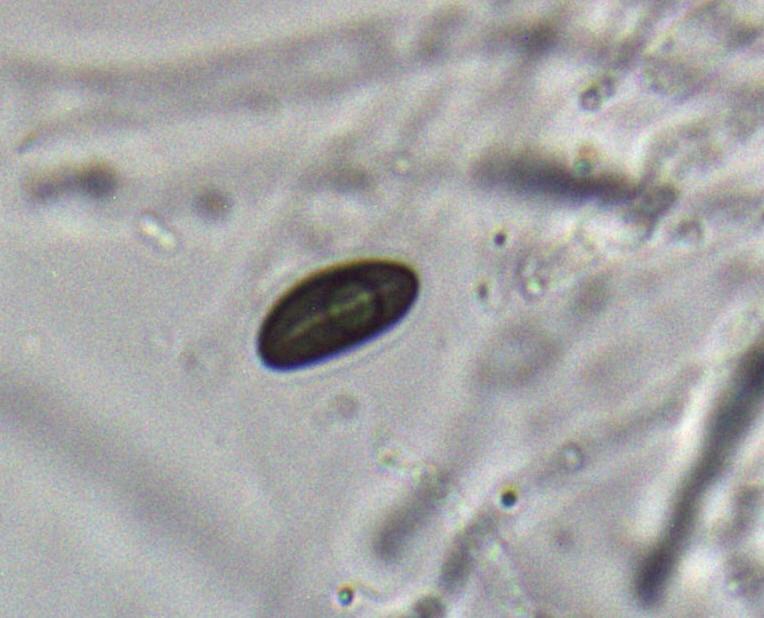
Spores: 11,35-13,37 x 5,14-5,94 µm Q= 2.23 with straight germsplit (spore lenght 11.2 µm with germsplit length 7.85 µm)
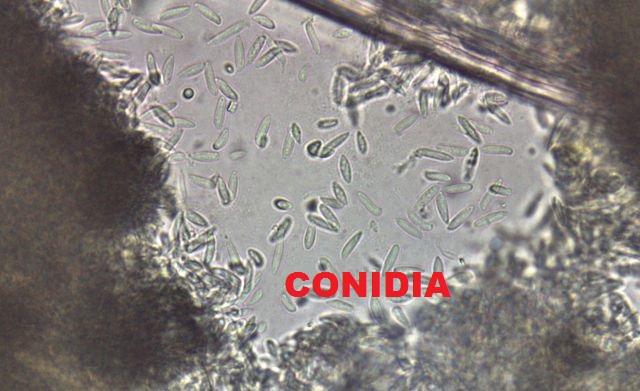
ANAMORPHE: flat length 5-8 mm; conidia:10,41-16,3 x 3,02-3,86 µm
Macroscopic/microscopic this frb looks like Xylaria arbusula except the length of the asci is wrong and I found it in Belgium/Turnhout in winter! Is this not a tropical asco?
I will be grateful for your help!
Greetings,
François Bartholomeeusen

your images do not allow an identification.
Before considering X. arbuscula you should rule out X. hypoxylon. The key feature distinguish them is the thickness and texture of the outer crust. See my notes in the monographic keys available on Ascofrance.
Good luck,
Jacques
I have made the wrong choice at step 2 of your superb key. I chose "Stromata hard-textured with a carbonaceous outer crust".
Perhaps the persistent, drying east wind, the sun and the freezing temperature changed the texture a bit? In all cases reading your notes has shed light on my problems. I have also measured the out crust and is was about 40-45 µm thick.
Thank you for your quick reaction!
Cordial greetings,
François