08-05-2026 11:55
Gernot FriebesHi,found on a decorticated Picea abies branch stil
09-05-2026 07:37
 Zuzana Sochorová (Egertová)
Hello,please, could anyone share this paper?Ferná
11-05-2016 20:37
Zuzana Sochorová (Egertová)
Hi,this very little ascomycete grew on soil in a m

05-05-2026 22:40
Gernot FriebesHi,I believe this is a Plagiostoma growing on a Sa
06-05-2026 11:25
 Castillo Joseba
Me mandan el material seco de Galicia (España) re
06-05-2026 17:23
Thomas Læssøehttps://svampe.databasen.org/observations/10594257
28-04-2026 20:07
 Lothar Krieglsteiner
... on twig in the air at standing Ceratonia siliq
04-05-2026 18:13
 Stephen Martin Mifsud
ID request for what seems to be a true aquatic fun
04-05-2026 16:39
Stephen Martin Mifsud
ID request: This specimen was collected in Malta o
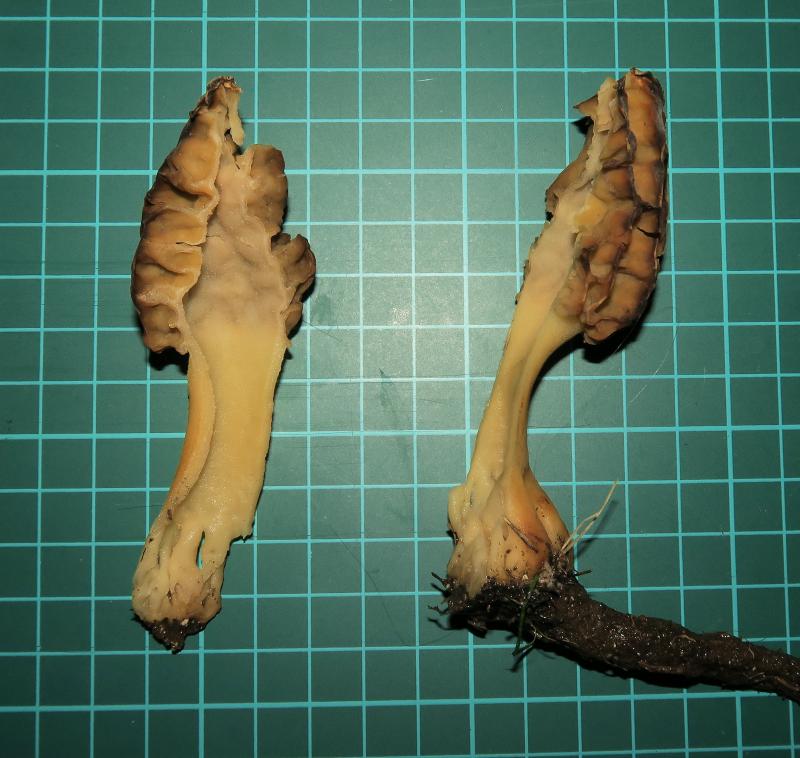
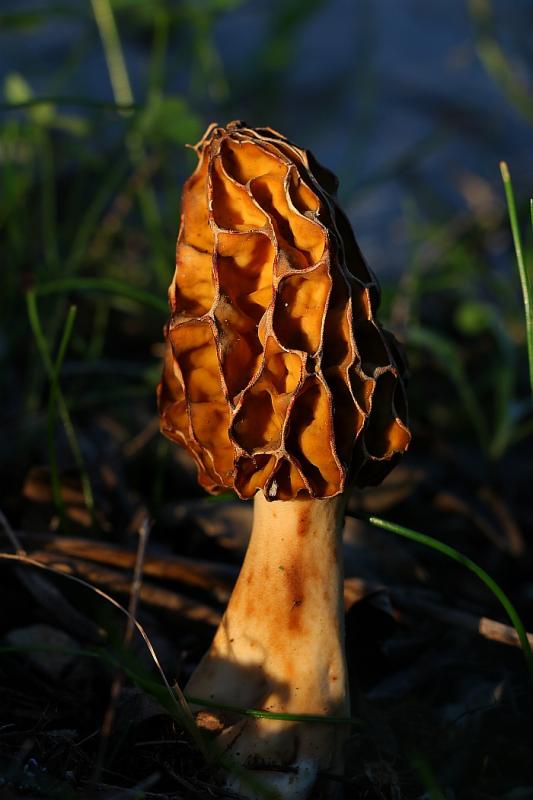
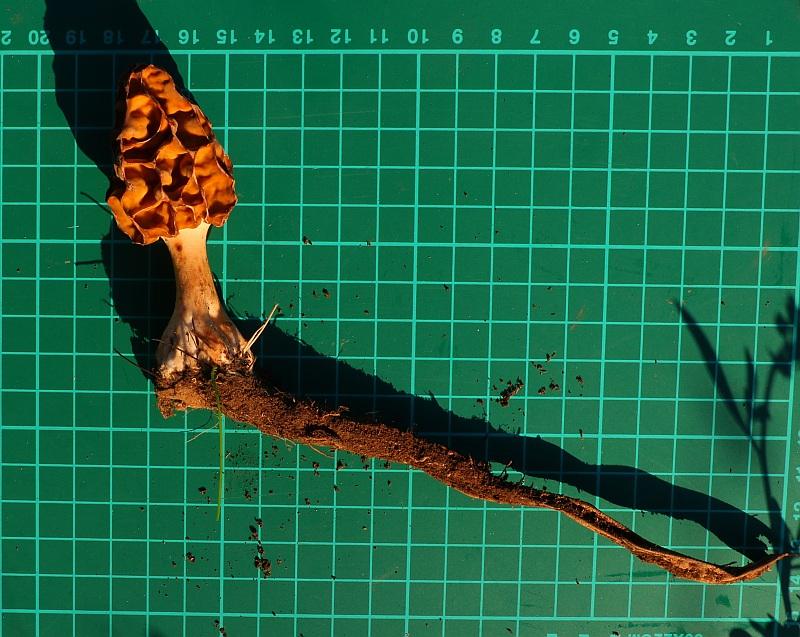
I have found a Morchella which is extremely rare in my country (only 2 reports). It was growing in a weedy area attached to what I think a root. It had a brownish-mustard yellow colour with wide alveoli made by rather thin walls. I tried to find some literature, ideally a key but I was not successful. The literature on ascofrance provides a monograph, but based on phylogenetics. I have collected the specimen but I have not carried any microscopical tests yet. I don't really know what/how to examine Morchella and what charachters are determinant. Any help / keys would be essential for me.
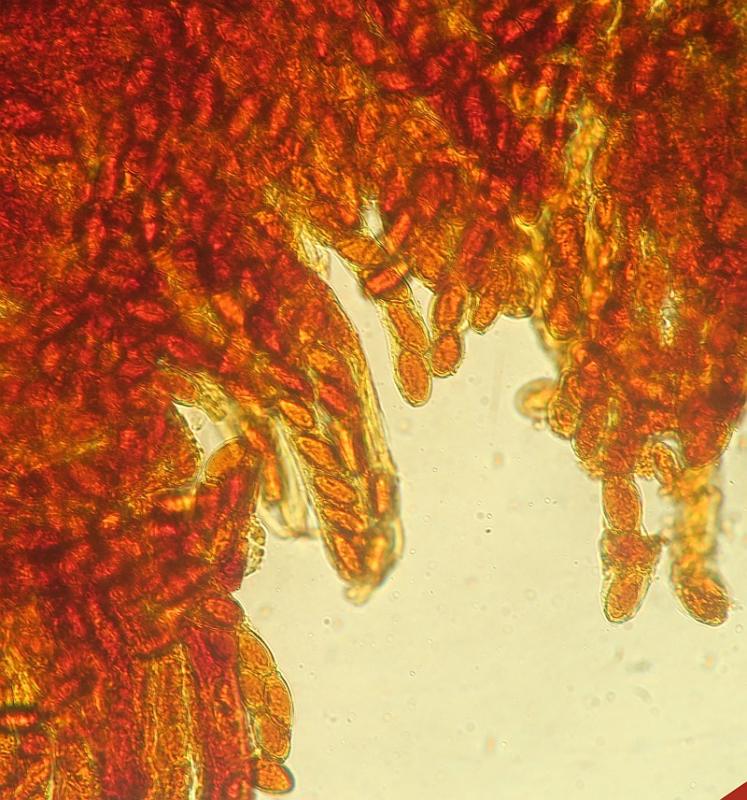
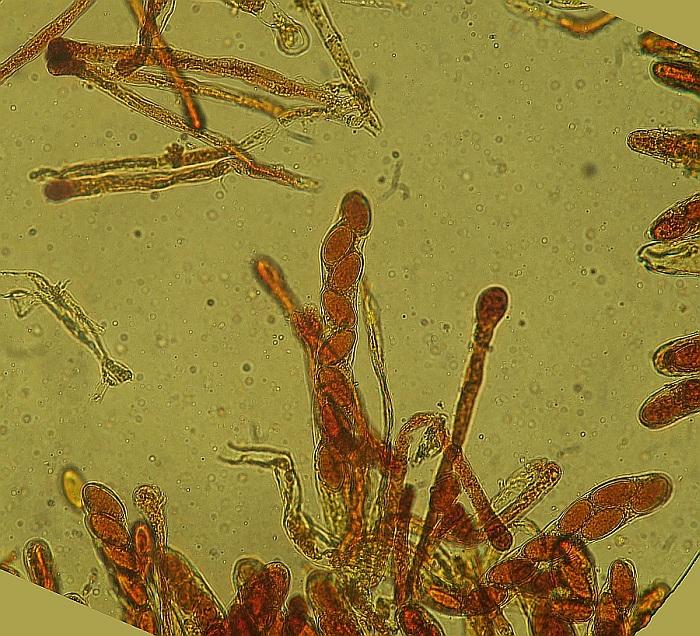
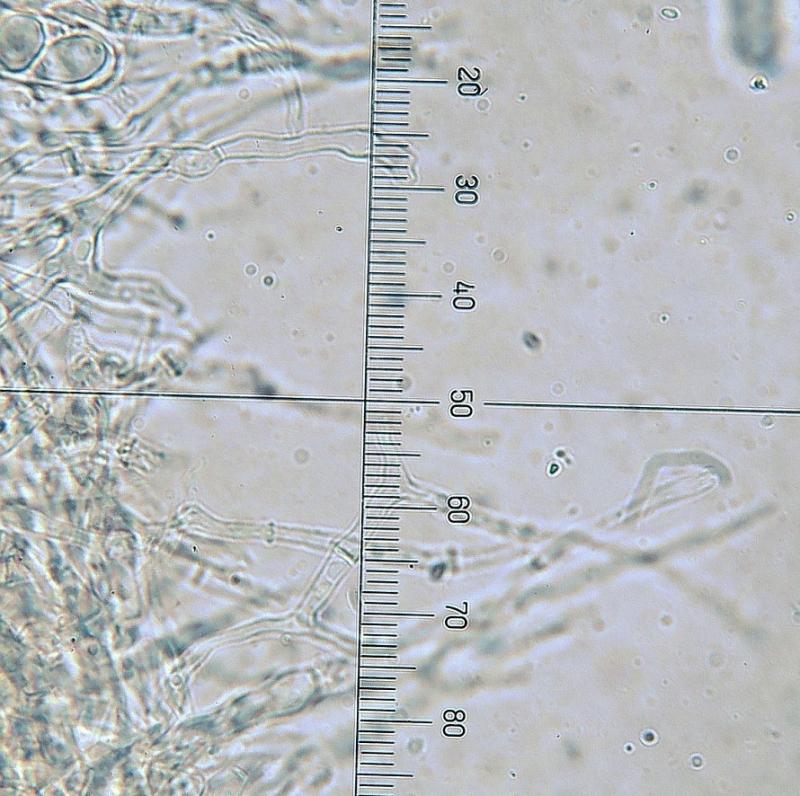
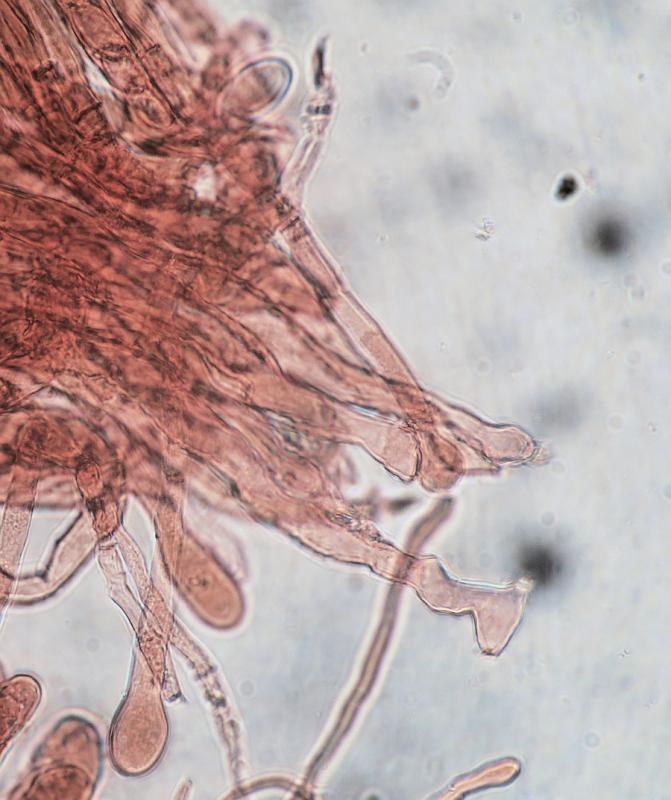
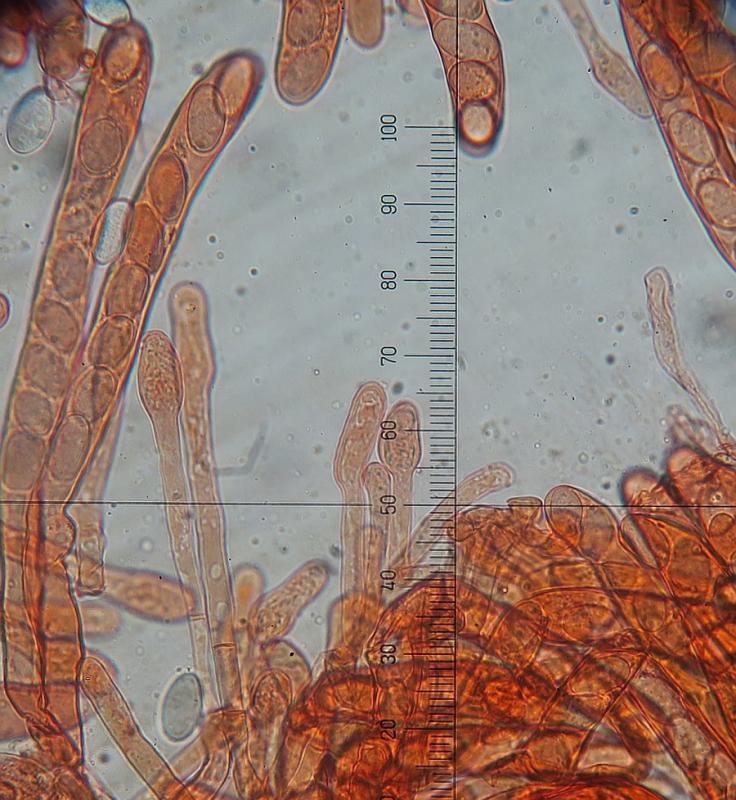
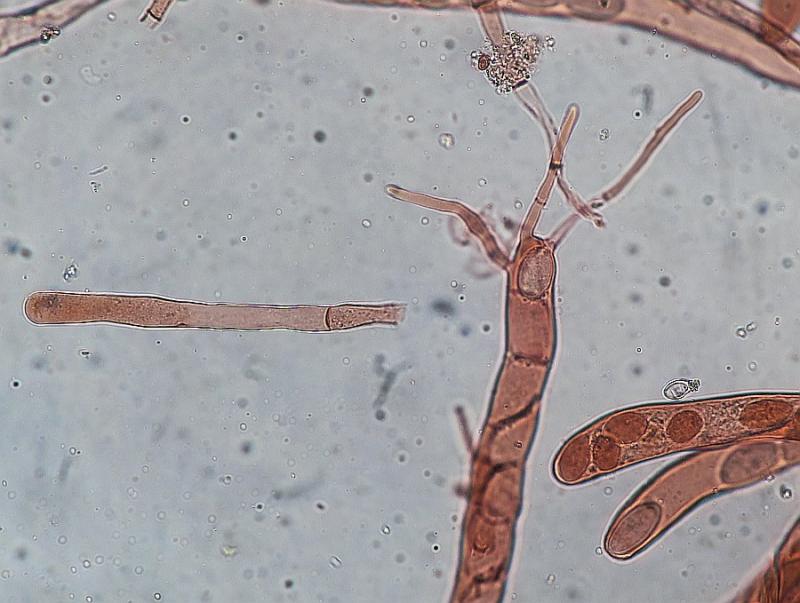
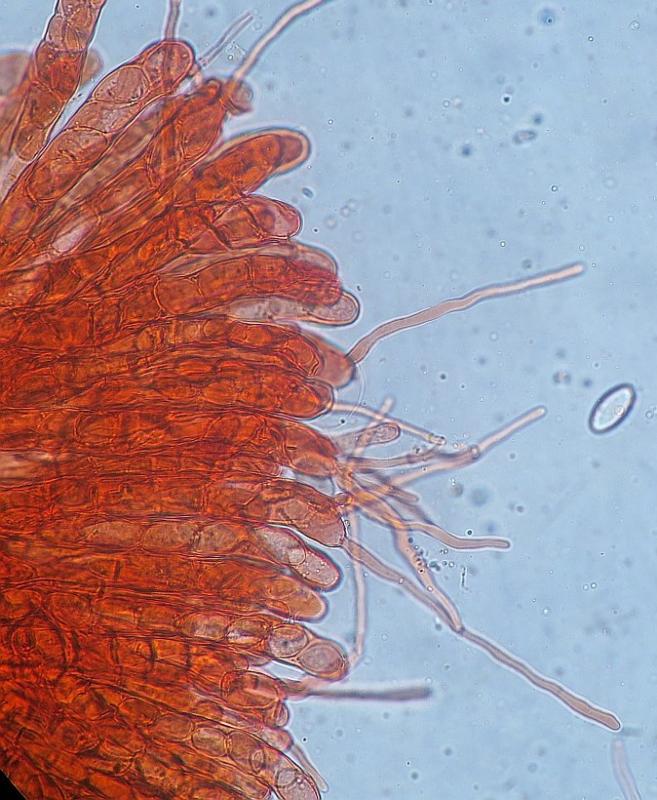
Paraphyses: Present, not frequent, septate, shorter from asci
Paraphyses shape (apex): Capitate, with a rounded, elliptic-rectangular or rarely irregaular-deltate head, (24.1-)30.7(-34.1) µm long
Paraphyses width: Column 6.8-9.5µm (mean 8.37µm) ; apical head (widest part): 12-17.8µm (mean 14.1µm)
Paraphyses length: Total length 142-174µm (mean = 161.4µm); Length of apical hypha 98-129µm (mean = 113.4µm)
Other remarks: Paraphyses dextrinoid in IKI, especially its head. They are 1- to 2- (3- septate), with the septa located at the basal third of the paraphyses.
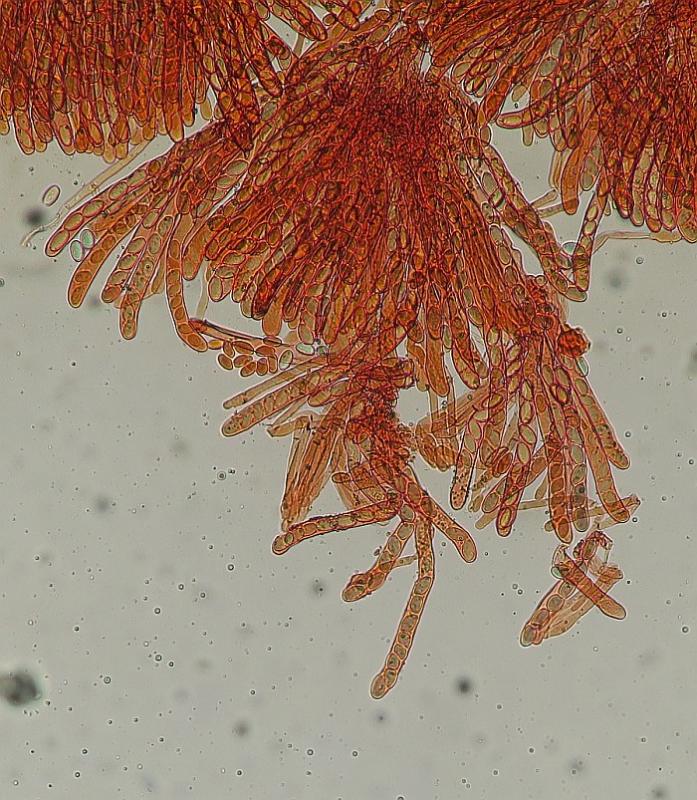
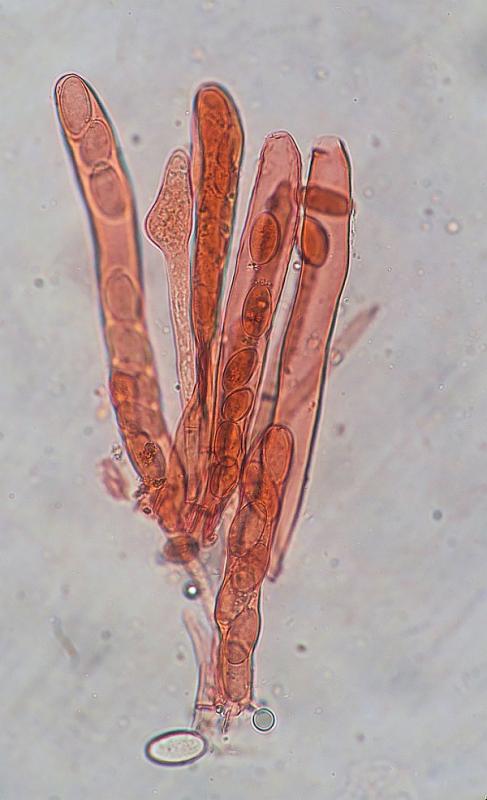
Ascum
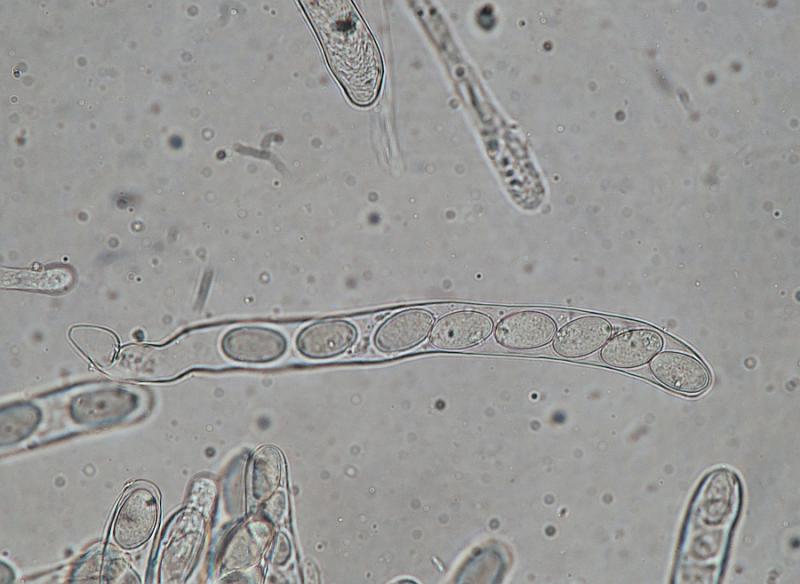
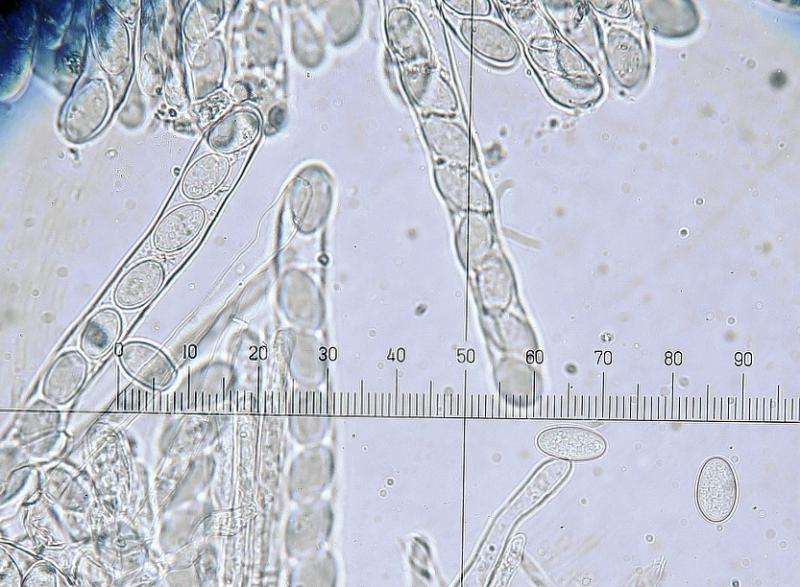
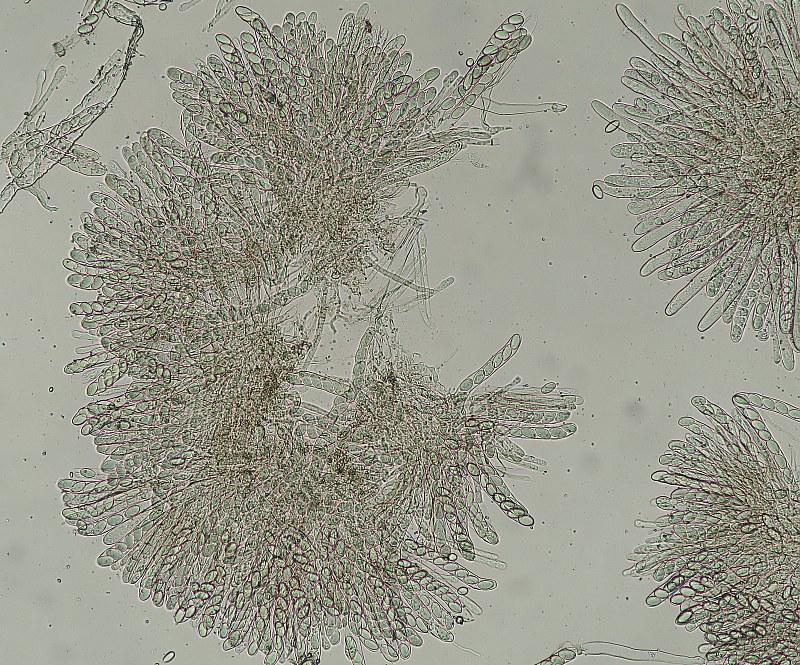
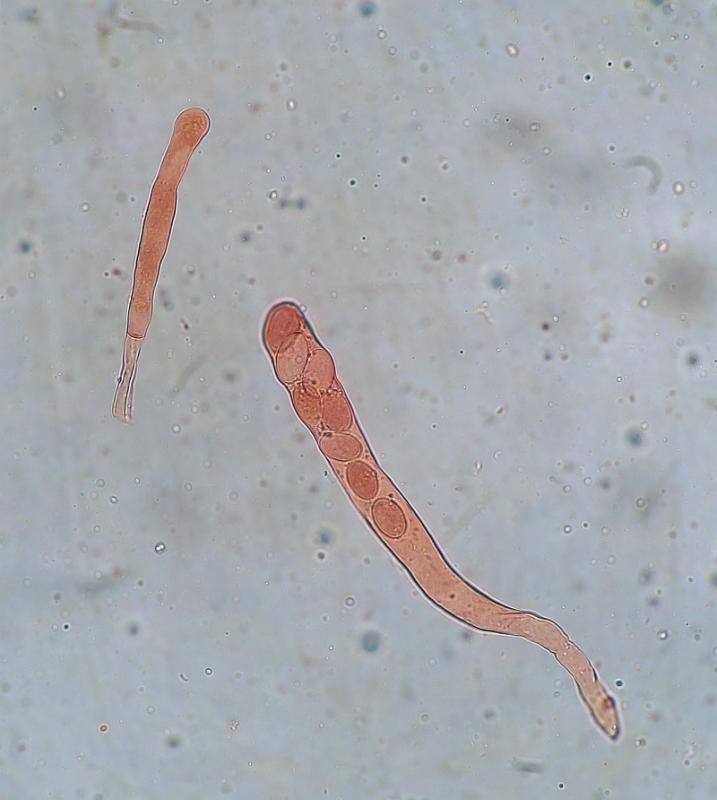
Shape: Cylindrical, straight or slightly sinusoidial-irregular, usually with a distinct kink at the base
No. of Spores: 8
Operculum Not: observed
Tunic (Wall): Uni-tunicate
Ascum length (range): 220 - 288 µm
Ascum length (mean): 262.7 µm
Ascum width (range): 15.2 - 20.8 µm
Ascum width (mean): 17.7 µm
Ascum L:W ratio: 15
Iodine reaction (J +/J -): J-ve but dextrinoid
Orifice: Absent
Remarks: Sometimes spore are clustered at the top of the ascum making it to swell nad bulge
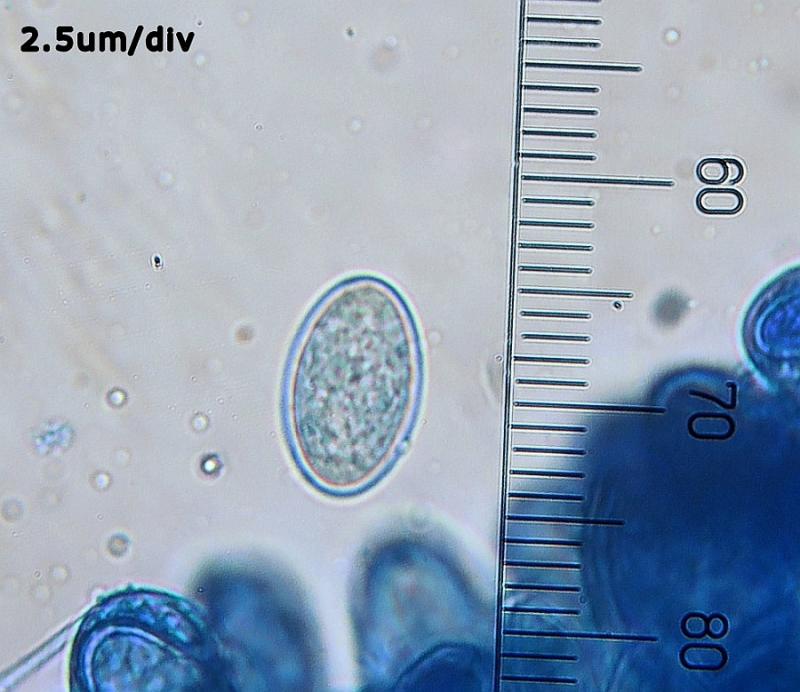
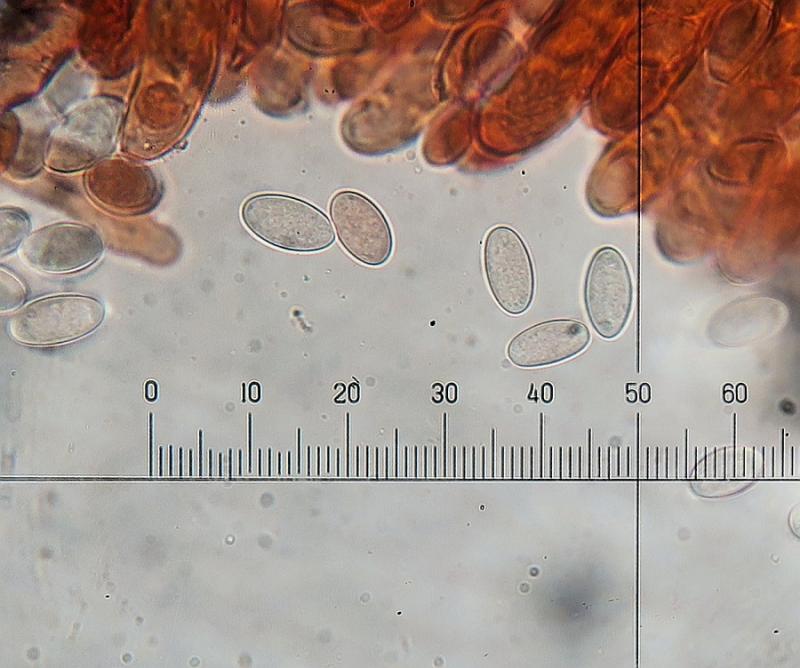
Spore
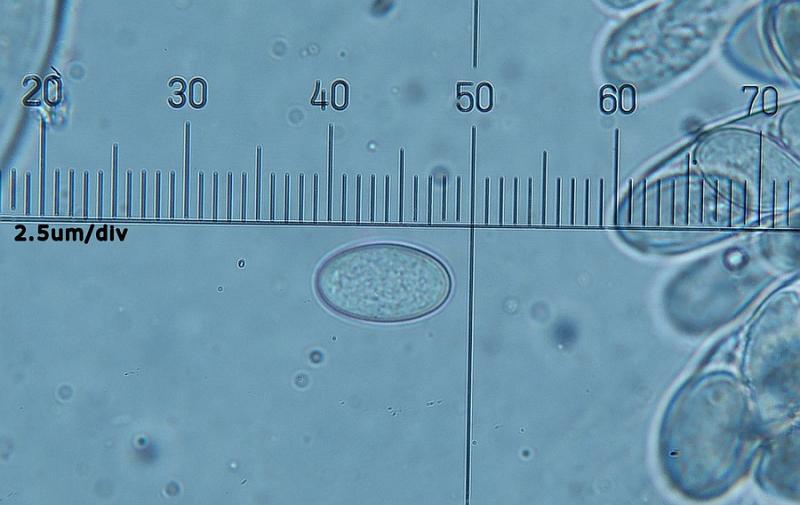
Spore length (range): 20.26 - 24.9 µm
Spore length (mean): 22.7 µm
Spore width (range): 9.97 - 15.9 µm
Spore width (mean): 12.4 µm
Spore Q factor (range): 1.54 - 2.24 µm
Spore Q factor (mean): 1.84
Spore shape: Fusoid-elliptical, widest at the centre with two identical rounded poles
Spore septa: Aseptate
Spore surface: Finely course or rugolose
Oil bodies: Absent
Arrangement of spores: Spores arranged obliquely, sometimes aggregated at the upper part of the ascum.
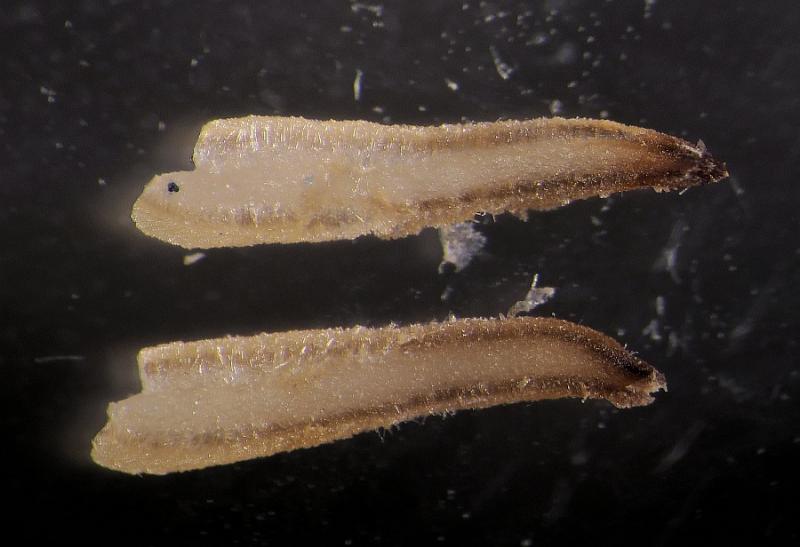
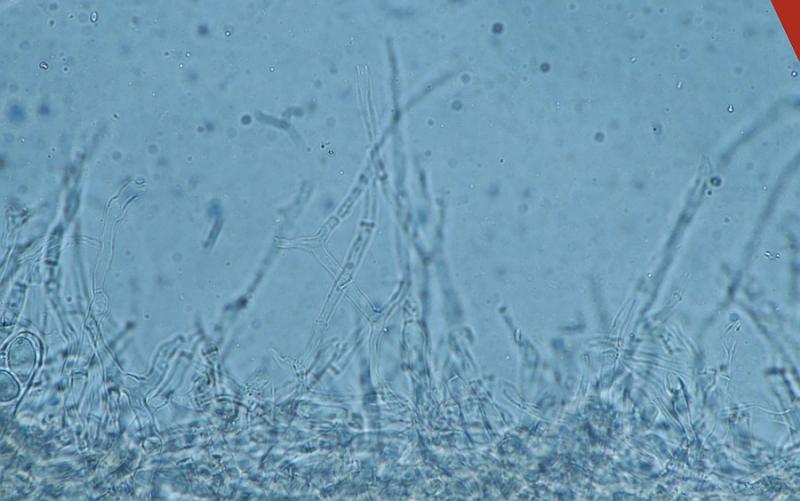
Excipulum (medullary): Profusely branched, intricate and reticulate hypha forming a textura intricata, with hyphal elements 3-6um wide and 24-45um long.
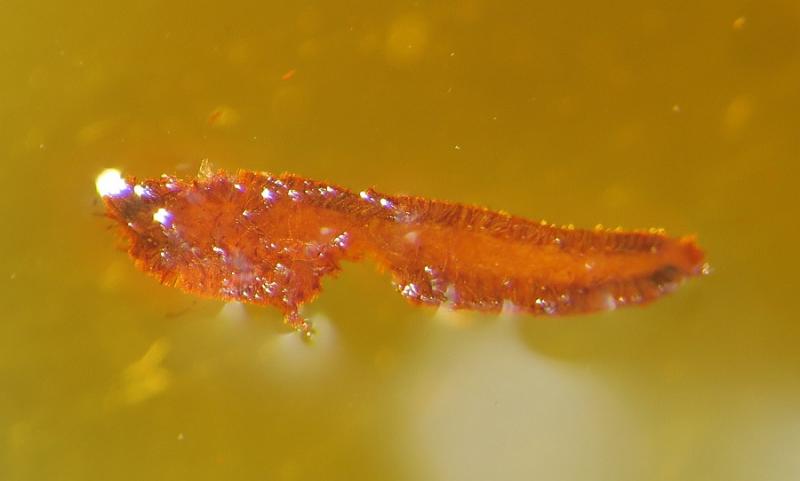
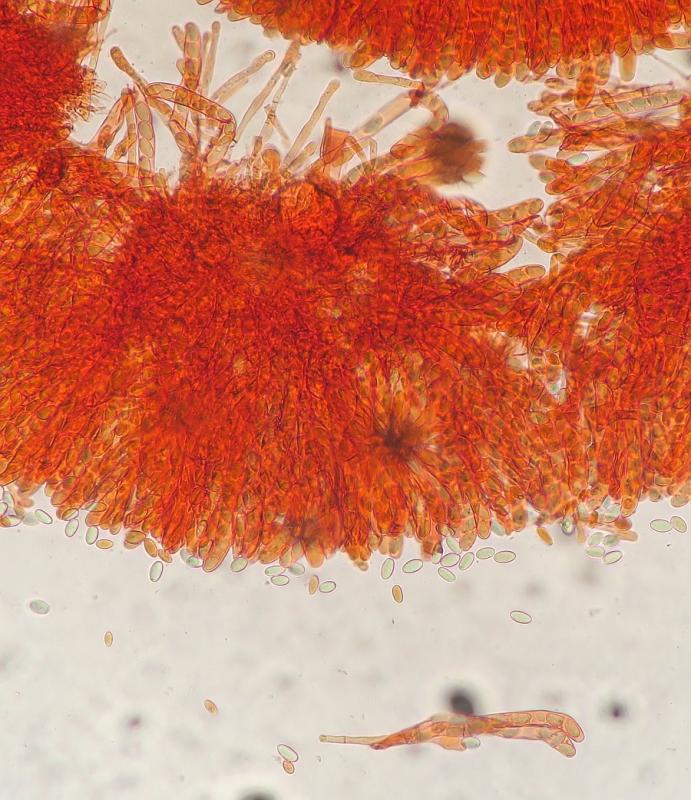

The habits with those larges pits reminds me two species: Morchella castaneae L. Romero & Clowez or M. galilaea S. Masaphy & Clowez
The habitat is as follows. It was found growing from rather bare soil margining a weedy area in turn an understory of olive trees. As you can see, the morel was attached to what I think is a dead root. Ascocarp found in 26 Dec 2016.
I check the species you mentioned, while what do you think about Morchella rufobrunnea or M. esculentoides?
Thanks