
11-05-2016 20:37
 Zuzana Sochorová (Egertová)
Hi,this very little ascomycete grew on soil in a m
08-05-2026 11:55
Gernot FriebesHi,found on a decorticated Picea abies branch stil

05-05-2026 22:40
Gernot FriebesHi,I believe this is a Plagiostoma growing on a Sa
06-05-2026 11:25
 Castillo Joseba
Me mandan el material seco de Galicia (España) re
06-05-2026 17:23
Thomas Læssøehttps://svampe.databasen.org/observations/10594257
28-04-2026 20:07
 Lothar Krieglsteiner
... on twig in the air at standing Ceratonia siliq
04-05-2026 18:13
 Stephen Martin Mifsud
ID request for what seems to be a true aquatic fun
04-05-2026 16:39
Stephen Martin Mifsud
ID request: This specimen was collected in Malta o
28-07-2011 18:31
 Alex Akulov
Dear FriendsToday I made the pdf file of Velenovsk
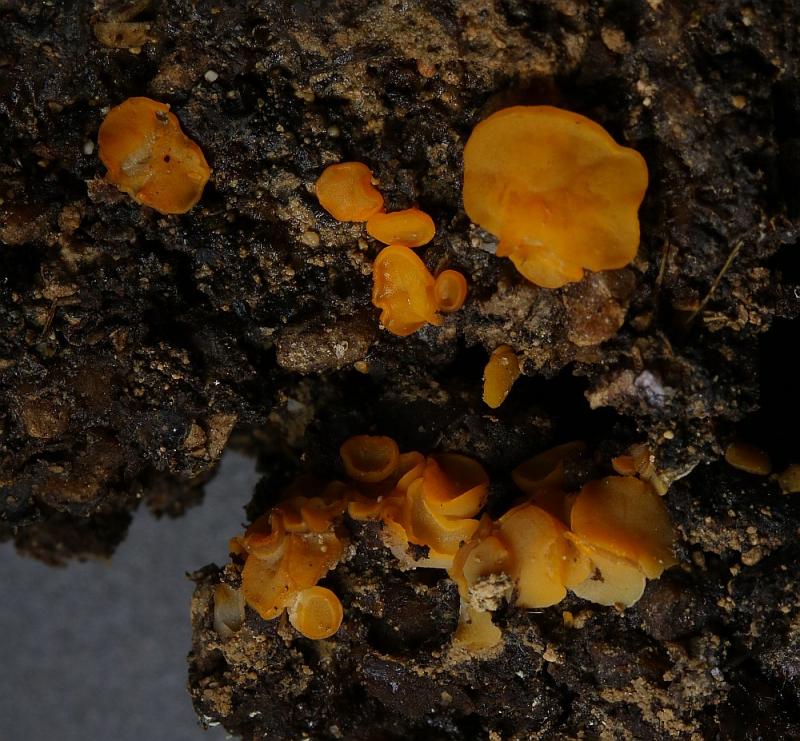
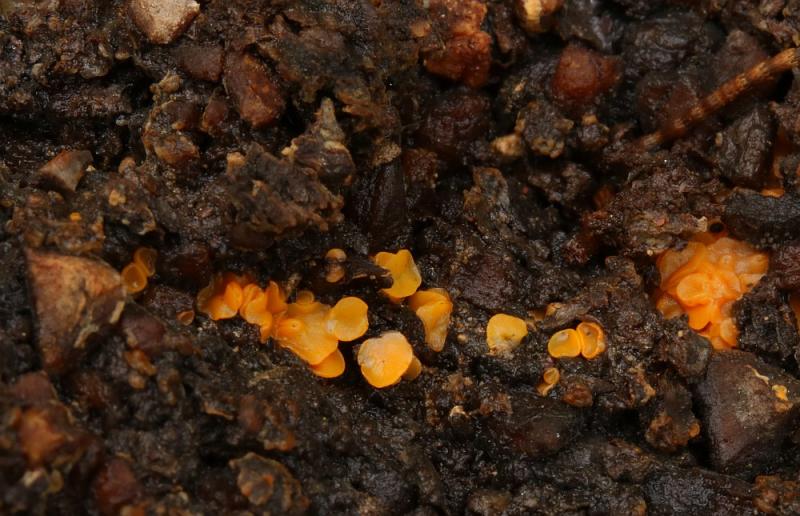
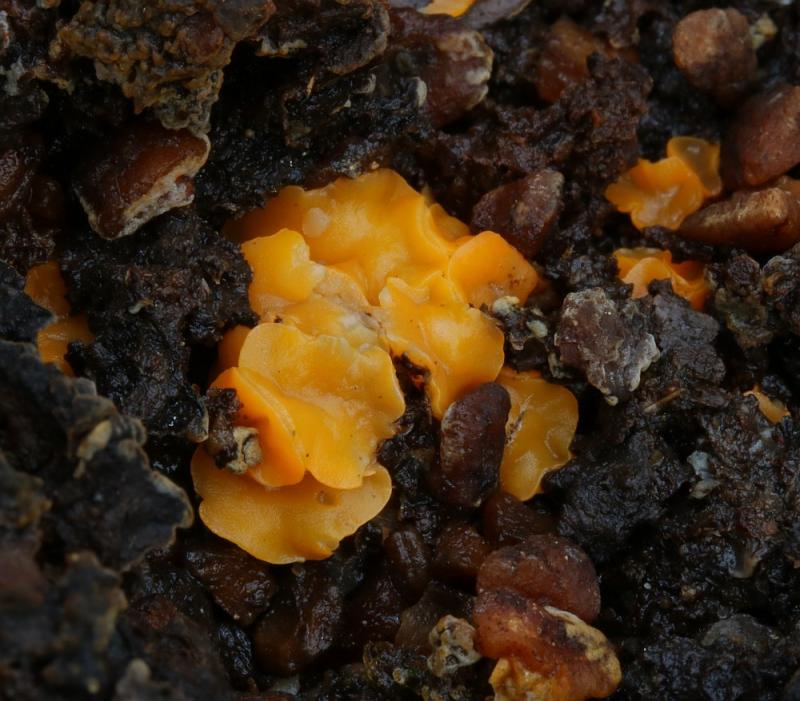
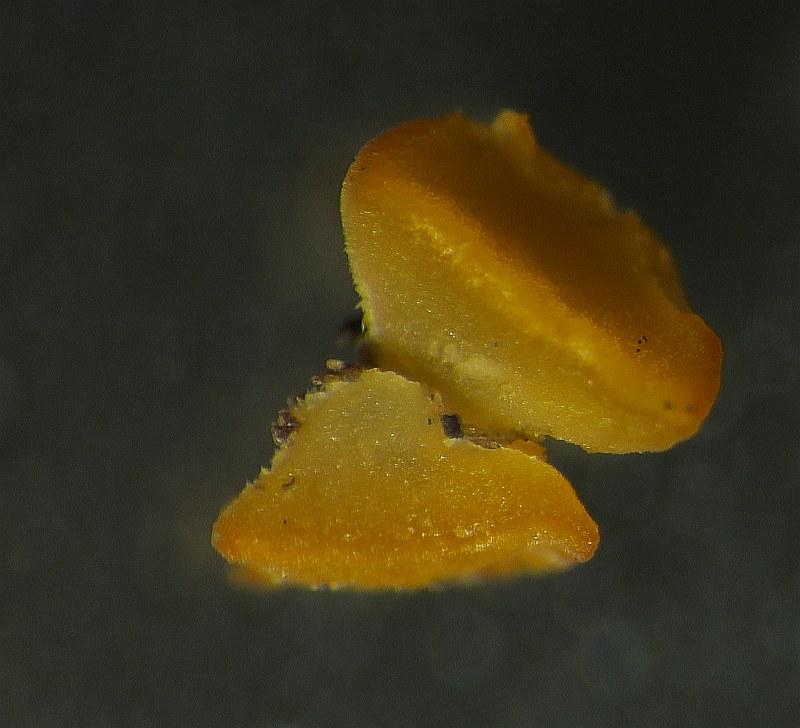
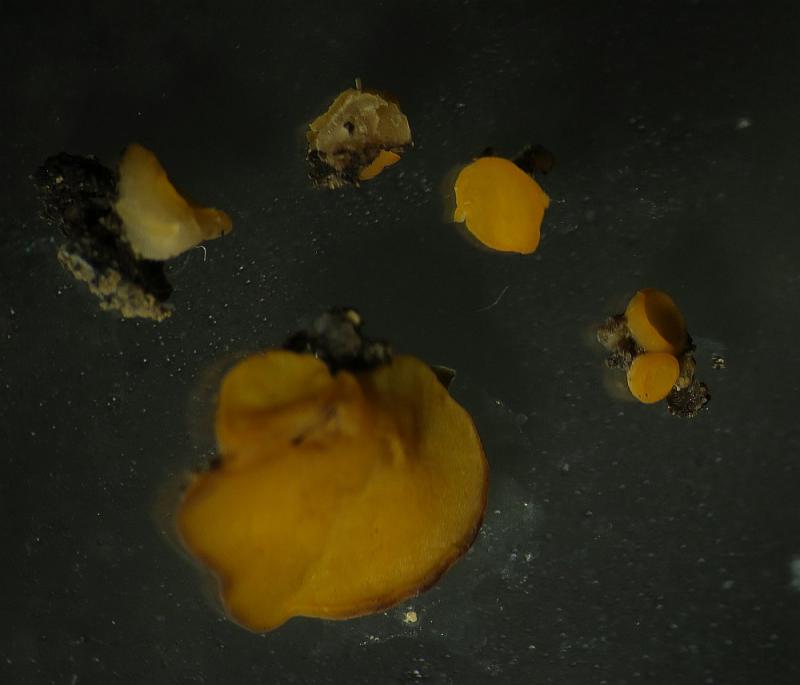
ID for this orange-amber cupulate Asco.
Stephen Martin Mifsud,
17-12-2016 21:59
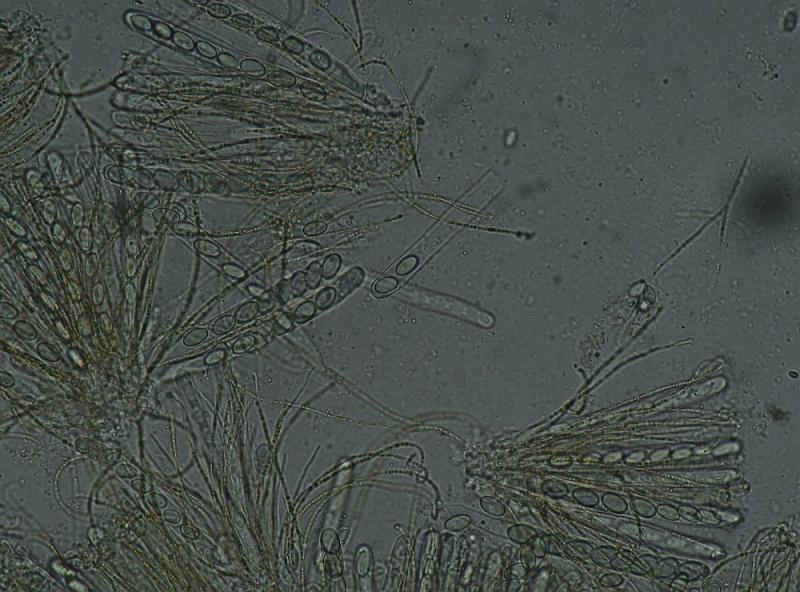
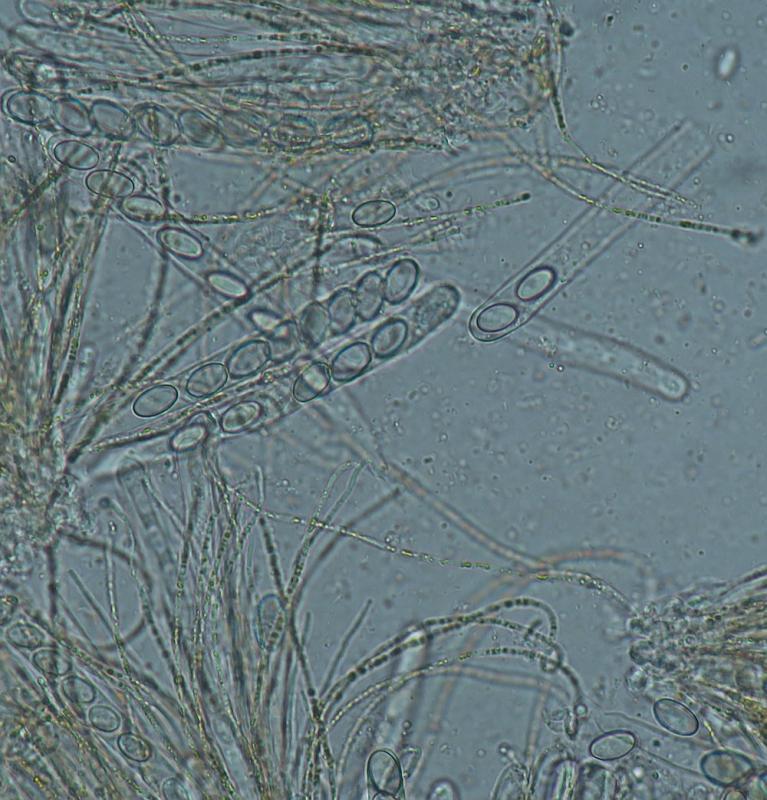
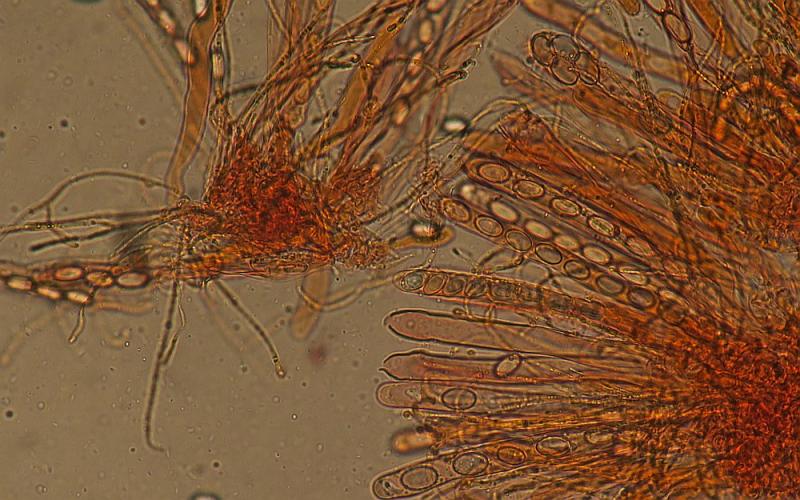
I've just collected the data and micrographs of another small, orange-yellow (quite dull) sessile (or very shortly stipitate) discoid ascomycete (Pezizales) which I would like to share in this forum for help. Spores without distinct oil bodies, ellipsoid, (9.1-)10.8 (-12.0) x (5.5-)6.5 (-7.1) um (Qe = 1.67x). Paraphyses threadlike 1-2um wide, sometime branching once into two branches, tips often curled not more than 3/4 of a loop. Asci J-ve.
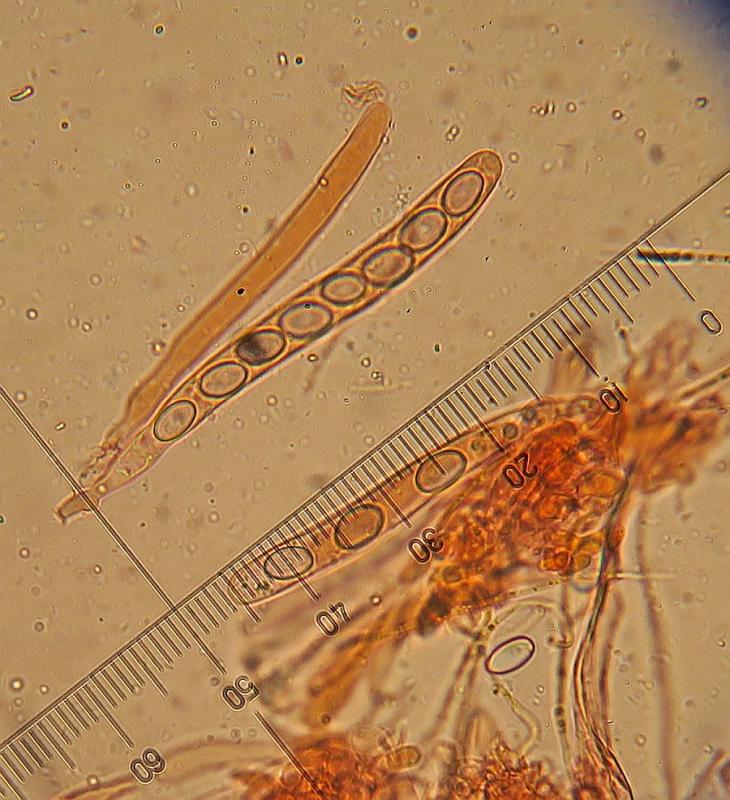
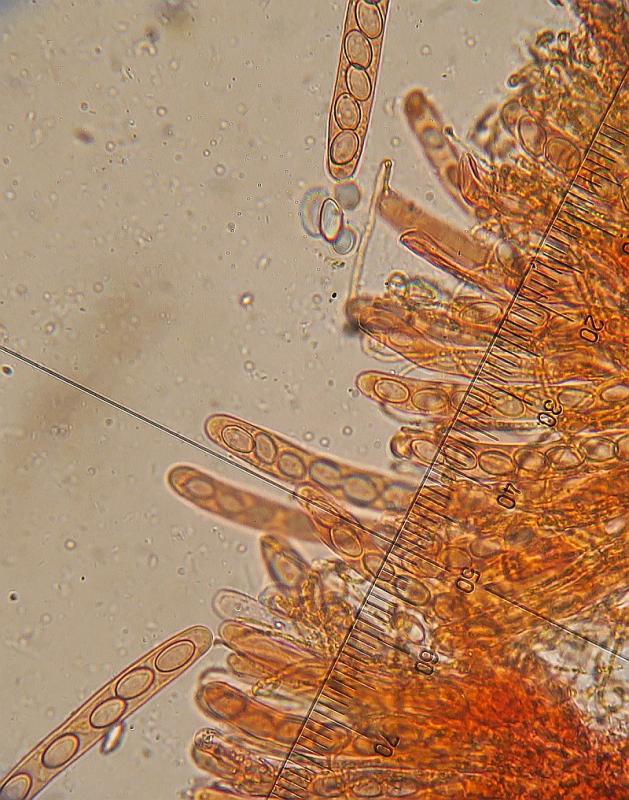
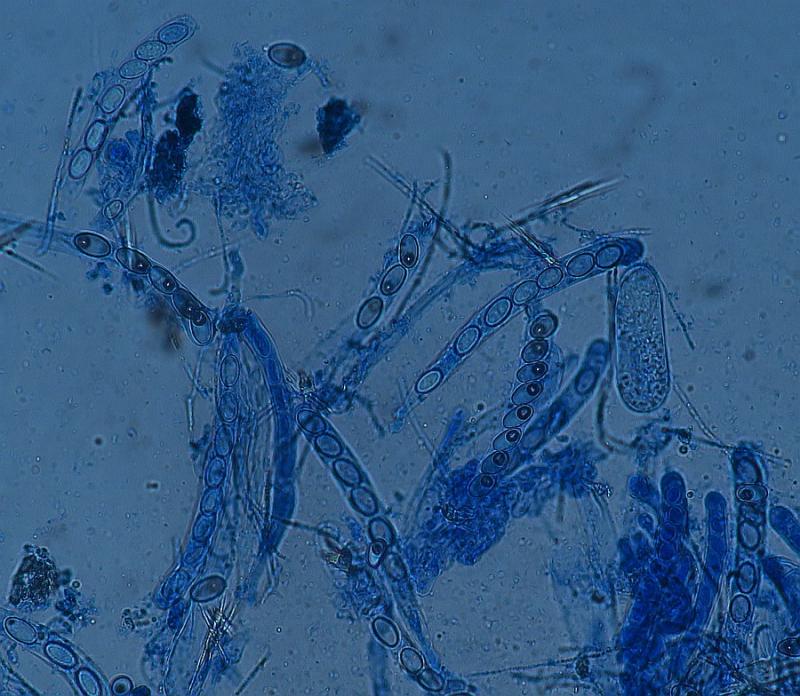
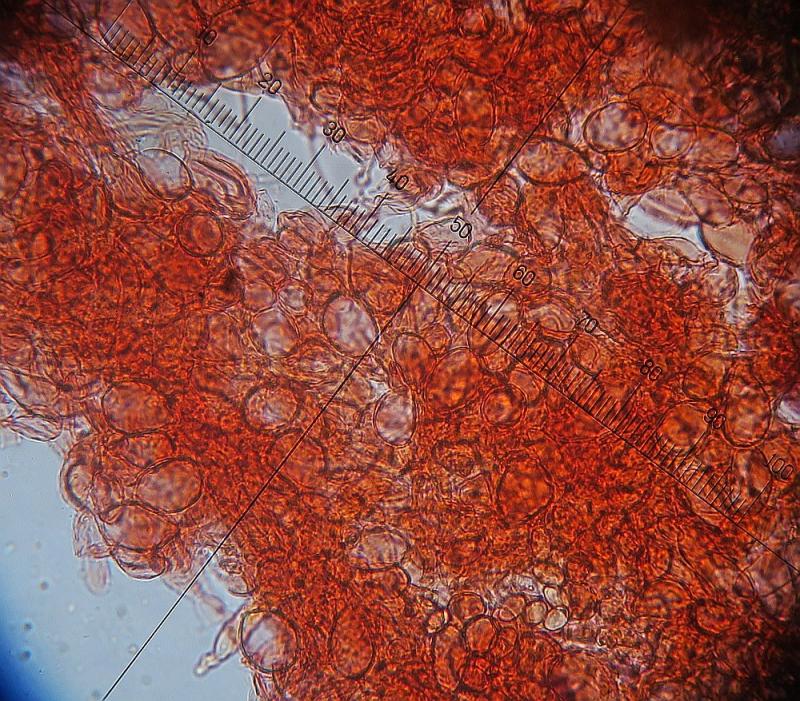
Uwe Lindemann,
17-12-2016 22:37

Re : Trying to ID this orange-amber cupulate Asco.
Hi Stephen,
it looks like a member of the Boubovia-Pulvinula group. Possibly Boubovia nicholsonii (Massee) Spooner & Y.J. Yao, see here http://www.asturnatura.com/fotografia/setas-hongos/boubovia-nicholsonii-massee-crossl-spooner-y-j-yao-1/17688.html
If you could send me a part of your collection I would be glad to study it.
Best, Uwe
it looks like a member of the Boubovia-Pulvinula group. Possibly Boubovia nicholsonii (Massee) Spooner & Y.J. Yao, see here http://www.asturnatura.com/fotografia/setas-hongos/boubovia-nicholsonii-massee-crossl-spooner-y-j-yao-1/17688.html
If you could send me a part of your collection I would be glad to study it.
Best, Uwe
Stephen Martin Mifsud,
17-12-2016 23:14
Re : Trying to ID this orange-amber cupulate Asco.
Dear Uwe,
I would be more than happy to submit a sample. I guess you need a fresh sample on some substrate in a closed container. Hope there's more left, but the current cold and rainy weather might repopulate more individuals. The habitata was quite artificial. It was some kind of animal bedding dumped on soil. The bedding consisted of wooden chips, gravel and possibly old excreta but not dung. It was lying on clayey calcareous soil.
I followed a key (American) and led me to the genus Byssonectria, which had Paraphyses also with curled tips, but the spores were too much fusifoem. Well, I will check in depth tomorrow morning Zzz....
http://www.discoverlife.org/mp/20q?search=Byssonectria
Send me your postal address through my email (check my profile!)
Interesting!
I would be more than happy to submit a sample. I guess you need a fresh sample on some substrate in a closed container. Hope there's more left, but the current cold and rainy weather might repopulate more individuals. The habitata was quite artificial. It was some kind of animal bedding dumped on soil. The bedding consisted of wooden chips, gravel and possibly old excreta but not dung. It was lying on clayey calcareous soil.
I followed a key (American) and led me to the genus Byssonectria, which had Paraphyses also with curled tips, but the spores were too much fusifoem. Well, I will check in depth tomorrow morning Zzz....
http://www.discoverlife.org/mp/20q?search=Byssonectria
Send me your postal address through my email (check my profile!)
Interesting!
Uwe Lindemann,
17-12-2016 23:24
Re : Trying to ID this orange-amber cupulate Asco.
I have already sent you an email with my address :-)
Best, Uwe
Best, Uwe
Stephen Martin Mifsud,
18-12-2016 08:55
Re : Trying to ID this orange-amber cupulate Asco.
I agree, it's more than likely Boubovia sp. (this genus not in the keys I used); not Byssonectria. It is a relatively new genus and from what I gather the paraphyses with blobby pigments and curled apices are imp. characters.
Hope to send you a sample soon
Hope to send you a sample soon