
11-05-2016 20:37
 Zuzana Sochorová (Egertová)
Hi,this very little ascomycete grew on soil in a m
08-05-2026 11:55
Gernot FriebesHi,found on a decorticated Picea abies branch stil

05-05-2026 22:40
Gernot FriebesHi,I believe this is a Plagiostoma growing on a Sa
06-05-2026 11:25
 Castillo Joseba
Me mandan el material seco de Galicia (España) re
06-05-2026 17:23
Thomas Læssøehttps://svampe.databasen.org/observations/10594257
28-04-2026 20:07
 Lothar Krieglsteiner
... on twig in the air at standing Ceratonia siliq
04-05-2026 18:13
 Stephen Martin Mifsud
ID request for what seems to be a true aquatic fun
04-05-2026 16:39
Stephen Martin Mifsud
ID request: This specimen was collected in Malta o
28-07-2011 18:31
 Alex Akulov
Dear FriendsToday I made the pdf file of Velenovsk
... found in the National Park Eifel, Germany.
The only thing I am sure of is it is not N. serpens, because the porus is blue in IKI.
I do not find striate spores - not chestersii
I do not find a (at least not conspicuous) germ slit - not aenea var. aenea
The flesh is not whitish - not aenea var. macrospora
too large, too many perithecia for confluens ...
So, where am I wrong? Can somebody provide a tip.
Best regards from Lothar
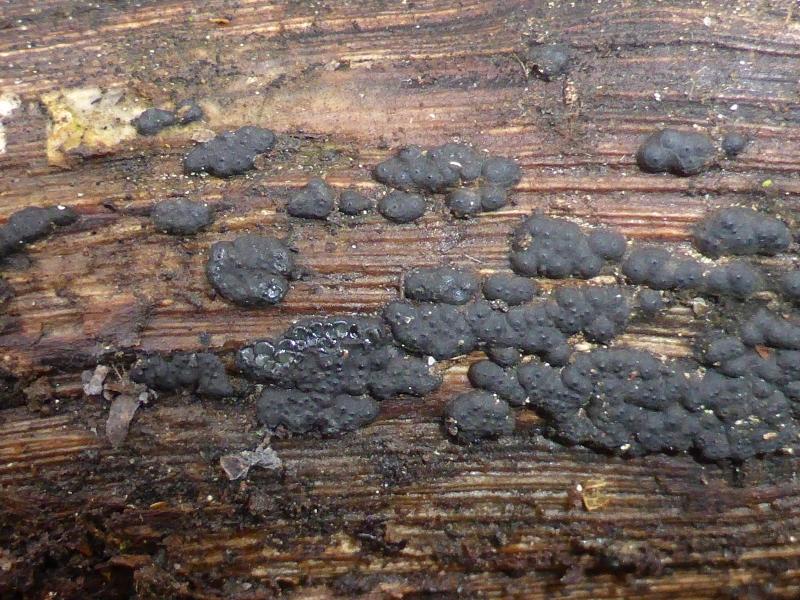
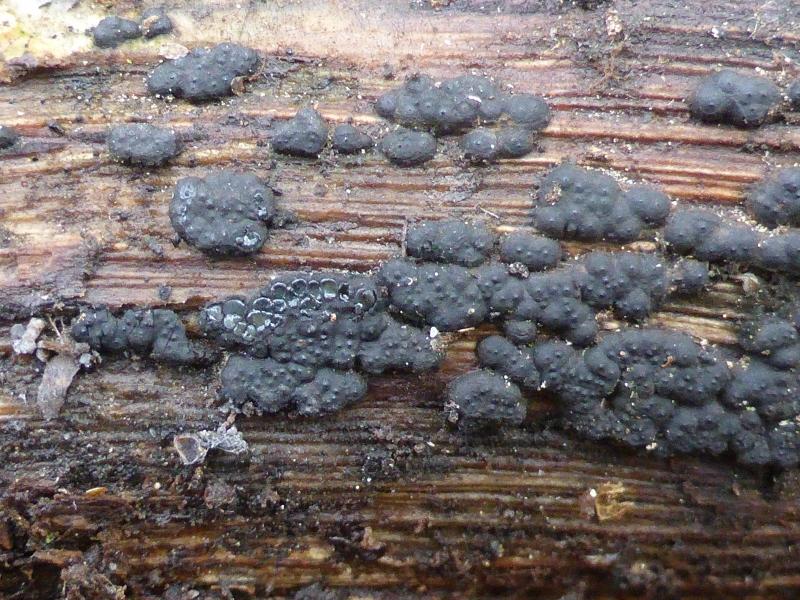
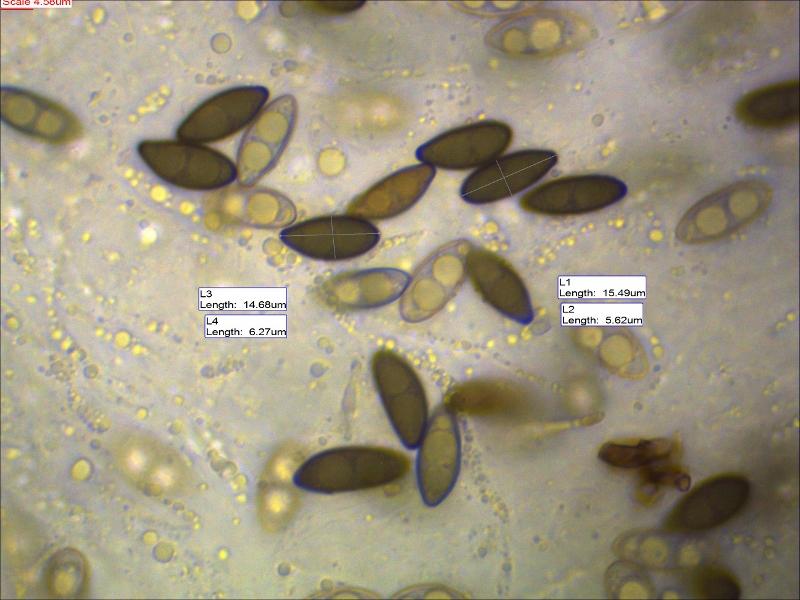
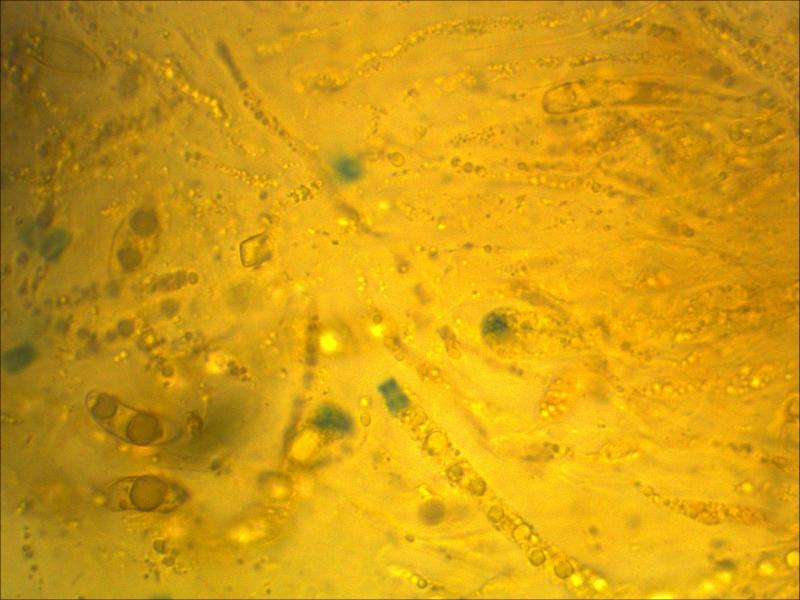
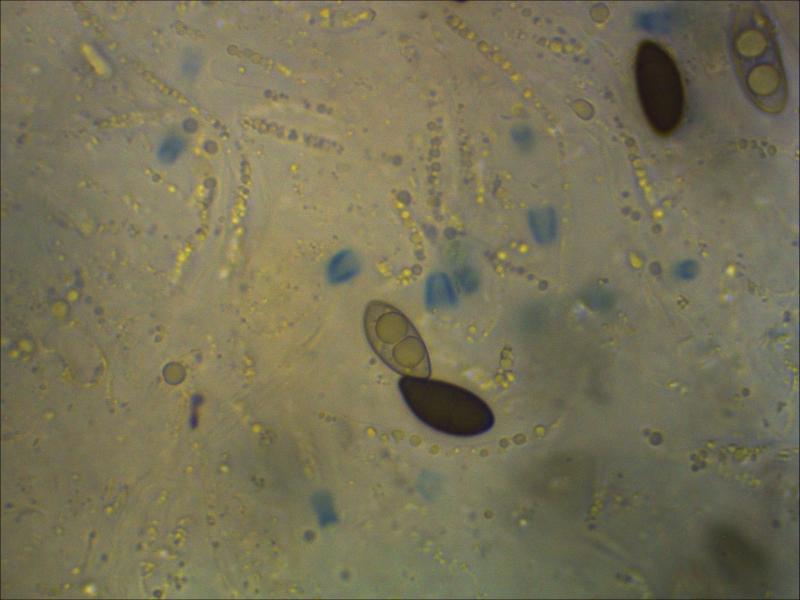
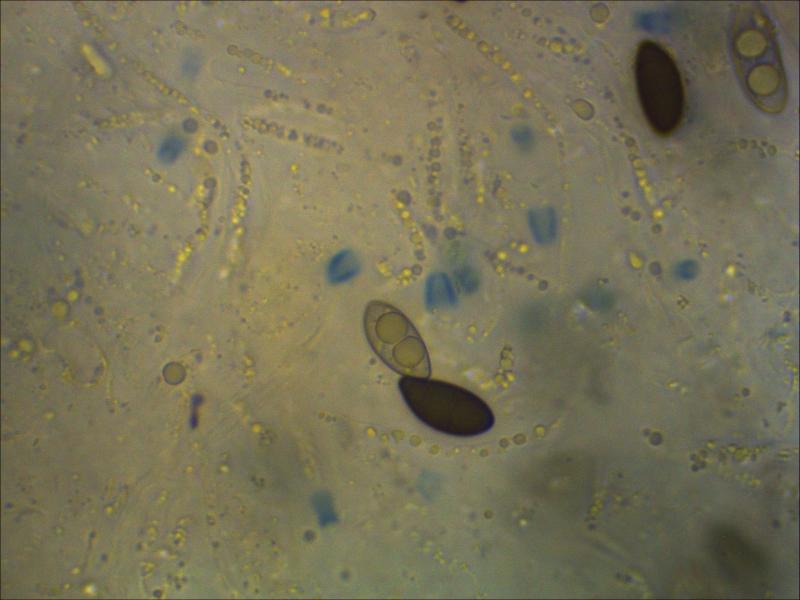
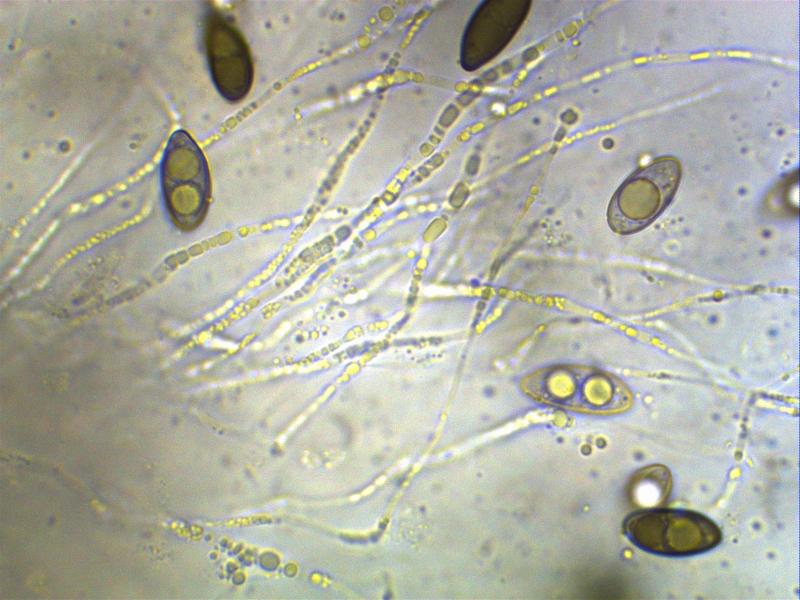
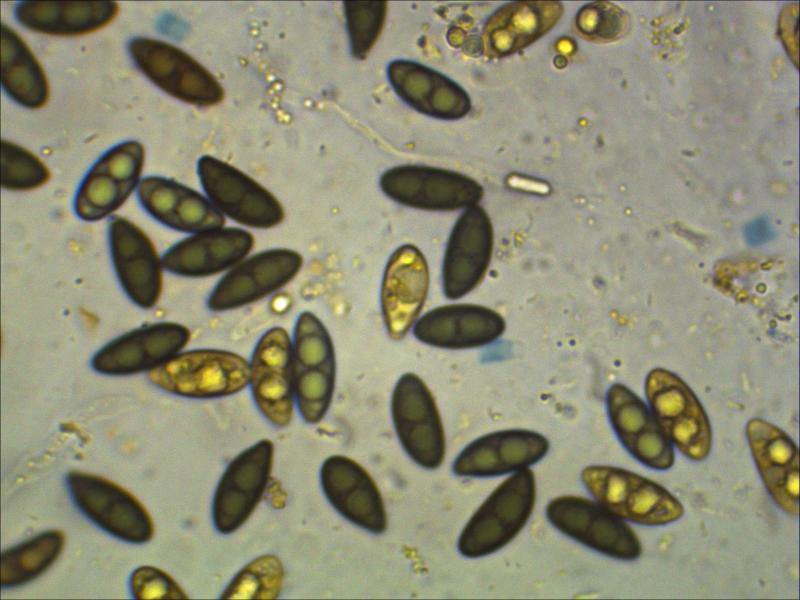
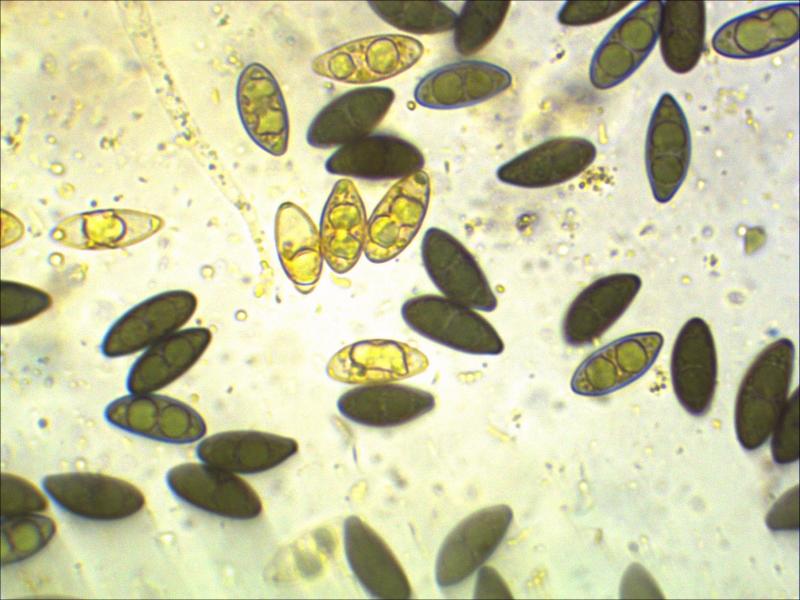
Did you consider N. serpens var. colliculosa which unlike N. serpens shows also a blue reaction? It has been raised to species level by Granmo et al. (1999) but this is not followed by many others (why not?). The only problem with this identification are the rather large ascospores of your collection judging from the measurements given in one of your pictures (typically 10-13,5 mu).
I found this species (or variation) in October last in the eastern part of the Netherlands (Winterswijk).
Eduard
Hi Eduard,
you are right - that was the mistake!
And the spores are a little bit large, but this is perhaps the minor problem ...
In http://pyrenomycetes.free.fr/nemania/keydir/dichotomickey.htm
I did not really consider the variety of serpens, because I thought it must have a red IKI-reaction like the typical form.
So - thank you vey much. I will deal with my specimen as Nemania (serpens var.) colliculosa now. I also doubt if something with hemiamyloid and with euamyloid asci should be considered the same species (???).
Best regards from Lothar