
25-03-2026 10:35
Hulda Caroline HolteHello,I collected this species growing on a dead b
24-03-2026 19:59
 William Slosse
Hello everyone,On 23/03/26, I found the following
21-03-2026 15:13
Lepista ZacariasHello everyone, Does any one know of any literatu
24-03-2026 21:37
Elisabeth StöckliBonsoir,Sur bois (tronc) très pourri de conifère
24-03-2026 21:07
Ethan CrensonHello all, A friend collected this asco in a wood
23-03-2026 20:16
 Miguel Ángel Ribes
Good eveningI'm unable to identify this Coprotus o
24-03-2026 15:44
Åge OterhalsI hope someone can confirm the name of this collec

20-10-2017 09:23
Garcia SusanaEste otro crecía en el mismo trocito de madera qu
Orbilia luteorubella
Joaquin Martin,
06-07-2016 18:30
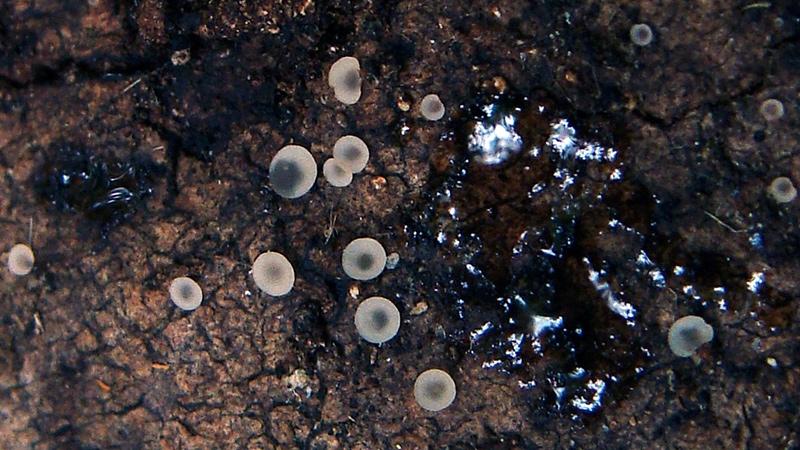
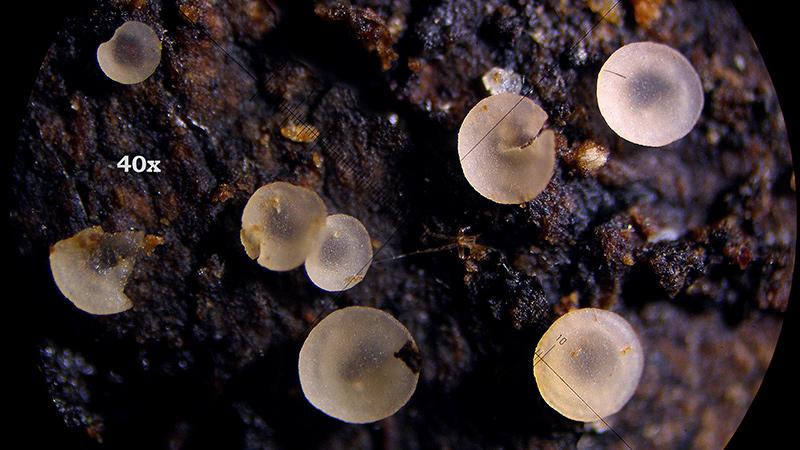
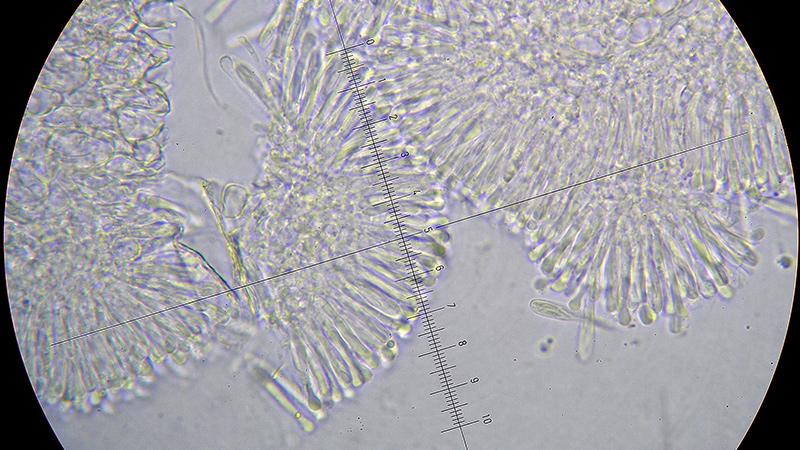
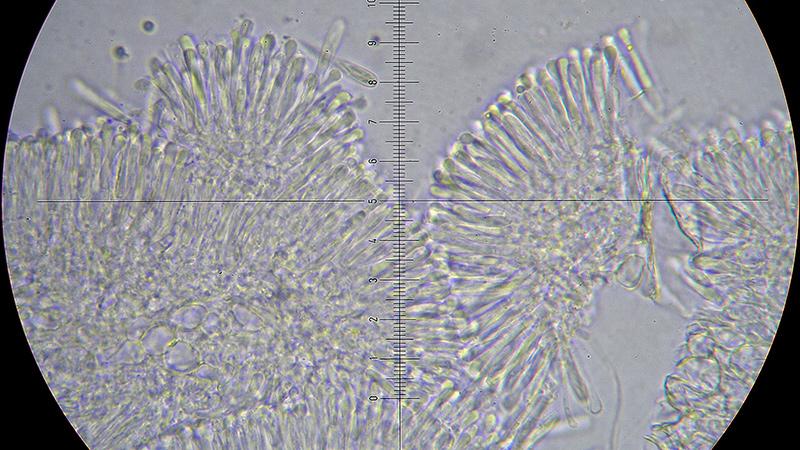
A friend has given me this Orbilia, it was found on bark of gimnosperma branch in riparian forest, likely Castanea sativa.
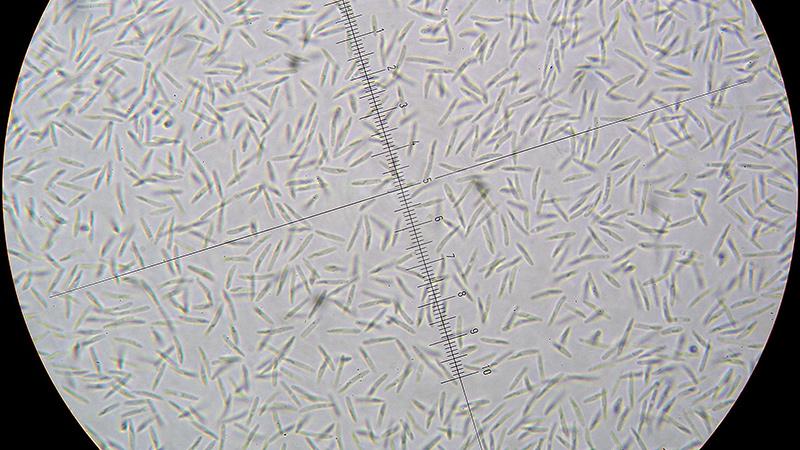
The measures of the spores are:
(6.7) 7.2 - 8.7 (9.9) × 0.8 - 1.1 (1.2) µm
Q = (5.8) 7.3 - 10.2 (10.7) ; N = 25
Me = 8.1 × 0.9 µm ; Qe = 8.7
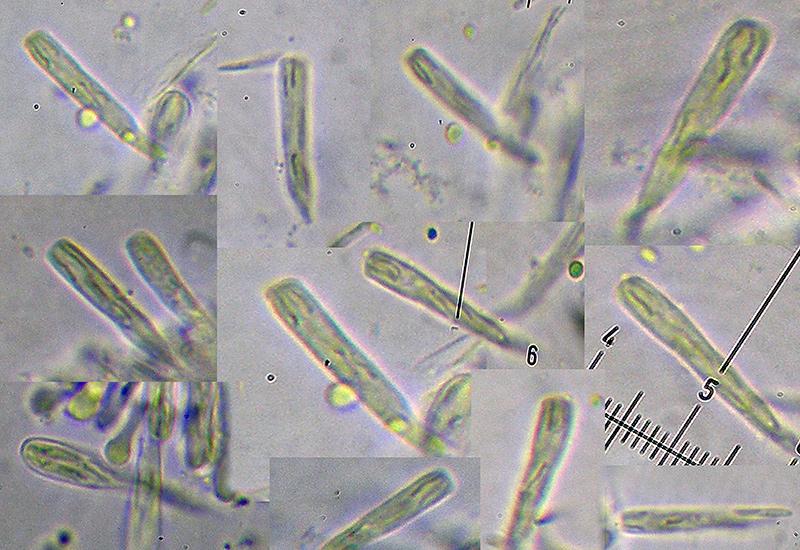
By the position of the spores in the asci I think Orbilia luteorubella.
Thanks.
Hans-Otto Baral,
06-07-2016 18:46

Re : Orbilia luteorubella
Yes, but I suppose O. rosea, which is very difficult to distinguish. But
- the apos are rose
- the soil ist perhaps acidic because of Castanea
- the water is running which is typical for Anguillospora-like anamorphs
O. luteorubella has a Helicoon which is more adapted to standing water.
If you get the collection data, please tell me. You could also send me the photos in higher resolution to better see the spores.
Zotto
- the apos are rose
- the soil ist perhaps acidic because of Castanea
- the water is running which is typical for Anguillospora-like anamorphs
O. luteorubella has a Helicoon which is more adapted to standing water.
If you get the collection data, please tell me. You could also send me the photos in higher resolution to better see the spores.
Zotto
Hans-Otto Baral,
06-07-2016 21:14
Re : Orbilia luteorubella
Thanks for sending pics in high resolution. Now I see clearer, but I overlooked the narrow spore width. This is neither of these species, but maybe the first record of Orbilia sinensis in Europe. For conformation this sample should be sequenced. The anamorph is expected to have completely different conidia, 1-celled, pyramidal with protuberances. But it was never observed on the substrate, always only in culture. Collections are known from USA and mainly China/Japan.
I suggest to send me the sample in air-dry state, and I will forward it.
Zotto
P.S. I must correct: Enrique (6143) made a collection in 2014 in Asturias. I commented as follows: A collection from Spain would represent the only European record of this species complex, but it is not included in the description because the spores are at the upper end of the range (*8.5–11.5 × 1–1.2 µm), also the apothecia were associated with anguillospora-like conidia.
I suggest to send me the sample in air-dry state, and I will forward it.
Zotto
P.S. I must correct: Enrique (6143) made a collection in 2014 in Asturias. I commented as follows: A collection from Spain would represent the only European record of this species complex, but it is not included in the description because the spores are at the upper end of the range (*8.5–11.5 × 1–1.2 µm), also the apothecia were associated with anguillospora-like conidia.