
25-03-2026 20:53
François BartholomeeusenDear forum members,On 23 March 2026, I found sever
23-03-2026 20:16
 Miguel Ángel Ribes
Good eveningI'm unable to identify this Coprotus o
24-03-2026 15:44
Åge OterhalsI hope someone can confirm the name of this collec
25-03-2026 15:06
 Bernard CLESSE
Bonjour à toutes et tous,Pourriez-vous me confirm
25-03-2026 10:35
Hulda Caroline HolteHello,I collected this species growing on a dead b
25-03-2026 13:54
 Enrique Rubio
Does anyone know where I could download Paoletti's
25-03-2026 15:46
 Michel Hairaud
Bonjour, Je sollicite de l'aide pour cette récol
24-03-2026 19:59
 William Slosse
Hello everyone,On 23/03/26, I found the following
21-03-2026 15:13
Lepista ZacariasHello everyone, Does any one know of any literatu
24-03-2026 21:37
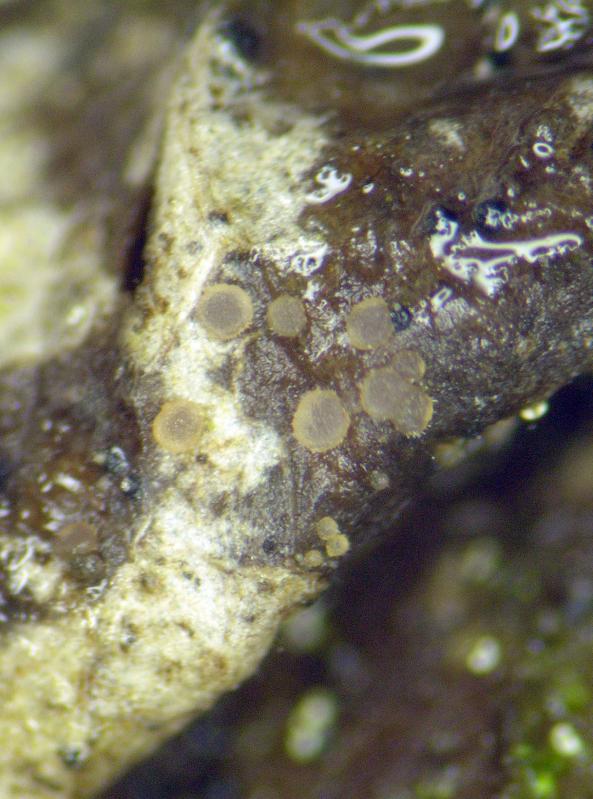
Elisabeth StöckliBonsoir,Sur bois (tronc) très pourri de conifère
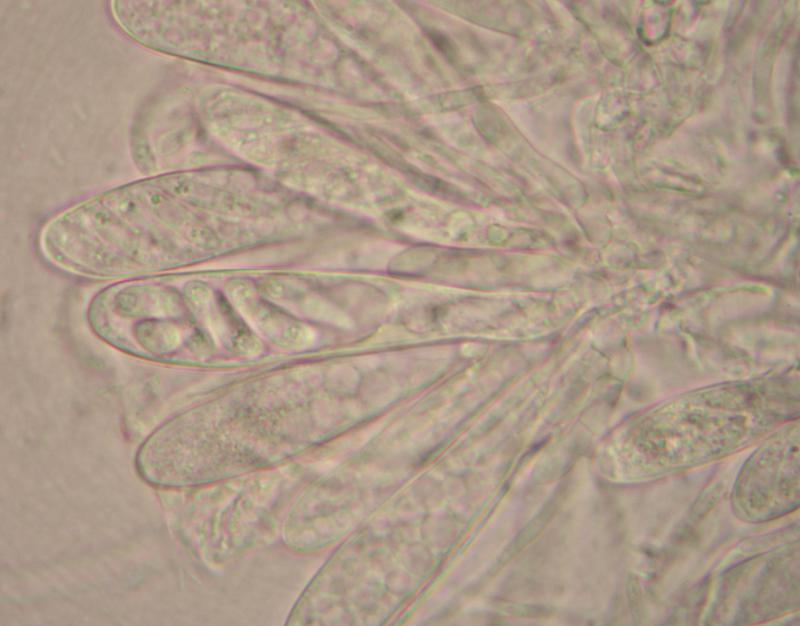
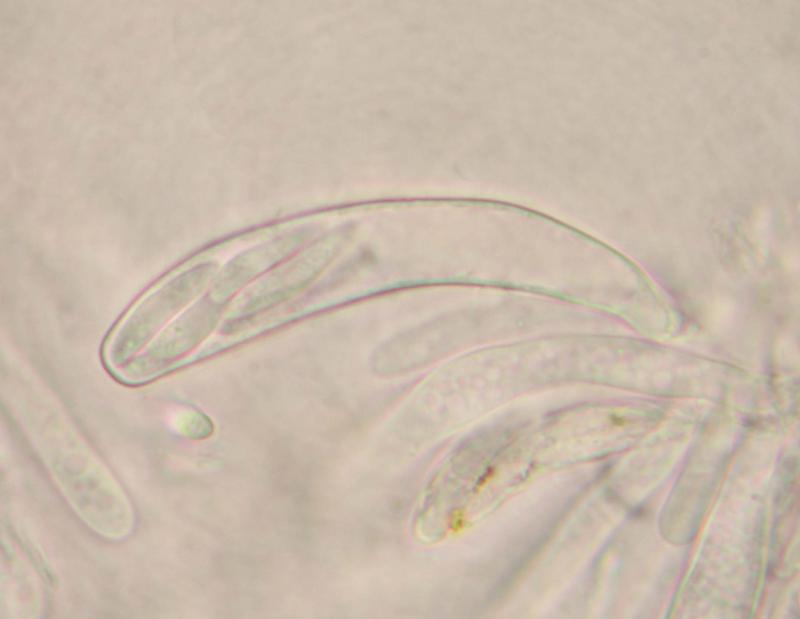
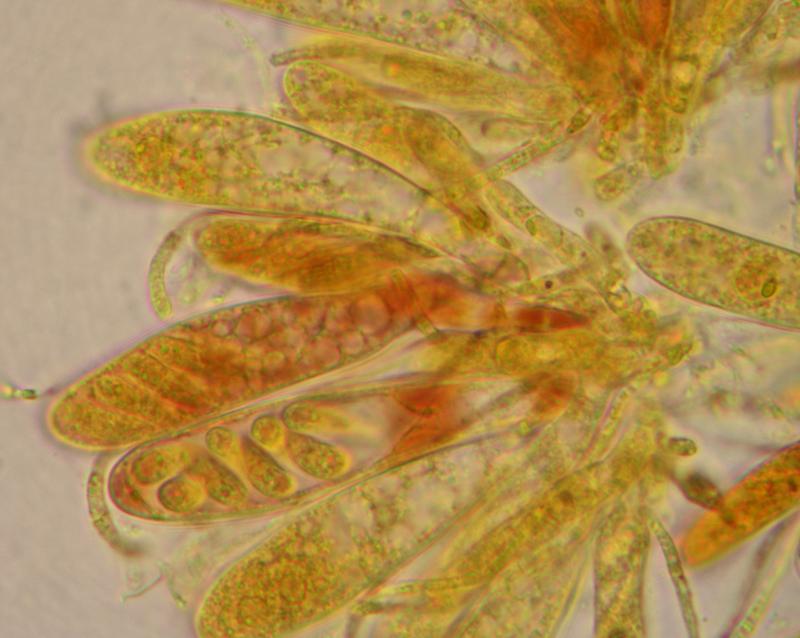
Trouvé au sol, sur feuilles de plante inconnue, apothécies sessiles, 0.15-0.2mm, surface externe couverte de poils, asques 55-62 9-11µm, octosporés, IKI-, spores 13-16x2.6-3µm, paraphyses simples 2-2.5µm, poils réfringents.
Merci d'avance pour votre aide.
Elisabeth
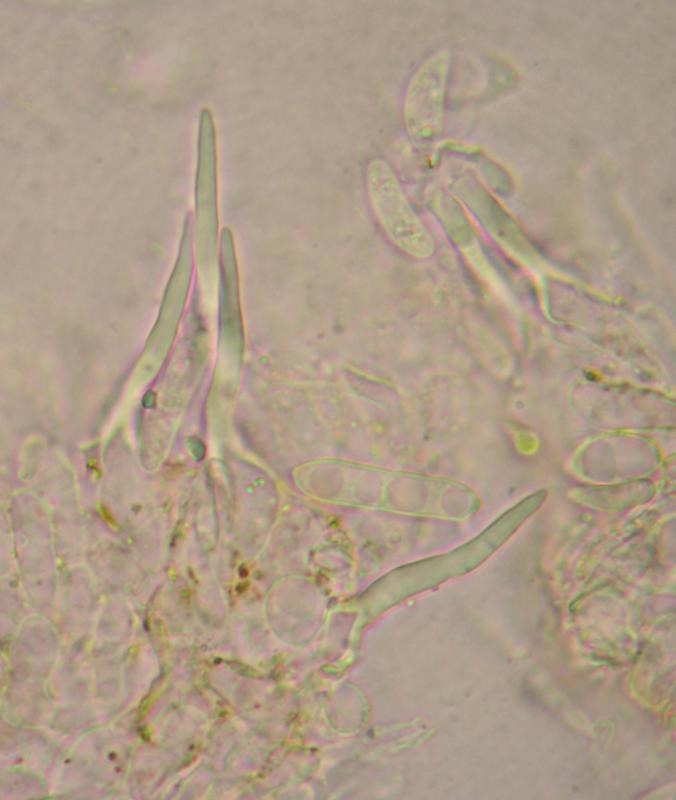
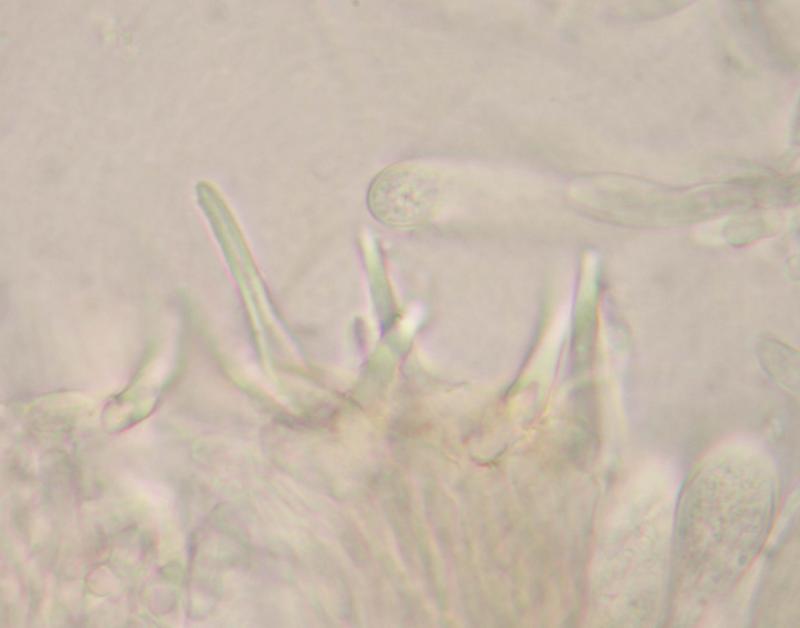

-Does the glassy substance of the hars disappear in 5-10% KOH? I assume so, at least when shortly heated over a flame.
-Is the ascus apex thick-walled in the dead state?
-No free spores seen and measured?
I am sure you used Lugol, because there are two similar species, Naevia diaphana and Hyalopeziza raripila, which both have a hemiamyloid (pure red) apical ring, though sometimes almost negative.
Zotto
Ascusspitze mit IkI rot (schwach und nicht alle), mit KOH+IKI blau, Haare KOH 3% keine Reaktion, also H. raripila.
Elisabeth
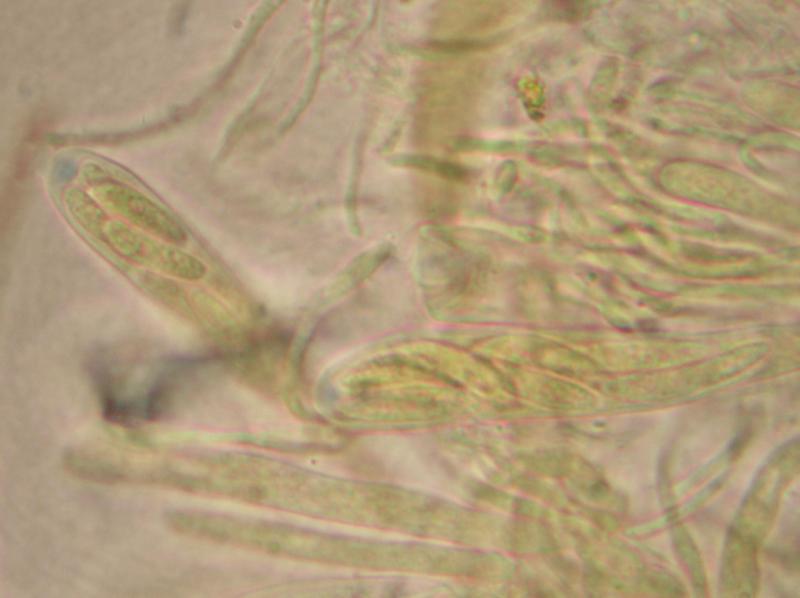
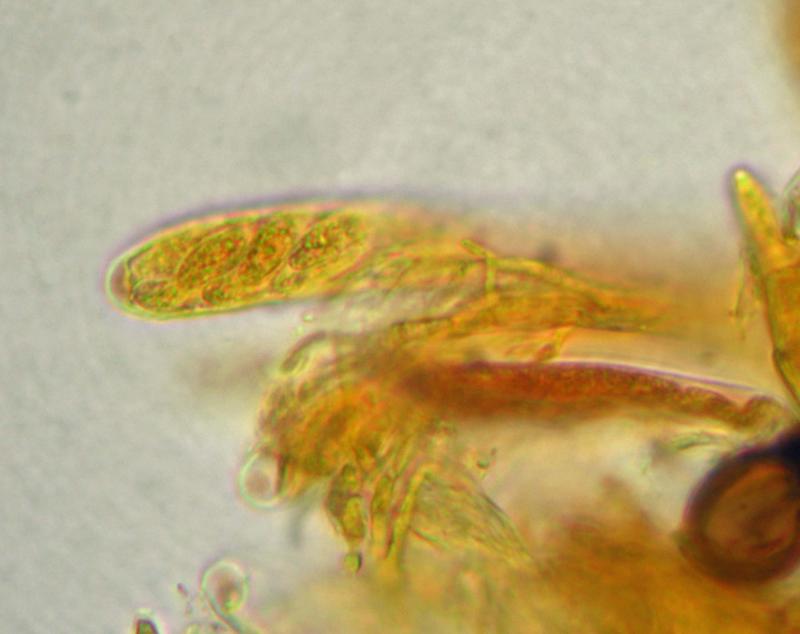
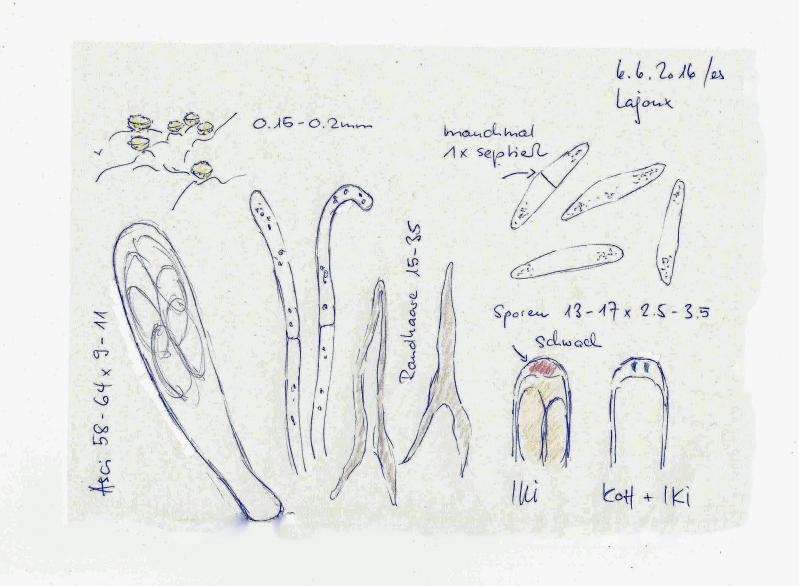
Diese Art und die diaphana stehen auf meiner Wunschliste ganz oben, was Sequenzierung anbelangt. Es ist nämlich nicht klar, ob die zu den Hyaloscyphaceen oder den Naevioideen gehören, oder sonstwo hin.
Vermutlich hast du den Pilz getrocknet. Ich vermute sehr, dass Timo Kosonen großes Interesse hätte. Glashaarpilze sind ja das Steckenpferd von Seppo Huhtinen. Ich kann ja mal fragen, ob sie so eine Art schon hatten.
Viele Grüße
Zotto