10-05-2026 09:02
Buckwheat PeteHello everybody, ould this be Lachnum subvirgineu
08-05-2026 11:55
Gernot FriebesHi,found on a decorticated Picea abies branch stil
11-05-2016 20:37
 Zuzana Sochorová (Egertová)
Hi,this very little ascomycete grew on soil in a m
09-05-2026 07:37
Zuzana Sochorová (Egertová)
Hello,please, could anyone share this paper?Ferná

05-05-2026 22:40
Gernot FriebesHi,I believe this is a Plagiostoma growing on a Sa
06-05-2026 11:25
 Castillo Joseba
Me mandan el material seco de Galicia (España) re
06-05-2026 17:23
Thomas Læssøehttps://svampe.databasen.org/observations/10594257
28-04-2026 20:07
 Lothar Krieglsteiner
... on twig in the air at standing Ceratonia siliq
04-05-2026 18:13
 Stephen Martin Mifsud
ID request for what seems to be a true aquatic fun
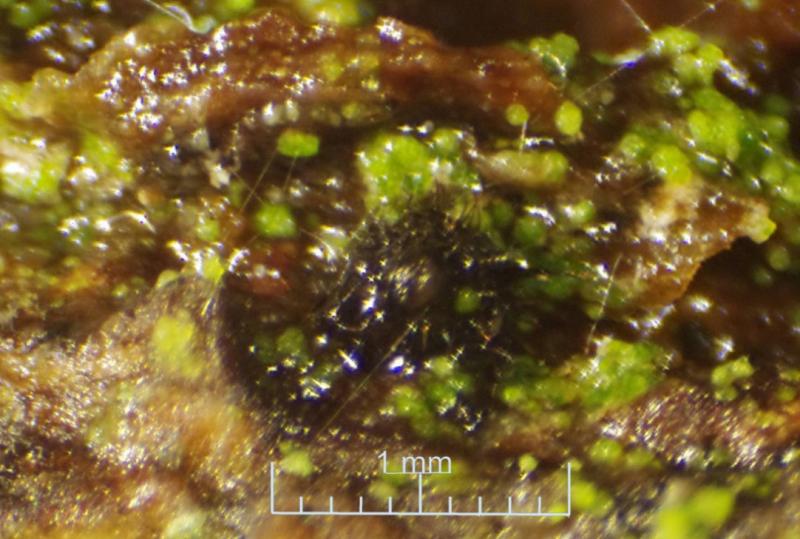
This ascomycete is grown in moist chamber on bark of Ulmus glabra, (only 3 ascomata).
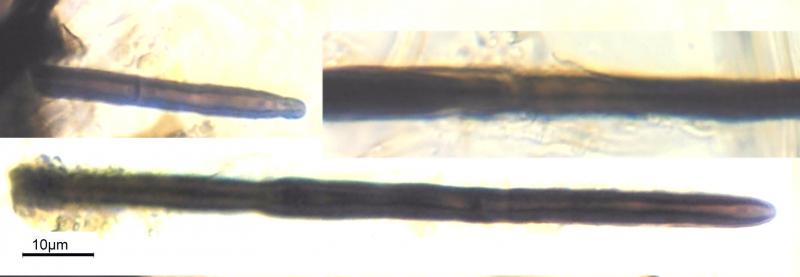
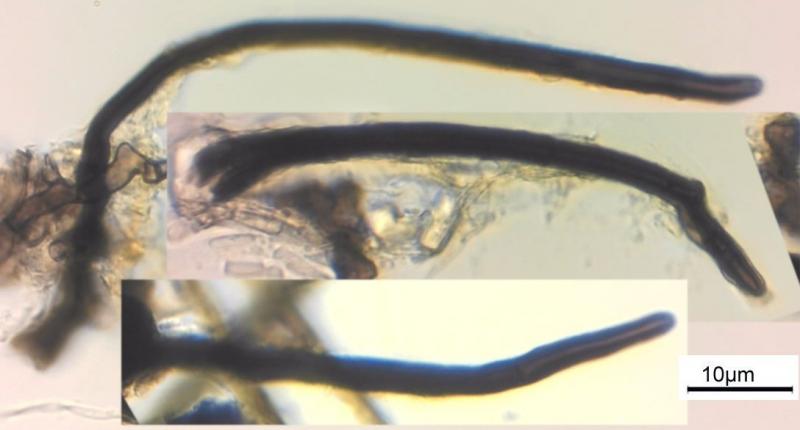
Ascomata ca 500X500µm + neck 200µm, with hypha and some thick walled septate setae 120x8µm (N4).
Asci: ca 120x20µm (N5)
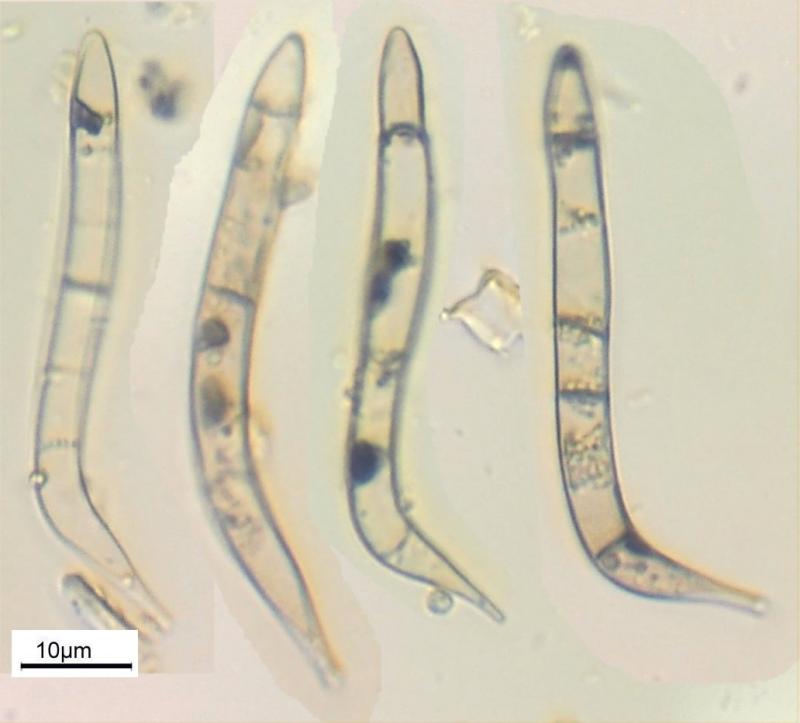
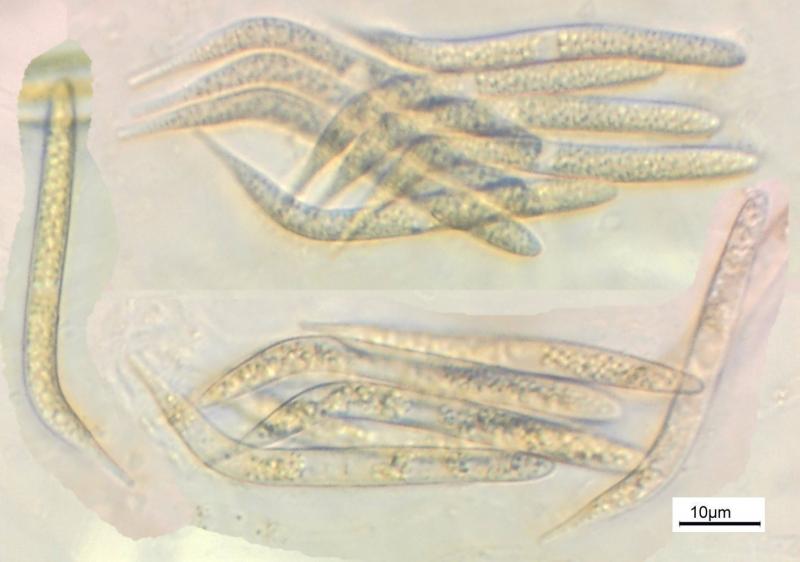
Ascospores (49.8) 51.9 - 58.5 (64) × (3.3) 3.7 - 4.7 (5.2) µm, Q = (10.9) 11.6 - 14.8 (16) ; N = 30, Me = 55.3 × 4.3 µm ; Qe = 13.1
I think it is a Hilberina and have read Miller's et al paper here on the forum http://www.ascofrance.fr/search_forum/29631, but can't find any that fits........
Thank you for any comment
Regards
Per
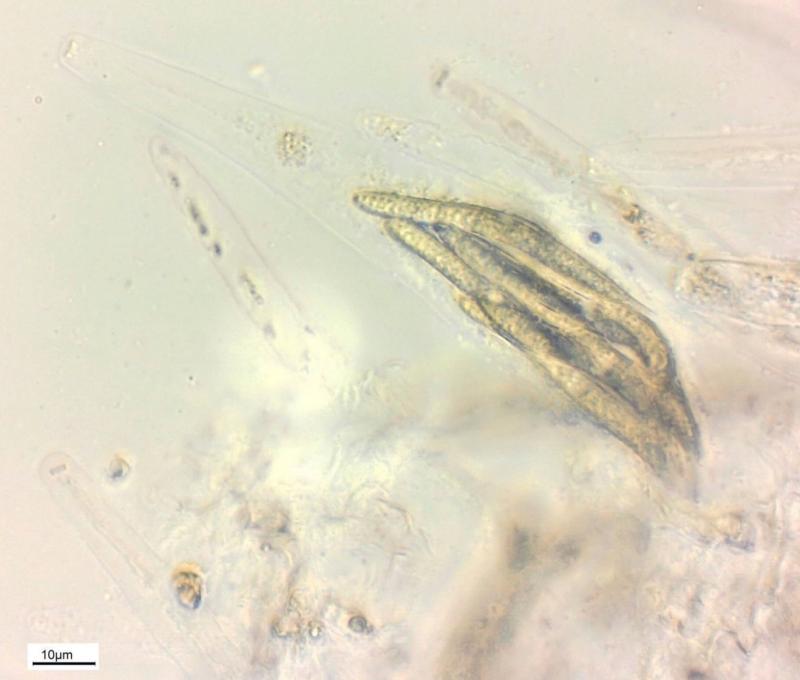
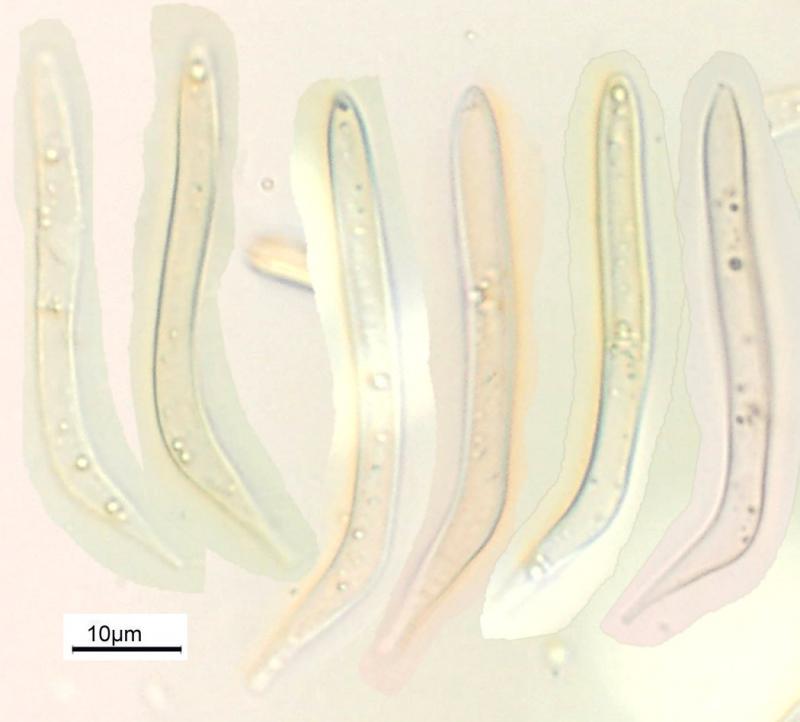
following the key in Candoussau, Fournier & Magni (Mycotaxon 80:201 ff./2001) this looks just like Hilberina rufa, a species described in that paper. But I've never seen this one myself. So let's wait for Jacques ...
Regards,
Klaus
thank you for responding.
Yes, I agree it looks like H rufa and comes out as that in the key you mention. But I don't see that the color of the setae, the neck and arrangement of the spores in the ascus fits the description very well. The spores are not septate, but they may be too young?
I have very little experience with this genera (and ascoes) and do not know how much the color etc can vary within a species.
Regards
Per

it does not indeed evokes H. rufa which has rust brown stiff hairs and not such a neck, but growth in a moist chamber may alter some characters.
These fungi must be characterized based on a set of characters including wall, ostiole and setae anatomy, dimensions of perithecia and ascus morphology, not only ascospore morphology. It is anyway a complex group in which many new species are likely to be discovered.
Cheers,
Jacques
Thank you very much for explaining about this genera and how difficult it is to identify the species. I do not have the equipment and skill to study it in such details. It will be mentioned in a paper I'm writing about Fungi and Myxcetozoa i Rotlia naturreservat as Hilberina sp.
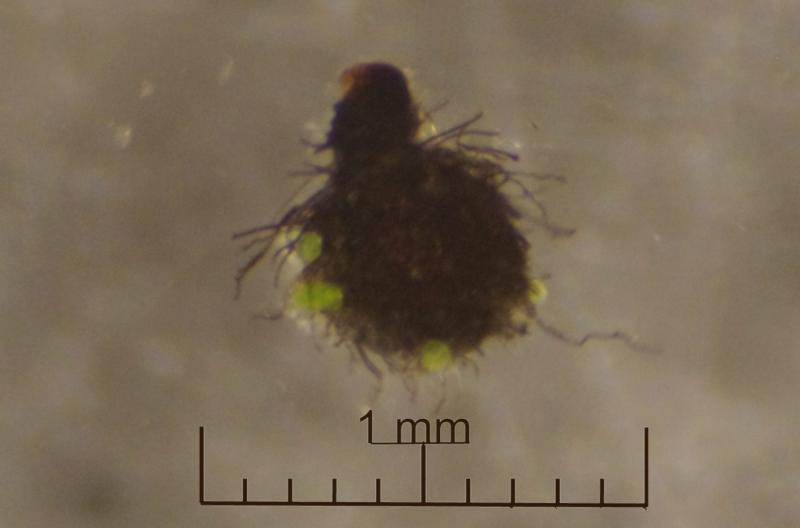
Anyway I found an old dead (empty) perithecia on the bark today and it must have been there before I put it in the moist box 3 weeks ago. It has exactly the same shape as the other one, see photo.
I looked a bit more at the setae; some of them measured 250µm, they are septate close to the base, and the opening inside (lumen?) is very narrow (0.7) 1.1 - 2.4 (3.8) µm, N = 24, Me = 1.7 µm.
And I found 11 spores and most of them where septate.
Regards
Per