
08-05-2026 11:55
Gernot FriebesHi,found on a decorticated Picea abies branch stil

05-05-2026 22:40
Gernot FriebesHi,I believe this is a Plagiostoma growing on a Sa
06-05-2026 11:25
 Castillo Joseba
Me mandan el material seco de Galicia (España) re
06-05-2026 17:23
Thomas Læssøehttps://svampe.databasen.org/observations/10594257
28-04-2026 20:07
 Lothar Krieglsteiner
... on twig in the air at standing Ceratonia siliq
04-05-2026 18:13
 Stephen Martin Mifsud
ID request for what seems to be a true aquatic fun
04-05-2026 16:39
Stephen Martin Mifsud
ID request: This specimen was collected in Malta o
28-07-2011 18:31
 Alex Akulov
Dear FriendsToday I made the pdf file of Velenovsk
04-05-2026 09:50
Castillo Joseba
Me mandan el material seco de Galicia,(España) re
 A bit lost with these bald-ones.
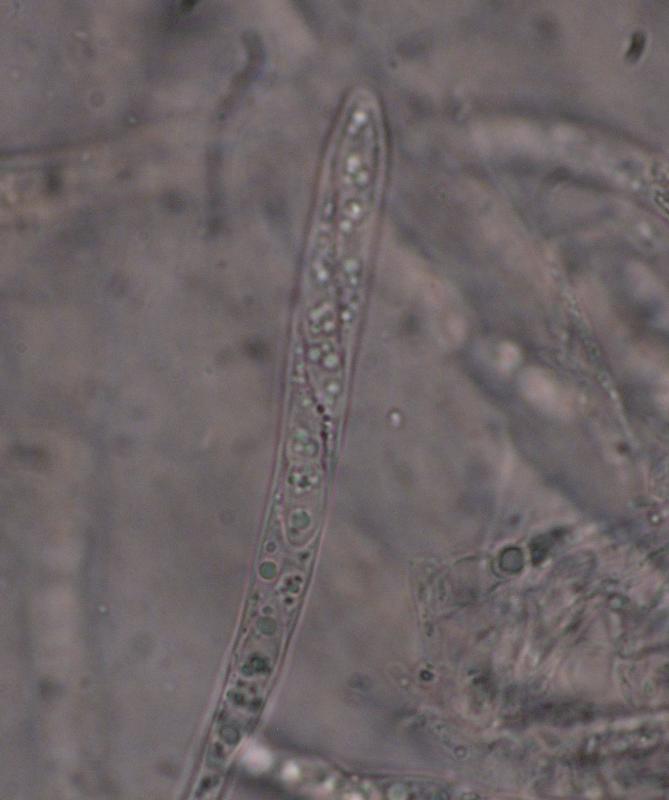
Spores +- fusoid, with prominent septa already in ascus. Often constricted at septa. Mature spores with 1-3 septa. Large vacuoles. Spores often disintegrate in two (after some physical pressure). Size 15-22 x 3-5(6) um.
Paraphyses cylindrical, with large refractive vacuole in the upper part.
Asci often over 100 um in length, apical part blue in MLZ. Croziers not observed.
On dead Betula in southern Finland. A fresh and "good-looking" specimen.
Feel free.
Timo
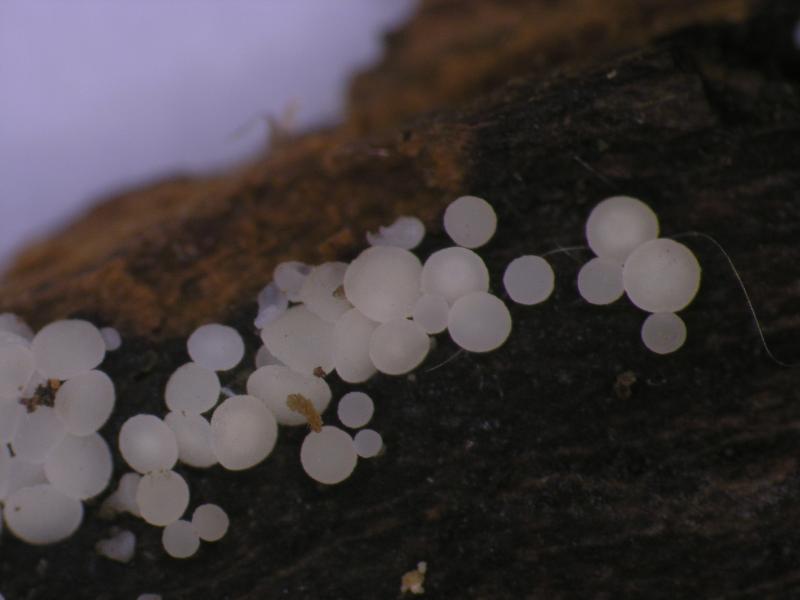
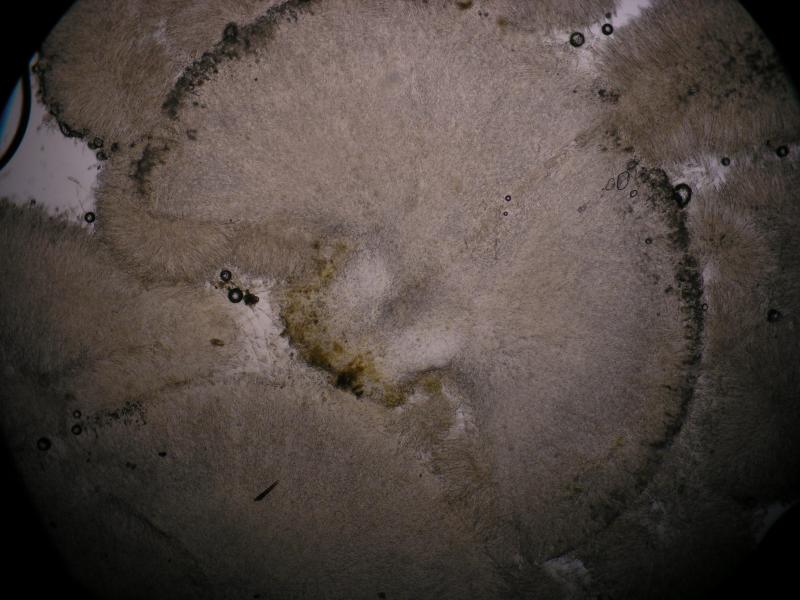
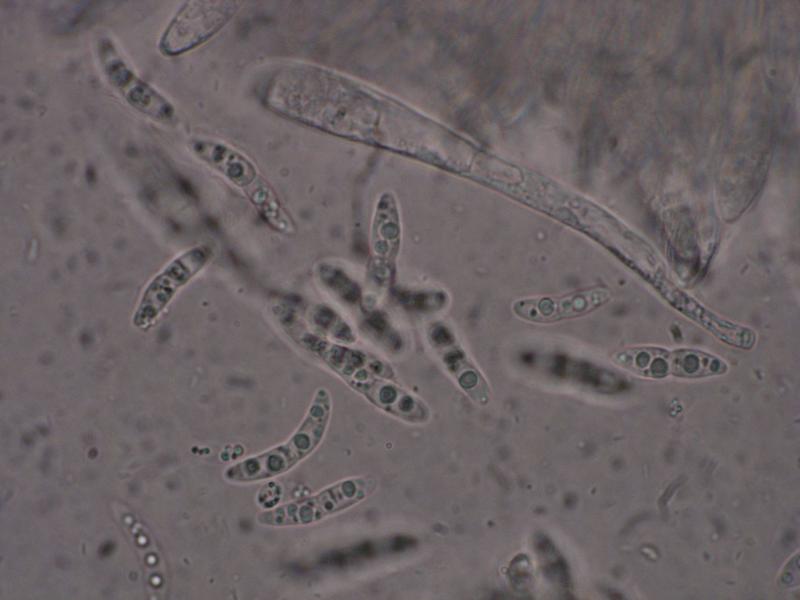
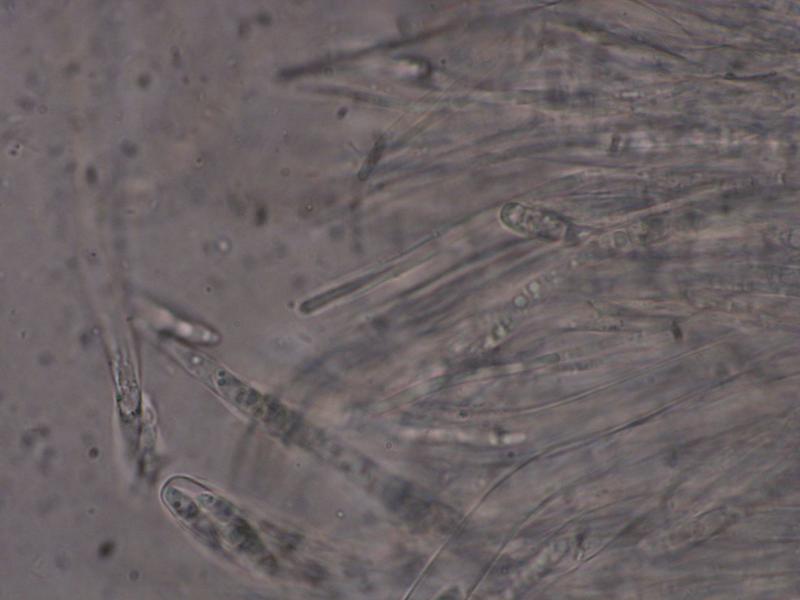
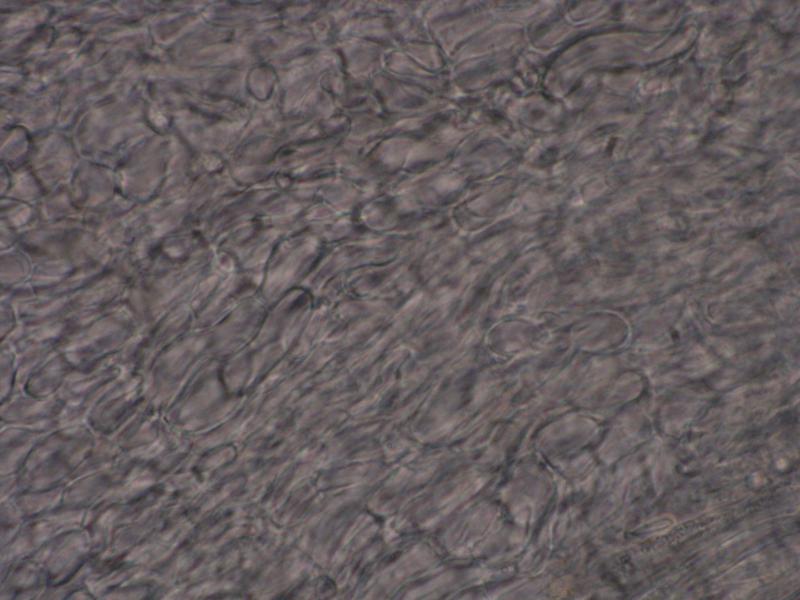

do you haver a photo of the blue apical ring? I am not sure whether to put this alternatively in Calycina. You have nice living asci, is there also a photo where spore septation is visible inside of them?
Zotto
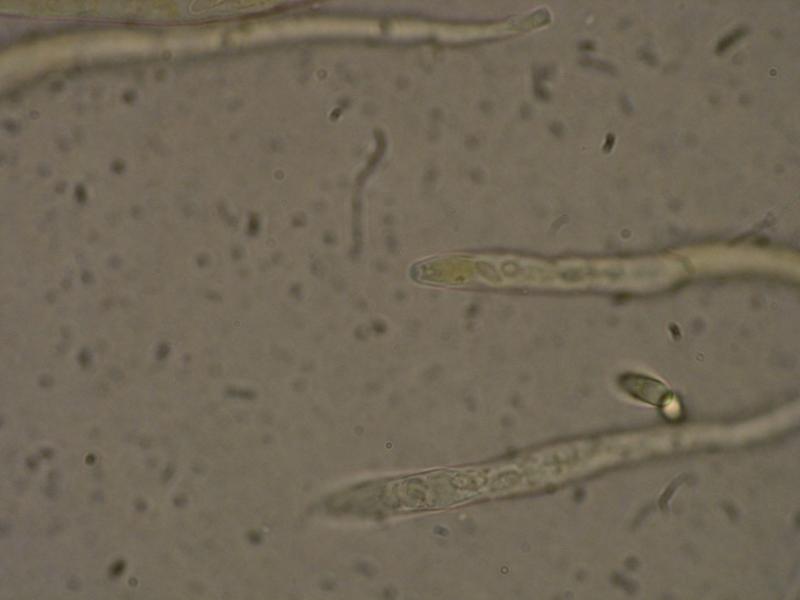
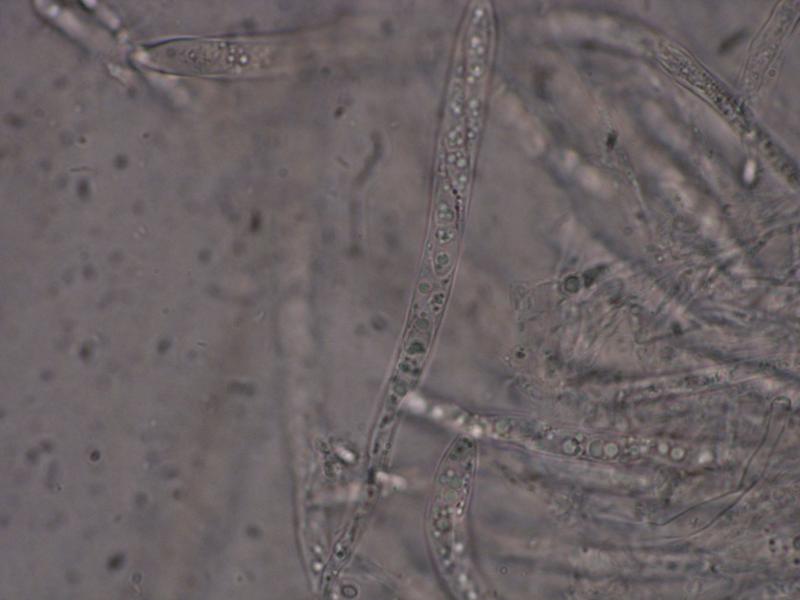
I guess the ring is of the Calycina type, so it isn't a Hymenoscyphus.
"Inside asci" is not enough, it is important to look the spores inside living asci. You have a turgescent ascus on your photo but cut away... Hymenoscyphus ejects always non-septate spores, calycina often 1-septate.
T
Hi Timo,
"the thing" is different if you use Melzer or Lugol (alternatively Barals solution).
Melzer contains chloral hydrate and kills the cells. The hemiamyloid reaction that is a vital reaction is suppressed by Melzer. So you should use only IKI (Lugol, Barals solution) and no Melzer.
Regards from Lothar
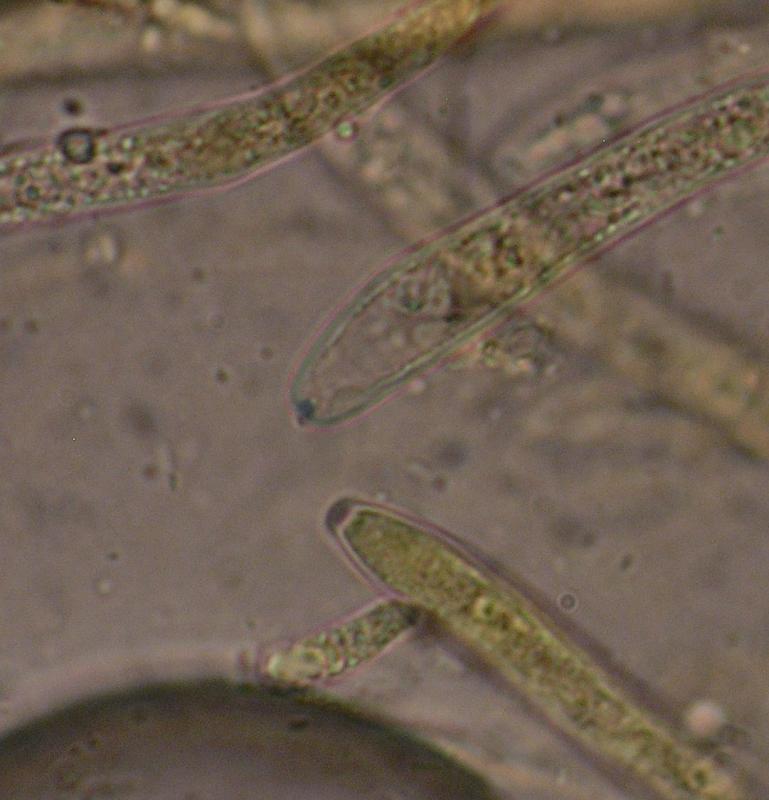
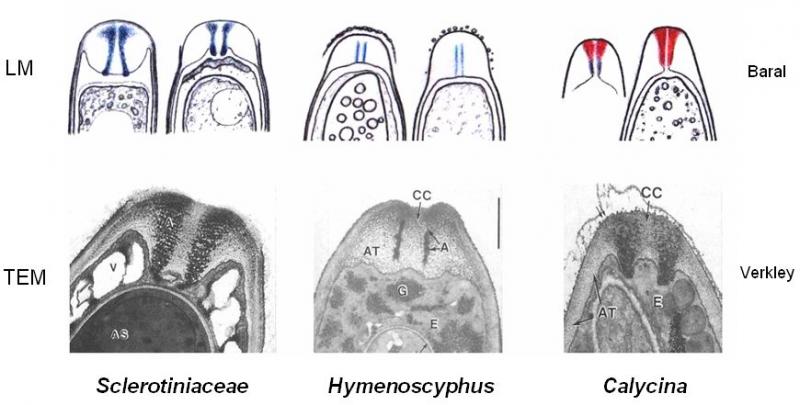
The differences are illustrated below. Surely they are not always as different as there, and both red and blue reactions occur in all these groups.
So we must search in the genus Calycina.
Specimen is still alive and kicking,
Timo