
02-06-2026 14:33
 Nicolas VAN VOOREN
Hello.I'm searching for a PDF copy of the followin
02-06-2026 17:58
Louis DENYBonjour forum, Sur feuille de Populus tremula, en

28-07-2011 18:31
 Alex Akulov
Dear FriendsToday I made the pdf file of Velenovsk
11-09-2025 16:57
 Jason Karakehian
Our revision of Marthamycetales (Leotiomycetes) is
12-11-2019 10:32
 Miguel Ángel Ribes
Hi againExactly at the same place than my previous
25-12-2019 17:54
Valencia Lopez Francisco JavierHola a todos/asEstas supuestas pezizas estaban en
12-07-2015 00:05
 Nedim Jukic
This one from the same locality as the previous on

30-05-2026 21:12
Philippe PELLICIERSur branche de mélèze (Larix) près de la neige,
Coniochaeta ligniaria?
Chris Johnson,
05-03-2015 13:07
Found on pony dung.
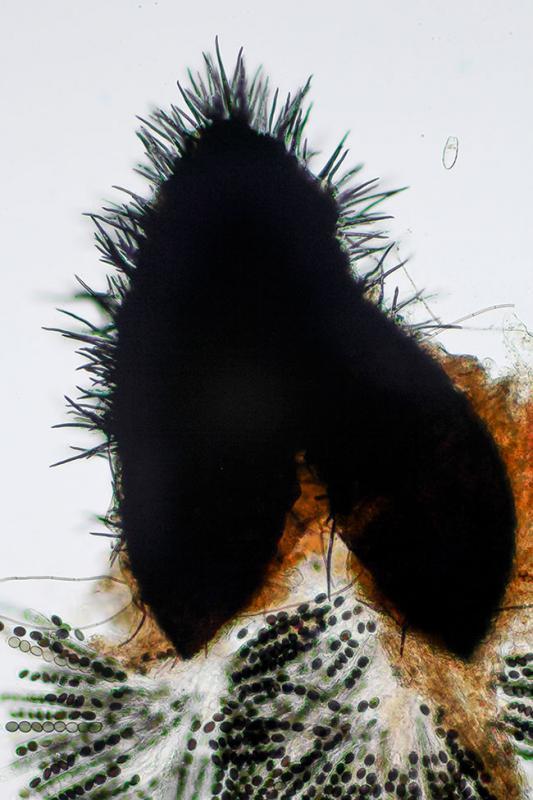
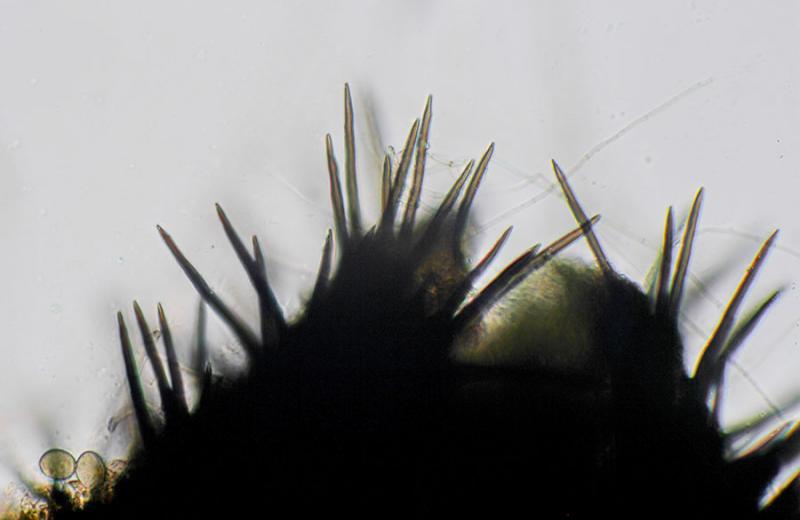
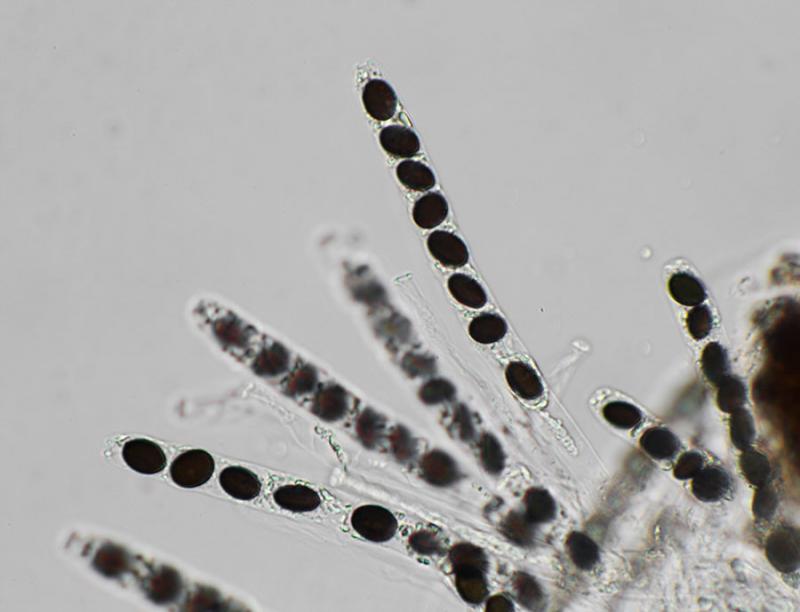
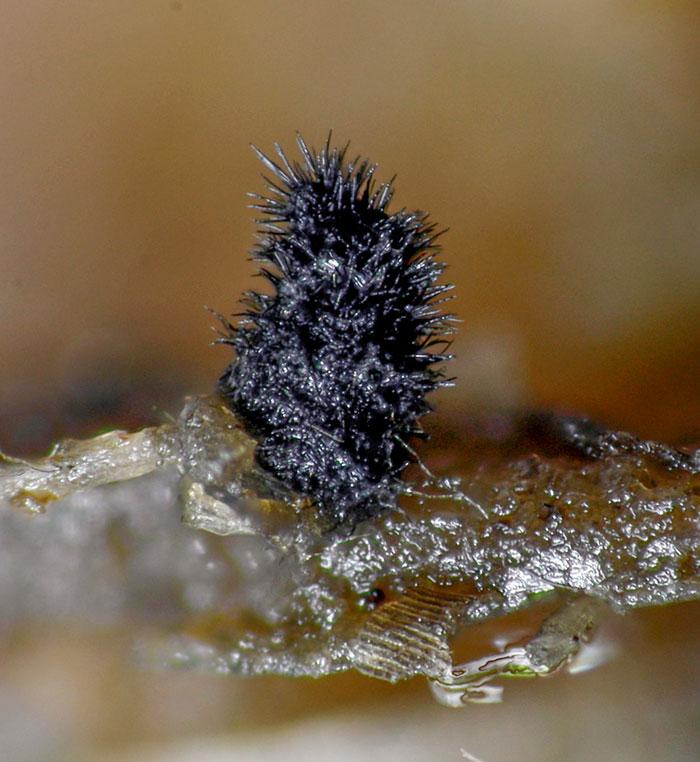
Perithecia 600µm tall x 400µm wide covered in setae, 60-75µm long, thich-walled with acute apices.
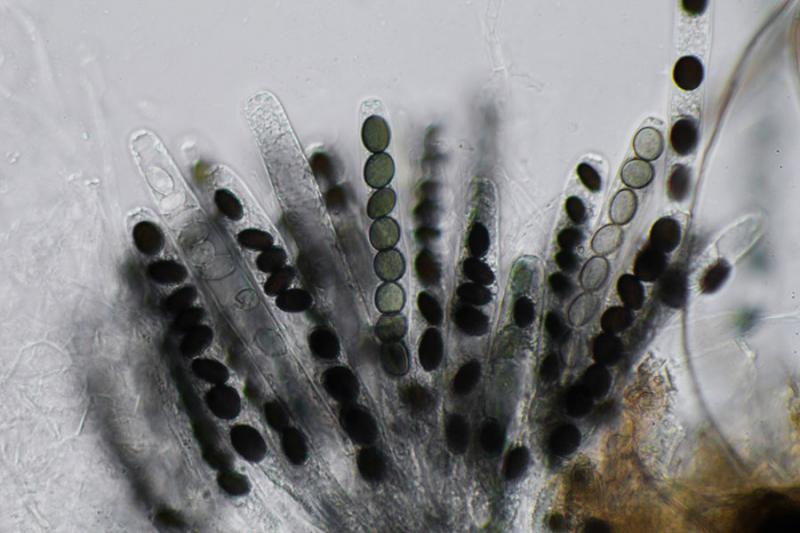
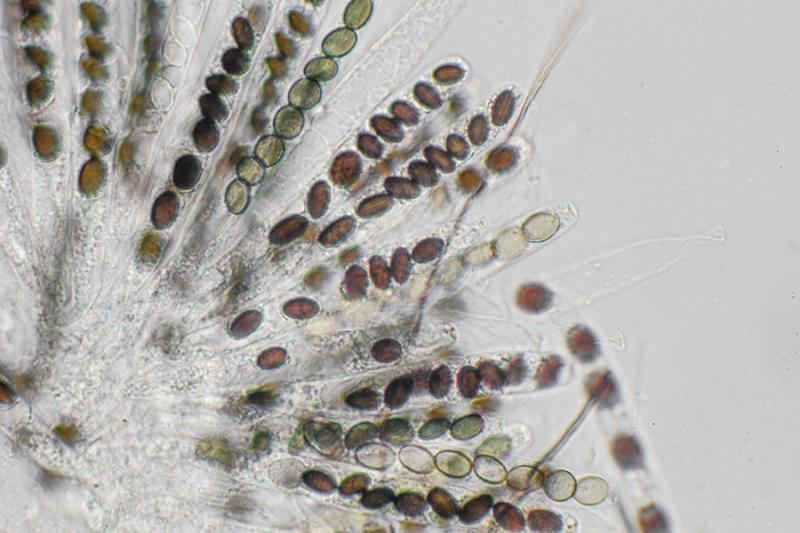
Asci 8-spored, uniseriate, 165-178 x 13µm
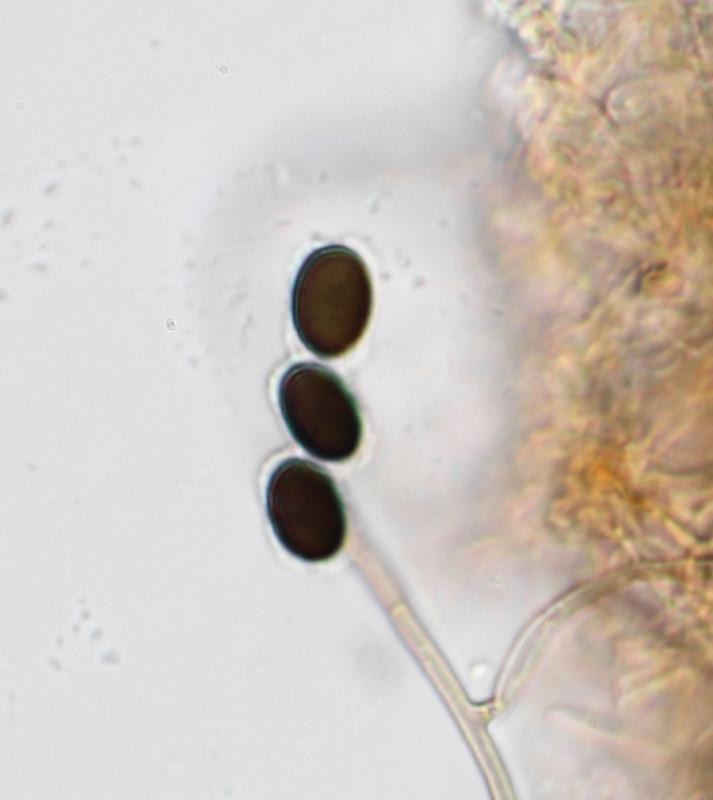
Spores with vertical germ slit, 11.4 x 9.1 x 6.7 (average) mostly measured within the asci. Spores have a gelatinous sheath.
My main concern is the spore-size. Althought mine sit comfotable in the lower size-range, Mahoey & LaFavre and Checa give a larger range. Checa also notes that the spore-size is quite variable.
Comments welcome. Thank you, Chris
Michel Delpont,
05-03-2015 14:50

Re : Coniochaeta ligniaria?
Hi Chriss.
I think it is indeed C.vagans. Many authors divide C.ligniaria (rather on wood) of C.vagans on dung. The latter usually have more rounded spores in front view. Have you observed the germination slit around the spore? Spore size is actually quite variable.
Michel.
I think it is indeed C.vagans. Many authors divide C.ligniaria (rather on wood) of C.vagans on dung. The latter usually have more rounded spores in front view. Have you observed the germination slit around the spore? Spore size is actually quite variable.
Michel.
Chris Johnson,
05-03-2015 16:24
Re : Coniochaeta ligniaria?
Hi Michel
Thank you for the confirmation. Germ slits were observed best with the microscope, especially on slightly immature spores.
Mike Richardson worked on dung fungi for many years, mainly in Scotland and the islands and recorded Coniochaeta ligniaria numerous times on various types of dung although, as far as I can ascertain, not on horse.
Bita Asgari, et al, have Coniochaeta vagans with a smaller spore-range more in keeping with mine but, as you say, they can be quite variable. My main concern is that Coniochaeta vagans has only one record on the national database and that may be dubious as there is no data attached to it.
Regards, Chris
Thank you for the confirmation. Germ slits were observed best with the microscope, especially on slightly immature spores.
Mike Richardson worked on dung fungi for many years, mainly in Scotland and the islands and recorded Coniochaeta ligniaria numerous times on various types of dung although, as far as I can ascertain, not on horse.
Bita Asgari, et al, have Coniochaeta vagans with a smaller spore-range more in keeping with mine but, as you say, they can be quite variable. My main concern is that Coniochaeta vagans has only one record on the national database and that may be dubious as there is no data attached to it.
Regards, Chris