
02-06-2026 17:58
Louis DENYBonjour forum, Sur feuille de Populus tremula, en
02-06-2026 14:33
 Nicolas VAN VOOREN
Hello.I'm searching for a PDF copy of the followin

28-07-2011 18:31
 Alex Akulov
Dear FriendsToday I made the pdf file of Velenovsk
11-09-2025 16:57
 Jason Karakehian
Our revision of Marthamycetales (Leotiomycetes) is
12-11-2019 10:32
 Miguel Ángel Ribes
Hi againExactly at the same place than my previous
25-12-2019 17:54
Valencia Lopez Francisco JavierHola a todos/asEstas supuestas pezizas estaban en
12-07-2015 00:05
 Nedim Jukic
This one from the same locality as the previous on

30-05-2026 21:12
Philippe PELLICIERSur branche de mélèze (Larix) près de la neige,
Nectriaceae on bark of Banksia
Hans-Otto Baral,
23-10-2007 18:35
 Bon soir,
on a dry branch of Banksia grandis in SW-Australia grows on the bark (peridermis) among the hairy felt a nice Nectriaceae which was at first sight taken for an Orbilia. It is characterized by rather large spores. The orange peridium turns deep pink in KOH and does not seem to have a perceptible ostiole. Any idea? I have not tried any key.
Sp. *29-31 x 9.5-10.3 µm, smooth, hyaline. Many spores still alive 13 months after collection.
There is also a polysporous Nitschkia (?broomeana) on this branch.
Zotto
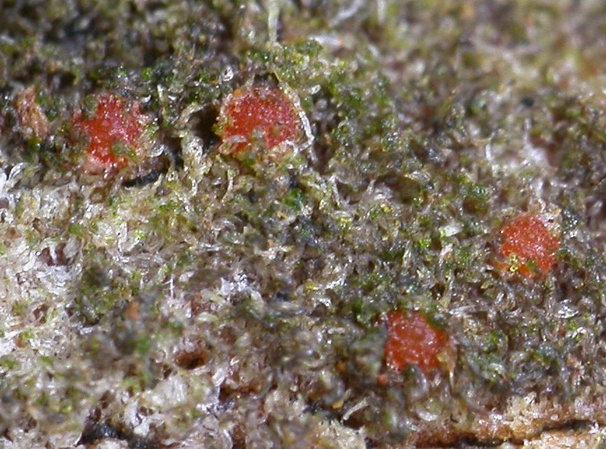
Hans-Otto Baral,
23-10-2007 18:36
Re:Nectriaceae on bark of Banksia
here are the living spores
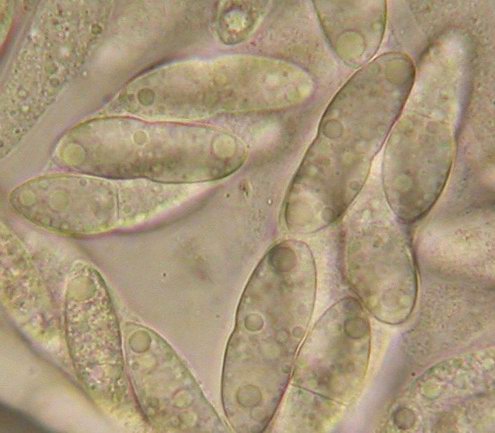
Hans-Otto Baral,
23-10-2007 18:37
Re:Nectriaceae on bark of Banksia
and the peridium in KOH (yellowish-orange in water)
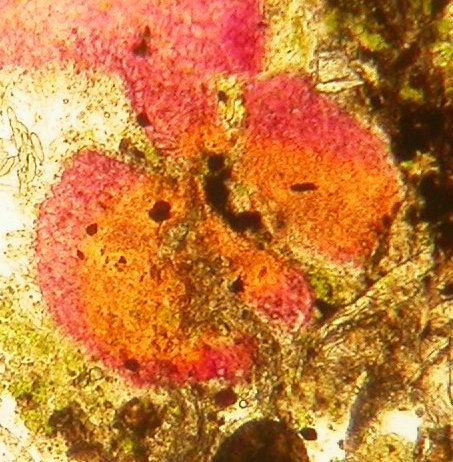
Hans-Otto Baral,
23-10-2007 18:37
Re:Nectriaceae on bark of Banksia
again
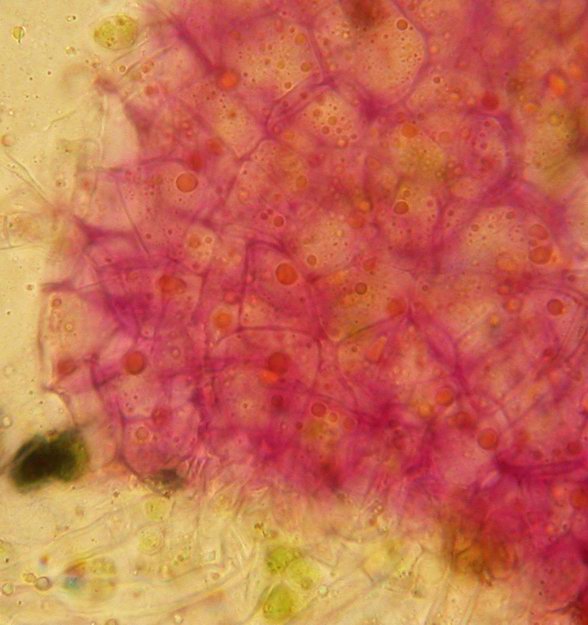
NC NC,
23-10-2007 19:04
Re:Nectriaceae on bark of Banksia
Why not send this information to Amy Rossman or Gary Samuels?
Dick
Dick
Christian Lechat,
23-10-2007 19:41

Re:Nectriaceae on bark of Banksia
Hi Zotto,
is there a stroma? which is the thickness of the perithecial wall? cupulate ascomata when dry?
could you make an image of vertical section of ostiolar region? :)
is there a stroma? which is the thickness of the perithecial wall? cupulate ascomata when dry?
could you make an image of vertical section of ostiolar region? :)
Hans-Otto Baral,
24-10-2007 16:50
Re:Nectriaceae on bark of Banksia
Hi Christian
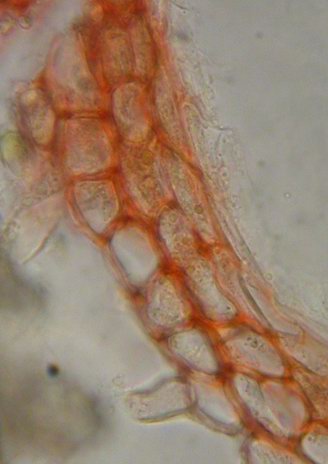
The perithecia are actually rather strongly collapsing when dry. The spores have a wider range: *(26-)29-31(-35) x 9.5-10.3(-11.3) µm, and shrink considerably in KOH: (25-)28-33.5 x 8.2-9 µm. The The peridial wall is laterally upto 30 µm thick. I did not succeed, however, to hit the ostiolum, the perithecium is apparently brittle when dry. Also it is completely immersed among the dense hair felt on the bark.
The perithecia are actually rather strongly collapsing when dry. The spores have a wider range: *(26-)29-31(-35) x 9.5-10.3(-11.3) µm, and shrink considerably in KOH: (25-)28-33.5 x 8.2-9 µm. The The peridial wall is laterally upto 30 µm thick. I did not succeed, however, to hit the ostiolum, the perithecium is apparently brittle when dry. Also it is completely immersed among the dense hair felt on the bark.
Hans-Otto Baral,
24-10-2007 16:52
Re:Nectriaceae on bark of Banksia
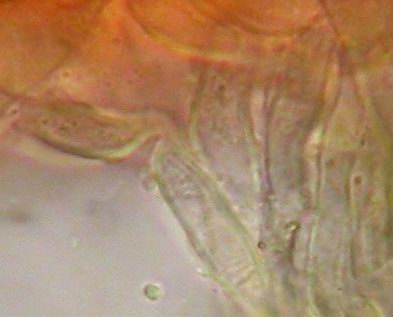
The anchoring hyphae are 3-5 µm wide, +/- thick-walled.
If you wish I will send it to you (together with H. arenula).
Of course I would be glad to have a statement by Amy Rossman and Gary Samuels. They do not appear to visit Ascofrance?
Zotto
If you wish I will send it to you (together with H. arenula).
Of course I would be glad to have a statement by Amy Rossman and Gary Samuels. They do not appear to visit Ascofrance?
Zotto
Christian Lechat,
24-10-2007 21:20
Re:Nectriaceae on bark of Banksia
Dear Zotto,
according to your data, I think it is a Cosmospora but without to see it, it is difficult to say something
You can send it to me, I will be glad to see it because I don't find any species like this in Cosmospora genus.
Regards
according to your data, I think it is a Cosmospora but without to see it, it is difficult to say something
You can send it to me, I will be glad to see it because I don't find any species like this in Cosmospora genus.
Regards