
28-04-2026 20:07
 Lothar Krieglsteiner
... on twig in the air at standing Ceratonia siliq
04-05-2026 18:13
 Stephen Martin Mifsud
ID request for what seems to be a true aquatic fun
04-05-2026 16:39
Stephen Martin Mifsud
ID request: This specimen was collected in Malta o
04-05-2026 09:50
 Castillo Joseba
Me mandan el material seco de Galicia,(España) re
02-05-2026 12:42
Alain BRISSARDBonjour à tousJeuidi 30 avril dernier on m'a remi
02-05-2026 13:06
Pauline. PennaBonjour Please can someone help me with this id
01-05-2026 22:45
 Thierry Blondelle
Bonjour à tous, Une récolte sur bouse séchée d
14-04-2026 05:32
Ethan CrensonHi all, A few weeks back a friend pointed out som
28-04-2026 20:33
Vitus SchäfftleinHello, I found Trochila ilicina on Ilex aquifoliu
Schizothecium sp
Carmen Echavarri,
16-01-2015 10:27
I found this Schizothecium on cow dung.
This is my first Schizothecium and I have a lot of doubts.
I think it could be Sch. conicum but I have seen (Doveri key) that Sch. conicum must have biseriate spores and I have found uni or biseriadas ¿All of spores have to be biseriate? ¿Maybe spores of my schizothecium are not biseriate but irregularly placed?
The spore size and hairs are conform with Sch. conicum, I think.
On the other hand I have read in another work (Lei Cai*, Rajesh Jeewon and Kevin D. Hyde) that Sch. with flexuosus hairs can´t be Sch. conicum and must choose among glutinans, miniglutinans or squamulosum
¿Can you help me, please?
Thanks in advance.
Carmen
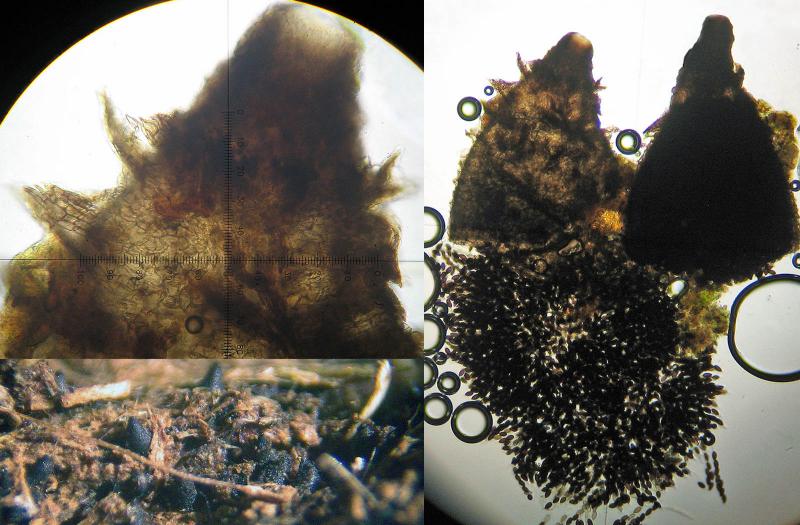
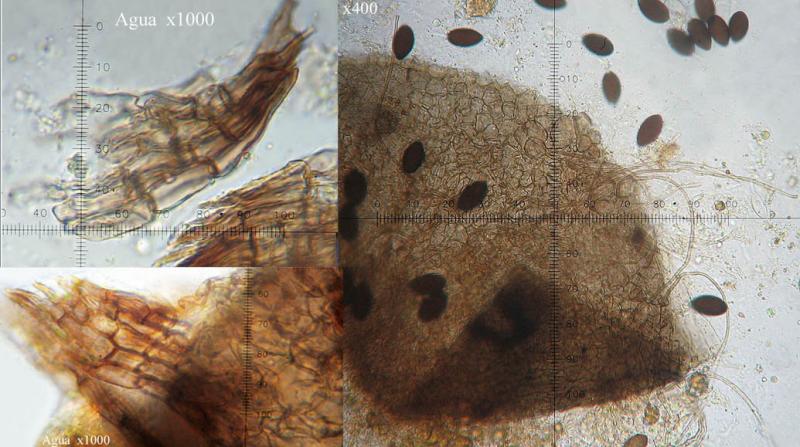
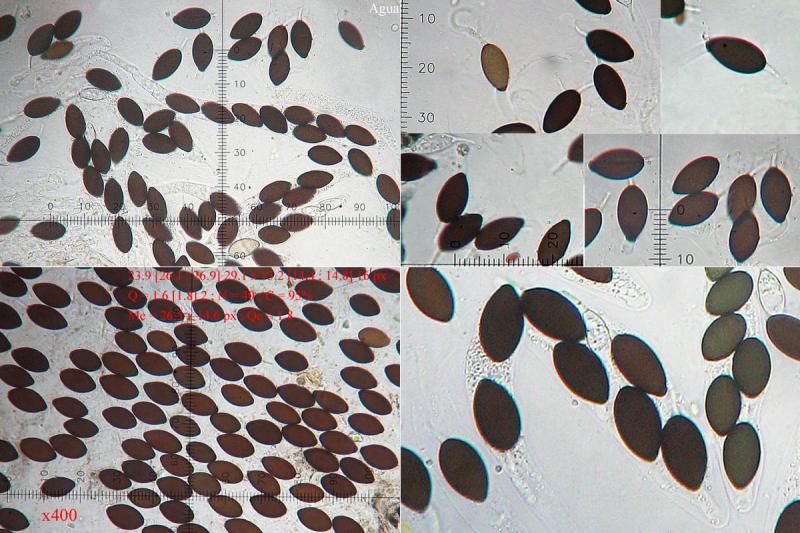
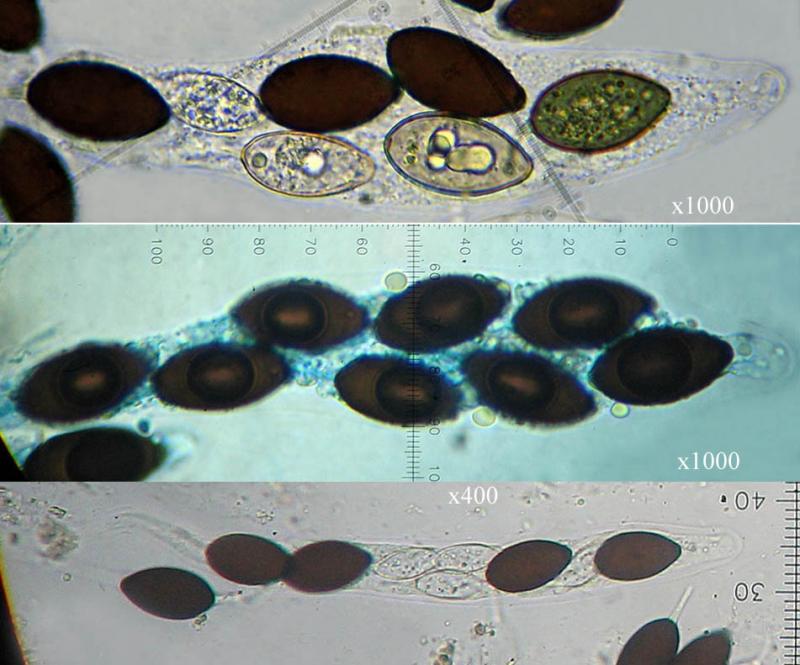
Carmen Echavarri,
16-01-2015 10:43
Re : Schizothecium sp
Another photo

Michel Delpont,
16-01-2015 11:50

Re : Schizothecium sp
Hola Carmen.
It is indeed S.conicum. This is one of the most frequent Schizothecium especially cow dung. Indeed, the spores are not always biserial, and I often find copies with uniseriate spores and more or less biserial. The size of the spores is imortante and it is often better to measure a number. Equally important is the length and location of the hair on the perithecia order to separate from other related species, particularly S.miniglutinans.
Michel.
It is indeed S.conicum. This is one of the most frequent Schizothecium especially cow dung. Indeed, the spores are not always biserial, and I often find copies with uniseriate spores and more or less biserial. The size of the spores is imortante and it is often better to measure a number. Equally important is the length and location of the hair on the perithecia order to separate from other related species, particularly S.miniglutinans.
Michel.
Carmen Echavarri,
16-01-2015 17:46
Re : Schizothecium sp
Thank you very much Michel.
And the flexuosus hairs? Are not important in this case?
And the flexuosus hairs? Are not important in this case?
Michel Delpont,
16-01-2015 18:38
Re : Schizothecium sp
Yes, some perithecia as S.glutinans and S.miniglutinans hyphoides have more hair, the agglutinated hair, size and location are very important. Also important accurate measurement of spores and their location in the asci.
Michel.
Michel.
Carmen Echavarri,
16-01-2015 18:48
Re : Schizothecium sp
OK Michel.
Many thanks again.
Best regards.
Carmen
Many thanks again.
Best regards.
Carmen